News
Road closures ahead of Ring of Kerry – Plunkett St closed from 2pm Friday

L
Locals and visitors will need to be aware of road closures in Killarney and along the Ring of Kerry route to facilitate the annual Ring of Kerry Cycle tomorrow.
Some road closures will come into effect from 2pm today.
Up to 6000 cyclists are expected to cycle the 175-kilometre route to raise money for charity and Kerry County Council has passed a temporary road closing order to allow the safe passage of the participants.
Plunkett Street, Killarney (from the Junction of Plunkett Street / Main St. to College Square) will be closed from 2.00 p.m. to 10.00 p.m. today (Friday).
The official start will take place on the Mission Road in Killarney on Saturday morning and this road will be closed to vehicular traffic from 5.00am to 9.00am and again between 11.30am and 8.00pm on Saturday.
The main road between Fossa and Killorglin will close between 6.00am and 9.00 am with diversions via Faha , Listry and Miltown in place.
The eastbound lane of the Ring of Kerry route between Killorglin to Caragh Bridge will close between 6.00 a.m. to 12 noon.
This closure will start at the Iveragh Road Roundabout via Iveragh Road, Tullig, Quaybaun and finishing at Caragh Bridge and a one-way traffic diversion will be in place for traffic travelling eastbound from Caherciveen and Glenbeigh via Dooks, Cromane, Garraun and Castleconway. Traffic travelling westbound from Killorglin to Glenbeigh will remain on the N70.
The Sneem to Molls Gap road will close between 11.00 a.m. to 8.00 p.m. As will the Kenmare to Torc Waterfall section via Moll’s Gap.
The New Street Car Park will be closed from 7.00am from today, July 5 until to 8.00 p.m. tomorrow (Saturday).
There will be access to Killarney Plaza Hotel and other businesses in the Upper Section of the New Street Car park on both days with limited parking spaces.

LOCAL GOLD: Terrie O’Shea, founder and owner of Killarney-based business Sorella Berries, celebrating her Gold award win at the Blas na hÉireann Irish Food Awards held in Dingle last week. Her hand-crafted chocolate covered strawberries secured the top spot in national competition, earning recognition for the local food producer on the national stage.

LOCAL GOLD:
LOCAL GOLD: Terrie O’Shea, founder and owner of Killarney-based business Sorella Berries, celebrating her Gold award win at the Blas...
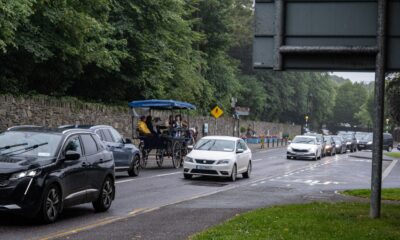

Grady demands Killarney traffic review
Killarney councillor Martin Grady has called for an urgent review of traffic management across the town following severe delays along...

Killarney Pumpkin Farm returns for Halloween
The annual event is in its sixth year and caters to people of all ages. The farm is located in...


Killarney Toastmasters host special open night
Killarney Toastmasters is inviting members of the local community to an open night at the Dromhall Hotel on Muckross Road...

Killarney hotels achieve top global rankings in Readers’ Choice Awards
Killarney hotels achieve top global rankings in Readers’ Choice Awards Two leading Killarney hotels are celebrating major international accolades following...
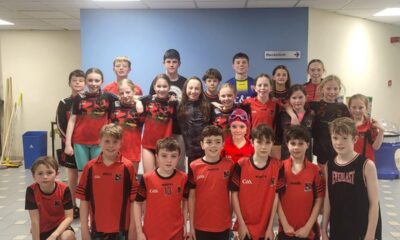

Fossa Swimmers make a splash at County Finals
The Fossa Swim team pictured at the Tralee Sports Complex following their successful outing at the County Finals of the...

On the Ball Part 2 of the Mikey Daly Interview
Éamonn Fitzgerald EF: Killarney Celtic are invited to participate in an Irish competition. That has big financial implications for travel,...


LUKE MANGAN recently caught up with Kerry FC’s manager, Colin Healy.
He spoke to him about his careers as a player and manager. Here’s how it went: When you began your...


Home cup tie for St Paul’s could be epic
Paudie O’Connor National Cup (Round 1) Utility Trust St Paul’s v GCU Brunell Saturday 7.30pm Killarney Sports and Leisure Centre...


Chances of Kerry v Cork Munster final in 2026 decrease as Munster GAA delay seeding plan
After facing a backlash from Limerick, Clare, Waterford and Tipperary players, Munster GAA have postponed their plan to keep Cork...