News
Residents give Countess Grove a facelift

CLEANING UP: A group from the Countess Grove Residents Association doing their bit for Killarney in the Tidy Towns competition by participating in a general clean-up of their estate on Monday night. Picture: Eamonn Keogh
By Michelle Crean
It was all hands on the cleaning equipment for local residents who came together to give their estate a facelift on Monday evening.
Eager residents in Countess Grove, who won the Best Estate award in the annual Killarney Looking Good Competition last year,rolled up their sleeves and gave their area a general clean-up as part of their Tidy Towns commitment.
“Each year the Countess Grove Residents’ Association sends out a flyer suggesting that it’s time for the yearly tidy-up, and the call is always well answered,” Philip Brady, Chair of the group, told the Killarney Advertiser.
“People young and old come out with their shovels, hoes and brushes. Barrows appear magically. And in a couple of hours bulging refuse sacks supplied by the Council are ready for collection. In the meantime people chat, admire small children brought along to “help” and comment on how well the place is looking now.”
The residents are also looking forward to the construction of a zebra crossing at the entrance to their estate.
“This will be of the same standard as the one at the top of Countess Road, and most of the funding necessary has been vouched for through the good offices of several county councillors of the Killarney area. It will serve about 180 houses from the various estates and should make the crossing point much safer.”

LOCAL GOLD: Terrie O’Shea, founder and owner of Killarney-based business Sorella Berries, celebrating her Gold award win at the Blas na hÉireann Irish Food Awards held in Dingle last week. Her hand-crafted chocolate covered strawberries secured the top spot in national competition, earning recognition for the local food producer on the national stage.

LOCAL GOLD:
LOCAL GOLD: Terrie O’Shea, founder and owner of Killarney-based business Sorella Berries, celebrating her Gold award win at the Blas...

Grady demands Killarney traffic review
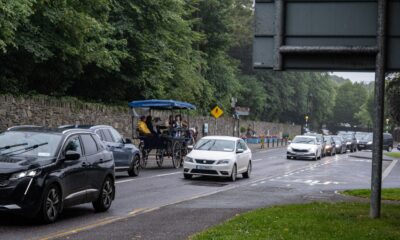
Killarney councillor Martin Grady has called for an urgent review of traffic management across the town following severe delays along...


Killarney Pumpkin Farm returns for Halloween
The annual event is in its sixth year and caters to people of all ages. The farm is located in...


Killarney Toastmasters host special open night
Killarney Toastmasters is inviting members of the local community to an open night at the Dromhall Hotel on Muckross Road...

Killarney hotels achieve top global rankings in Readers’ Choice Awards
Killarney hotels achieve top global rankings in Readers’ Choice Awards Two leading Killarney hotels are celebrating major international accolades following...

Fossa Swimmers make a splash at County Finals
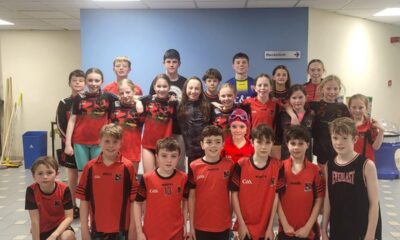
The Fossa Swim team pictured at the Tralee Sports Complex following their successful outing at the County Finals of the...


On the Ball Part 2 of the Mikey Daly Interview
Éamonn Fitzgerald EF: Killarney Celtic are invited to participate in an Irish competition. That has big financial implications for travel,...


LUKE MANGAN recently caught up with Kerry FC’s manager, Colin Healy.
He spoke to him about his careers as a player and manager. Here’s how it went: When you began your...


Home cup tie for St Paul’s could be epic
Paudie O’Connor National Cup (Round 1) Utility Trust St Paul’s v GCU Brunell Saturday 7.30pm Killarney Sports and Leisure Centre...


Chances of Kerry v Cork Munster final in 2026 decrease as Munster GAA delay seeding plan
After facing a backlash from Limerick, Clare, Waterford and Tipperary players, Munster GAA have postponed their plan to keep Cork...