
News
New Gaelic football rules: Gavin and co. are talking about a revolution


Adam Moynihan gives his assessment of the seven major rule ‘enhancements’ being proposed by Jim Gavin’s Football Review Committee
We’ve grown accustomed to regular updates to the Gaelic football rule book. Radical changes in the way the game is being played and, subsequently, enjoyed (or not) have led to frequent and frantic tinkering on the GAA’s part. They are well aware of the widespread dismay at the negative tactics and boring fare, and, to their credit, they have tried to fix it.
Their efforts so far have not really had a major impact but if the Football Review Committee can force through their proposed amendments, the effects could be revolutionary.
Here are the seven key rule enhancements and some thoughts on the pros and cons.
1v1 throw-in to start the game
At the start of both halves the referee would begin the game by throwing the ball in to just one player from each team.
Throw-ins have become messy with two opposing midfielders pinning each other down while the other two jump for possession. Removing the wrestlers from the equation will do no harm at all.
40-metre scoring arc and new scoring system
The introduction of a new 40-metre scoring arc around both sets of goalposts would facilitate a new scoring system. Points scored from on or outside the 40-metre arc would be worth two points with points scored from within the 40-metre arc worth one point. A goal would be worth four points. Converted 45s would continue to be worth one point.
The benefits of the two-point scoring arc are twofold. Firstly, it encourages long-range shooting, a wonderful skill which we are seeing less and less of in the modern game. Secondly, more shots from distance will force packed defences to press slightly higher, potentially opening up gaps closer to goal. Increasing the value of a goal to four points goes hand in hand with the introduction of the arc as it encourages attacking teams to maintain an inside threat rather than simply picking off scores from distance.
Kickouts
Kickouts would be taken from the 20-metre line and must go beyond the 40-metre arc.
I’m not sure about this one. I don’t think short kickouts are as detrimental to the game as some traditionalists seem to, especially if the limits on passing to the goalkeeper are brought in…
Limits on passing to the goalkeeper
A player may only pass the ball to their goalkeeper if both they and the goalkeeper are inside the large rectangle or if the goalkeeper has advanced beyond their own 65-yard line. The goalkeeper can still move up the field to challenge the opposition kickout or attempt to intercept a pass from the opposition.
If introduced, this, in my opinion, will fundamentally change the game for the better. One of the biggest scourges of the modern game is long, pointless, uninterrupted periods of nothing possession, passing the ball back and forth across the pitch as the opposition sit back and refuse to press. And one of the main reasons this happens is the team with the ball always has an extra man: the goalkeeper. Removing the keeper as an easy outlet will inevitably lead to more gegenpressing, more tackles, more turnovers, and more excitement. It could be as revolutionary as the back pass rule was in soccer.
Solo and Go
A player who is fouled has the option of continuing play by taking a ‘solo and go’ rather than pausing play to take a free. It doesn’t have to be the player who is fouled that takes the ‘solo and go’.
Inspired by the ‘tap and go’ in rugby, this is a terrific idea aimed at speeding up the game. A definite ‘yes’ for me.
Advanced mark
You can claim an offensive mark if you field a ball inside the 20-metre line that has been kicked from outside the 45-metre line. But, rather than stop and claim the mark, players can instead continue to play and attempt to score from open play. The referee plays advantage and if none accrues then the ball is brought back for the mark. Rather than limit an advantage to five seconds, consideration is being given to allowing referees to give advantage for as long as there is positive momentum.
While personally I would prefer if they ditched the advanced mark entirely, this is a slight improvement (although maybe I wouldn’t be saying that if I was a corner back).
Three Up/Three Back
This rule enhancement under consideration would oblige both teams to always have a minimum of three players inside each 65-yard line. If a defending player retreats beyond the ’65 to give his team a numerical advantage then they would concede a free on their own 13-metre line. If a player carries the ball past their own ’65 and leaves less than three team-mates behind them then a free is given to the opposition at the point where they crossed the line.
This is a big one and arguably the most ambitious of the FRC’s proposals. The merits are obvious. Fewer defenders behind the ball, more space for forwards, and more opportunities for counter-attacks. The practicalities are the worry here. Will the officials be able to keep track of the bodies? If it works it will be a total game-changer.
There are several other “smaller” proposals being trialled and tabled, such as the introduction of a hooter, an NFL-style overtime showdown, and vanishing foam for referees to mark the location of frees.
Overall, the ideas seem bold and positive. They may not all get the green light at Special Congress on November 30 but, for the first time in a while, I’m feeling optimistic about the future of Gaelic football.

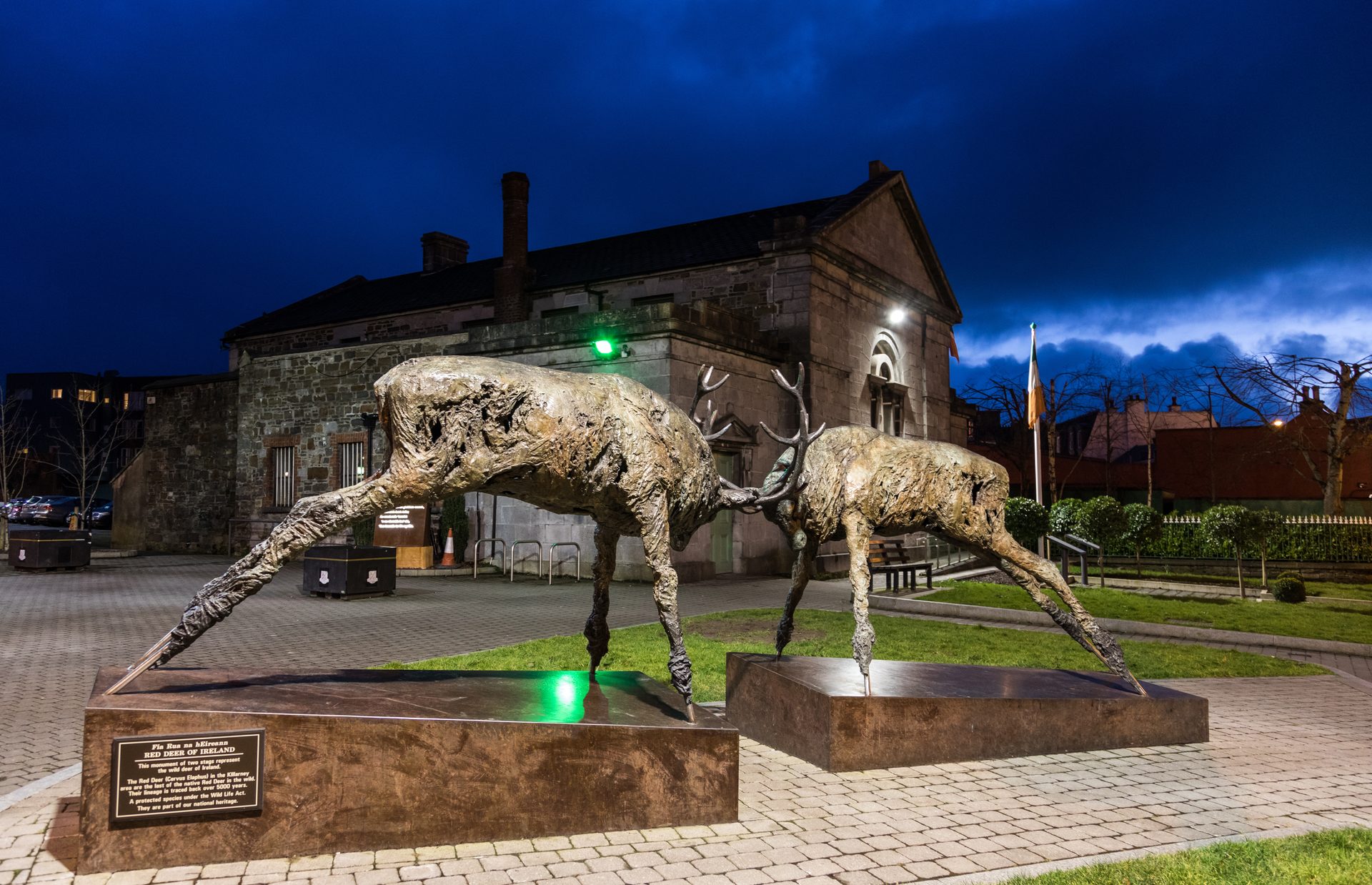
Drivers warned as deer rutting season begins
Motorists in Killarney are being urged to exercise extreme caution as the annual deer rutting season gets underway, causing animals to stray far beyond their usual habitats inside Killarney National Park.
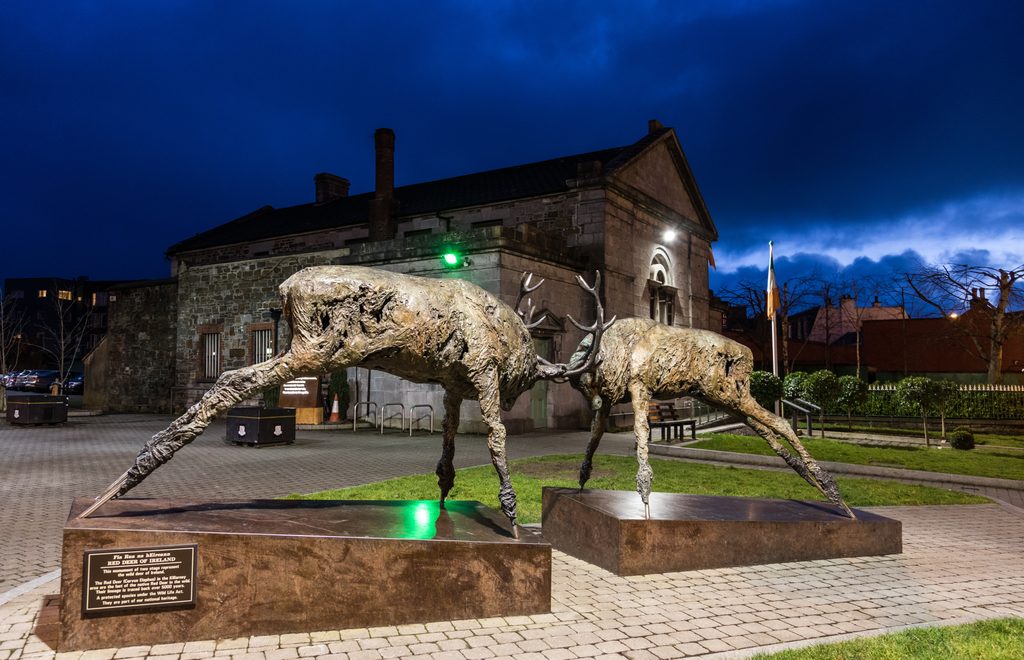
The autumn mating season sees deer becoming highly active and unpredictable, leading to increased sightings and collisions on local roads outside traditional park boundaries.
Two separate incidents highlighted the growing hazard on local routes this week. A reader contacted the Killarney Advertiser to warn drivers after spotting a deer roaming near Tiernaboul towards the school on Sunday afternoon around 7.30pm.
Later that same night, in the early hours of Monday morning, a local driver collided with a deer near Kerry Airport around 1am while returning home from an event.
Despite attempting evasive action, the motorist struck the animal, which died at the scene and temporarily blocked the road before local Gardaí were alerted to clear the obstruction.
The driver sustained substantial vehicle damage, requiring repairs to the bumper, headlamp, and internal components, leaving her facing significant garage costs and time off the road.
Gardaí and road safety advocates advise motorists travelLing during early morning and late evening and remain vigilant along tree-lined routes.


Drivers warned as deer rutting season begins
Drivers warned as deer rutting season begins Motorists in Killarney are being urged to exercise extreme caution as the annual...


Kerry Airport CEO addresses chamber luncheon
Kerry Airport chief executive Adrian Neilan addressed local business leaders at the Killarney Chamber of Tourism and Commerce luncheon at...


The Brehon raises €2,850 for Jack and Jill Foundation
The Brehon Hotel and Spa raised €2,850 for the Jack and Jill Children’s Foundation after hosting a closest-to-the-pin golf simulator...

Five local postmen retire with 185 years service
Five local postmen retire with 185 years service RETIREMENT NIGHT: Pictured at the retirement party held at Killarney Racecourse on...


New Streetscapes murals launched at College Square
A colourful collaboration between the Kerry Local Creative Youth Partnership (LCYP) and the Architecture Kerry Festival at Kerry County Council...
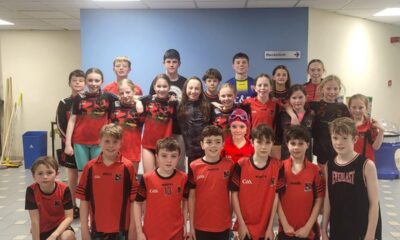

Fossa Swimmers make a splash at County Finals
The Fossa Swim team pictured at the Tralee Sports Complex following their successful outing at the County Finals of the...

On the Ball Part 2 of the Mikey Daly Interview
Éamonn Fitzgerald EF: Killarney Celtic are invited to participate in an Irish competition. That has big financial implications for travel,...


LUKE MANGAN recently caught up with Kerry FC’s manager, Colin Healy.
He spoke to him about his careers as a player and manager. Here’s how it went: When you began your...


Home cup tie for St Paul’s could be epic
Paudie O’Connor National Cup (Round 1) Utility Trust St Paul’s v GCU Brunell Saturday 7.30pm Killarney Sports and Leisure Centre...


Chances of Kerry v Cork Munster final in 2026 decrease as Munster GAA delay seeding plan
After facing a backlash from Limerick, Clare, Waterford and Tipperary players, Munster GAA have postponed their plan to keep Cork...
