News
New free text service launched to help fight crime

CRIME PREVENTION: At the launch of the Killarney 'SEE Something SAY Something' text service in Killarney were: Eileen O’Donoghue (Killarney Municipal District Officer) and Chief Superintendent Eileen Foster with Cllr Niall Kelleher (Chairperson, Joint Policing Committee), Superintendent Flor Murphy, Frank Doran (Chairman Purple Flag Committee), Paul Sherry (President Killarney Chamber of Tourism and Commerce), Cllr John Sheahan (Cathaoirleach, Killarney Municipal District) and Brian Stephenson, (Text Service Creator). Photo: Valerie O’Sullivan
By Michelle Crean
The streets of Killarney are set to be much safer thanks to the launch of a new crime reporting text service.
This week, Killarney Chamber of Tourism and Commerce and An Garda Siochana, jointly launched the ‘SEE Something SAY Something’ initiative – where the public can report crime or anti-social behavior anonymously with their phone.
Members of the public can simply text KILLARNEY and a brief account of the incident and the location to 50555 which will be received by the sergeant on duty and acted upon immediately.
The service was developed by entrepreneur Brian Stephenson and has been very successful in Tralee.
The new service will complement the Purple Flag initiative aimed at maintaining Killarney’s standing as one of the safest and most attractive towns in the country at night.
“SEE Something SAY Somethinghas worked very successfully in Tralee and we are delighted to be able to introduce it to Killarney,” Superintendent Flor Murphy, said. “It’s all about public safety and making our town and its surrounds better and safer for residents and visitors. It doesn’t take away the traditional methods of fighting crime, but it will enable us to work more quickly and more smartly if anti-social behaviour or criminality is reported by text message.”

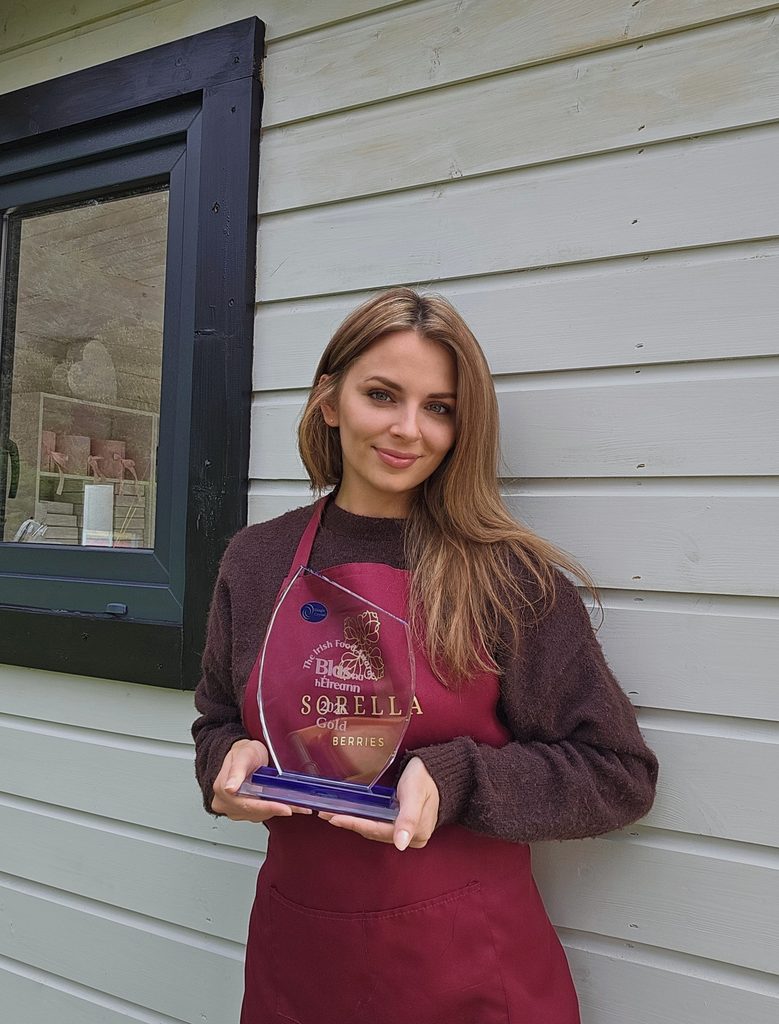
LOCAL GOLD: Terrie O’Shea, founder and owner of Killarney-based business Sorella Berries, celebrating her Gold award win at the Blas na hÉireann Irish Food Awards held in Dingle last week. Her hand-crafted chocolate covered strawberries secured the top spot in national competition, earning recognition for the local food producer on the national stage.
LOCAL GOLD:
LOCAL GOLD: Terrie O’Shea, founder and owner of Killarney-based business Sorella Berries, celebrating her Gold award win at the Blas...

Grady demands Killarney traffic review
Killarney councillor Martin Grady has called for an urgent review of traffic management across the town following severe delays along...

Killarney Pumpkin Farm returns for Halloween
The annual event is in its sixth year and caters to people of all ages. The farm is located in...

Killarney Toastmasters host special open night
Killarney Toastmasters is inviting members of the local community to an open night at the Dromhall Hotel on Muckross Road...

Killarney hotels achieve top global rankings in Readers’ Choice Awards
Killarney hotels achieve top global rankings in Readers’ Choice Awards Two leading Killarney hotels are celebrating major international accolades following...

Fossa Swimmers make a splash at County Finals
The Fossa Swim team pictured at the Tralee Sports Complex following their successful outing at the County Finals of the...

On the Ball Part 2 of the Mikey Daly Interview
Éamonn Fitzgerald EF: Killarney Celtic are invited to participate in an Irish competition. That has big financial implications for travel,...


LUKE MANGAN recently caught up with Kerry FC’s manager, Colin Healy.
He spoke to him about his careers as a player and manager. Here’s how it went: When you began your...

Home cup tie for St Paul’s could be epic
Paudie O’Connor National Cup (Round 1) Utility Trust St Paul’s v GCU Brunell Saturday 7.30pm Killarney Sports and Leisure Centre...


Chances of Kerry v Cork Munster final in 2026 decrease as Munster GAA delay seeding plan
After facing a backlash from Limerick, Clare, Waterford and Tipperary players, Munster GAA have postponed their plan to keep Cork...