
News
New details on 18th century grave uncovered during shopping centre construction


EXCLUSIVE
By Sean Moriarty
Some fascinating new information has come to light on the grave uncovered during the construction of the new Aldi store on Park Road.

INSCRIPTION: Researchers were able to decipher some but not all of the inscription

MAPS: An old map show the potential location of the original grave and and its current location

UNCOVERED: The grave at Aldi as it was found during construction

PRESS CUTTING: How the Killarney Advertiser reported the discovered grave

PROTECTED: Mayor Marie Moloney and Padraig Barry of Aldi at the protected grave outside a Killarney shopping centre

INSCRIPTION: Researchers were able to decipher some but not all of the inscription

MAPS: An old map show the potential location of the original grave and and its current location

UNCOVERED: The grave at Aldi as it was found during construction

PRESS CUTTING: How the Killarney Advertiser reported the discovered grave

PROTECTED: Mayor Marie Moloney and Padraig Barry of Aldi at the protected grave outside a Killarney shopping centre
Last week, the Killarney Advertiser revealed that an ancient grave was discovered during the construction phase of the new store.
Aldi have preserved the grave, which is dated from the 1800s, and have placed a protection railing around it.
It is the company’s intention to place an information lectern on the railing so local people will be able to learn about the history of the unusual find.
Aldi employed the services of Cork-based archaeology firm John Cronin and Associates and the Killarney Advertiser was given exclusive access to the report.
The report was prepared by Peter Looney of John Cronin & Associates, with assistance from Ita O’Brien, Andras Hindli and John Cronin.
UNCOVERED
The stone was found in its current location, but within a disused barn, during the early site clearance works in November 2018 and the scene was preserved until Cronin and Associates examined it in greater detail.
“The slab was lying face down on the surface of the rubble layer and consists of a single block of limestone carved and shaped into an elongated six-sized shield to resemble a coffin lid measuring max 2.2m long and max 0.95m wide,” says the report. “Five lines of text are carved on the right-hand side of the cross.”
Expert archaeologists were able to decipher some but not all of the text. It reads:
SACRED TO THE MEMORY OF MARGARET SHEA
WHO DIED SPT_____________________
May She rest in peace Amen
ERECTED AS A MEMORIAL OF AFFECTION BY HER HUSBAND JEREMIAH SHEA.
“Shea is a frequent surname in County Kerry, and both Margaret and Jeremiah are also widespread. Without a date - which it is hoped may yet be deciphered -it may not be possible to identify exactly who the people named on the stone are,” says the report.
According to members of the Lyne family, the previous owners of the site, the grave slab belonged to their father and was in their possession until the turn of the century when its whereabouts became unknown.
Mr Tom Lyne – who used the barn adjacent to where the slab was uncovered before construction began - described growing up with the slab always within the courtyard of the family’s farmstead which would have extended into the current find spot.
“He indicated that the slab would have been standing against a boundary wall. It seems likely that slab was abandoned with the farmstead as it fell into disuse in the latter half of the 20th century, eventually falling over on its face (the position it was uncovered in) and its whereabouts becoming lost to the family. Thus, the grave-slab is most likely ex-situ having been brought to the area with the Lyne family around the 1900’s when the family farmstead was built adjacent to the southwest corner of the subject site,” adds the report.
It is believed the grave was originally located in a burial ground where the Lewis Road is now and that it may have been moved to its current location when that town centre road was being built.
RARE
“That area is now built up, mostly with residential properties. It can be assumed that many of the gravestones that were in the original Killarney Burial Ground were moved off-site and that may have been what happened to the subject stone, which then came into the possession of the Lyne family,” adds the report.
“Three local graveyards: Muckross Abbey, Killegy Lower and New Cemetery, Coolcorcoran, were visited in December 2020 to ascertain if there are any similar types of grave memorial. No stone of a similar shape was found in any of these three local graveyards.
“Only two examples were found to take a similar form: one of which was the same general shape as the example found at Ardshanavooly in Killarney. This stone, in the graveyard in Oola, County Limerick is also pointed at the top and bottom. This stone is very worn and only the initials ‘C B’ could be read. Therefore, despite the shared unusual shape, the stone at Oola cannot offer any clue towards the age of the Killarney stone.”
A second slab is at Abbeylands, County Waterford and is dated 1854.
“Once weather conditions allow, it is proposed to make a further attempt at deciphering the second line of the text inscription. This is the line that is likely to have a date inscribed and thereby add significantly to our knowledge of the history of the stone if it can be read. A rubbing was attempted in December 2020 but was unsuccessful as the surface of the stone was wet. When the stone is dry, it is likely that a rubbing will be more successful.”
FUTURE PLANS
Once all of the research work is complete a low-height lectern with an inclined tray will be placed adjacent to the presentation plinth to allow people to learn about the origins of the grave slab and reproduce the weathered inscription.
“The interpretative opportunity here is to encourage those interested to see if they can discern the inscription, and to reflect on the care and attention wrought on this memorial to a loved one and to consider how such an object found its way to this location,” concludes the report.

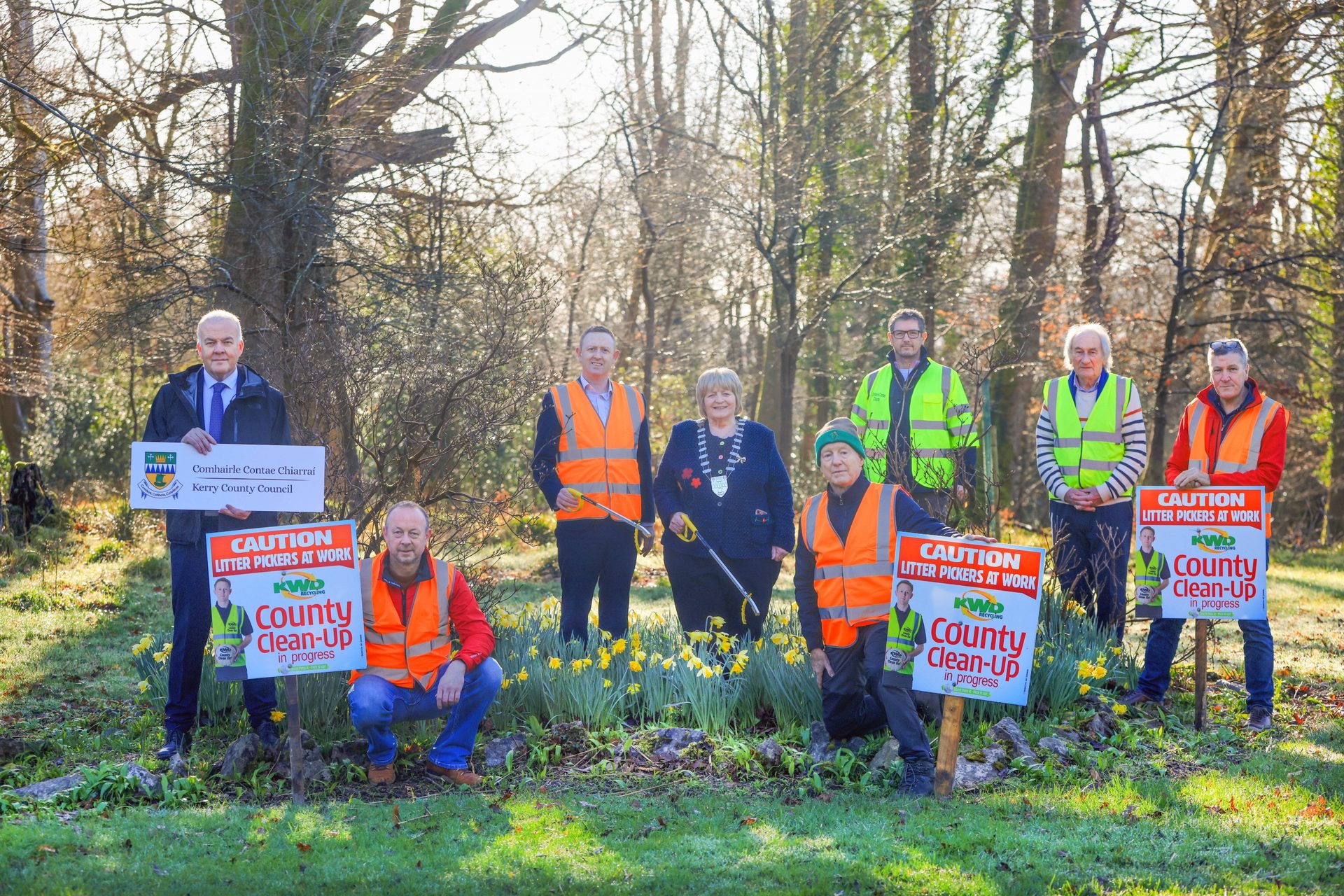
KWD Recycling shortlisted for national environmental awards
Killarney-based KWD Recycling has been announced as a finalist in the 2026 Repak Resource Awards, securing a spot on the national shortlist for environmental achievement.
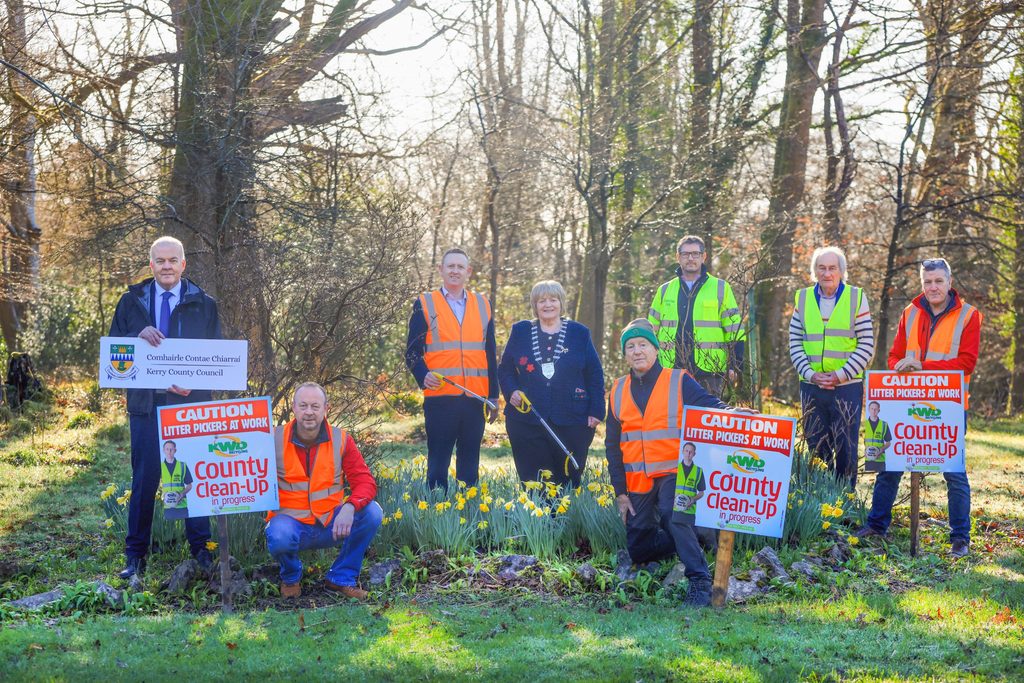
The local waste management company has been nominated in the Best Recovery Operator Innovation category, sponsored by DNV, for its state-of-the-art residual waste recovery system.
The Killarney facility utilizes optical sorting, screening, and mechanical processing to extract recyclable plastics and organic material from municipal waste. In its first year of operation, the technology recovered more than 10 per cent of plastic packaging from residual waste for recycling and diverted almost 50 per cent of organic material toward composting.
KWD Recycling will compete alongside Dublin operators Panda and Thorntons Recycling for the category title.
Repak CEO Zoe Kavanagh commended the Kerry firm for demonstrating environmental leadership and bringing local ambition to the national awards.
Category winners will be announced at a black-tie ceremony at the Mansion House in Dublin on Friday, October 23, where each winner will also compete for the Overall Repak Resource Award.
Local businesses have a strong track record at the national event, with Killarney town venue The Killarney Park and The Ross previously taking home the overall title in 2023.
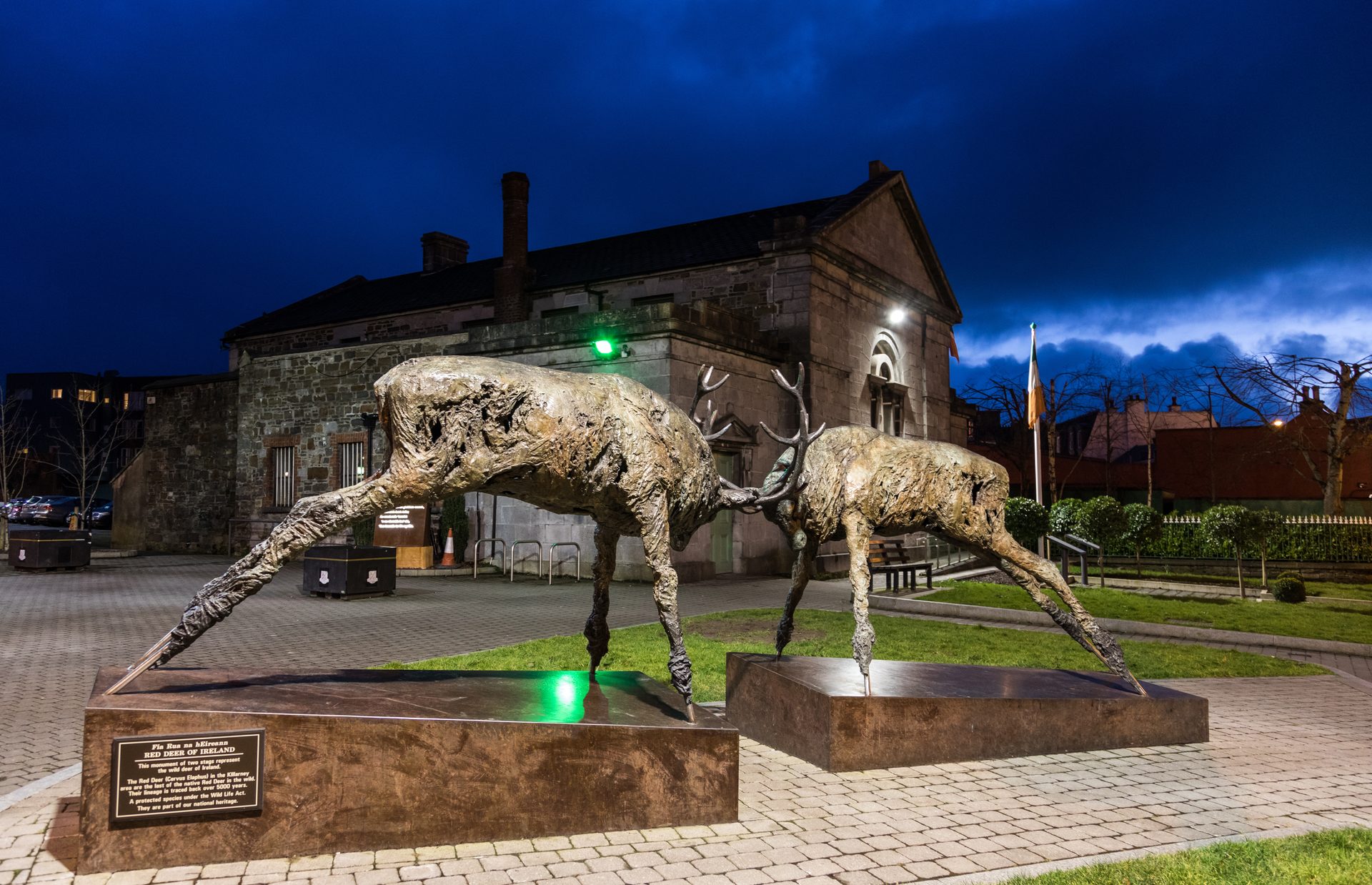
Drivers warned as deer rutting season begins
Motorists in Killarney are being urged to exercise extreme caution as the annual deer rutting season gets underway, causing animals to stray far beyond their usual habitats inside Killarney National Park.
The autumn mating season sees deer becoming highly active and unpredictable, leading to increased sightings and collisions on local roads outside traditional park boundaries.
Two separate incidents highlighted the growing hazard on local routes this week. A reader contacted the Killarney Advertiser to warn drivers after spotting a deer roaming near Tiernaboul towards the school on Sunday afternoon around 7.30pm.
Later that same night, in the early hours of Monday morning, a local driver collided with a deer near Kerry Airport around 1am while returning home from an event.
Despite attempting evasive action, the motorist struck the animal, which died at the scene and temporarily blocked the road before local Gardaí were alerted to clear the obstruction.
The driver sustained substantial vehicle damage, requiring repairs to the bumper, headlamp, and internal components, leaving her facing significant garage costs and time off the road.
Gardaí and road safety advocates advise motorists travelLing during early morning and late evening and remain vigilant along tree-lined routes.

KWD Recycling shortlisted for national environmental awards
KWD Recycling shortlisted for national environmental awards Killarney-based KWD Recycling has been announced as a finalist in the 2026 Repak...

Drivers warned as deer rutting season begins
Drivers warned as deer rutting season begins Motorists in Killarney are being urged to exercise extreme caution as the annual...


Kerry Airport CEO addresses chamber luncheon
Kerry Airport chief executive Adrian Neilan addressed local business leaders at the Killarney Chamber of Tourism and Commerce luncheon at...


The Brehon raises €2,850 for Jack and Jill Foundation
The Brehon Hotel and Spa raised €2,850 for the Jack and Jill Children’s Foundation after hosting a closest-to-the-pin golf simulator...

Five local postmen retire with 185 years service
Five local postmen retire with 185 years service RETIREMENT NIGHT: Pictured at the retirement party held at Killarney Racecourse on...


Fossa Swimmers make a splash at County Finals
The Fossa Swim team pictured at the Tralee Sports Complex following their successful outing at the County Finals of the...


On the Ball Part 2 of the Mikey Daly Interview
Éamonn Fitzgerald EF: Killarney Celtic are invited to participate in an Irish competition. That has big financial implications for travel,...


LUKE MANGAN recently caught up with Kerry FC’s manager, Colin Healy.
He spoke to him about his careers as a player and manager. Here’s how it went: When you began your...


Home cup tie for St Paul’s could be epic
Paudie O’Connor National Cup (Round 1) Utility Trust St Paul’s v GCU Brunell Saturday 7.30pm Killarney Sports and Leisure Centre...


Chances of Kerry v Cork Munster final in 2026 decrease as Munster GAA delay seeding plan
After facing a backlash from Limerick, Clare, Waterford and Tipperary players, Munster GAA have postponed their plan to keep Cork...
