News
Montessori to relocate after neighbours’ complaints

&
A Killarney Montessori School is to relocate from the Countess Road, the Circuit Civil Court was told this week.
Complaints were made in 2016 in relation to alleged breaches of the 1993 planning for the school, about the number of children now attending the Montessori House of Children Limited, as well as the hours of operation.
Owners of the school had consistently been granted permission by Kerry County Council - but refused by An Bord Pleanala, had “come to the end of the road” in trying to regularise matters and was moving altogether, Killarney court heard.
Carol Dempsey and Sean Buckley of Bradgate, Countess Road, directors of the Montessori House of Children Limited, were consenting to the injunction order being brought by Kerry County Council to no longer use the Bradgate premises at Countess Road other than as permitted in the original 1993 permission, or other than absolutely necessary due to circumstances outside their control, barrister for the Council, Aoife Lynch, outlined at the Circuit Civil Court.
The school is to relocate to the Killarney Pastoral Centre and plans are at an advanced stage. A stay was put on the order under Section 160 of the Planning and Acts until December 12.
“The 1993 permission does not permit the main house be used as a school. They are decommissioning Bradgate, and it is not their intention to use it as a school,” she said.
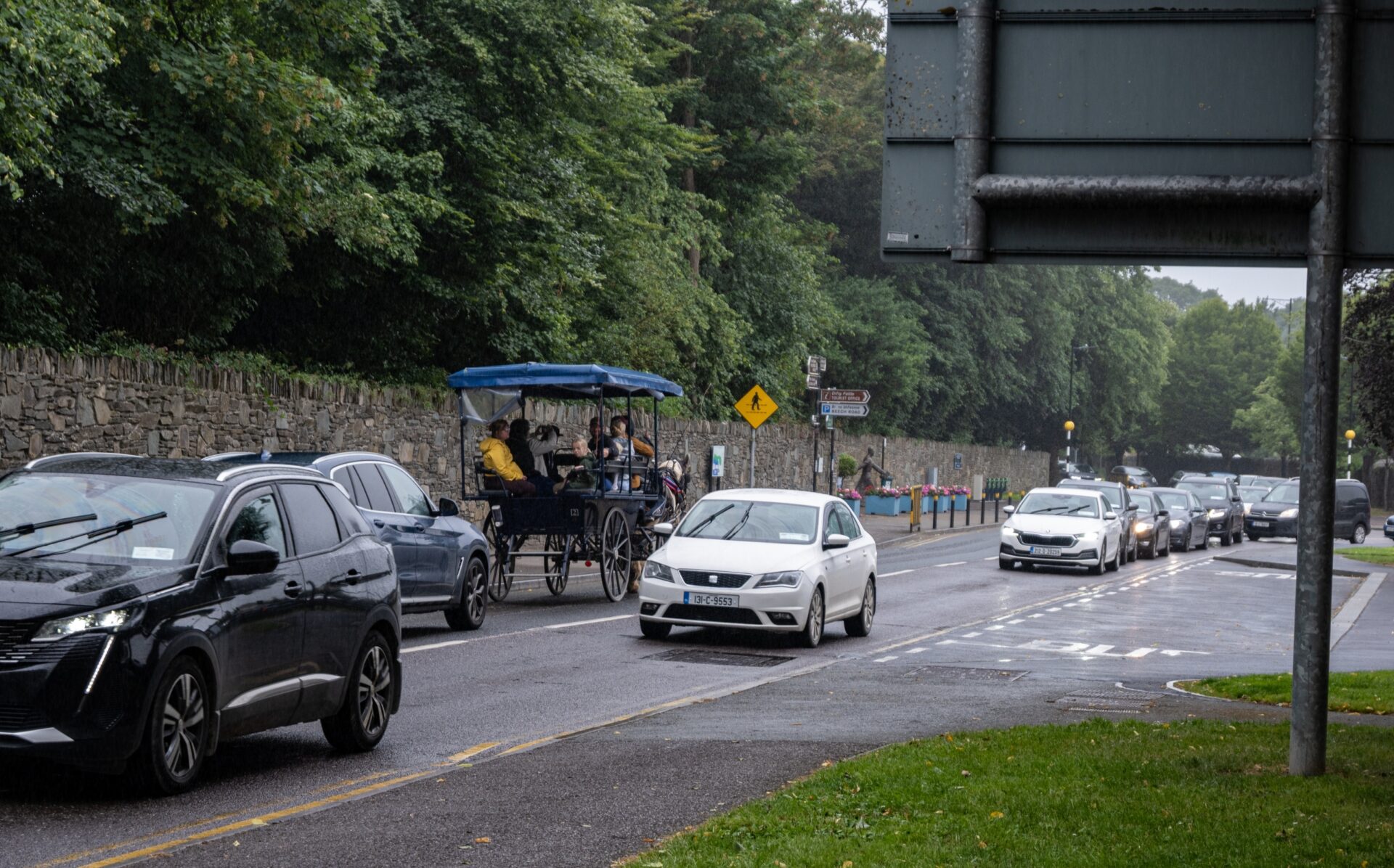
“Neighbours complained. This is a residential area,” Ms Lynch said. Traffic was the main issue, she said.

LOCAL GOLD: Terrie O’Shea, founder and owner of Killarney-based business Sorella Berries, celebrating her Gold award win at the Blas na hÉireann Irish Food Awards held in Dingle last week. Her hand-crafted chocolate covered strawberries secured the top spot in national competition, earning recognition for the local food producer on the national stage.

LOCAL GOLD:
LOCAL GOLD: Terrie O’Shea, founder and owner of Killarney-based business Sorella Berries, celebrating her Gold award win at the Blas...

Grady demands Killarney traffic review
Killarney councillor Martin Grady has called for an urgent review of traffic management across the town following severe delays along...


Killarney Pumpkin Farm returns for Halloween
The annual event is in its sixth year and caters to people of all ages. The farm is located in...


Killarney Toastmasters host special open night
Killarney Toastmasters is inviting members of the local community to an open night at the Dromhall Hotel on Muckross Road...


Killarney hotels achieve top global rankings in Readers’ Choice Awards
Killarney hotels achieve top global rankings in Readers’ Choice Awards Two leading Killarney hotels are celebrating major international accolades following...


Fossa Swimmers make a splash at County Finals
The Fossa Swim team pictured at the Tralee Sports Complex following their successful outing at the County Finals of the...


On the Ball Part 2 of the Mikey Daly Interview
Éamonn Fitzgerald EF: Killarney Celtic are invited to participate in an Irish competition. That has big financial implications for travel,...


LUKE MANGAN recently caught up with Kerry FC’s manager, Colin Healy.
He spoke to him about his careers as a player and manager. Here’s how it went: When you began your...


Home cup tie for St Paul’s could be epic
Paudie O’Connor National Cup (Round 1) Utility Trust St Paul’s v GCU Brunell Saturday 7.30pm Killarney Sports and Leisure Centre...


Chances of Kerry v Cork Munster final in 2026 decrease as Munster GAA delay seeding plan
After facing a backlash from Limerick, Clare, Waterford and Tipperary players, Munster GAA have postponed their plan to keep Cork...