
News
Marie meets: Sergeant Gearoid Keating


After 40 years of service with An Garda Síochána, I thought in any line of work, how important it is important to celebrate longevity for many reasons, not the least of which it shows the continuity to adapt, improve and motivate, to the changes brought about by time, techniques and society.
Sergeant Gearoid Keating, this week retired from the RPU (Roads Policing Unit) so I paid a visit to his home in Beaufort for a cupán tae and a chat.
Take me back to Templemore Gearoid?
“In October 1983, I entered a very different Garda Training College to what it is now. From the moment we arrived, we were Gardaí. With over 500 recruits in-house, the routine began immediately with early morning room inspections, followed by marching in full uniform and inspection on our personal hygiene and presentation at random. Lights out by 11:30 pm nightly, and returning home was only permitted three times over our six-month stint in Templemore. Sunday was the best day of the week, as after marching to mass in full uniform, we were free for the day, well at least until 11:30 pm” Gearoid laughed.
So what was in store for you on 'passing out' of Templemore?
“Store Street, that's what was in store!!! Our stationed posts were announced not one minute before we passed out. I was immediately on a bus to Dublin, a city I'd only visited once, to see my native Galway play in Croke Park in 1979.
Store Street Garda Station is one of the busiest stations in Europe and when I arrived, the AIDS, Hepatitis C, Heroin epidemic was at its peak. I arrived with two colleagues, bags in hand where the waiting area was heaving. After announcing ourselves were told to return the next day at 6 pm. Our accents gave us away and we paid three times the fair to the taxi driver who took the scenic route to our board and lodgings in Santry. It was busses from then on which didn't run after midnight so the only solution outside of bus times was to invest in a good bike, which I was knocked off of several times. On my first night on the beat, I was accompanied by senior Garda for half of that shift and the other half was up to me. It was daunting by comparison. A vast change from Gort where my mother was afraid to let me walk down the street alone, to me asking for directions back to Store Street Garda Station after I'd finished my first shift! I was naive but I learned much, fast! I had never seen a heroin addict, not even on TV because it just wouldn't be shown. Initially, the assumption was that diseases such as AIDS and Hepatitis C could be transmitted through contact and this was used to weaponise us on the beat. In those days if arresting a person, you'd have to go directly to the next available court. So if your shift finished at 6 am, the courts wouldn't open til 9 am and some days it was 1 pm before your case would be heard and you'd be back in then for 6 pm that evening. The law has since changed to 30 days to go to court thankfully”.
So what kept you in Dublin Gearoid?
“I soon met my wife Sarah. It was love at first sight. I remained in Dublin for a further 10 years until I was promoted to Sergeant in charge at Burtonport, Co. Donegal. Sarah didn't come with me as she figured a six-hour commute home from Donegal, to see her mother in Co. Kerry, that she might as well be in New York! But we did set off one weekend prior to my post, to check out my new adventure. No sat nav back then! A map and signposts that changed from English to Irish, brought us to 'An Gaeltacht' which included the beautiful Arranmore Island. I soon became a native and I found myself no longer fearful that when someone raised their hand to me it was merely a friendly gesture of greeting. It was a huge change for me to move from the inner city to rural Ireland. I loved it. It was one of my favourite posts but it was short-lived as I was excited to soon become a father to my son Matthew, so I headed south again to Ronanstown, Dublin, for a year and a half, and we welcomed my daughter Niamh during this time”.
Had you become a fan of the Dubs then?
“I suppose I had in ways. After Ronanstown, my next station was Rathmines which was a lovely middle-class area to be stationed at, but I soon relocated to DMR South (Dublin Metropolitan Region) Traffic Unit in Terrenure where I stayed for 2/3 years.
After that, in 2005, I was Kerry-bound with Sarah, Matthew & Niamh, to work in the Roads Policing Unit where I stayed for 15 years.
Is there any one story that sticks out in your mind as a Garda/Sergeant Gearoid?
“There are many Marie, but one I can share is that of a younger Gearoid on a security post outside the GPO. Randomly, a man approached me, frantically pointing at another man on a very crowded busy O'Connell Street. He repeated over again, 'He's wearing my suit'!. He was most insistent and gave distinctive markings on the suit to compare. His house had recently been burgled and robbed of his many possessions. I approached the other man with sensitivity, who like myself was clearly a country man, considering his accent alone. On producing his ID, I discovered he was known to Gardaí, so on ordering a search of his B&B, we found an abundance of jewellery and other stolen items from various robberies”.
Gearoid, have you any retirement plans ahead?
They joke that I'll take up new residence at Beaufort Golf Club, where I've thoroughly enjoyed being Captain/President/Treasurer over the past 12 years. The community has always been important to me and the Gardaí are a huge part of the community.
I'm not sure what exactly is on the cards next Marie, but it will definitely be Australia for myself & Sarah as we've never been, to visit my son Matthew, an engineer in Perth, and my daughter Niamh who is a teacher in Vietnam.
Before I left I asked Gearoid if he'd enjoyed his going away party at Reidy's over the weekend. “Wait a minute and I'll show you a video that was featured on the night of Marty Morrissey” who had no bones about recalling Gearoid's hurling fame, at an All Ireland Vocational Semi-Final, in 1982 against Tipperary, where he was reprimanded and sent off for foul play. “It was a great night Marie. The Sheahan family put in such effort to make it a most memorable night and I was surrounded by colleagues, family and friends. What more could I ask for?”

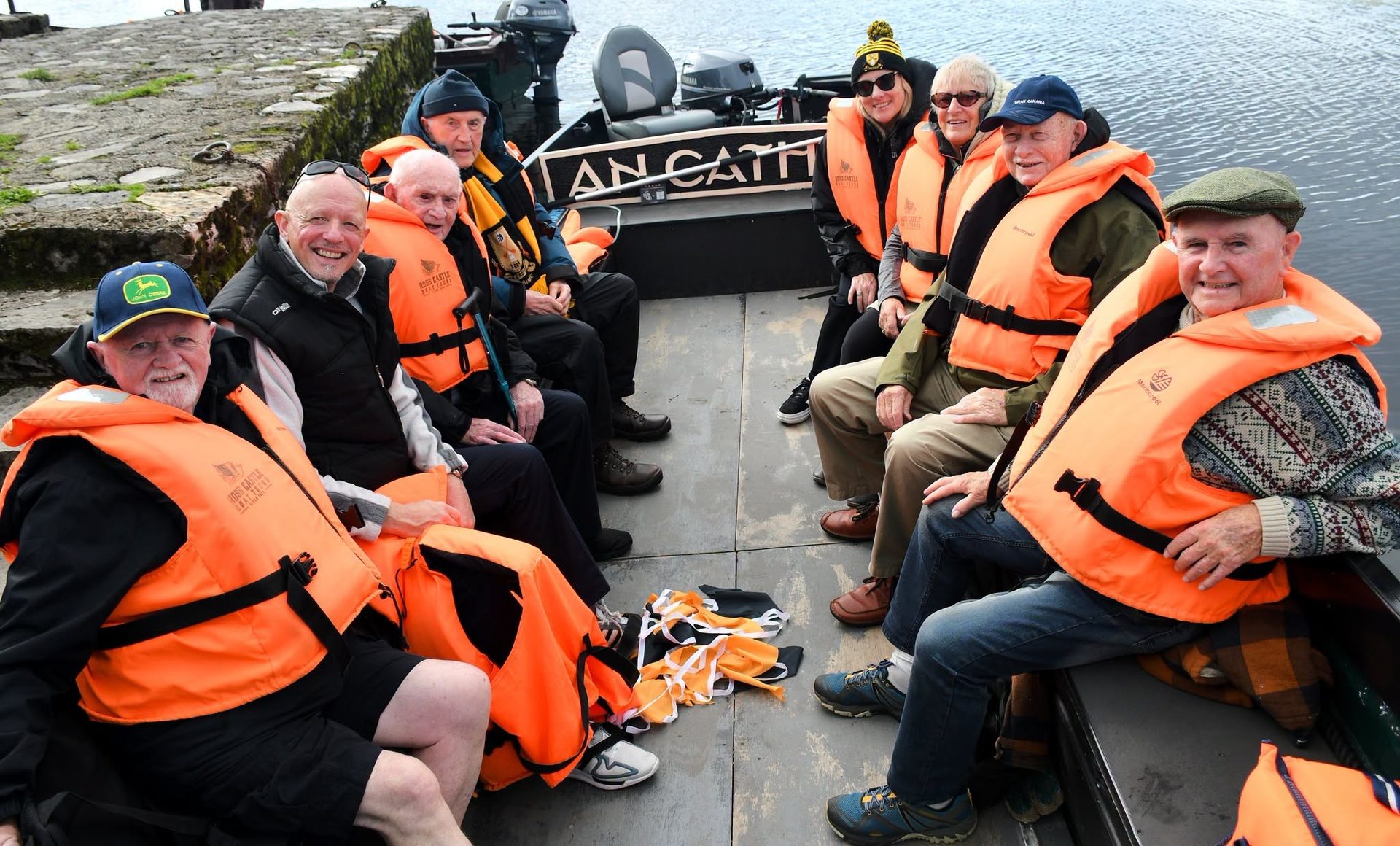
Dr Crokes stalwarts enjoy lake cruise
Dr Crokes GAA Club hosted a special day out for its senior members on Monday, this week, taking a group aged between 70 and 90 on a cruise across the Lakes of Killarney.
Organised by the Dr Crokes Healthy Club committee under its Crokes Cruisers initiative, the event was held to recognise the lifetime contribution made by long-standing members who continue to support club activities behind the scenes.
The group travelled on two vessels, including An Cathal, an open boat operated by local brothers Tony and Mike Fleming. Built to preserve the traditional Killarney lake boat style, it is the only purpose-built, fully accessible boat on the lakes, allowing members with mobility issues and wheelchair users to safely join the two-hour trip.
Following the lake tour, the party gathered on shore for coffee and refreshments provided by Derric McMahon and Harry Clifton of the Ross Castle Garden Cafe.
The initiative forms part of the club’s ongoing community work as a Gold Award winner in the GAA Healthy Club programme.

New Streetscapes murals launched at College Square
A colourful collaboration between the Kerry Local Creative Youth Partnership (LCYP) and the Architecture Kerry Festival at Kerry County Council...
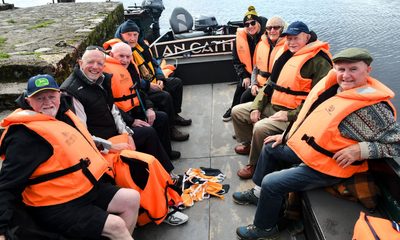

Dr Crokes stalwarts enjoy lake cruise
Dr Crokes stalwarts enjoy lake cruise Dr Crokes GAA Club hosted a special day out for its senior members on...
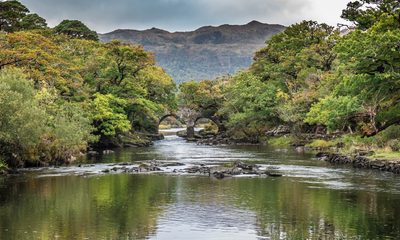

Green light for Torc to Dinis walkway
Green light for Torc Dinis walkway Planning approval has been granted for a long-awaited lakeside walkway and cycleway connecting Torc...
LOCAL GOLD:
LOCAL GOLD: Terrie O’Shea, founder and owner of Killarney-based business Sorella Berries, celebrating her Gold award win at the Blas...
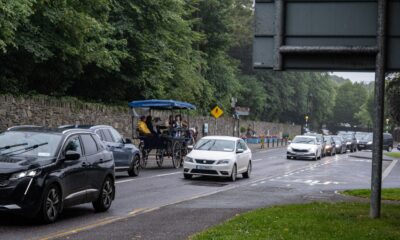

Grady demands Killarney traffic review
Killarney councillor Martin Grady has called for an urgent review of traffic management across the town following severe delays along...


Fossa Swimmers make a splash at County Finals
The Fossa Swim team pictured at the Tralee Sports Complex following their successful outing at the County Finals of the...
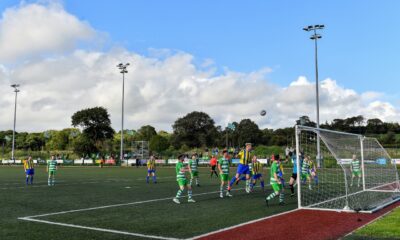

On the Ball Part 2 of the Mikey Daly Interview
Éamonn Fitzgerald EF: Killarney Celtic are invited to participate in an Irish competition. That has big financial implications for travel,...

LUKE MANGAN recently caught up with Kerry FC’s manager, Colin Healy.
He spoke to him about his careers as a player and manager. Here’s how it went: When you began your...


Home cup tie for St Paul’s could be epic
Paudie O’Connor National Cup (Round 1) Utility Trust St Paul’s v GCU Brunell Saturday 7.30pm Killarney Sports and Leisure Centre...


Chances of Kerry v Cork Munster final in 2026 decrease as Munster GAA delay seeding plan
After facing a backlash from Limerick, Clare, Waterford and Tipperary players, Munster GAA have postponed their plan to keep Cork...
