
News
KNOW YOUR RIGHTS: Contraceptive Services in Ireland


Birth control or contraception is the use of medicines, devices, or surgery to prevent pregnancy.
You can get contraception from most pharmacies in Ireland. Most contraception will need a prescription from a GP but you do not need a prescription for emergency contraception or condoms.
You can get prescriptions for contraceptive drugs and devices, as well as advice about contraception from GPs, voluntary organisations and private family planning clinics. Voluntary and private family planning clinics usually have charges but may waive them or have lower fees in certain cases.
In Budget 2023 it was announced that the age range for free contraception will be extended to include women aged 16 and aged 26 to 30, from 1 September 2023. This change requires legislation.
Is contraception free in Ireland?
You can get free contraception if you are:
A woman or person with a uterus
Aged 17 to 26
Living in Ireland
What contraception costs are free for people aged 17 to 26?
Any GP appointments about your contraception options
Contraception prescriptions from your doctor (at participating pharmacies)
Emergency contraception (the morning-after-pill)
Fitting, removal and check-ups of long-acting reversible contraception (LARCs)
Other types of contraception such as contraceptive injections, implants, IUS and IUDs (coils), the contraceptive patch and contraceptive ring
Prescriptions for combined oral contraception (the daily pill)
How do I get free contraception if I am aged 17 to 26?
You do not need a medical card.
You need to book an appointment with a GP or doctor to discuss your contraception. This appointment will be free. The GP and pharmacy will ask for your:
PPS number
Name
Date of birth
Address
Your GP will use this information to let the pharmacy know not to charge you for your free contraception prescription. You can also collect your free contraception from some family planning clinics.
Is contraception covered by my medical card?
If you have a medical card, you get free contraceptive drugs, devices and free GP services including contraceptive advice. This also includes emergency contraception. You will have to pay a prescription charge for items you get from pharmacies under the medical card scheme.
What is the situation, if I do not have a medical card?
If you do not have a medical card, and you are not eligible for the free contraception scheme (above), you will have to pay for contraception and contraceptive services. You may be able to reduce the cost of your contraception through the Drug Payment Scheme. For example, the cost of long-acting reversible contraceptives such as the IUS (hormonal coil) or IUD (copper coil). You may also be able to claim tax relief on medical expenses.
Can I get free condoms in Ireland?
Condoms are not free under the medical card or free contraception scheme.
You can get free condoms from:
Sexual health or GUM (genitourinary medicine) clinics
Some sexual health NGOs
Many third level colleges
Where can I get emergency contraception?
Emergency contraception is a back-up contraception. You can use emergency contraception up to five days after having unprotected sex, but it is more effective the sooner you take it after unprotected sex.
You can get emergency contraception tablets (sometimes called the morning-after pill) over the counter in most pharmacies without having to go to a doctor for a prescription.
You can get free emergency contraception if:
You have a medical card, or
You are a woman or person with a uterus, aged 17 to 26 and living in Ireland
You can read more about contraception services on the HSE website: www.sexualwellbeing.ie.
For anyone needing information, advice or have an advocacy issue, you can call a member of the local Citizens Information team in Kerry on 0818 07 7860, they will be happy to assist and make an appointment if necessary. The offices are staffed from Monday to Friday from 10am to 4pm. Alternatively you can email on tralee@citinfo.ie or log on to www.citizensinformation.ie for further information.

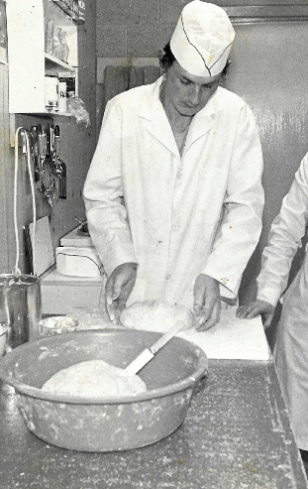
Missing Killarney chef located dead in UK
A 34-year search for missing former Killarney chef Patrick (Patsy) O’Sullivan ended following confirmation that he was located deceased in the UK.
Patsy was 35 years old when last seen by relatives in Lombardstown, County Cork, during the Easter Bank Holiday weekend in April 1992. At the time of his disappearance, he was working as a chef in Waterville, having previously worked across several Killarney hotels. He was scheduled to attend a family Christening shortly after returning from Kerry, but never arrived.
Despite decades of public appeals, including features on RTÉ’s Crimecall, his location remained unknown.
Investigations revealed that Patsy moved to the UK and changed his name to Patrick Aldridge in 1995, adopting the surname of his partner who passed away in 2022. He passed away from natural causes on July 5, 2024, living just over an hour away from his brother who also passed away in the UK last year.
Speaking on Cork’s 96FM, his brother Jerry O’Sullivan confirmed the family finally received closure following renewed efforts led by Garda PJ Roche and investigating officers. He noted that while unanswered questions remain about why Patsy started over fresh, the family is grateful for the work that brought final answers.
An Garda Síochána confirmed the missing person case is closed and thanked the public for their assistance over the years.
IN MEMORY: Patrick (Patsy) O’Sullivan, a native of North Cork who worked as a chef in Killarney and Waterville, went missing in April 1992 and was located deceased in the UK. Photo: Garda Press Office.
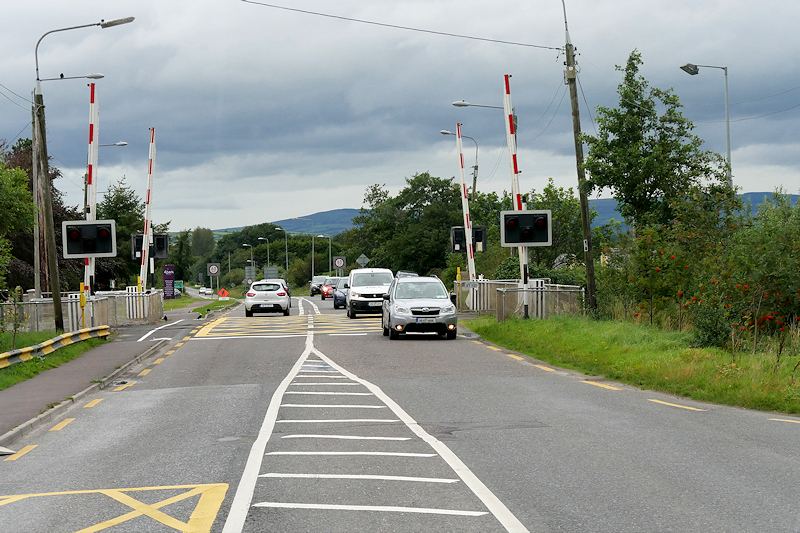
Speed cameras go live at Farranfore level crossing
An Garda Síochána, Iarnród Éireann, Transport Infrastructure Ireland, and Kerry County Council put new safety enforcement cameras into operation at the Farranfore level crossing this week.
The GoSafe system, which went live at 12pm on Tuesday, October 6, automatically detects vehicles running red lights or breaking the speed limit as they approach and cross the railway track.
Farranfore is only the second level crossing on the national rail network to feature the technology, following a trial at Merrion Gates in Dublin where driver compliance reached 99.7 per cent. Up to six crossing locations nationwide are slated to receive the units.
The system targets two distinct traffic violations. Proceeding past a stop line when red lights are flashing carries an automated Fixed Charge Notice of €80 and two penalty points, rising to five penalty points upon court conviction. Speeding violations trigger a €160 fine and three penalty points, which can increase to five points and fines up to €1,000 if prosecuted in court.
Iarnród Éireann highlighted excessive approach speed as a key safety factor at the Farranfore junction. Nationwide, 31 incidents involving vehicles or bicycles colliding with automated level crossing gates have occurred in 2026 to date, up from 23 in 2025.
Highlighting the risk to local road users, Road Safety Officer with Kerry County Council Declan Keogh said: : “The new safety cameras at Farranfore railway crossing serve as a dual-safety mechanism, for road users and for rail users and operators. I would urge all motorists to think twice before taking that chance to get across the railway line when the warning lights have activated and the barriers are lowering. All too often those chances have proved unsuccessful, with serious consequences.”
Iarnród Éireann Chief Executive Mary Considine noted that interfaces between road and rail traffic represent one of the primary safety risks on the network, adding that automated cameras encourage drivers to reduce speed and obey active signals.
Assistant Commissioner Ferry of the Garda National Roads Policing Bureau welcomed the joint venture, stating that technology-led enforcement will significantly assist in maintaining safety across shared transport networks.
50km/h zone enforced at Farranfore
Motorists traveling through Farranfore are reminded that the speed limit on the approach to and across the railway crossing is strictly 50km/h.
While automated safety systems enforce both signal compliance and vehicle speed, the 50km/h limit remains the maximum legal speed on the N22 section approaching the crossing gates.
The newly activated GoSafe cameras record vehicle speeds automatically in both directions. Any motorist detected exceeding the 50km/h threshold will automatically receive a €160 Fixed Charge Notice alongside three penalty points applied to their driving licence.
Local authorities and Gardaí advise drivers approaching Farranfore from both the Tralee and Killarney directions to adjust their driving speed early, monitor active signals, and prepare to stop safely when warning lights activate.

Missing Killarney chef located dead in UK
Missing Killarney chef located dead in UK A 34-year search for missing former Killarney chef Patrick (Patsy) O’Sullivan ended following...

Speed cameras go live at Farranfore level crossing
Speed cameras go live at Farranfore level crossing An Garda Síochána, Iarnród Éireann, Transport Infrastructure Ireland, and Kerry County Council...


Conference on historic Annals of Inisfallen
Conference on historic Annals of Inisfallen A full-day conference dedicated to one of Ireland’s most important surviving medieval manuscripts will...
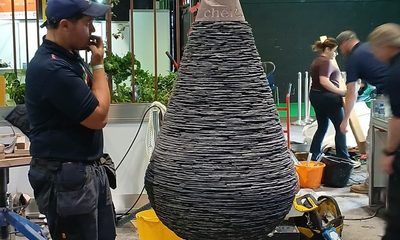

Gneeveguilla apprentice wins national stonemasonry title
Gneeveguilla apprentice wins national stonemasonry title Darragh O’Sullivan from Gneeveguilla won the overall prize in the Architectural Stonemasonry category at...


Jessica Cronin donates hair for children’s charity
Jessica Cronin donates hair for children’s charity Ten-year-old Killarney resident Jessica Cronin is set to cut and donate 12 inches...


Fossa Swimmers make a splash at County Finals
The Fossa Swim team pictured at the Tralee Sports Complex following their successful outing at the County Finals of the...
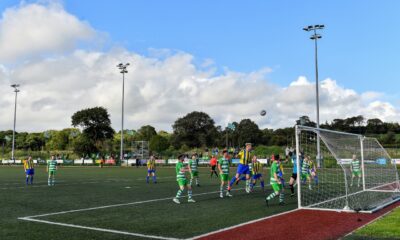

On the Ball Part 2 of the Mikey Daly Interview
Éamonn Fitzgerald EF: Killarney Celtic are invited to participate in an Irish competition. That has big financial implications for travel,...


LUKE MANGAN recently caught up with Kerry FC’s manager, Colin Healy.
He spoke to him about his careers as a player and manager. Here’s how it went: When you began your...


Home cup tie for St Paul’s could be epic
Paudie O’Connor National Cup (Round 1) Utility Trust St Paul’s v GCU Brunell Saturday 7.30pm Killarney Sports and Leisure Centre...


Chances of Kerry v Cork Munster final in 2026 decrease as Munster GAA delay seeding plan
After facing a backlash from Limerick, Clare, Waterford and Tipperary players, Munster GAA have postponed their plan to keep Cork...
