
News
Housing will never be the same


L

.
Last week I wrote about the pathetic investment options out there for Irish investors.
Despite high ongoing fees (mortgage, maintenance, insurance etc.) and the actual headache of being a landlord, it's easy to see why real estate functioned as the de facto investment portfolio for an entire generation.
Wealth creation was a rinse-and-repeat function where couples put money away until they had enough for the 'next house'. As a result, we have an economy where 70% of household wealth is tied up in real estate.
Driven by the profits it created, Ireland became obsessed with owning real estate.
But real estate as an investment won't be nearly as successful for our generation. (If you are able to get a house, that is)
All you have to do is look at the anecdotal evidence all around us to confirm this.
My parents bought the house they currently live in for 30k (pounds) 35 years ago. The house is now worth roughly 450k.
I typically despise these back-of-the-envelope calculations when It comes to property, given the endless variables and ongoing costs involved, but bear with me.
That's a gross return of 15 times the original value. Now there are upgrades, a change in currency and other adjustments to consider here, so for argument's sake, let's call it 10X.
To achieve the same level of growth over the next 35 years, you would be left paying 4,500,000 euros for what is a pretty modest house.
Sure, we will still see property prices increase over time, but the rate of growth won't be anywhere near as meaningful for one simple reason.
Interest rates.
Artificial Growth
Over the last 30 years, real economic growth has been stagnant, yet Ireland has experienced enviable nominal growth.
How did we manage it?
We created imaginary wealth.
We pushed interest rates lower and lower to stimulate economic growth.
And it worked.
After all, if you make 100k/year you can probably afford a 400k mortgage at 4%. At 2%, with the same 100k/year salary you can now take on 600k in debt.
So, were we getting richer, or was the debt just easier to afford?
Where do we go from here?
We have now squeezed interest rates as low as they can go.
The house price appreciation we have seen was justifiable because the mortgage rates on housing continued to fall in recent decades. This allowed people to take on more debt without severely impacting their ability to repay that debt.
If we go back to my parents, they were paying 14% on their mortgage. Mortgage rates are currently between 2 to 3%.
A relentless drop in interest rates gave way to higher and higher prices for houses, but interest rates are now on the floor.
The juice has been squeezed.
In fact, the trend has started to reverse, with rates expected to rise 1.5% in the first half of 2023
Be mindful that the same credit expansion cannot happen again.
How the next generation thinks about their investment options has to change.
Banks offering 0% returns for the use of your money and a housing ladder you can't get on are not your only two options.
If you need help creating your own investment portfolio, just reach out to me at mike@theislandinvestor or simply scan the QR code above.

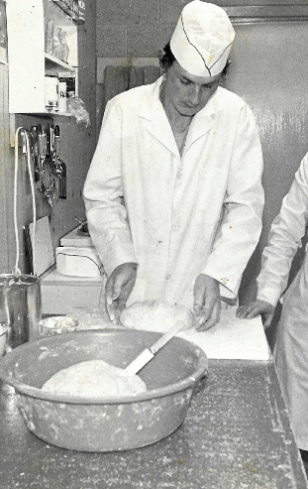
Missing Killarney chef located dead in UK
A 34-year search for missing former Killarney chef Patrick (Patsy) O’Sullivan ended following confirmation that he was located deceased in the UK.
Patsy was 35 years old when last seen by relatives in Lombardstown, County Cork, during the Easter Bank Holiday weekend in April 1992. At the time of his disappearance, he was working as a chef in Waterville, having previously worked across several Killarney hotels. He was scheduled to attend a family Christening shortly after returning from Kerry, but never arrived.
Despite decades of public appeals, including features on RTÉ’s Crimecall, his location remained unknown.
Investigations revealed that Patsy moved to the UK and changed his name to Patrick Aldridge in 1995, adopting the surname of his partner who passed away in 2022. He passed away from natural causes on July 5, 2024, living just over an hour away from his brother who also passed away in the UK last year.
Speaking on Cork’s 96FM, his brother Jerry O’Sullivan confirmed the family finally received closure following renewed efforts led by Garda PJ Roche and investigating officers. He noted that while unanswered questions remain about why Patsy started over fresh, the family is grateful for the work that brought final answers.
An Garda Síochána confirmed the missing person case is closed and thanked the public for their assistance over the years.
IN MEMORY: Patrick (Patsy) O’Sullivan, a native of North Cork who worked as a chef in Killarney and Waterville, went missing in April 1992 and was located deceased in the UK. Photo: Garda Press Office.
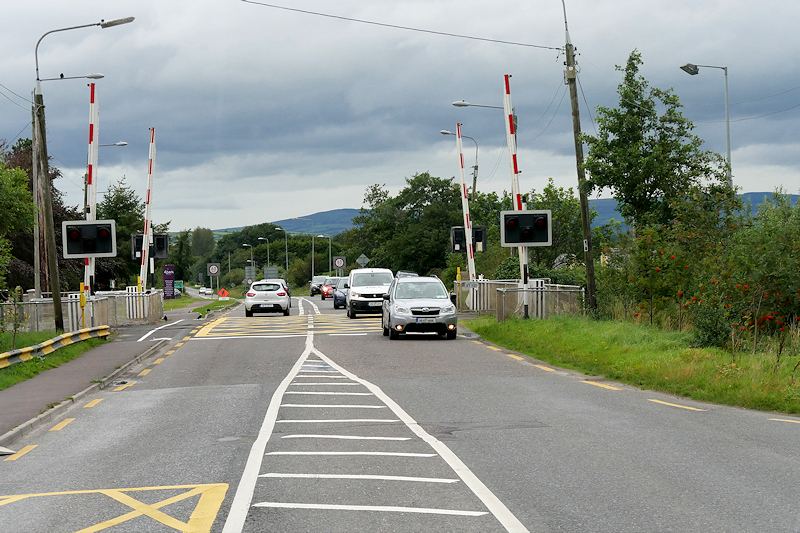
Speed cameras go live at Farranfore level crossing
An Garda Síochána, Iarnród Éireann, Transport Infrastructure Ireland, and Kerry County Council put new safety enforcement cameras into operation at the Farranfore level crossing this week.
The GoSafe system, which went live at 12pm on Tuesday, October 6, automatically detects vehicles running red lights or breaking the speed limit as they approach and cross the railway track.
Farranfore is only the second level crossing on the national rail network to feature the technology, following a trial at Merrion Gates in Dublin where driver compliance reached 99.7 per cent. Up to six crossing locations nationwide are slated to receive the units.
The system targets two distinct traffic violations. Proceeding past a stop line when red lights are flashing carries an automated Fixed Charge Notice of €80 and two penalty points, rising to five penalty points upon court conviction. Speeding violations trigger a €160 fine and three penalty points, which can increase to five points and fines up to €1,000 if prosecuted in court.
Iarnród Éireann highlighted excessive approach speed as a key safety factor at the Farranfore junction. Nationwide, 31 incidents involving vehicles or bicycles colliding with automated level crossing gates have occurred in 2026 to date, up from 23 in 2025.
Highlighting the risk to local road users, Road Safety Officer with Kerry County Council Declan Keogh said: : “The new safety cameras at Farranfore railway crossing serve as a dual-safety mechanism, for road users and for rail users and operators. I would urge all motorists to think twice before taking that chance to get across the railway line when the warning lights have activated and the barriers are lowering. All too often those chances have proved unsuccessful, with serious consequences.”
Iarnród Éireann Chief Executive Mary Considine noted that interfaces between road and rail traffic represent one of the primary safety risks on the network, adding that automated cameras encourage drivers to reduce speed and obey active signals.
Assistant Commissioner Ferry of the Garda National Roads Policing Bureau welcomed the joint venture, stating that technology-led enforcement will significantly assist in maintaining safety across shared transport networks.
50km/h zone enforced at Farranfore
Motorists traveling through Farranfore are reminded that the speed limit on the approach to and across the railway crossing is strictly 50km/h.
While automated safety systems enforce both signal compliance and vehicle speed, the 50km/h limit remains the maximum legal speed on the N22 section approaching the crossing gates.
The newly activated GoSafe cameras record vehicle speeds automatically in both directions. Any motorist detected exceeding the 50km/h threshold will automatically receive a €160 Fixed Charge Notice alongside three penalty points applied to their driving licence.
Local authorities and Gardaí advise drivers approaching Farranfore from both the Tralee and Killarney directions to adjust their driving speed early, monitor active signals, and prepare to stop safely when warning lights activate.

Missing Killarney chef located dead in UK
Missing Killarney chef located dead in UK A 34-year search for missing former Killarney chef Patrick (Patsy) O’Sullivan ended following...

Speed cameras go live at Farranfore level crossing
Speed cameras go live at Farranfore level crossing An Garda Síochána, Iarnród Éireann, Transport Infrastructure Ireland, and Kerry County Council...


Conference on historic Annals of Inisfallen
Conference on historic Annals of Inisfallen A full-day conference dedicated to one of Ireland’s most important surviving medieval manuscripts will...
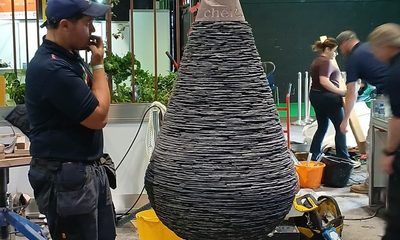

Gneeveguilla apprentice wins national stonemasonry title
Gneeveguilla apprentice wins national stonemasonry title Darragh O’Sullivan from Gneeveguilla won the overall prize in the Architectural Stonemasonry category at...


Jessica Cronin donates hair for children’s charity
Jessica Cronin donates hair for children’s charity Ten-year-old Killarney resident Jessica Cronin is set to cut and donate 12 inches...
