News
Hilarious Disney play gets Kerry premier in Killarney

PLAY: Ciaran McCarthy, Stephen Black, James Daly, Pam Moylan and Indre Urbanaviciute who are performing ‘And They Used To Star In Movies’ in Courtney's Bar. Photo: Mikey Starvrovsky
By Michelle Crean
It was such an outstanding performance that a local group plan to feature their hilarious play in Killarney again next week.
A small group of Killarney people came together on Saturday and Sunday night upstairs in Courtney’s bar for ‘And They Used To Star In Movies’ – a play by Campbell Black, which was banned in America 40 years ago.
Cast members Stephen Black, aka Mickey Mouse, and Ciaran McCarthy aka Donald Duck, Indre Urbanaviciute, James Daly and Mike McSweeney were outstanding.
The play was written in 1974 and produced in London in 1976 after being banned in America following protests by the Disney Corporation, Ciaran McCarthy told the Killarney Advertiser. “Over 40 years later the Kerry premiere took place last Friday night in Courtney’s Bar, Killarney and was a huge success with not a spare seat to be had.”
The play centres round a washed-up Mickey Mouse who finds solace in a bottle and yearns for the glory days of the past. His relationship with his ex, the promiscuous Minnie Mouse, is complicated to say the least. Mickey also finds it difficult to conceal his jealousy for his former colleague, the substance abusing Donald Duck, whose success threading the boards on Broadway is driving him bonkers.
“The 40 minute play was hilarious, clever, poignant and knee deep in satire with the actors giving a great account of themselves,” Ciaran said.
“Another three dates have been added on April 26, 27 and 28, and limited tickets are available from Courtney’s Bar. It’s free entry and starts at 7pm sharp. This is a show not to be missed.”

LOCAL GOLD: Terrie O’Shea, founder and owner of Killarney-based business Sorella Berries, celebrating her Gold award win at the Blas na hÉireann Irish Food Awards held in Dingle last week. Her hand-crafted chocolate covered strawberries secured the top spot in national competition, earning recognition for the local food producer on the national stage.

LOCAL GOLD:
LOCAL GOLD: Terrie O’Shea, founder and owner of Killarney-based business Sorella Berries, celebrating her Gold award win at the Blas...


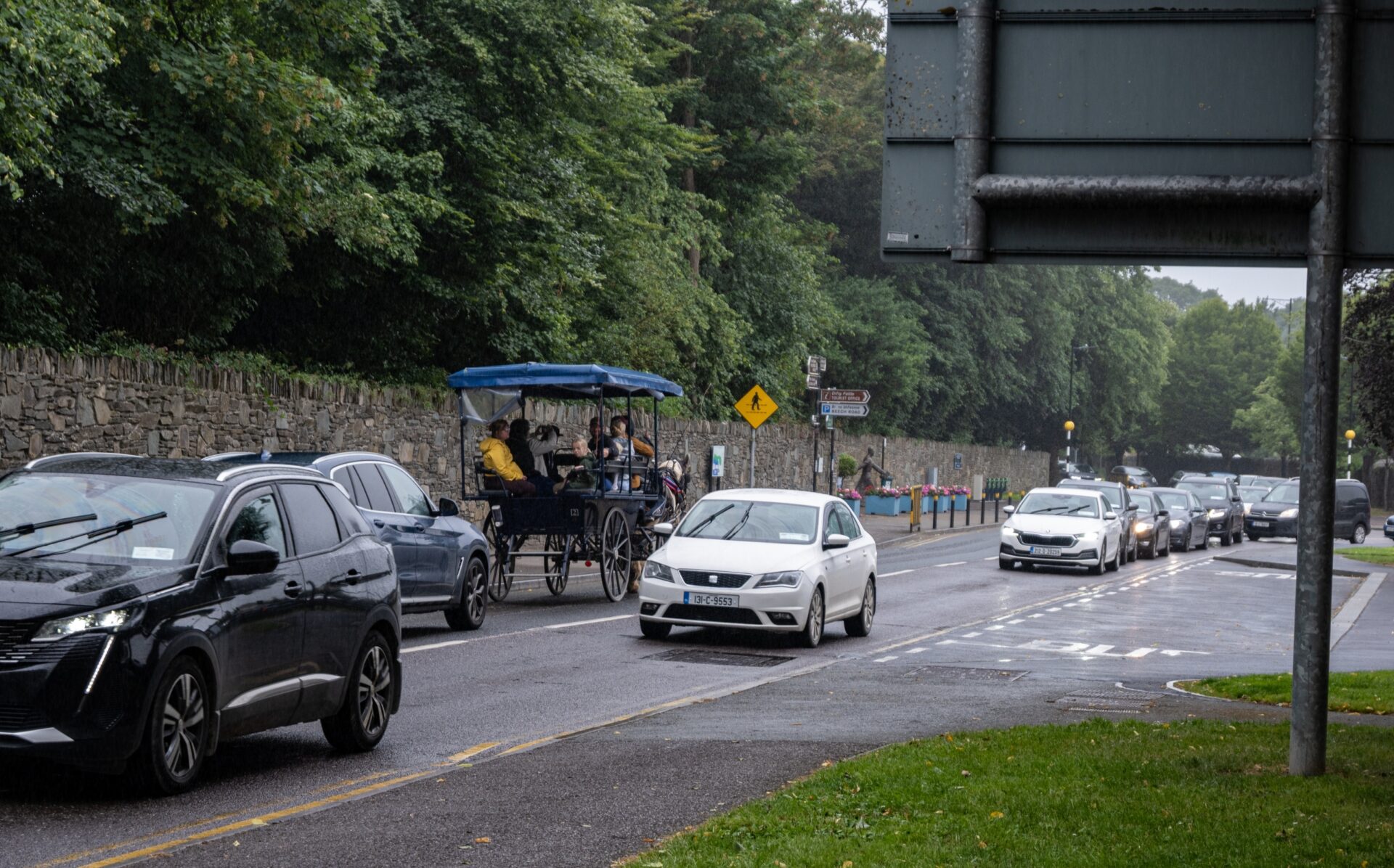
Grady demands Killarney traffic review
Killarney councillor Martin Grady has called for an urgent review of traffic management across the town following severe delays along...

Killarney Pumpkin Farm returns for Halloween
The annual event is in its sixth year and caters to people of all ages. The farm is located in...


Killarney Toastmasters host special open night
Killarney Toastmasters is inviting members of the local community to an open night at the Dromhall Hotel on Muckross Road...


Killarney hotels achieve top global rankings in Readers’ Choice Awards
Killarney hotels achieve top global rankings in Readers’ Choice Awards Two leading Killarney hotels are celebrating major international accolades following...

Fossa Swimmers make a splash at County Finals
The Fossa Swim team pictured at the Tralee Sports Complex following their successful outing at the County Finals of the...

On the Ball Part 2 of the Mikey Daly Interview
Éamonn Fitzgerald EF: Killarney Celtic are invited to participate in an Irish competition. That has big financial implications for travel,...


LUKE MANGAN recently caught up with Kerry FC’s manager, Colin Healy.
He spoke to him about his careers as a player and manager. Here’s how it went: When you began your...


Home cup tie for St Paul’s could be epic
Paudie O’Connor National Cup (Round 1) Utility Trust St Paul’s v GCU Brunell Saturday 7.30pm Killarney Sports and Leisure Centre...


Chances of Kerry v Cork Munster final in 2026 decrease as Munster GAA delay seeding plan
After facing a backlash from Limerick, Clare, Waterford and Tipperary players, Munster GAA have postponed their plan to keep Cork...