Connect with us

News

From silence to connection: Neil Kelders returns to Killarney to give back and talk mental health

Published

on

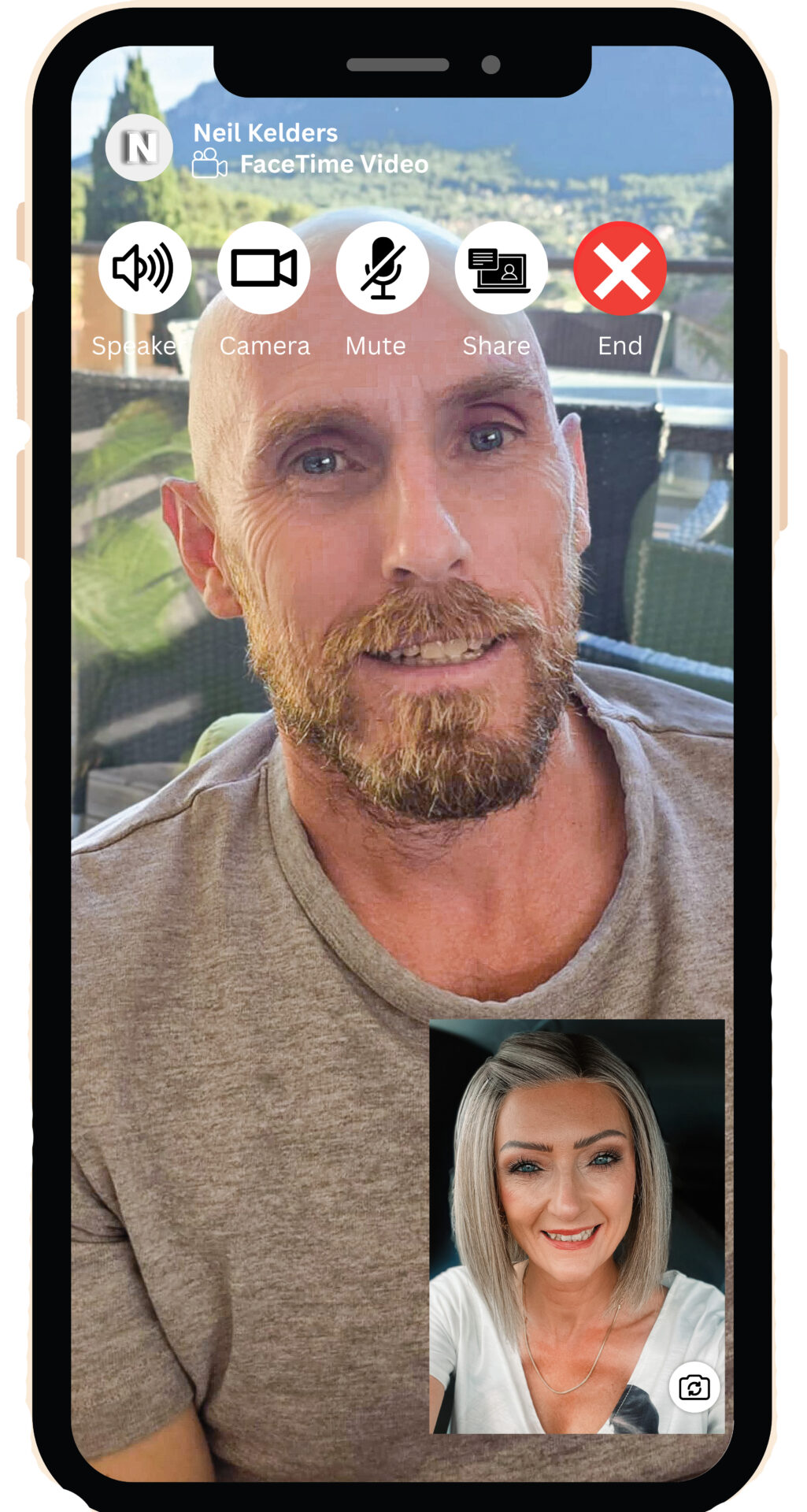
When I first moved from The Premier to The Kingdom, Neil Kelders was the familiar face behind the bar at the Tatler Jack. I thought I knew him, but I didn’t really know him at all. His story, like so many untold stories in our community, is a powerful reminder of why mental health matters, and why checking in on friends and family is so crucial.

Mental Health Week took place in the second week of October, and although this feature comes a little late, the timing is still perfect. Neil is giving back to his hometown, hosting a free parent workshop on raising resilient teens.  It takes place at Killarney Racecourse on Thursday, November 13 at 7pm. His mission is simple but profound: honest conversation can change everything. No tea, no biscuits, just FaceTime and conversation. 

I sat down with Neil to talk about his upcoming workshop.

Neil, the evening at Killarney Racecourse is a beautiful gesture. What inspired you to host it here in your hometown?

My first mental-health talk was in Killarney ten years ago. This town shaped me, so coming back isn’t nostalgic, it’s needed. Parents are still afraid, teens overwhelmed, families unsure how to bridge the gap. Change starts at home with small, human actions. The Racecourse felt right, full of life and community. When I mentioned it to Ollie, he said yes before I finished. That’s Killarney, people who show up.

You’ve said this event is about “giving back.” What does that mean to you personally?

I feel it’s my duty. I hid my struggles for twenty years. Learning to manage them gave me a responsibility to share what helps. When I told my story, messages came from parents, teens, strangers. Honesty opens doors. My mental health is strong, but I still have hard days. Recovery isn’t perfection, it’s showing what’s possible.

You’ve invited clubs, schools, and groups across all divides. What do you hope people take away?

Mental health touches every home, club, school and group. We’ve all got our boxes. Parent, coach, teacher, teen, but none of us has been here before. We’re learning as we go. I want people to leave lighter and more connected, reminded that honest conversations change everything.

You’ve built a reputation for helping people find a way forward using what actually works. What does that look like in practice?

“What works” means tools you can use today, not theory for tomorrow.

In coaching and workshops, that can mean pausing before reacting or small resets that steady a home. It’s not about fixing anyone, it’s helping them move forward with calm, clarity, and courage.

Can you share a bit about your journey, how you came to this line of work?

I was the class clown, always “grand.” I wasn’t. I lived with depression, anxiety, and suicidal thoughts for two decades. The first person I confided in was my sister-in-law. I felt a weight lifted but it was only the start. You don’t talk once, and it’s gone, you keep talking. At Pieta House, two counsellors didn’t fit; the third did. She challenged me, then said: “Someone else might be a better fit now.” That honesty changed me. Everyone had helped, but I still had to take responsibility. That was the turning point, stop waiting to be rescued, start rebuilding.

Your book The Other Side has resonated widely. What message do you hope people carry?

Getting through tough times isn’t a straight line. It’s messy, human, and possible. You don’t need it all figured out, just do something. The book shows what rebuilding really looks like: slip-ups, small wins, learning to live again. Change will start when you act.

You’ve worked with parents, teenagers, and organisations. What’s one common challenge you see?

Disconnection. Parents fear saying the wrong thing, teenagers think no one understands, adults pretend they’re fine. When people don’t feel heard, they stop talking. My work breaks that silence, listening without fixing, supporting without fear. When people feel safe to be real, things change.

How do you keep mental health relatable, especially for teens?

By being real. Teens spot fake instantly. I don’t arrive with answers, we find them together. They help decide what’s shared with parents; that trust matters. We talk about goals, values, and what they want from life. Sometimes it’s “burn your thoughts” or a quick reset; sometimes it’s just listening. Once they see they don’t have to be perfect, things shift.

What would you say to parents who feel guilty or unsure?

You’re not meant to have all the answers. Keep showing up, even when you don’t know how. Your job isn’t to fix your teenage child, it’s to help them feel safe enough to talk. You can’t do that if you’re running on empty. A walk, a pause, five minutes of breathing, it helps. Presence beats perfection.

For teenagers, what’s one message you hope they’ll hear?

You’re not broken. You’re feeling more than you can handle right now, that’s being human. When I was your age, I hid for years. If you’ve spoken up, even once, you’re already twenty years ahead of me. What you’re feeling can seem endless, but it isn’t. There’s more ahead. Calm, laughter, and moments you can’t imagine yet. Keep moving, and don’t do it alone.

Are we getting better at talking about mental health?

We’re talking more but not always listening better. Awareness is great but it isn’t action. We quote “one in four,” but I could never have been a stat, I wore the mask too well. Others are hiding too. We have more language now, but not always the safety to use it. Stigma hasn’t gone; it’s changed shape. Awareness matters; connection changes lives. If someone leaves feeling hopeful but unsure where to start, what’s one step they can take? Start small. Check in with one person tomorrow. Ask, “How are you, really?” and mean it. Don’t fix, show up.

What does this community mean to you?

Killarney shaped me, the good and the hard. It’s where I stayed silent and where I found my voice again. We’re not meant to do life alone. Connection holds us together.

If people remember one thing from the evening, what would you love it to be?

Things can get better. Not perfect, just better. If you change nothing, nothing changes. Do something.

What’s next for you?

More of this. Real conversations that make a difference. I’m continuing parent-teen coaching and community workshops across Ireland, the UK, and Canada, and working with companies to build workplaces where people can speak up safely. The focus now is partnerships and reach, so families get help before crisis. I’m really looking forward to next Thursday night at the Racecourse.  Its free and all are welcome.  Be sure to register at events.neilkelders.com.  It’s not about perfection or having all the answers. It’s about connection, courage, and showing up. Join me, and let’s start together.
Advertisement

News

Felicity’s Summer in Killarney Week 13

Published

on

By

Felicity’s Summer in Killarney
Week 13


A few weeks later and the end of summer was quickly approaching. Auntie Sheila and Jack insisted that they needed to spend a nice day out in town to make up for all the chaos they’d had on the night of the Kerry v Cork game.

Auntie Sheila was looking at things to do. “The Riverdance is on at the Gleneagle Arena, how about that? And we’ll need dinner too of course, but I’d like to take you to Salvador’s.” Jack and Felicity both agreed that it would be lovely.

On the day, Auntie Sheila brought Felicity and Jack to out for dinner. Felicity had never been into Salvador’s before. It was very atmospheric – warm and rustic.

The trio were laughing away when Auntie Sheila glanced at her watch. “Oh shoot, we’ve got to go guys otherwise we’ll miss the start of the show!”

They quickly paid for their meal and hustled down towards the shuttle stop. They got there just as the last passenger was boarding. Auntie Sheila fished out coins from her purse for the bus driver, and he nodded them along.

Felicity collapsed into the aisle seat next to Jack, with Auntie Sheila on her other side. She giggled at the frazzled state they were all in. Auntie Sheila’s hair had exploded into a frizz when met with the rush, and Jack looked like he had just woken up despite having been awake since the early morning.

They got to the Arena and quietly found their seats. The performers were entrancing; Felicity could hardly look away.

After the show, which was mercifully jerky-free, the trio trudged back to the shuttle bus. The crowd was far larger than when they arrived. It was crowded on board, but they managed to squeeze into the first shuttle headed back into town.

Felicity let herself get lost in the hubbub on the bus. She wondered if she would have time for things like this once she started college. She refused to let herself hope that her Garda apprenticeship application would be accepted.

Felicity stepped off of the bus with the rest of the crowd, mind still wandering. She waited for Jack and Auntie Sheila to rejoin her. “I’d love to go for something sweet right about now.”

Jack looked pensive. “How about Murphy’s Ice Cream? They’re always open late in summer.”

Felicity questioned the validity of it still being summer, given that it was September. She was going home at the start of next week. No small part of her dreaded the return to Dublin. But she would enjoy Killarney whilst she was here, not dwell on the future.

The group trundled down Main Street towards Murphy’s. As expected, the lights inside were on; warm and welcoming. They each sampled a few flavours before settling on what they wanted.

They milled around Murphy’s, at a bit of a loss about what to do next. “We could catch some live music,” Jack suggested. They jumped on the idea with vigour and Auntie Sheila suggested Buckley’s in The Arbutus.

And what a time it was! The evening was filled with laughter, joy and music, a far sight from that night not long ago when Anthony was still a looming threat. But that had passed. There would be other times in life to worry but now was not one of them.

Excursion
Felicity had been anxiously anticipating her Leaving Cert exam results for weeks. It had eventually boiled down to the final couple of hours, and she couldn’t help but wonder if this was all for naught.

She didn’t know what she wanted to do. She had applied for a variety of courses as the guidance councillors advised, but all she wanted was for her Garda apprenticeship application to be accepted. Felicity didn’t let herself think about what would happen if she succeeded, but nonetheless there was a small flame of hope that would not be extinguished.

The clock passed 10am. Felicity hurriedly refreshed her browser and signs into her CAO portal. Oh my gosh. She had done it. She had gotten what she needed for her first choice of courses. Not that it would matter if she got her apprenticeship, but she didn’t want too many eggs in one basket. Now she only had to wait for offers and the decision about her apprenticeship application.

To celebrate, Felicity called Jack and they decided they would go out to the National Park. Jack wanted to take her over to Avoca, but those plans were dashed when they saw a string of emergency service vehicles – mainly fire engines – rushing up the winding road.

There must have been another fire. The heatwave had been dragged out for long enough, for almost a month now. Even on the days when there was cloud it was unbearably hot and humid. Too hot to think, that’s for certain.

Instead, Jack turned around at Ladies View and they went to Muckross. Jack found a blanket in the boot of the car, and deciding that would be enough they ventured out to Dundag beach. It was slightly cooler under the shade by the beach, but it was still too warm to function.

Felicity was far happier to be here enjoying nature rather than out in town drinking, especially after the match day and Anthony’s arrest. It was a great relief that he had been arrested, but she still looked over her shoulder for him or the men in black whenever she was out of the house.

Here on Dundag it was far easier to relax than anywhere else. They had a picnic blanket, some cold drinks and what felt like all the time in the world.

Attachments

Continue Reading

News

MARIE MEETS: SEAN COFFEY

Published

on

By

MARIE MEETS


Words by Marie Carroll O’Sullivan ‘

Photos by Marie Carroll O’Sullivan


Five years, one great privilege


From student to Principal, Sean Coffey reflects on 15 years at the helm of St Brendan’s College: the people, the traditions, the challenges and the €37 million transformation that will carry his beloved Sem into the future.
Say the name Sean Coffey and, depending on your age, you might think of St Brendan’s College, The Sem, Muckross Rowing Club, Gaelic football, music, community or simply a man who somehow seems to know everybody.
And, as it turns out, their sons too.
When I went to meet Sean Coffey, retired Principal of St Brendan’s College, I had already been given a rather extraordinary piece of information by my neighbour, who had once subbed at the school.
“Sean Coffey knows the name of every student in that school,” she told me.
Every student?
There are 872 of them, I thought.
So naturally, that was the first thing I asked him: how on earth do you know the name of 872 students?
“I’d know most of them,” Sean smiled.
And that simple answer perhaps tells you more about Sean’s approach to education than any list of achievements ever could.
He recalled working with Sr Bernadette Costello in 1991.
“I walked into her office one day and there she was with pictures of each of the first-year students, memorising their names and details.”
There was a lesson in that.
“Know the names and you will gain the relationship, which is of huge importance. I’ve encouraged all my staff to be relational to students always.”
It is a philosophy that has stayed with him throughout his 15 years at St Brendan’s College, where he became Principal in 2011.
The Sem is 166 years old. Sean himself graduated from its hallowed corridors in 1986, following in the footsteps of his father and brothers, and his son later graduated from the same school.
So when Sean became Principal, he was not simply walking into a workplace.
He was walking back through a door he had first entered as a student.
And what a door it has been.
Today, St Brendan’s is home to students from at least 36 different nationalities, alongside five special classes, reflecting the increasingly diverse community that is Killarney.
You’ve always spoken about relationships. Does that extend to parents too?
“Absolutely. This is so important.”
The traditional parent-teacher meeting takes on a slightly more inclusive form at The Sem, with students joining their parents and teachers around the table.
Because, in Sean’s view, education is not something simply imposed on a young person; it is something intentionally created around them.
And then there is the building itself.
We chatted in the school’s newly refurbished waiting room, surrounded by plans of St Brendan’s dating back to the 1930s.
Sean pointed out the shiny new frames containing the plans for what is to come.
The €37 million refurbishment and rebuilding project is transforming the historic school, with some of the existing single-storey buildings set to rise to three storeys.
So, when will it all be finished?
Sean laughed: “How long is a piece of string?”
There was a pause.
“2028!”
I suspect that answer came with just the right amount of Principal’s diplomatic optimism.
Although Sean may have retired from the Principal’s office, he certainly has not retired from education.
His new role is School Management Advisor with GMB, supporting the voluntary school sector in Ireland. He will work with serving Principals, providing support, training, upskilling and CPD, while drawing on the considerable experience of those around him.
And how does it feel being the youngest one in the room?
Sean laughed again: “There are lots of experienced, knowledgeable voices… and they picked me!”
Based in Dublin, the new role will take him away for around four nights a month, but it is clear that Sean still has plenty to give to the world of education.
Looking back over 15 years as Principal, what stands out as the highlight?
“There’s been a few,” he said, “but I think the graduation Mass this year was very special.”
With 160 Leaving Certificate students graduating, the school chapel, with its capacity of just 300, could not accommodate the occasion.
So the celebration moved to St Mary’s Cathedral.
“Teachers past and present attended. It’s a magnificent space. The level of engagement, the quality of the liturgy, the outstanding choir… the best we’ve ever had.”
But Sean’s pride in The Sem stretches far beyond the classroom.
“I am also so very proud of the culture of music and dance, the traditions and the Gaelic games and extra-curricular activities the teachers volunteer to support at St Brendan’s.”
And it is not just Gaelic games.
There is Olympic handball, rowing, climbing and a remarkable range of opportunities for students to discover where their talents might lie.
Sport, for Sean, is not simply about winning.
It is about belonging.
That spirit was certainly evident when The Sem won the Hogan Cup in 2016 and then retained it in 2017, back-to-back All-Ireland Senior A football titles, bringing the school’s total to four.
But perhaps Sean’s greatest satisfaction is seeing the school grow in ways that cannot be measured on a scoreboard.
“I am extremely proud of the growth and inclusion of all students.”
He describes Killarney as an “amazing multi-ethnic town” and believes the town’s three secondary schools reflect that diversity.
“And we have furthered our inclusion into special classes. We have five.”
For Sean, that inclusion benefits everyone.
“The inclusion of these special classes is vital, not only in supporting the students who attend them, but also in enriching the wider college community, including the teachers and students, who learn and interact alongside them.”
Then there is another institution close to Sean’s heart: Muckross Rowing Club.
He is part of its story across four generations.
“As are most of the volunteers at the club,” he said, before joking that he was a “child prodigy”.
He became a coach in 1991, and his pride in the club is obvious.
What he loves is the breadth of opportunity it offers young people, from those taking their first tentative strokes on the water right through to world championship and Olympic standard rowing.
And perhaps that brings us back to the heart of Sean’s philosophy: give young people opportunity, give them respect, and, above all, know them.
What do you think people sometimes get wrong about young people?
“Young people can sometimes get a bad rep, but the reality is that they are far more mature than what we were. They’ve so much more to navigate.”
“I think we should give our young people respect and realise how much more complex their world is.”
Those words feel particularly fitting coming from someone who spent 15 years watching generations of teenagers arrive through The Sem gates and eventually walk back out into the world.
Sean also looks back with pride on how students and staff navigated the extraordinary years of Covid.
They worked through restrictions, disruption and uncertainty, doing their best to keep education moving until, eventually, “normal service” resumed.
And when Sean talks about Killarney, you get the feeling that retirement was never going to mean stepping away.
“I love Killarney deeply.”
He speaks of being Principal in a part of the town surrounded by heritage: the Presbytery, St Mary’s Cathedral, the Presentation Monastery and, across the road, Killarney National Park.
“And I got to have an office in the middle of it all. What a privilege.”
He talks about Killarney’s “get up and go community”, the energy of the Meitheal and the countless festivals and events powered by people who simply give their time because they believe in their town.
This year, more than 500 people took part in an orienteering event on the school grounds, bringing that familiar community energy right through the gates of The Sem.
For Sean, it is what makes Killarney special.
And when I asked him who he would like to thank, his answer was as much about others as it was about himself.
“The community that supported St Brendan’s for generations.”
“The Board of Management for their time and expertise voluntarily.”
“The staff past and present for their unstinting work with young people in our care.”
“And to the thousands of students who passed these doors for their energy, fun and integrity.”
As I left the waiting room, with its old plans on the walls and its shiny new plans pointing towards the future, I thanked Sean for his time.
“I’m delighted, Marie, with my one last blast in the Advertiser, and sure isn’t it any excuse to come back through these doors again.”
Because for a man who spent 15 years at the head of one of Killarney’s most treasured institutions, a school he once attended himself, three generations now through the same doors, retirement does not really sound like an ending. It sounds more like another chapter.
And if Sean has taught generations of students anything, it is that relationships matter, communities matter, and that education is about far more than what happens inside a classroom. It is about belonging, opportunity, encouragement and giving young people the confidence to find their place in the world. And perhaps that is the greatest legacy of all.

Continue Reading

Last News

Sport