News
Opinion: Football at this level is a job and players need time off

Y
You have to admire the O’Donoghue Cup. It just refuses to quit.
After the cancellation of last Sunday’s final due to adverse weather conditions, the season will now end for Legion and Dr Crokes today, the 15th of December.
I’ll stop short of blaming the GAA or the East Kerry Board for Storm Atiyah but it’s hard not be frustrated at this stage. Just like last year, and the year before, our footballers are not going to get a proper break before the next season kicks off again in January.
Legion actually began training for the 2019 season in December of 2018 so they’ve been on the road for 12 full months. As for Dr Crokes, due to their involvement in the 2018/19 Munster and All-Ireland Club Championships (which ran until March 17), they basically never stopped training at all.
This, to my mind, represents a major player welfare issue and I find it incredible that in this modern era of heightened sensitivity and awareness when it comes to physical and mental health, the GAA think that it’s acceptable for players to be playing and training for 12 months of the year.
EAST KERRY BOARD
Last year I spoke to a number of players about the O’Donoghue Cup and how it was being run off and, to a man, they were all quite critical of the board. Personally I would agree that the staging of our district competitions could be improved upon. Actually, I would argue that one of the competitions, the Super League, shouldn’t be staged at all.
Dr Crokes’ participation in the Munster Club Championship is often cited as the main impediment to completing the East Kerry Championship in a timely fashion. This year, the Crokes didn’t qualify. Yet here we are again, deep into December, and little has changed.
I suppose it’s easy to direct our ire at the East Kerry Board because right now it’s their competition that we’re waiting on, but that wouldn’t be right.
There’s a far bigger picture here. The current GAA schedule, at both intercounty and club level, is an absolute mess. There are simply too many competitions and the only way of fixing it is by adopting a blank canvas approach to the entire schedule. Sadly, the GAA seem to disagree.
TWEET
I put up a tweet last Sunday saying: “Legion v Dr Crokes has been called off ‘in the interest of player safety’. If the GAA really cared about player welfare there wouldn't be football in December in the first place.”
If you were to go through the likes the tweet got you’d recognise a lot of the names. Crokes players, Legion players, club players from up and down the country, current Kerry players, recently retired Kerry players; GAA stakeholders who understand the ways in which the current schedule affects the lives of footballers, because it does or has affected their lives for years.
And then you look at those who tend to take a dim view of comments like mine. It’s almost exclusively non-players; one gets the impression that many of these people would be delighted if the final of the East Kerry Championship took place on Christmas Day. Wouldn’t that be a nice tradition?
Of course, everyone is entitled to their opinion, but is it possible that the players know what they’re talking about, seeing as how they’re the ones actually dealing with the problem year in, year out?
Looking from the outside, as officers, ex-players and supporters are, it is perhaps difficult to appreciate how hard it is to be a Gaelic footballer in 2019. It’s not a pastime.
These days, players are expected to prepare as if they were operating at a professional level. They have to adapt their diets. They have to do private gym sessions. They have to abstain from alcohol. They’re expected to put their team above all other considerations. As one coach told us, “you should be making excuses to come to training, not excuses to miss it”.
And all of these demands exist before a backdrop of fixture chaos, particularly at club level where you can go weeks and weeks without playing games, or even knowing when your next game might be.
RESPONSIBILITIES
Casual observers tend to picture your standard footballer as a young guy without a care in the world but players have girlfriends, wives, kids, full-time jobs, college commitments (often in a different county) and countless additional responsibilities that have to be managed around their other job: being a Gaelic footballer.
And make no mistake, playing football at the level that we’re talking about is not a hobby. It’s a job. For many players, it’s more important than their nine-to-five, and it has a greater impact on their mental wellbeing.
When things go to plan, sport has the power to elevate and energise. Unfortunately things don’t always go to plan and when that happens, sport also has the power to deflate and depress. The psychological strain that sport puts on players is far greater than many people realise. And this is before you factor in the physical demands, which are also intense.
When you give yourself to a sport and to a team, you really do give all of yourself. Again, it’s not a pastime. It’s a job. And a hard one at that.
Is it unreasonable to ask for some time off?
Pic: Séamus Healy.

Green light for Torc Dinis walkway
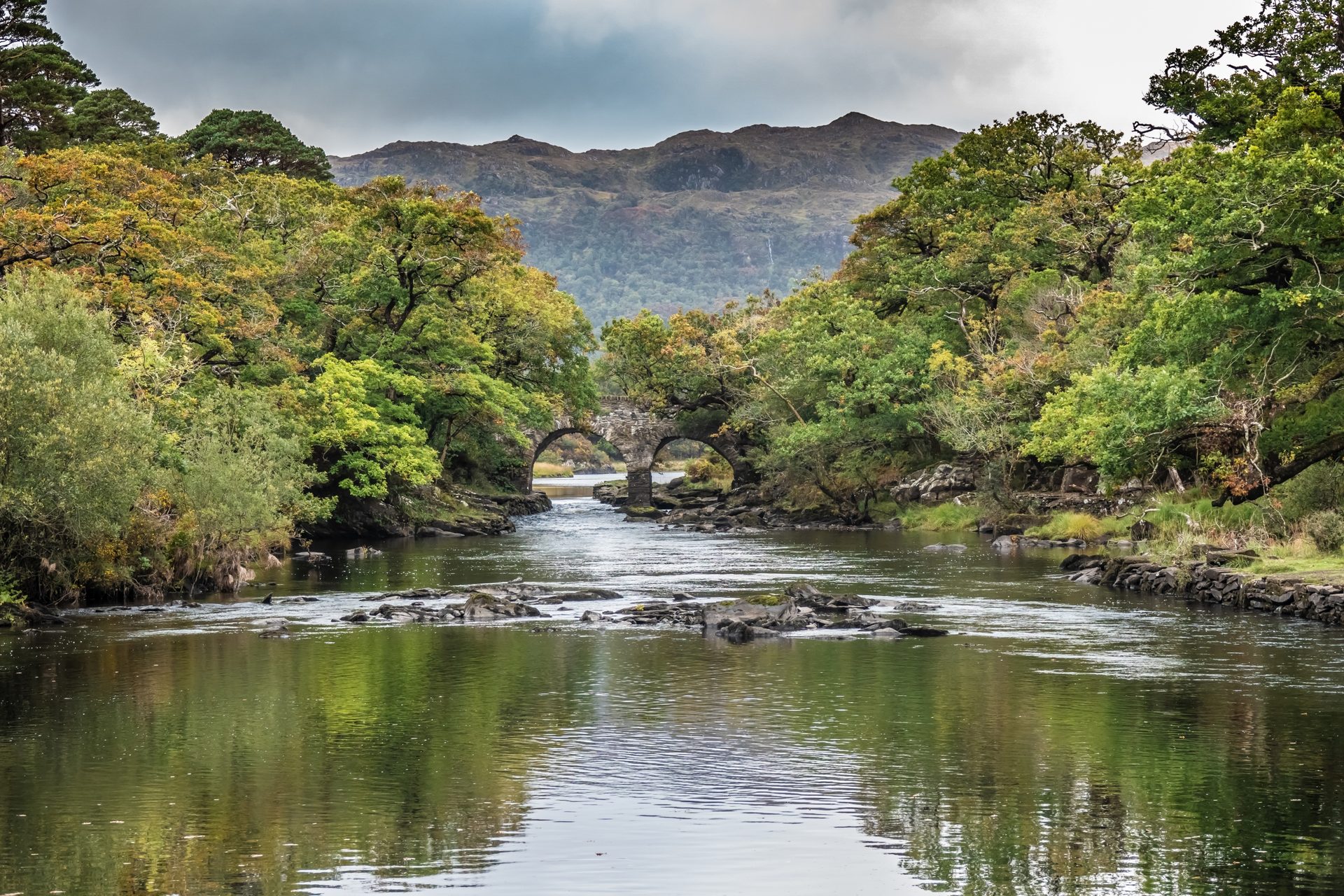
Planning approval has been granted for a long-awaited lakeside walkway and cycleway connecting Torc and Dinis inside Killarney National Park.
An Coimisiún Pleanála confirmed permission for the elevated platform project, which will complete the popular scenic loop while removing a dangerous 800-metre section along the busy N71 Killarney to Kenmare road.
Walkers and cyclists currently have to navigate narrow bends alongside heavy vehicular traffic and tour buses to complete the circuit between the Dinis and Torc car parks.
Mayor of Killarney John O’Donoghue welcomed the decision, calling it a transformative development for the region: “Since beginning in the Council in 2021, this has been one of my priorities as an issue I inherited from my predecessor Michael Gleeson, he being the first person to initially pursue the idea. I have repeatedly kept it on the agenda at Council meetings and now delighted to see we finally have positive news as this decision, which has been long overdue and eagerly awaited, will prove transformative for the area.”
Mayor O’Donoghue added: “The path, which will be on the lakeside, will offer views to rival those anywhere in the world and I have no doubt will prove very popular with locals and visitors alike. Huge credit is due to Kerry County Council and the NPWS for their co-operation on the issue. Once the decision has passed through its statutory waiting period, the design and tender stage can begin.”
The project, which will be built on a raised platform to protect the natural habitat beneath, will also be fully accessible for people with mobility issues. Killarney Chamber of Tourism and Commerce also welcomed the green light, noting that the completed loop will create a major safe attraction showcasing Muckross Lake, Dinis Cottage, and the Old Weir Bridge.
LAKESIDE PATH: An Coimisiún Pleanála has approved planning permission for a new raised walkway and cycleway connecting Torc and Dinis in Killarney National Park.
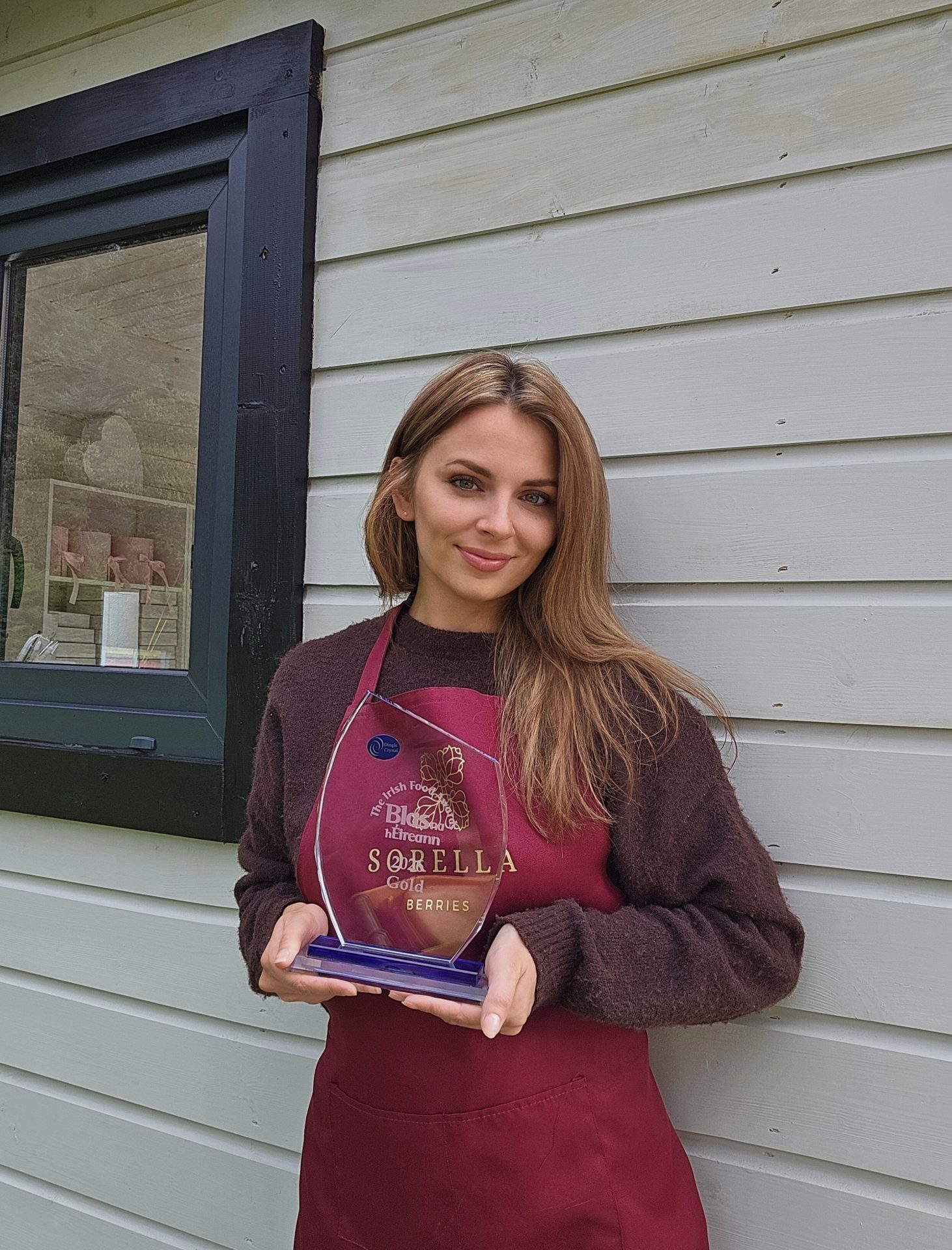
LOCAL GOLD: Terrie O’Shea, founder and owner of Killarney-based business Sorella Berries, celebrating her Gold award win at the Blas na hÉireann Irish Food Awards held in Dingle last week. Her hand-crafted chocolate covered strawberries secured the top spot in national competition, earning recognition for the local food producer on the national stage.
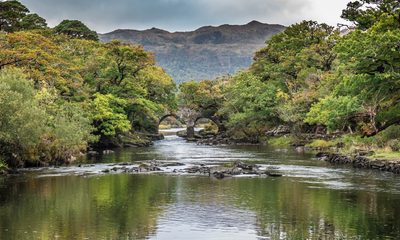

Green light for Torc to Dinis walkway
Green light for Torc Dinis walkway Planning approval has been granted for a long-awaited lakeside walkway and cycleway connecting Torc...
LOCAL GOLD:
LOCAL GOLD: Terrie O’Shea, founder and owner of Killarney-based business Sorella Berries, celebrating her Gold award win at the Blas...

Grady demands Killarney traffic review
Killarney councillor Martin Grady has called for an urgent review of traffic management across the town following severe delays along...

Killarney Pumpkin Farm returns for Halloween
The annual event is in its sixth year and caters to people of all ages. The farm is located in...


Killarney Toastmasters host special open night
Killarney Toastmasters is inviting members of the local community to an open night at the Dromhall Hotel on Muckross Road...

Fossa Swimmers make a splash at County Finals
The Fossa Swim team pictured at the Tralee Sports Complex following their successful outing at the County Finals of the...

On the Ball Part 2 of the Mikey Daly Interview
Éamonn Fitzgerald EF: Killarney Celtic are invited to participate in an Irish competition. That has big financial implications for travel,...


LUKE MANGAN recently caught up with Kerry FC’s manager, Colin Healy.
He spoke to him about his careers as a player and manager. Here’s how it went: When you began your...


Home cup tie for St Paul’s could be epic
Paudie O’Connor National Cup (Round 1) Utility Trust St Paul’s v GCU Brunell Saturday 7.30pm Killarney Sports and Leisure Centre...


Chances of Kerry v Cork Munster final in 2026 decrease as Munster GAA delay seeding plan
After facing a backlash from Limerick, Clare, Waterford and Tipperary players, Munster GAA have postponed their plan to keep Cork...