
News
Eamonn Fitzgerald: Anyone for cricket?


Eamonn Fitzgerald charts the history of the once popular “English” game that is now experiencing a revival in The Spa
What a change for lovers of live sport. After two years of very restricted action on the playing fields and in the indoor sports arenas, 2022 has got off to a flying start with a plethora of games in all codes. The Killarney sports scene, which is of great interest to this writer, is no different.
GAA and soccer are at full throttle for both genders, as a very popular indoor game, basketball, comes to an end. For now, let’s switch to a very different sport.
How about cricket? Well, what about it, and what relevance does that game have for Killarney and for Kerry?
Some weeks ago I was on our long, weekly group walk, which brought us to a splendid cricket club in The Spa, Tralee - as distinct from Spa, Killarney. This is no ordinary club venue, but the headquarters of Kerry Cricket.
And that set me thinking about the sport and of course the Cricket Field in Killarney. Many people believe that the GAA sports are the oldest games in Killarney. Not so. Rowing and cricket are much older. The GAA wasn’t founded until 1884, but cricket has been played in Ireland since 1792, when the Military of Ireland and the Gentlemen of Ireland took each other on in Dublin’s Phoenix Park.
The game still thrives in one of the world’s oldest established cricket clubs. I have seen those cricket games there on numerous occasions and, of course, the games go on all day.
By the mid-1850s, the game had expanded to the point where it was the largest and most popular sport in the country for certain social strata. In fact, its success was such that the first team to represent Ireland beat their English counterparts in 1855, handing them a 107-run thrashing.
However, the game went into decline towards the end of the century, largely a victim of politics and class. The founding of the GAA in 1884 and the subsequent growth of Gaelic games became a rallying point for the disaffected and disenfranchised working class tenants of Ireland against their upper-class, cricket-playing, landlords, and ascendency class.
Although the game of cricket itself was not anathema to the downtrodden, its affiliation to England was.
THE BAN
The game continued in the north of the country and in the heartlands of central and northern Dublin, but the GAA introduced the infamous Ban (Rule 27) in 1902. In effect, GAA players were banned from either participating or even watching the so-called English sports of soccer, rugby and cricket. The ban lasted for more than 70 years, ensuring that cricket became unknown in much of the country.
How many readers can remember spending Sunday afternoons watching the Killarney rugby team playing in the Cricket Field from the vantage point of the Flesk Bridge? It was a win-win situation for the GAA brethren. They did not have to pay to see the game and technically they did not contravene the Ban. The local GAA had people appointed to spy on members who defied Rule 27.
Although housing has taken over much of the old field, part of it is still there. Head out to the Flesk Bridge and look down to your left and there it is.
The original Cricket Field was owned by Lord Kenmare and as they were of the ascendancy class there was a great demand for cricket among the social class. None of the ordinary people of Killarney played cricket, but times changed and, when the Dr Crokes club was founded in 1886, the Browne family was very accommodating. They provided a sports field for the fledgling club. Tom Crosstown Looney, a prominent player with Crokes and with Kerry, struck a great deal, securing a splendid field for games and all for the nominal sum of a shilling a year for as long as they wanted it.
The same man erected sleepers on the Woodlawn side of the Cricket Field while the Flesk was the boundary on the Gleneagle side. Crokes played there and so did Kerry, who met their great rivals, Cork, there. In one photograph of the 1913 All-Ireland winning team taken in the Cricket Field, the sleepers are very visible. Dr Crokes played there until Dick Fitzgerald died and the club built the Fitzgerald Stadium.
The Kenmare’s were well respected by the local Killarney people as they provided great employment and were termed ‘good landlords’.
MODERN DAY
The 2022 cricket season got underway over the Easter weekend. County Kerry CC currently competes in all four leagues in Munster and also plays a number of tournaments.
In 2018 they won the Senior Munster Cup for the first time in the club’s history. They also won the Munster Junior Cup and the Munster Junior T20s and were awarded Munster Club of the Year
Kerry are the first club in Munster to boast a ladies cricket team and would be delighted to welcome new members, girls and boys, adults and juniors to training every Wednesday (6-8pm) at the beautiful Oyster Oval in The Spa. The contact at the Tralee location is Richard Rutland 086 8891533.
And there is a Killarney connection to top-level cricket. Ray Walsh, the well known Killarney garda (now retired), has a brother Eddie who is married to Laura, a sister of Eoin Morgan.
Morgan is a Dub, born there in 1986, who holds the record for the fastest century in the Cricket World Cup. He played for Ireland but really made his name with England. Under his captaincy, England won the 2019 ICC Cricket World Cup, the first time they won the tournament. Morgan, the ciotóg batter, plays county cricket for Middlesex.
“From the age of 13, I wanted to play cricket for England,” Morgan told the Sunday Times in 2010. “I’ve never felt any shame in saying this is what I wanted to do. And the people at home involved in cricket, they were like, 'Fair play, it's going to be unbelievable if you make it'. So I’ve never had any shame about this and my father has never had any shame about it.”
Shades of Jack Grealish in modern soccer parlance. Grealish has relations in Sneem and played underage soccer for Ireland alongside another man with strong Sneem connections, John Egan. He of course is the son of the great John Egan from Kerry’s Golden Years. Thankfully, John Egan Junior didn’t 'take the soup' and is a key man on the present Irish international team.
In modern times with so many people from foreign countries deciding to live and work in Ireland, they have brought with them their love of cricket. While there isn’t a Killarney cricket team – yet - one does see a few of the new arrivals playing casual cricket. Many of these people come countries like India and Pakistan, and isn’t it wonderful to see them playing the game that is so strong in countries that were once under British rule.
I saw another wonderful cricket ground recently in Valentia, where the sport thrived when so many English workers came to the island when the Transatlantic cable station linking Ireland with the USA was being set up.
Of course, rounders has many of the elements of cricket and it is an official game of the GAA, just like hurling, football, and handball. Sadly, the GAA has not promoted it properly and it is in danger of extinction. Maybe Larry McCarthy, the new president, may take up the challenge and be forever known as the president who revived rounders.

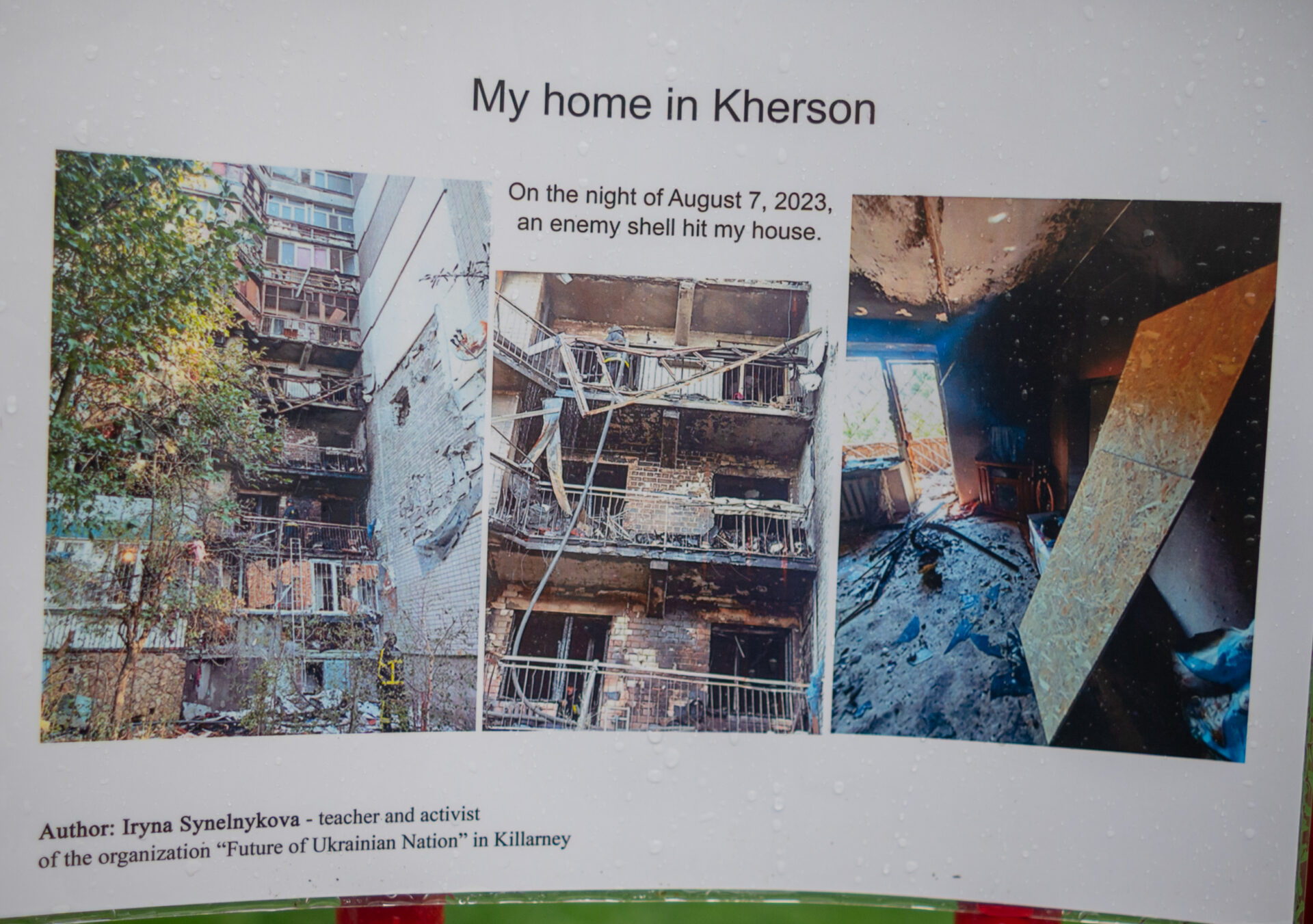


Powerful photo display at St Mary’s brings Ukraine conflict home
A unique photo exhibition has been installed on the railings outside St Mary’s Church of Ireland in Killarney town centre,...


Beaufort Engineer honoured with national emerging leader award
Beaufort Engineer honoured with national emerging leader award Beaufort native Danny Pio Murphy has been named the recipient of the...

Pickleball Club’s record medal haul at Munster Open
Pickleball Club’s record medal haul at Munster Open Killarney Pickleball Club celebrated its most successful outing to date at the...


Women’s Shed to Host Charity Auction for Typhoon Victims
The Killarney Women’s Shed has teamed up with local nurse Chandra Arias to host a major charity auction of upcycled...


Killarney hosts 88th annual Irish Hotels Federation Conference
Hoteliers from across the country gathered at the Gleneagle Hotel this week for the Irish Hotels Federation’s (IHF) 88th Annual...
