
News
All-Ireland week brings mixed emotions but confidence must be chief among them


by Adam Moynihan
There’s no denying that we’re a funny breed. No set of supporters are prouder of their team’s unparalleled achievements. No set of supporters are more critical of their team either. It follows, then, that here in Kerry, the days leading up to All-Ireland final day are a potent mix of excitement, scepticism, confidence, and an inescapable, stomach-churning anxiety that only gets worse the closer we inch towards Jones’ Road.
I met two locals not far from my home on Friday, around 30 seconds apart. Both asked the same question: will they do it? I said I think they will. The first agreed. “They’ll be fine,” he assured me, with a convincing nod of the head. My faith was strengthened. The second person wasn’t so sure. “I’m worried,” she admitted, and looking at her face I could tell she wasn’t lying. The duality of fan. Maybe she’s right?
I hope she’s reading this because there are genuine reasons to feel positive if you’re praying for a Kerry win on Sunday.
The chastening Meath defeat in June did not come in a knockout game but psychologically speaking it could have been a knockout blow for this group of players. We saw a knee-jerk reaction, at home and abroad, to dismiss Kerry’s credentials as All-Ireland hopefuls. How could a team who lost by nine points to Division 2 opposition be capable of going all the way?
What happened next was heartening in the extreme. Kerry beat Cavan while putting in an improved – if imperfect – performance in Killarney. Then they blitzed the champions and All-Ireland favourites Armagh in Croke Park. And they backed that up with a smart and assured display against Tyrone in the semis. That kind of turnaround takes mental toughness, maturity and professionalism – three key traits that all teams need to succeed.
The fact that several players are coming to the boil is also a plus point. Personally I recall expressing concerns about certain individuals prior to the knockout phase, but the likes of Brian Ó Beaglaoich, Gavin White, Seánie O’Shea and Graham O’Sullivan are all moving now. It’s not that they had been poor prior to that but I felt there was another gear in them, and they appear to have found it just at the right time.
Add to the mix the solid form of newly formed midfield pairing Seán O’Brien and Mark O’Shea, and the continued excellence of All-Star candidates Shane Ryan, Paul Murphy, Jason Foley, Paudie Clifford and Joe O’Connor, and the signs are promising.
And then there’s David Clifford. I was taken aback when I heard Jack O’Connor suggest that his star player is playing the football of his life after his hat-trick against Cavan. That’s a bold statement when you’re talking about a guy who has been playing good football since roughly 2004 (he was born in 1999). But it’s true. He has been untouchable all season and if he can do the business again on Sunday, a third Footballer of the Year award will surely follow. Not that such loose talk will penetrate the incredibly well-buttressed walls of his psyche.
Paul Geaney and Diarmuid O’Connor being available for selection also bodes well. Both participated fully in training last Saturday. Jack O’Connor must now decide what part – if any – they will play in the final.
Many of us had assumed O’Connor’s season was over when his damaged shoulder lasted just a few seconds against Cavan, so his comeback is potentially a major bonus. It’s impossible to assess the situation accurately based on the limited information that has been made public but if he is 100% fit and the risk of the injury recurring his minimal, we would all love to see him on the pitch.
However, if there’s a non-minimal chance that the shoulder could go again, Jack must factor in the potential blow to morale (to both team and player) that losing him again would be. Using up two substitutions if O’Connor were to be introduced off the bench would also be suboptimal to say the least.
On the other hand, Geaney had been playing brilliantly prior to his injury and was deemed fit enough to take his place on the bench in the quarter-final and semi-final, so throwing him back in feels like less of a risk and more of a no-brainer (assuming he is able to go full tilt).
There’s the confidence. Here comes the anxiety.
The opposition have an awful lot going for them. There were many potential contenders throughout this relatively open championship but, for me, Donegal were the one team I was worried about all along.
Inspired by talismanic coach Jim McGuinness, they have carved out a well-earned reputation as a formidable, tough-to-play-against side. Defensively they are well drilled, adopting a deep-lying zonal defence that can be extremely difficult to break down.
Kerry found that out for themselves in the second round of the league in Killarney back in February. Notwithstanding the fact that they fielded a cobbled together forward unit that day and Donegal were full strength at the back, I was hugely impressed with the Ulster outfit’s defensive structure. Kerry simply could not punch holes. It was obvious that Donegal had been working on it for a significant period of time, while Kerry were still getting their feet under the desk in terms of adjusting to the new rules.
David Clifford and others have since returned to the fray, and a proper offensive plan which includes two-point shooting has been adopted and refined, but Donegal have another five months of work done their end too.
Brendan McCole is their primary man-marker and he will pick up David Clifford. It remains to be seen what they will do with Paudie Clifford and Seánie O’Shea. The prodigious corner back Finbarr Roarty could track Paudie from the start but it seems unlikely at this stage that McGuiness will stray from his tried and tested zonal defence, which means his defenders will tend to stay at home rather than follow Kerry forwards wherever they may roam.
Offensively Donegal don’t take many risks but they are still really dangerous. They generally turn down opportunities to kick inside, instead preferring to run it and transfer the ball through the hands. They have speed across all lines of the field and are dangerous on the counter, but even against set defences they can be a real handful. They patiently move the ball back and forth around the arc, running at sharp angles off the shoulder, biding their time until they work an opening.
When they do, they have an array of shooters who can put the ball over the bar. The comeback king Michael Murphy is especially influential in this regard, either by facilitating those around him or by scoring himself. Jason Foley has been tipped to mark the big number 14 but we might see the diligent Dylan Casey getting that job, with Foley tagging Oisín Gallen.
All told, what Donegal do is highly effective. Their controlled style of play might not lend itself to a brilliant, open final in the classic sense of the word, but it should be an exciting 70 minutes (or more) nevertheless.
In the new game the following declaration is so obviously true it’s almost redundant to even say it – it’s a bit like saying it’s important to breathe – but winning your fair share of kickouts will be crucial. Kerry’s one capitulation this year came in Tullamore when they suffered a brutal period during which they could not get their hands on the ball. It’s very difficult to stem the tide when that happens, as we saw from the reverse perspective against Armagh.
So, despite all the talk about structures and tactics and match-ups, it might be as simple as this: will Kerry break even around the middle third?
If they do – and I believe they will – they’ll get enough ball, they’ll feed their forwards, they’ll get their scores and (here comes the confidence again) they’ll win.
VERDICT: Kerry by three.

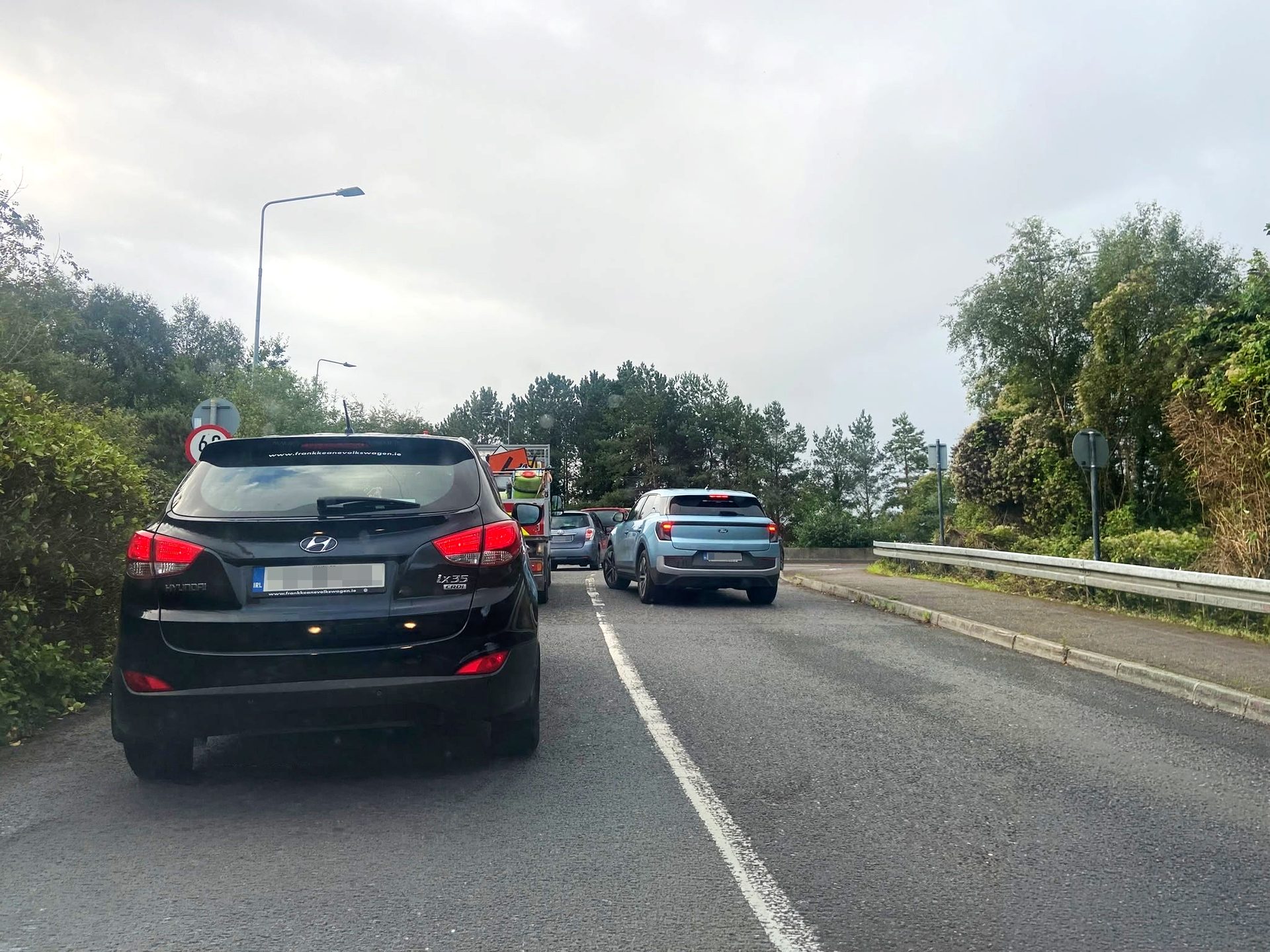
Frustration mounts over morning gridlock at Coolcorcoran
Mounting traffic gridlock at the Coolcorcoran junction onto the N22 Killarney Bypass is causing daily delays for commuters, with local motorists calling on Killarney Municipal District and elected representatives to take immediate action.
Early morning traffic coming from the Tralee side has become severely backed up past BG Motors during the peak 8.15am commute.
Motorists attempting to enter the bypass from the Coolcorcoran side face long queues and increasing frustration as they struggle to join the main road.
Local drivers point to a specific design issue at the exit, where a raised kerb and a section of unused footpath prevent left-turning vehicles from merging smoothly into the traffic flow.
Road users are requesting a simple layout modification to resolve the bottleneck: converting the exit to left-turn only, removing the kerb obstruction, and directing driver traffic to loop via a U-turn at the Killarney Sports and Leisure Centre roundabout. Similar left-turn measures were previously implemented at the nearby Lewis Road junction to improve safety and traffic flow.
The request comes as broader plans for the N22 bypass upgrade and new link road infrastructure remain under progression by Kerry County Council and Transport Infrastructure Ireland.
Motorists wishing to share their views on local road issues can email info@killarneyadvertiser.ie.
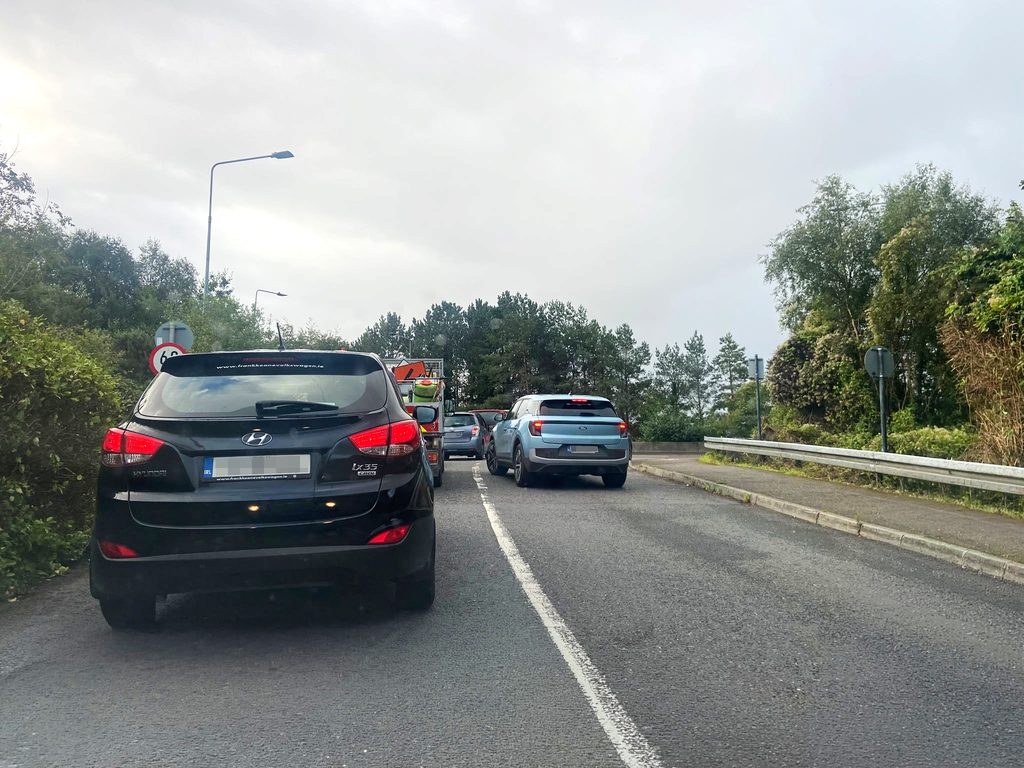



Frustration mounts over morning gridlock at Coolcorcoran
Frustration mounts over morning gridlock at Coolcorcoran Mounting traffic gridlock at the Coolcorcoran junction onto the N22 Killarney Bypass is...


Ailbhe Keogan scoops top television writing award
Acclaimed Kerry screenwriter Ailbhe Keogan has won the Best TV Drama Script award at the 19th Writers’ Guild of Ireland...


Strong turnout for St Paul’s Golf Classic at Beaufort
After a recent spell of indifferent weather, glorious sunshine and a gentle breeze greeted 35 teams at Beaufort Golf Course...

€150,000 granted to draft masterplan for St Finan’s site
Kerry County Council has been awarded €150,000 in government funding to progress a Masterplan and Infrastructure Delivery Plan for the...

GoSafe cameras live at Farranfore level crossing next week
GoSafe cameras live at Farranfore level crossing next week Automated speed cameras at the Farranfore rail level crossing will become...
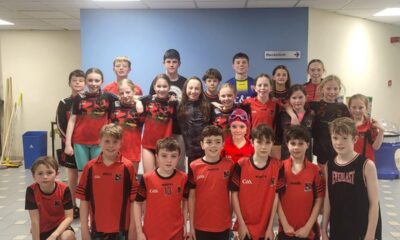

Fossa Swimmers make a splash at County Finals
The Fossa Swim team pictured at the Tralee Sports Complex following their successful outing at the County Finals of the...

On the Ball Part 2 of the Mikey Daly Interview
Éamonn Fitzgerald EF: Killarney Celtic are invited to participate in an Irish competition. That has big financial implications for travel,...


LUKE MANGAN recently caught up with Kerry FC’s manager, Colin Healy.
He spoke to him about his careers as a player and manager. Here’s how it went: When you began your...

Home cup tie for St Paul’s could be epic
Paudie O’Connor National Cup (Round 1) Utility Trust St Paul’s v GCU Brunell Saturday 7.30pm Killarney Sports and Leisure Centre...


Chances of Kerry v Cork Munster final in 2026 decrease as Munster GAA delay seeding plan
After facing a backlash from Limerick, Clare, Waterford and Tipperary players, Munster GAA have postponed their plan to keep Cork...
