
Sport
Killarney will never forget Johnny Culloty, our greatest sportsman


Eamonn Fitgerald shares fond memories of his friend Johnny Culloty, who sadly passed away this week aged 88
His game is over, the ultimate referee has called for the ball. Tá an t-am istigh, but his legacy will live on because he was a true sportsman in the full meaning of that phrase.
Such a sportsman embodies a combination of physical skills, mental strength, and exemplary character traits, a much-loved gentleman who never boasts about his achievements. He doesn’t have to; his record speaks for itself.
Johnny Culloty was all of that and more, much more. I have written about him in the past, choosing him as the best all-round sportsperson in Killarney for certain, and indeed much further afield.
Thankfully I followed my instincts and visited him in the Tralee Hospital just one week before he left this world that he embellished over a long lifetime. Monaghan and Roscommon were playing their Division 2 match under the new rules on his TV when I arrived.
What do you think of that Johnny for the standard of a Division 2 game? He didn’t rush in with an off-the-cuff reply, but then that wink and unmistakable smile. “It doesn’t matter one bit what division it is. They are kicking the ball and football is about kicking with the foot. Isn’t it a whole lot better than what we were having all along?”
Did any player catch his eye? “Number 13 is a handy boy.” That was the day that right corner forward Diarmuid Murtagh shot 12 points and went past the record of the late, great Dermot Earley as Roscommon’s all-time highest scorer.
LONG FRIENDSHIP
Johnny and I go back a long way, playing against each other in club matches, playing with him and winning County Championships with East Kerry, and then the Kerry experience.
I knew him as a player, selector, coach, manager and friend. He lifted the latch on the door for me, the door to a very special world that any Kerry garsún or cailín ciúin dreams about. One day, maybe someday, that dream will become a reality, and you are handed the geansaí.
One could never even dream of filling the shoes of a man who captained Kerry to win its 21st All-Ireland in 1969 and four other Celtic crosses, lifting Sam Maguire in the 50s, 60s and 70s. Now that is longevity. He won every honour in the GAA. No need to even try to list how often he was in the winners' enclosures in a variety of sports, including football, hurling, basketball, billiards, snooker, golf, fishing, rowing, and you can be sure that the King of the Taws (marbles) in the Old Mon was none other than Johnny Culloty.
He had a natural talent for sport, that innate, inborn gift that no matter what sport in which he participated he reached very high levels of success. He mastered the particular skills of the game and then practiced those skills. One can reach a certain level of success without talent but to consistently do that over a broad spectrum is rare. Natural talent and hard work mastering the skills were the recipe for Johnny’s success in sport.
His eye was in and the hand-eye coordination of the young Johnny had him in goal for the Kerry minor hurlers at the age of 14. He always had a great grá for the hurling and particularly the all-conquering Killarney minor teams of the 1950s. He won a Kerry SHC medal with Killarney in 1969. From minor Johnny moved up to the Kerry junior and senior ranks very quickly and won a bagful of medals, including four national hurling league medals in Division 2 in ‘57, ‘62, ‘67, and ’68, as well as an All-Ireland JHC medal in 1961.
This mastery and expertise transferred easily to other sports, noticeably golf. Balance is the key to success in handling the transfer of the ball, be it golf, basketball, snooker or other such sports. Johnny tapped into that innate ability and mastered the skills in the Fitzgerald Stadium, O’Mahony’s Point, Loch Léin and so many other arenas.
He was a great learner and teacher of sport. As a coach and manager of teams he was positive and supportive. He put it concisely: “Some days they go in, other days are not so memorable, when they go in past you to the net”. He was also a very shrewd judge of a player’s potential and ability, keeping a lifelong close eye on Legion juveniles who could make it up the line. He also took a great interest in the fortunes of the Sem, especially in the Frewen Cup and Corn Uí Mhuirí.
When I outlined his array of successes in so many sports, he stole the show by saying, “Yerra, sure I tried them all”. Such an understatement.
GREAT LEGION SERVANT
He played for his much-beloved Legion club not just for years, but for decades, winning East Kerry senior championships in 1954, 1955 and 1967.
He gave great service as chairman from 1967 right through until 1975. “Jameso (Donoghue) took over from me in 1976 and was there for a few years,” he recalled. Johnny was involved in everything at Legion, as a trainer, selector, supporter, and just about any other task that would enhance the spirit of the club. He was very proud when the new club grounds at Derreen were opened and loved nothing better than to head up to there and walk around the fields, content in the solitude of his own thoughts.
Sport did take him away from Killarney for big games, but Killarney was his true home. He came to prominence as a rising sports star in the Mon and the Sem. Most of his working life was dedicated to caring for the patients at St Finan’s where he became great friends with Dr Eamon O’Sullivan, forging a friendship and understanding leading to those marvellous successful Kerry teams.
His memory for detail of games won and lost was phenomenal, with equal clarity of a Legion game for a “tough match as usual in the Lawn”, Rathmore long before Rathbeg was on the radar, or tougher still hurling against the North Kerry clubs where the poor daisies were brave enough, or foolish enough, to put their heads above the ground for a very brief life. “Pull on it” was the rallying cry for the daisy cutters. He never boasted about his achievements in so many sports: such achievers don't have to.
FISHING
He was much happier to talk about fishing and he often told me that a day on the lake was a great day of sport for him. “Even if I caught nothing, it was great to be in the boat with Dan Coiny O’Connor. That would be the father of Michael from Ross Road. Dan was a great left-handed angler (a ciotóg). He gave me a brilliant introduction to angling in the lakes.”
Johnny also loved salmon fishing with Pa Doyle. “It was a great pastime on my days off from work in St Finan’s. But it wasn’t all plain sailing, pardon the pun. At that time, I remember Pa Doyle, Mick O’Shea and others waiting outside the wall of the old Glebe Hotel (since demolished to make way for the Glebe Car Park operated by Killarney Town Council).
“Pa would give me a shout if they needed me, and I was off for the day. We cycled down to Ross Castle and set off from there rowing the big Gap boats capable of taking 18 to 20 tourists as passengers. No engine of course so we had to negotiate the three Lakes of Killarney and two rivers. That was 14 miles one way up and then return for a 28-mile spin as well. That was as good a day’s training as you’d get. You’d be fit after it.”
Whew, not like today when the boatmen have high-powered engines and fewer passengers, dictated by Health & Safety regulations, no doubt. No need either for the fancy name of Strength & Conditioning, the sine qua non for today’s sports enthusiasts.
Johnny first rowed competitively as a juvenile with the Commercials and he also rowed with St Mary’s and won at least one senior 6s title. He rowed for several years with a right good team from St Finan’s, his workplace. He was in the boat when they won the coveted Antigen Cup.
During the week leading up to the All-Ireland football finals in September, he used some of his holiday time to savour the tranquillity of being on the lakes far away from the frenzied media build-up to the race for the Sam Maguire. He understood the importance of mental relaxation in preparing for the big game.
He grew up on Lewis Road and later in O’Sullivan’s Place, living so close to the Fitzgerald Stadium, officially opened in 1936, the year Johnny was born. St Mary’s Parish Hall was also a godsend. Was it any wonder that he took to whatever sport was in progress indoors, especially during the winter? Billiards, snooker and basketball were always on offer.
He told me that his first basketball team was called St Francis. “We were all choir boys from the Friary, and we had good fun with them. They were the forerunners for the Busby Babes and other senior teams. Fr Leahy was a great priest when he came to town and made full use of the hall (St Mary’s) for the benefit of the young people.”
It was a well-organised youth club before its time. He rattled off the names of several town teams. The Jokers, The Battleships, New Street, High Street, The Red Devils, The United, Arbutus Eagles, Ross Rovers, Woodlawn Rangers, St Mary’s, The Panthers, The Warriors, The Shadows and The Rockets. The Mineral Water factory also had a team.
SLIOTAR OR GOLF BALL
Swap the sliotar for the golf ball and the transfer of learning and mastery of skills was seamless.
“The way I started with golf was that Jackie Lyne (fellow Legion man) was playing at the time, so he asked me to go back to O’Mahony’s (Point) and I was able to hit the ball alright.”
Another understatement by the sportsman. Well-honed hurling/billiards/snooker skills came into play and like all other sports, he made a right fist of it. His handicap dropped quickly. I know he played off a 10 handicap at one stage and I would not be surprised if he went to single figures, such was his competitive spirit.
“I tried ‘em all,” was the understatement of Johnny Culloty, my choice for Killarney’s best all-round sportsperson. It was always a joy to meet him and discuss all things sport. Eirí in áirde and maoímh never dwelled in his mindset.
Our memory of Killarney’s Laochra Gael will endure. I doubt if he was a great fan of Tina Turner and her top hit ‘Simply the Best’ written by Mike Chapman and Holly Knight. Nevertheless, just one more time for Johnny Culloty.
‘Give me a lifetime of promises and a world of dreams, You're simply the best, better than all the rest, Better than anyone, anyone I've ever met.’
Sport transcends all. Slán abhaile to the fairways and eternal green fields for Johnny Culloty, Killarney’s iconic sports personality. The memories of a wonderful sportsman and a gentleman go smior will last in this writer's mind.
Cómhbhrón ó chroí to Joan, Bríd, Donal, Orla, Seánie, his extended family and to his Legion of admirers and friends.
News
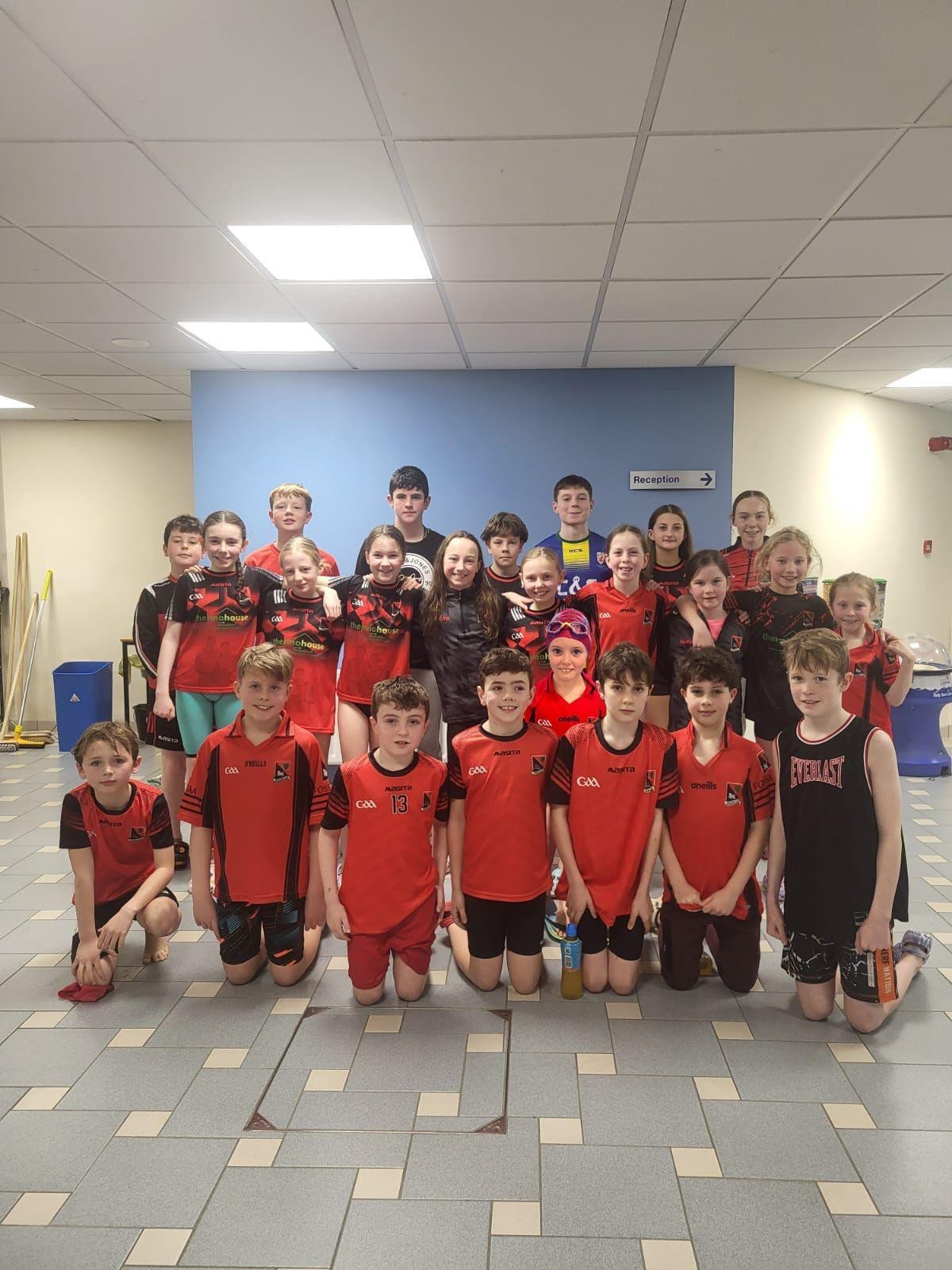
Fossa Swimmers make a splash at County Finals
The Fossa Swim team pictured at the Tralee Sports Complex following their successful outing at the County Finals of the Community Games on Sunday, February 15. The 25-strong squad delivered […]

News
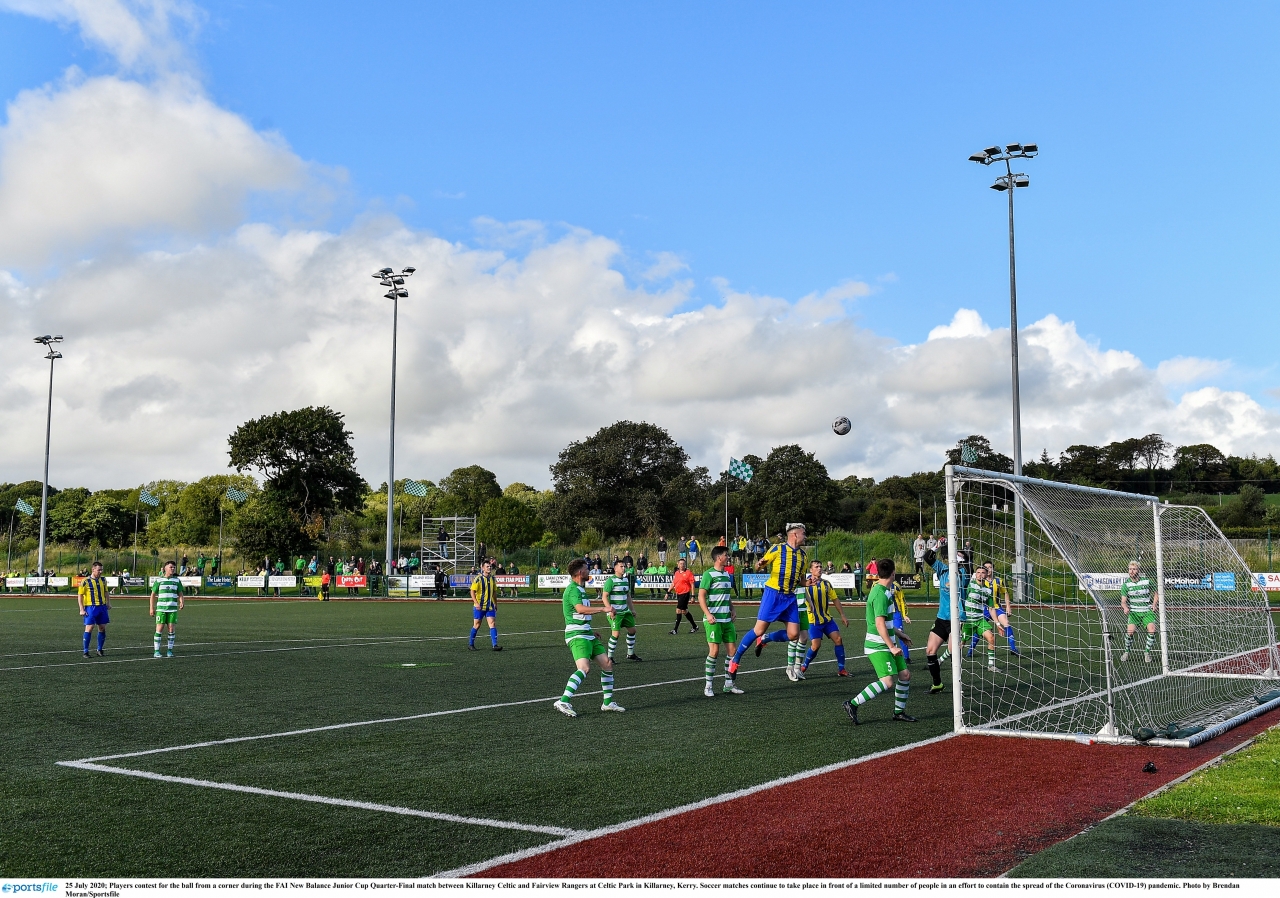
On the Ball Part 2 of the Mikey Daly Interview
Éamonn Fitzgerald EF: Killarney Celtic are invited to participate in an Irish competition. That has big financial implications for travel, meals, etc. MD: It is great to be invited, showing […]

Paralympic legend Jason Smyth visits St Brendan’s
Paralympic legend Jason Smyth visits St Brendan’s World renowned Paralympian and world record holder Jason Smyth paid a visit to...

Deerpark Retail Park placed on market for fifteen million euro
Deerpark Retail Park in Killarney has officially been placed on the market with a guide price in excess of 15.4...

Killarney Racecourse to host first professional festive pantomime
Killarney Racecourse to host first professional festive pantomime A classic fairytale is set to receive a distinct Kerry makeover this festive...

Kerry artist explores identity at ANAM
Kerry artist explores identity at ANAM Kerry artist Felix Power is inviting the Killarney community to explore personal ideas of...

Town encouraged to wear bright colours for Kevin
Town encouraged to wear bright colours for Kevin The town of Killarney was encouraged to wear its brightest colours this...
