
Sport
Eamonn Fitzgerald’s personal tribute to the great Mícheál Ó Muircheartaigh


Eamonn Fitzgerald shares fond memories of his friend, the legendary GAA broadcaster Mícheál Ó Muircheartaigh, who sadly passed away last week
“The tears have all been shed now. We’ve said our last goodbyes. His soul’s been blessed. He's laid to rest.”
Thank you, Phil Coulter, for those simple but meaningful lyrics to convey the sense of personal loss of someone very special. They struck a chord when I heard the news that saddened the Irish nation, those at home here in Kerry, but also throughout the Irish diaspora.
He was so big and strong for a 93-year-old, we thought he’d last forever, until Mícheál Ó Muircheartaigh left this world on June 25. He left it in a better place for so many people, me included.
So many of his own Mícheálisms, such as a Rabbitte chasing a Fox in Croke Park, surfaced once more in the wonderful tributes in the media to the man from Dún Síon. Here are my personal memories of Mícheál.
50 YEARS AGO
Well, over 50 years ago I was playing with East Kerry in the All-Ireland seven-a-side football blitz for all the 32 county champions. After a series of victorious games on the Saturday, we went through to Sunday’s final.
Coming off the pitch in Belfield late on Saturday evening I noticed this stranger walking toward me, more like striding it out like that magnificent pose of Monsignor Flaherty on Mission Road. “Conas mar atá an saol agat, Éamonn?” I answered him as Gaeilge and for the next 50 years plus we always conversed in Irish. He had beautiful, meaningful, lyrical, descriptive and poetic Gaeilge.
For the purpose of this article, English has to be the preferred option, even if some of the inner nuances are lost. In translation, he said, “I thought you always played outfield and in the backs for Dr Crokes and for UCD.” Yes, I replied, today is my first time ever playing in goal. He answered, “Tell me now (his favourite line), how come you played in goal today?” It’s a long story but no one else would volunteer. Donie O’Sullivan made a deal with me that if I started the first half of the first game in goal, he would swap with me for the second half.
“And did Donie forget to do that?” Yes, and I have been in goal for all games today.
“Listen to me now, you made a great hand of goalkeeping and I saw all your games today. You should play there more often,” and then he said “slán”.
Later I enquired from Donie O’Sullivan about that tall striking gentleman who had seen all our games. “That’s Mícheál Ó Muircheartaigh, a great friend of Kerry football.”
Then I recalled that beautiful lilting voice, more melodious still in his Kerry Gaeilge. He never wore the green and gold geansaí but unlocked the door for many to do so. I was one of the lucky ones and thought no more about this chance meeting with the tall stranger until sometime later a postcard came through the letterbox in our Dublin flat. ‘You have been selected to play for Kerry in the first round of the National League v Mayo at JP O’Sullivan Park, Killorglin on Sunday next at 3pm. Be in the dressing room for 2.15pm.’
And so started a half-century of friendship, respect and consideration. In the game against Mayo, the only real goal opportunity happened in the 45th minute when Joe Langan (RIP), that great Mayo 40 yards man, thundered through the middle and unleashed a bullet from inside the 21. Goal written all over it, but by pure good fortune it cannoned off my forehead and went out past the inrushing Joe. We often talked about it over the years when we met. Joe was also in the same line of work as me. Clean sheet.
Years later I discovered that Mícheál had phoned Kerry selector Ned Fitzgerald (Maurice’s father) enquiring how Kerry were fixed for the forthcoming National League. “Have you a goalkeeper? There’s a young Kerry fellow I saw playing in goal here in Dublin,” and sin mar a tharla (that is how it happened). Fortune favours the brave, especially in a chance meeting.
He was there that day to praise and was also there on other days that were not good. He was the eyes and ears in Dublin scouting for Kerry. He was our trainer for the Dublin-based Kerry players, cajoling us to do one more all-out sprint on the Swords pitch. Later, in O’Dwyer’s time, he moved to Belfield for the training and several players from counties other than Kerry joined his sessions.
EVERYTHING IRISH
He loved everything Irish: its people, culture, traditions, and the language native to his upbringing in Dún Síon. He was fluent both in English and in Irish, his first language.
Take the first left after the racecourse before reaching Dingle and down to Dún Síon. No doubt he had the perfect location to witness Fungi enthralling the world with his appearances for over 25 years. I wonder did Mícheál ever record a live commentary on Fungi’s leaps out in the mouth of the harbour? No doubt he would have traced him back to Fionn Mac Cumhaill.
He was very proud that a young native garsún named Jack Kennedy learned the tricks of the trade at the annual Dingle races. He must have been very proud that the now 25-year-old Kennedy was crowned champion jump jockey with 123 wins.
Mícheál was a great racing follower and was a regular punter at Cheltenham with his close friend, former Kerry star and fellow broadcaster Mícheál Ó Sé. I would love to have heard him broadcasting The Gold Cup in 2002-2004 when Jim Culloty won that magical three-in-a-row, especially coming up to the 33rd fence and then that long punishing hill up to the finish.
Once Jockey Jim had cleared the last fence Mícheál would entertain a nation, the Irish nation, and it might go like this, unscripted as always:
“And now Jim Culloty has come clear over the last and while he faces that long challenging Cheltenham hill, let me tell you why he is a champion jockey. Isn’t his uncle the great Johnny Culloty, that wonderful sportsman from Killarney? He first played for Kerry as a hurling goalkeeper when he was only 14. They didn’t win the Munster Championship but it was through no fault of Johnny’s. He won a Munster medal with the Kerry minors in ’54 and I often wonder why Mick O’Dwyer did not start on that minor team. Johnny was a great corner forward but injured his knee and then returned to goal and won five All-Irelands. And then, of course, his nephew Jim is striding it up that last furlong. I don’t see Johnny in the crowd to see Jim win the Gold Cup, but there is no doubt there are plenty in his hometown of Killarney celebrating the bets they put on with Mick Bartlett. There will be great excitement in the Tatler Jack, the Speak, Jack C’s, Husseys and Lenihans, once owned by Pat O’Meara the treasurer of the Kerry County Board and a big man in the Legion club. Johnny won't be in any of those sheebeens: he’s a teetotaller like myself.”
LANGUAGE
In my view, Mícheál did more for the promotion of the Irish language than any other person during his lifetime of getting the Gaelscoileanna started and now they are thriving in so many places around the country.
Many people who have just a smattering of simple Irish are not confident or at ease trying to speak it. Mícheál’s approach was positive and encouraging. Just use the bit of Irish you have and put in the English words where necessary. So “tá mo bhicycle gone” conveys the meaning of “my bicycle is lost”.
I asked him if he would launch Seachtain na Gaeilge many years ago in Killarney CC. “Cinnte” (definitely) was his instant answer. He spent a whole morning moving around the school meeting and greeting so many students and teachers adapting his Gaeilge to each individual's fluency, or lack of it.
I will miss the phone calls and him saying, “Tell me now, Eamonn, I’ll be going down home (to Dún Síon) on Friday. Will you get two more of the lads to make a fourball and we’ll take them on for a fiver? Be judicious in selecting the opposition. I always have the (golf) sticks in the boot of the cairt (cart/car).”
On one such occasion, we played in Mahony’s Point and got as far as the fifth fairway when all semblance of keeping up with the pairings in front went by the board. A wayward second shot sliced all the way over to the sixth fairway meant I lost my partner. I suspect it was a deliberate slice because he knew one of the players coming down the sixth. Time stood still, but all the way up the eighth fairway took the biscuit. Those coming up the 11th recognised Mícheál and came across to shake his hand. It took almost 50 minutes to play the hole. Word had got out that Mícheál was playing, and everyone just wanted to meet and greet the man who met and greeted everyone.
It was 10.25pm when he took his drive on the 18th, which he parred. The best the opposition could manage was a four out of the first bunker. “Now wasn’t that a great end to a great day, ending all square, no money exchanged, and we’ll have the replay the next time I’m down home.”
Fortunately, it was mid-June and daylight was at its longest. Five hours and fifty minutes for just one game. He gave so much joy to so many people, as he always did.
There were other phone calls, usually checking on young lads who might make a good (Kerry) senior in the future. “Badly needed if we want to beat Cork on the way to Croker. Tell me about this young foxy boy from Killarney with the strange name of Gooch. What’s his surname? Cooper. A great Killarney name. Tom who produced the famous film, ‘The Dawn’ and John C, who mastered many sports. Football, rugby, golf and boxing. You can’t beat Dúchas.” Not those Cooper ancestors, Mícheál. This fella’s father is from the county bounds, from a rival town club, the other side of the fence.
“Oh, tuigim (I understand). Has he the three essentials (skill, commitment and guts) to make it?” Certainly, but he is a very light slip of a lad. “Size won't matter if he has the essentials. Pender (Tom Prendergast) and Red Collier (Meath) were small men, but they were terrific wing backs, who wouldn’t back down from anyone. “Any good prospects coming through the schools? In my view, the best two players emerging in 2000 are Declan O’Sullivan of Coláiste na Sceilge and Michael Meehan of St Jarlath’s.”
Mícheál was a great friend of this column, always asking me to send him those interviews with Con (Houlihan), Mick O’Dwyer, Johnny Culloty, Seán Kelly, Jimmy O’Brien and several others.
APPEAL
So why was my friendship with Mícheál so precious and energising over 50 years? He was a people’s person, the kind of person you wanted to meet. It was all about you and not him. You were the only person that mattered to him. You were the centre of his life even on a short (rarely short) phone call.
All of our conversations were ‘as Gaeilge’ and what music that was to my ears. Articulate, melodic, lyrical, poetic, caring, loyal… A man of integrity. Positive and supportive on days one needed a pick-me-up. His positivity was infectious. You felt the better for hearing or meeting him.
I recall ringing him on his 90th birthday during Covid and asking him how he managed to be so positive in a world of negativity and so much uncertainty. “My grandmother taught me her special prayer. The gist of it is: Arise at the dawn of day and face its challenges with enthusiasm.”
He was more than just a father to the nation, a teacher, and a best friend. He can still be heard and will continue to be heard in our bank of memories.
The final words are his own from the funeral mass booklet. As Gaeilge, of course. In translation, much of the musical tones are lost, but the essential message is clear:
If I would be there west in the place of my father,
On the dewy fields walking every morning,
Talking and chatting there with my honest gentle neighbours,
And lie under the sod there forever in care.
O, take my enthusiasm to the place of Duibhne
It is my secret love which is dear to my heart,
The place of my youth and the land of my ancestors.
I love you forever and your magical glory.
Safely home, Mícheál.
News
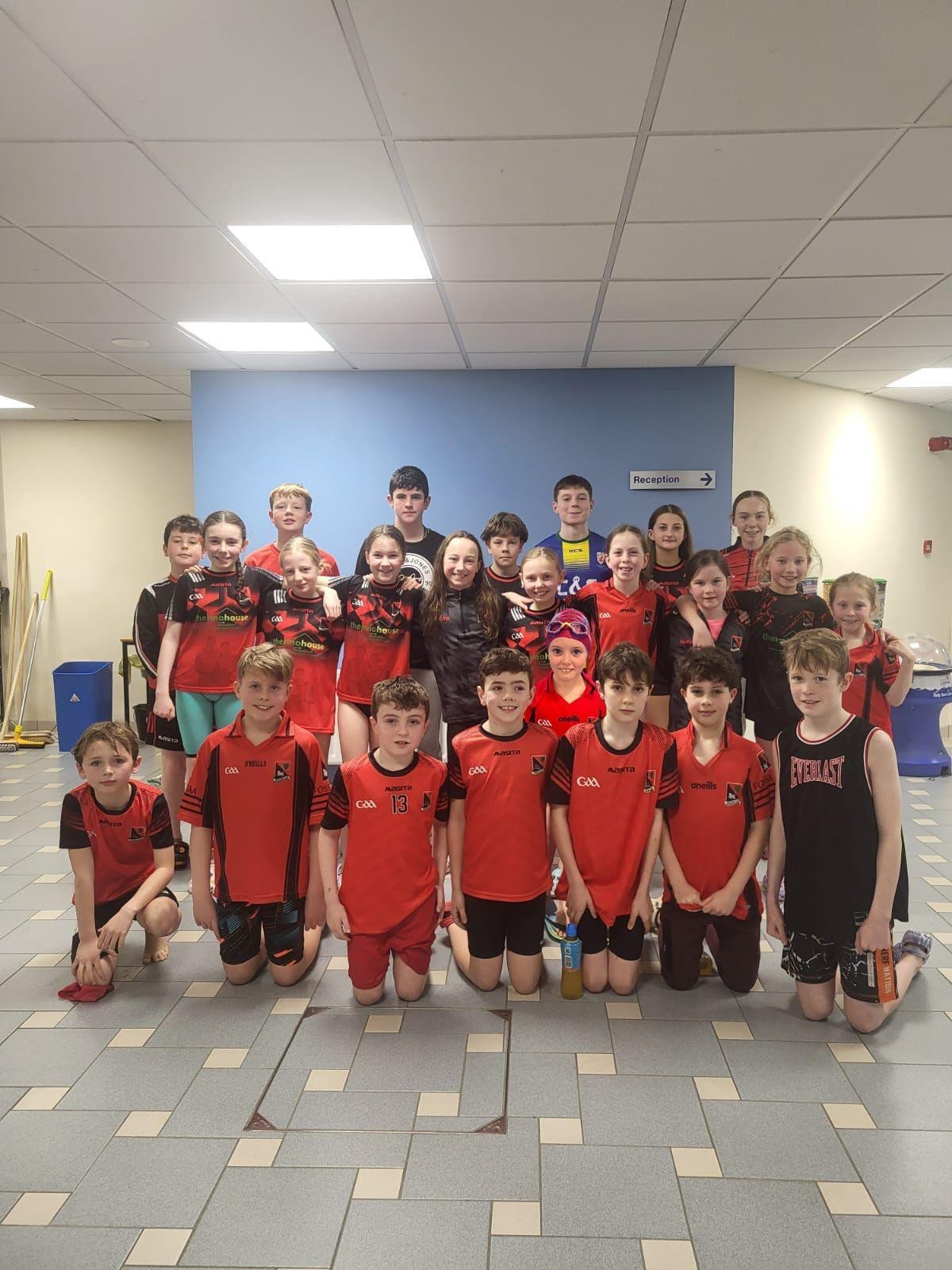
Fossa Swimmers make a splash at County Finals
The Fossa Swim team pictured at the Tralee Sports Complex following their successful outing at the County Finals of the Community Games on Sunday, February 15. The 25-strong squad delivered […]

News
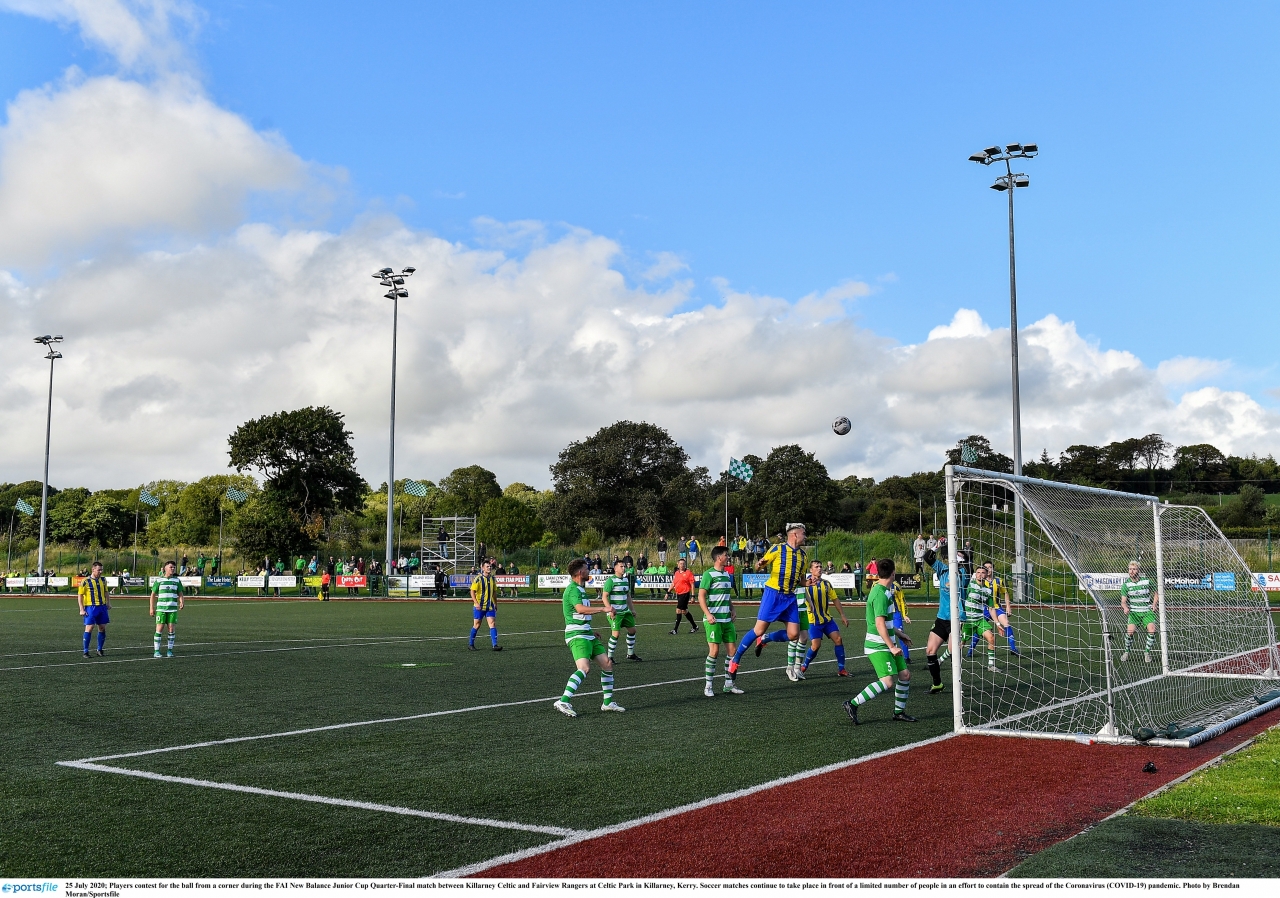
On the Ball Part 2 of the Mikey Daly Interview
Éamonn Fitzgerald EF: Killarney Celtic are invited to participate in an Irish competition. That has big financial implications for travel, meals, etc. MD: It is great to be invited, showing […]

KWD Recycling shortlisted for national environmental awards
KWD Recycling shortlisted for national environmental awards Killarney-based KWD Recycling has been announced as a finalist in the 2026 Repak...

Drivers warned as deer rutting season begins
Drivers warned as deer rutting season begins Motorists in Killarney are being urged to exercise extreme caution as the annual...

Kerry Airport CEO addresses chamber luncheon
Kerry Airport chief executive Adrian Neilan addressed local business leaders at the Killarney Chamber of Tourism and Commerce luncheon at...

The Brehon raises €2,850 for Jack and Jill Foundation
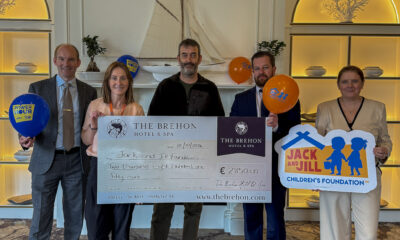
The Brehon Hotel and Spa raised €2,850 for the Jack and Jill Children’s Foundation after hosting a closest-to-the-pin golf simulator...

Five local postmen retire with 185 years service
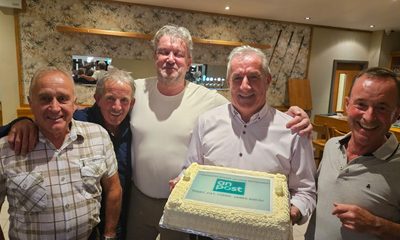
Five local postmen retire with 185 years service RETIREMENT NIGHT: Pictured at the retirement party held at Killarney Racecourse on...
