
Sport
The Killarney Cricket Field and Kerry’s long-standing connection to the English game


Eamonn Fitzgerald traces the roots of cricket in The Kingdom, going back to the days of the Cricket Field here in Killarney
There is something special about sports beginning with the letter ‘c’. Immediately I think of canoeing, curling, CrossFit, climbing, cycling, camel racing, camogie, caid, and cricket. Let’s look at ‘cricket’. More about the other sports at some later dates.
Cricket has made a few rare enough appearances in these pages but it is the focus of this week’s column arising out of several queries I’ve had about how the Cricket Field in Killarney got its name.
Just state the obvious: that is where cricket was played from the 1870s until the sport just faded away in Killarney for strong historical reasons. For the uninitiated, go to the end of Muckross Road and from the Flesk Bridge see what remains of the Cricket Field on the left bank of the Flesk River. It is still quite a sizeable green field, but much reduced with the expansion of housing in the Woodlawn area.
A couple of weeks ago, the Irish Cricket team won their first ever test match by beating Afghanistan by six wickets in Abu Dhabi. That was a breakthrough because they had lost their first seven matches since they earned test status in 2017.
Several countries claim that the game of cricket began in their land, but all the indicators are that England is the birthplace of the game. Some form of it was played in the 1600s. Gradually it grew in other countries, especially where the British Empire held control. This led to the first test cricket match in 1877. Those tests are certainly a test of endurance as some can last up to five days.
The origin of cricket in Ireland is set in the history of its time, particularly in the 1800s when the native Irish peasants lived under the regime of the landed gentry who promoted the game of cricket and confined it mainly to their own class.
In O’Caithnia’s splendid work Scéal na hIomána (The Story of Hurling), he recalls: “In 1829 Crofton Croker walked down Flesk Road on a Sunday stroll with Killarney ADM Fr Edmund Fitzmaurice. They came upon a group of lads playing cruicéad na hÉireann (Cricket of Ireland).”
I expect that is the first recorded mention of cricket in Killarney. While cricket was quite common throughout Ireland and was an imported game for the English gentry, the County Kerry Cricket Club wasn’t formed until 1872, even though it was already played intermittently in some parts of the county.
Valentia Island was a case in point. Valentia Cricket Club played Tralee at the military barracks square in Ballymullen, Tralee. Later they played their games in the local sportsfield (the present Austin Stack Park). Their colours were green and gold. Surprise, surprise.
The Valentia team included the workers from Britain who came to the island to lay the famous Transatlantic Cable, all 3,500 miles of it, a remarkable feat of engineering at that time. After three attempts they succeeded in 1858. The company had a very active Valentia CC for the British workers. The locals were bemused at first, but in due course they also learned the basics of cricket.
KILLARNEY CC
The Killarney Cricket Club wasn’t founded until April 1887. There is a record of a match between Killarney CC and Major Henderson’s team played on the lawn opposite the Major’s posh residence in Glenflesk in the 1880s. Killarney CC also played two matches against the Middlesex Regiment stationed in Buttevant. Those games were played in 1888.
There were also cricket teams in such unlikely places as Sneem, Ballylongford, Kenmare, Waterville, Cahersiveen, Milltown, Killorglin, Listowel, Tarbert, Causeway, Ballyheigue, Ardfert, Abbeyfeale and Newcastle West. However, they did not last too long in some of these areas.
The GAA was founded in 1884 and Dr Crokes was founded in 1886. Patron of the new Killarney Cricket Club was Lord Kenmare who duly provided the Killarney Cricket Field on a nominal rent to promote the game. The Killarney CC team was very active and while cricket was the game of the gentry in Ireland, when their numbers dwindled in some locations some Irish tenants were included to make up a team. However, that was not widespread.
Anywhere the British were in the ascendancy they introduced the game of cricket. So, if there was a British garrison stationed you can be sure that cricket was played regularly. That was how soccer was also introduced to different parts of Ireland. Soccer was the sport of the garrison towns. A bonus for cricket was when the Trinity-educated well-to-do Irish graduates returning home. They played and supported cricket as a status symbol in society. The same can be said of rugby as it was played up to the 1960s. That has changed in current rugby circles.
Canon Tom Looney informed me that there is a strong cricket connection with his former parish of Kilcummin. It goes back to a ‘John Morphy’ from Ballinamanagh Kilcummin, who emigrated to Australia. Briefly, his daughter Florence Rose made the ‘Canberra News’ after Australia crushed England in 1882.
The Killarney Cricket Field also became the centre for Gaelic football where the local GAA games were played on the pitch leased from Lord Kenmare long before the Fitzgerald Stadium was built. It was also the venue for some stirring Kerry v Cork Munster finals and a venue for Killarney RFC.
Readers will recall the infamous Ban or Rule 27 of the GAA which forbade GAA members and players from playing foreign games (rugby, soccer, cricket, hockey). That was a big bone of contention right up until 1971 when it was abolished at the GAA Congress in Belfast. It became very much a cat-and-mouse game when spectators interested in those games had to avoid GAA personnel catching anyone breaking the Ban.
Ironically, Michael Cusack from Carron in Clare was a well-known rugby player, starring with Trinity RFC. When he was teaching at Blackrock College, Dublin in the early 1870s he played cricket and when he set up his own school in 1877, he founded a rugby team with himself as secretary and trainer. Sevan years later he was a founding member of the GAA. Hence the stand in Croker.
Who can remember the spectators who viewed the local rugby match from the Flesk Bridge?
Cricket is enjoying a revival and recently I viewed the beautiful new base for Kerry Cricket in Spa. No, not the famous football club in Killarney parish, but the Oyster Oval at The Spa, Tralee. Kerry CC won the Senior Munster Cup for the first time in its history in 2018 and were awarded the Munster Club of the Year for successes in the Munster Junior Cup and the Munster Junior T20s.
Currently, they are playing in the above competitions and also in the Irish National Cup. No doubt the game has got a great boost with the increasing numbers of immigrants from countries where cricket is the national game. Will Cricket make an official comeback to Killarney? If so, where will the games be played? Currently, who owns the Cricket Field? Níl fhios agam ach i ndeireadh na dála cricket in Kerry is on the up and up.
And so, back to the Killarney Cricket field off the Muckross Road, getting greener by the day. Wouldn’t the Bull McCabe have a field day claiming the famous field? The late great John B. Keane was so perceptive understanding the DNA of the Kerry psyche.
SPORT IN BRIEF
Cheltenham was centre stage this week. Did you pick the winner for the Gold Cup?
Congrats to the Utility Trust St Paul’s basketball team who delivered a top-class display in the Division 1 league final at the National Basketball Arena in Tallaght on Saturday. They put the Swords Thunder side to the sword with a whopping 23 points to spare. Well done to all concerned and further proof why Killarney’s James Fleming is one of the most sought-after coaches in basketball. Next season St Paul’s will be playing in the Super League.
Meanwhile, the Irish bubble burst at Twickenham and it was well-deflated before that late drop kick. No Grand Slam but there is an early opportunity tomorrow (Saturday) to get back on track with the home game against Scotland which is scheduled to kick off at 4.45pm.
Plenty of TV coverage for GAA patrons this weekend with 9 games on TV, including Kerry away to Roscommon on Sunday (TG 4). I expect Kerry to win that and conclude their league programme here in the Fitzgerald Stadium on Sunday 24 March. Best of luck to Mercy Mounthawk in the Hogan Cup final.
News
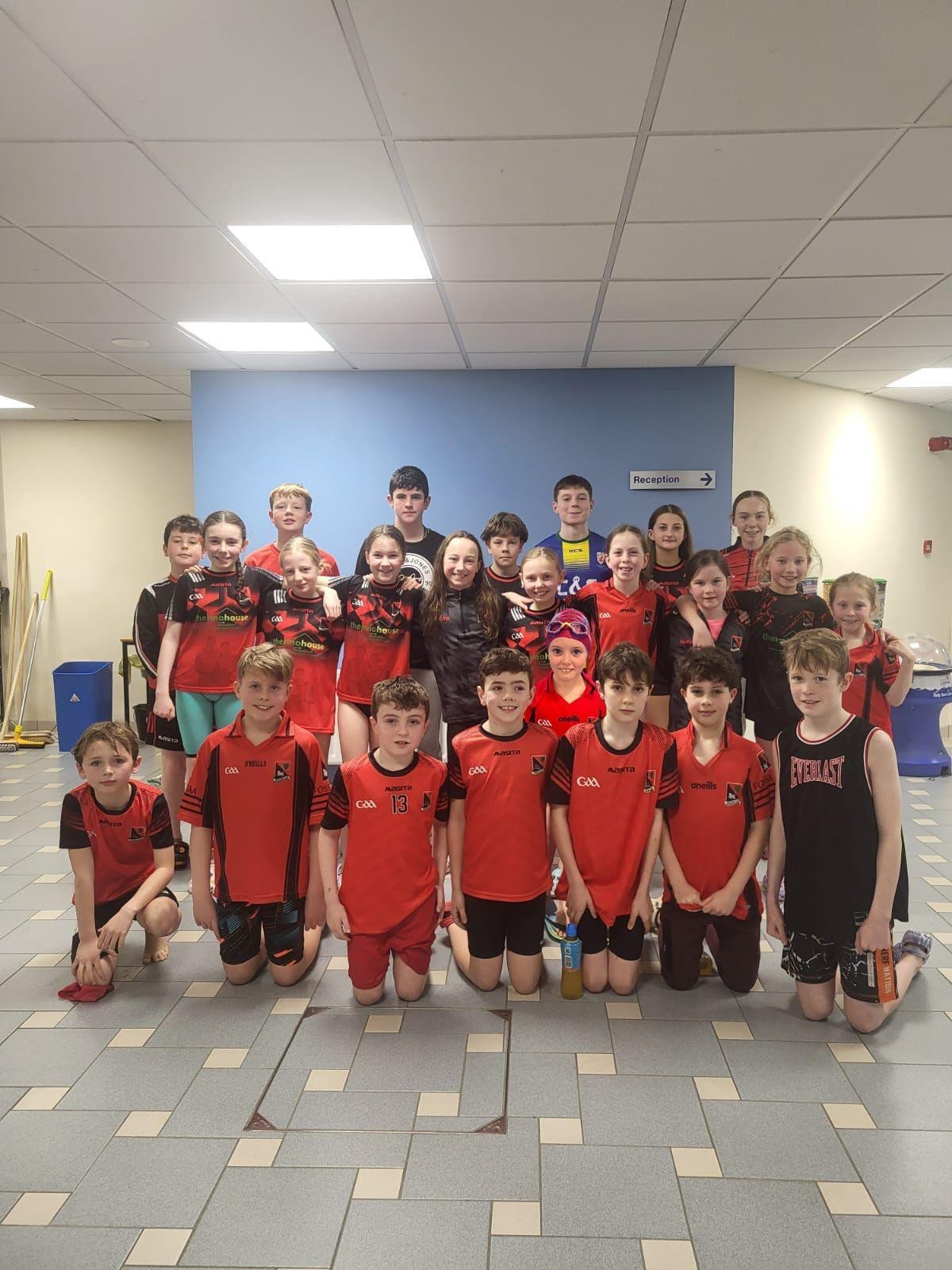
Fossa Swimmers make a splash at County Finals
The Fossa Swim team pictured at the Tralee Sports Complex following their successful outing at the County Finals of the Community Games on Sunday, February 15. The 25-strong squad delivered […]

News
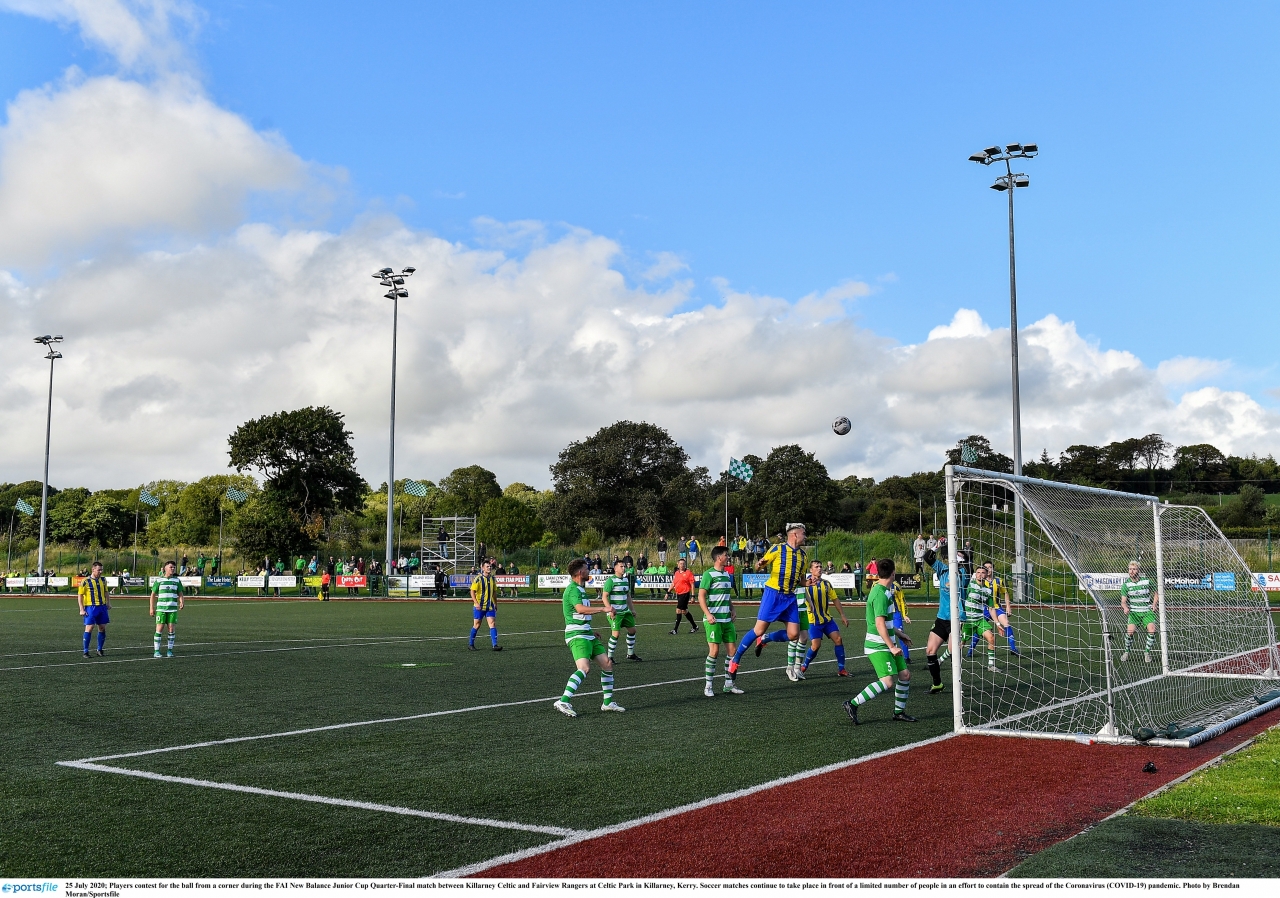
On the Ball Part 2 of the Mikey Daly Interview
Éamonn Fitzgerald EF: Killarney Celtic are invited to participate in an Irish competition. That has big financial implications for travel, meals, etc. MD: It is great to be invited, showing […]

Paralympic legend Jason Smyth visits St Brendan’s
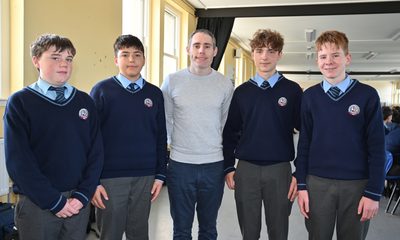
Paralympic legend Jason Smyth visits St Brendan’s World renowned Paralympian and world record holder Jason Smyth paid a visit to...


Deerpark Retail Park placed on market for fifteen million euro
Deerpark Retail Park in Killarney has officially been placed on the market with a guide price in excess of 15.4...

Killarney Racecourse to host first professional festive pantomime
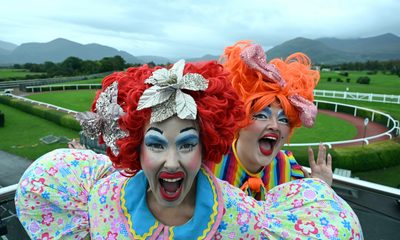
Killarney Racecourse to host first professional festive pantomime A classic fairytale is set to receive a distinct Kerry makeover this festive...


Kerry artist explores identity at ANAM
Kerry artist explores identity at ANAM Kerry artist Felix Power is inviting the Killarney community to explore personal ideas of...


Town encouraged to wear bright colours for Kevin
Town encouraged to wear bright colours for Kevin The town of Killarney was encouraged to wear its brightest colours this...
