
Sport
Opinion: Rahillys’ wild proposal has some merit – but only some


by Adam Moynihan
When I say that my eyebrows were raised as I scrolled through the statement on the Kerins O’Rahillys website on Thursday morning, I mean they were raised from start to finish.
The Tralee club, who last weekend lost their senior status for the first time ever, spoke of their “anger” at the county board and their “ire” at getting demoted to intermediate while divisional teams enjoy a “special status” that spares them such a grisly fate.
The post (penned by club PRO Pat Flavin) went on to remind us of Rahillys’ exploits in last year’s Club Championship. With county calibre talent like David Moran, Tommy Walsh, Jack Savage and Barry John Keane to the fore, they reached the All-Ireland semi-final before coming up short against eventual champions Kilmacud Crokes. It was a long campaign that required sacrifices.
“This is why we feel for this group of lads, who have soldiered on despite the loss of so many key players and coping with injuries etc,” the statement continued.
Clearly, Rahillys feel that they still deserve to be a senior club. And they offer us a “solution that can suit everyone” – one that they describe as a “small change”.
Take the divisional teams out of senior, move them to the Intermediate Club Championship, and replace them with the top eight clubs at intermediate level.
This would mean that the 2024 County Championship would be comprised exclusively of club sides - with Rahillys being one of those club sides, naturally enough.
Whatever you think of their idea, you have to admit they have balls.
It's one thing for a manager or a chairman to respond to a question from a journalist and say something like, "yeah, we're a bit disappointed, we feel there should be more senior clubs". But to publish a lengthy manifesto on the club website outlining why they shouldn't be relegated just days after being relegated? And to suggest that divisional teams like East Kerry and Mid Kerry should be booted out of the championship next year, just three days before those two teams contest a county final?
Of course any club is entitled to fight their own corner, but I was genuinely taken aback by what I was reading. As official club statements go, this one was pretty wild.
The fact that Rahillys are making this proposal now, immediately after they have fallen through the trap door, has unsurprisingly been ridiculed by some observers. It comes across as self-serving given the circumstances. It should be pointed out, however, that they have tabled a motion to increase the number of senior clubs twice in the past five years, so it is an issue that has been on their mind for a while.
The thing is, they’re not alone in thinking that change is necessary.
The debate surrounding the number of senior clubs in Kerry has been lumbering on for years. The general consensus is that eight simply isn't enough.
As the rapid and unexpected demise of Legion, Austin Stacks, and now Kerins O'Rahillys shows, it's very easy for clubs to have an off year, or an off month, and lose their coveted place in the County Championship. It can also prove very hard to get it back.
Meanwhile, divisional teams are always invited back to the feast, irrespective of the contribution they made to last year’s shindig.
For what it’s worth, my own instinct is that 16 senior clubs is too many. It would dilute what is a very competitive and very entertaining Senior Club Championship and it would make it basically impossible to include the eight divisional teams in the County Championship. Rahillys are clearly fine with that, but I have a feeling there would be strong resistance in other corners of the county.
One of the redeeming qualities of the current format is that it gives the best players from smaller clubs the opportunity to compete in the senior championship. Significantly, these smaller clubs far outnumber the would-be senior clubs who might be in favour of a radical overhaul.
That’s one part of Rahillys’ proposal that has to be dismissed as fanciful. They say that their suggestion constitutes a small change and it can suit everyone. Removing the divisional teams from the County Championship, dropping them down to intermediate and taking their intermediate clubs away from them is not a minor alteration. For example, East Kerry would be left with three clubs: Listry, Firies and Kilgarvan. Mid Kerry would be left with just two: Keel and Cromane. How does that suit them?
Raising the number of senior clubs to 10 or 12 seems more realistic. Keep the eight divisional outfits and have a playoff round to see who qualifies for the 16-team championship. The best district sides will still make it and still contribute to our showpiece competition in a meaningful way.
(This would also go some way towards levelling the playing field in the Munster and All-Ireland Intermediate and Junior Club Championships. That might not be good for Kerry clubs hoping to make it to Croke Park, but it would be objectively fairer to everyone else.)
Most importantly, in the interest of fairness and transparency, any decision on restructuring the championship needs to be made before all relevant championships start, not after they end. The county board can't decide there will be 10 or 12 senior clubs next season and allow the already relegated Rahillys to be one of those clubs.
Of course I understand Rahillys' frustration. They're a great club with a great history. They want to play in the County Championship and they feel they offer more than certain divisional teams. But the rules were the same for everyone at the start of the season. The senior clubs knew what they needed to do to avoid relegation.
In the statement they're not shy about highlighting the failings of South Kerry, West Kerry, Feale Rangers, St Brendan’s and Shannon Rangers in 2023. With respect, Rahillys weren’t great themselves. Fair enough they were missing some important players but that could happen to any team. They were well beaten in their three group games in the Club Championship and then they lost to Na Gaeil in the relegation playoff.
The goalposts can’t be shifted now to make allowances for them because they’re a big club.
That wouldn’t be right, and I said the same thing last year when it was Stacks, and the same thing the year before when it was Legion (and nearly Dr Crokes).
If there are to be changes, they need to come into effect in 2025 so that the 2024 competitions are run off with those changes in mind. So, for example, if the number is to be increased to 12 then tell clubs that there will be no senior teams relegated in 2024, and that the four semi-finalists in the intermediate will be promoted.
A club like Rahillys would fancy their chances of being one of those four teams. In fact, if they really feel that they’re a senior club, they should be going out to win the Intermediate Championship. That, in my opinion, would be the right way to do it.
News
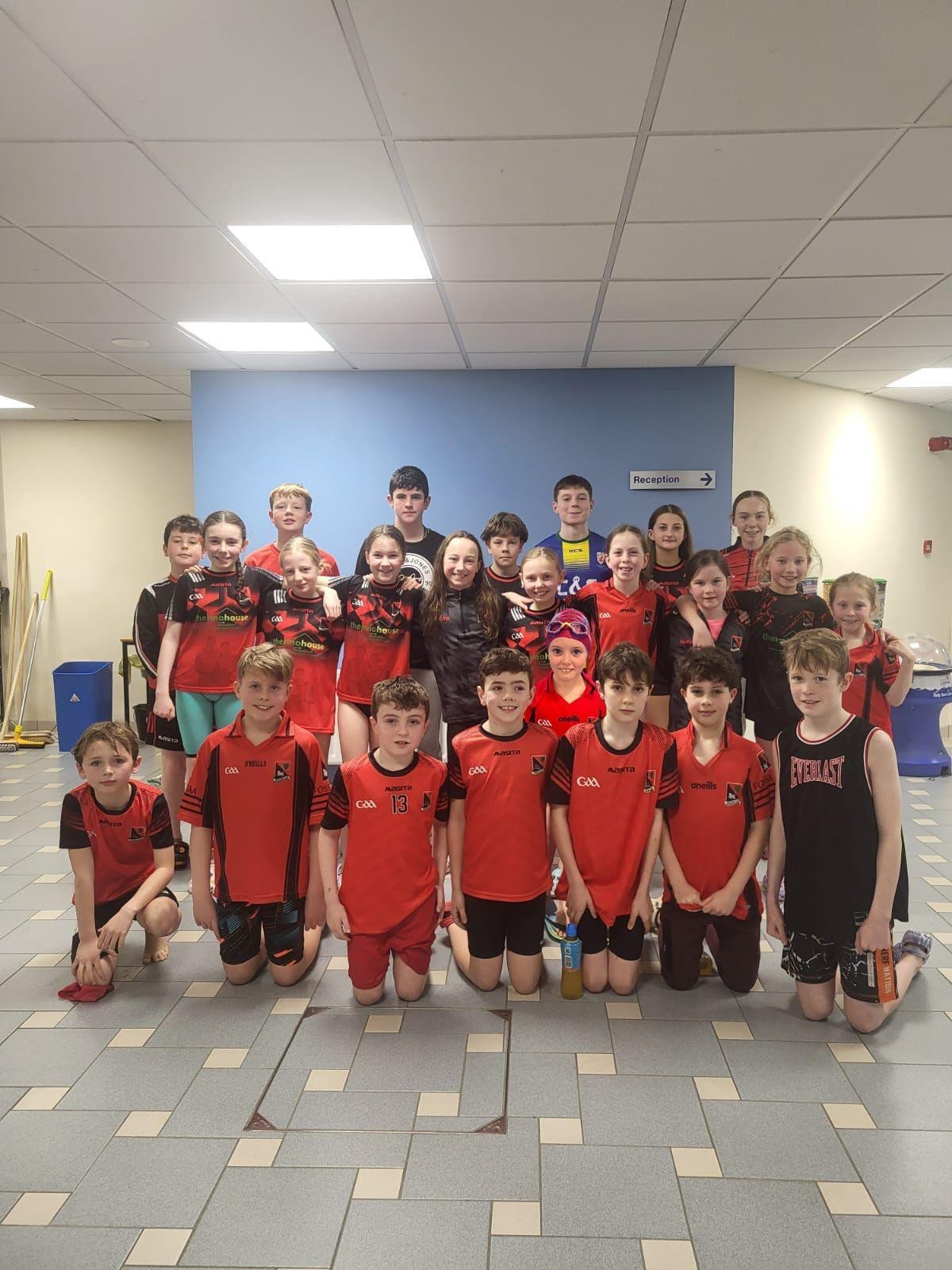
Fossa Swimmers make a splash at County Finals
The Fossa Swim team pictured at the Tralee Sports Complex following their successful outing at the County Finals of the Community Games on Sunday, February 15. The 25-strong squad delivered […]

News
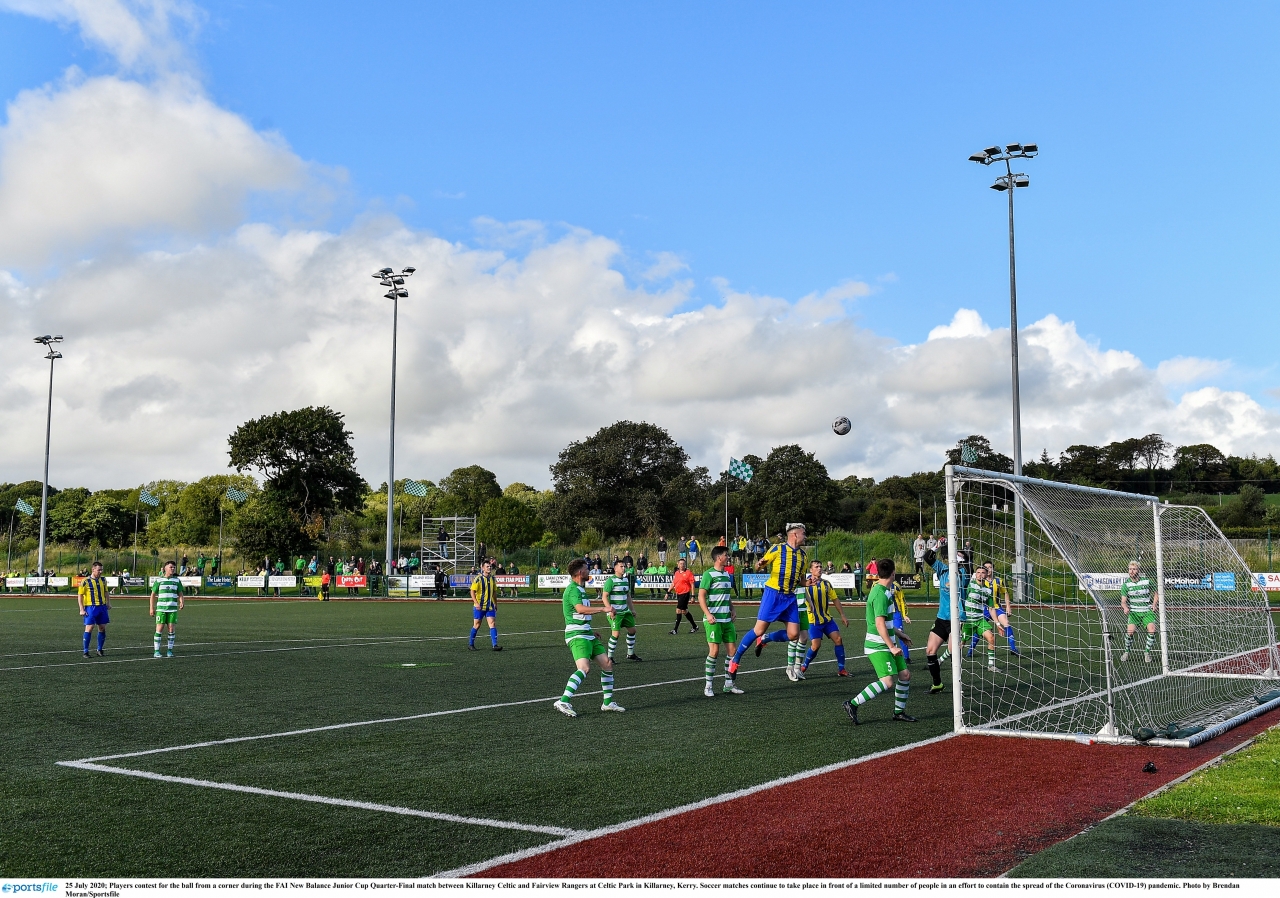
On the Ball Part 2 of the Mikey Daly Interview
Éamonn Fitzgerald EF: Killarney Celtic are invited to participate in an Irish competition. That has big financial implications for travel, meals, etc. MD: It is great to be invited, showing […]


Paralympic legend Jason Smyth visits St Brendan’s
Paralympic legend Jason Smyth visits St Brendan’s World renowned Paralympian and world record holder Jason Smyth paid a visit to...


Deerpark Retail Park placed on market for fifteen million euro
Deerpark Retail Park in Killarney has officially been placed on the market with a guide price in excess of 15.4...


Killarney Racecourse to host first professional festive pantomime
Killarney Racecourse to host first professional festive pantomime A classic fairytale is set to receive a distinct Kerry makeover this festive...


Kerry artist explores identity at ANAM
Kerry artist explores identity at ANAM Kerry artist Felix Power is inviting the Killarney community to explore personal ideas of...


Town encouraged to wear bright colours for Kevin
Town encouraged to wear bright colours for Kevin The town of Killarney was encouraged to wear its brightest colours this...
