Connect with us

Sport

Home double-header for Lakers

Published

on

The Scotts Lakers return home this weekend with a double-header of fixtures on Friday and Saturday night. On Friday at 8.15pm one of the league’s form teams, the Portlaoise Panthers, are in the Killarney Sports and Leisure Centre.

The Laois club have only won six times this season but three of those victories have come in the last four games. University Kokomo graduate Desean Hampton is a key player for the Panthers along with Gary Morrissey, Seán Condon and Davin McEvoy.

On Saturday at 7.30pm, the University of Ulster will be in town looking to cement their playoff spot. The National Cup winners have Cork man Conor O’Sullivan on their books, while former SETU Carlow player Nate Shafer is another man to keep an eye on.

The Lakers will be hoping to bounce back from their recent six-point defeat away to the Dublin Lions. For long periods it looked like the visitors were going to end the February tour of Ireland with a much-needed and merited win but they just couldn't stick with the Lions in the final quarter.

There were several positives for Jarlath Lee despite the defeat. 18-year-old Eoin Carroll put in an outstanding performance, hitting 18 points and using his height to great effect around the basket. Senan O’Leary hit the same tally, including four three-pointers. Mark Sheehan, another teenager, hit a hat-trick of threes. Alongside Jack O’Sullivan, these four players have made a real impact this season. Add in Oisín Spring and the older Jamie O’Sullivan, still the right side of 21, and the Lakers have the nucleus of a squad for years to come.

On the night the Lakers hit an impressive fourteen from beyond the arc as the reliable Jack Ferguson and captain Rui Saraiva battled all the way.

PLAYOFFS

The St Paul’s women’s team are still on track to reach the playoffs, despite last weekend’s double overtime defeat to the Cavan Eagles.

Paul’s just came up short against the runaway Northern Conference leaders at the Virginia Show Centre but they are still in a strong position with two games to go. The top two from each conference advance to the post-season and James Fleming’s team are currently second in the south, one win behind Portlaoise. Finishing in first place would be preferrable as it would mean avoiding the Eagles in the playoffs.

The penultimate game of the regular season is an away trip to the National Basketball Arena where Griffith College Templeogue will provide the opposition. The Dublin side have had a strong season. They have put all the teams below them to the sword with relative ease and have been extremely competitive against the top teams in the division. Tip-off on Saturday is at 5pm.

Advertisement

News

Fossa Swimmers make a splash at County Finals

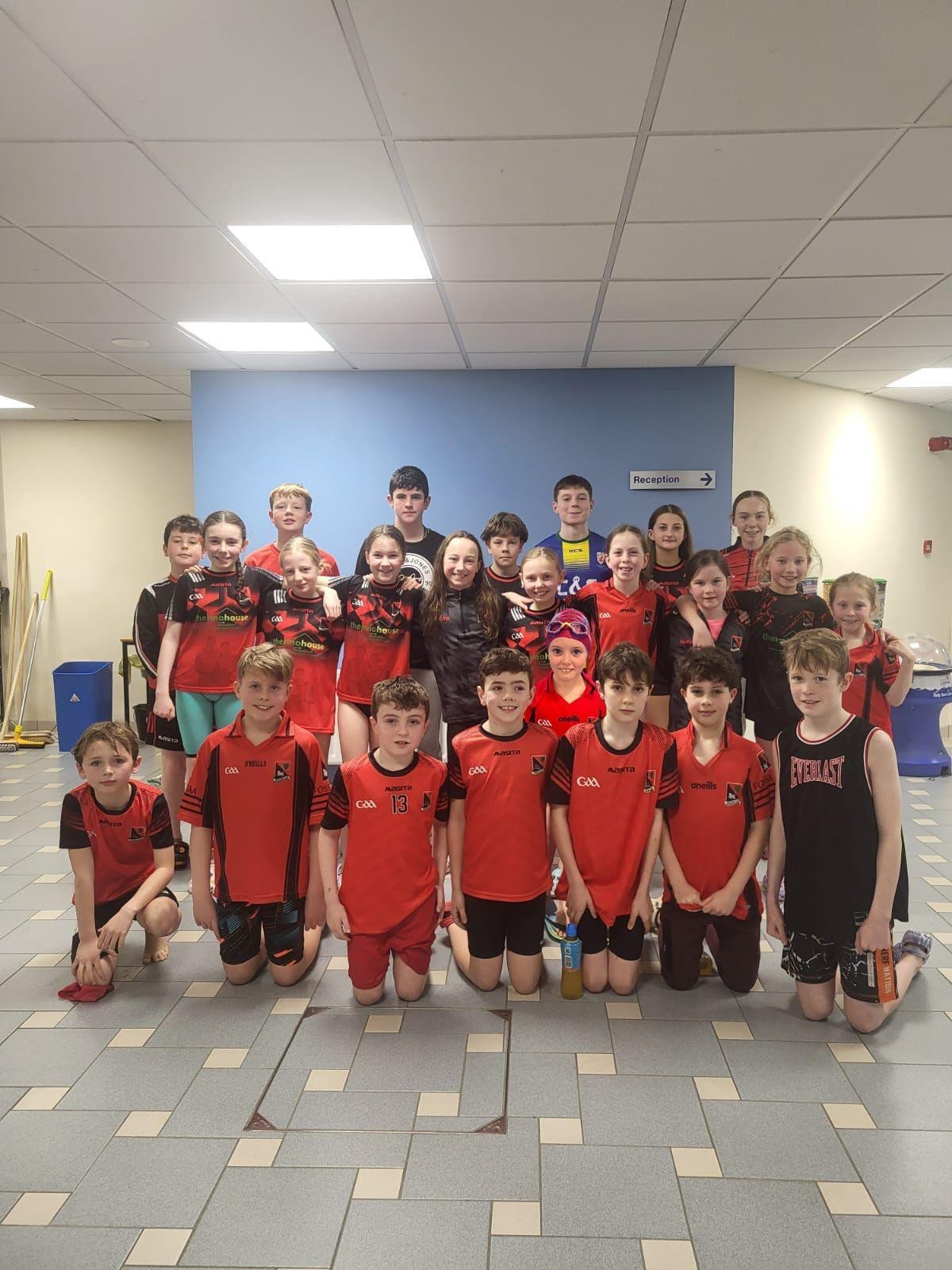
The Fossa Swim team pictured at the Tralee Sports Complex following their successful outing at the County Finals of the Community Games on Sunday, February 15. The 25-strong squad delivered […]

Published

on

The Fossa Swim team pictured at the Tralee Sports Complex following their successful outing at the County Finals of the Community Games on Sunday, February 15.

The 25-strong squad delivered an impressive performance, securing a total of 37 medals across various individual and relay events.
Two Fossa swimmers captured gold medals, officially qualifying them for the National Community Games Finals scheduled for later this year.

Continue Reading

News

On the Ball Part 2 of the Mikey Daly Interview

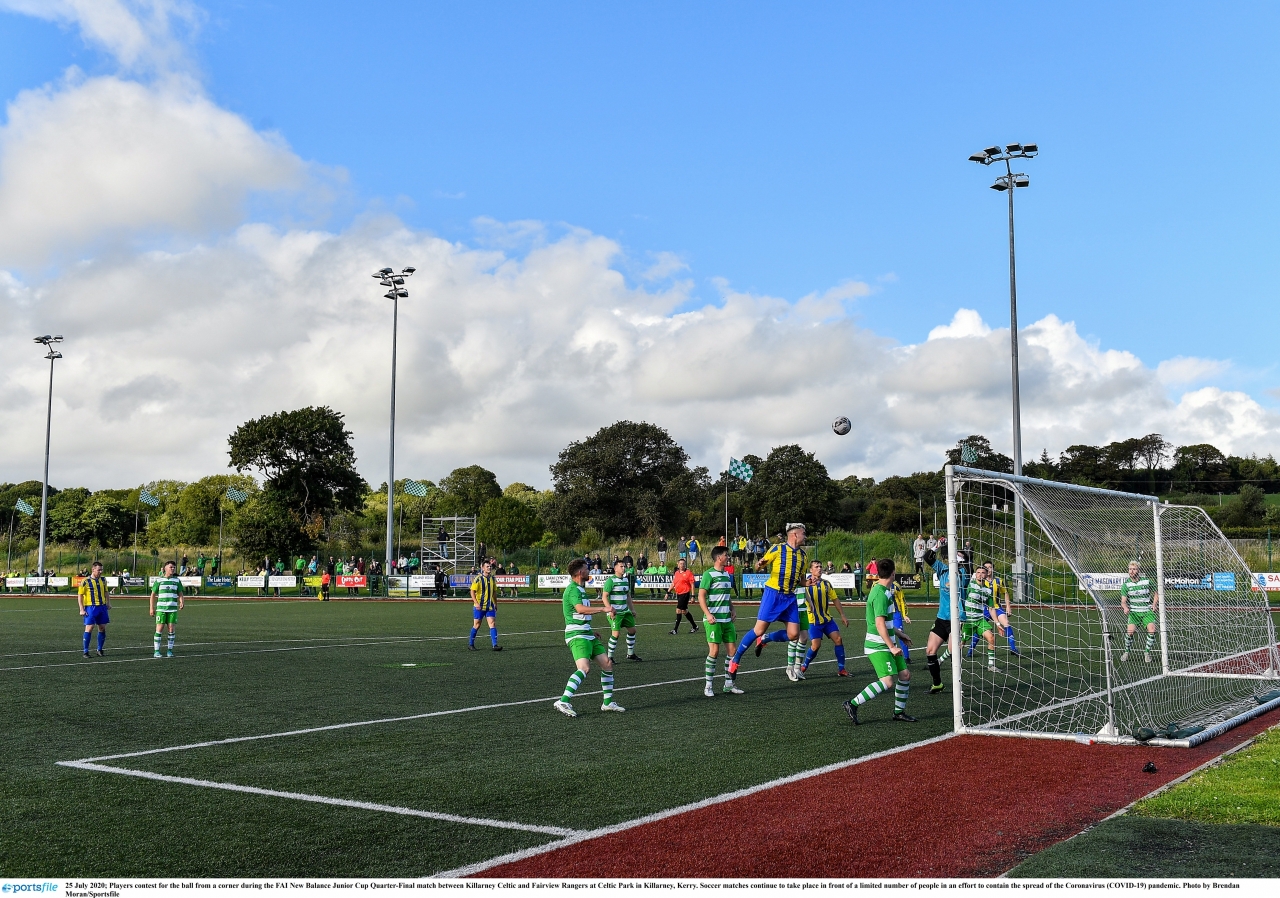
Éamonn Fitzgerald EF: Killarney Celtic are invited to participate in an Irish competition. That has big financial implications for travel, meals, etc. MD: It is great to be invited, showing […]
Published

on

Éamonn Fitzgerald
EF: Killarney Celtic are invited to participate in an Irish competition. That has big financial implications for travel, meals, etc.
MD: It is great to be invited, showing the quality of our squads, but travel costs are very high. I have been looking at clubs like ours in Limerick, Tipperary, Clare and elsewhere for a regionalised competition so that travel costs could be reduced, but I don’t see any commitment to that idea. It’s up in the air at the moment.
EF: Running an amateur sports club is very expensive, especially if you have so many successful teams in competition.
MD: You are well aware of that yourself, but with all of our activities, we are funded by the usual sources used by all sports to collect money. We are in a very good financial state.
EF:How good?
MD: As a trustee of the club, I am very proud to say that we are almost debt-free and we expect to be clear of any debt by October this year, marking our 50th anniversary. In saying that, whether you are an Under 12 or a senior player, all you have to pay for a training session with Killarney Celtic is €2.

EF:The women in Celtic appear to do great work developing soccer for all.
MD: Yes, they do marvellous work in so many parts of the club, led by trojan worker Mary Lyne. On Wednesday night last, the Mothers, Others and Friends started a weekly non-competitive fun game under lights at Celtic Park, and that is great.

EF: Can, can you see some ex-Celtic player is going to make it with a top Irish club and then cross Channel?
Md: I have to compliment Killarney Athletic here right away because Brendan Moloney and Diarmaid O’Carroll did just that. We haven’t had any such shining light yet, but we know that we will in the future because we have great young successful players coming through.
EF: Reverting back again, to 1976, you would have come up at the time The ‘ban’ was abolished. That rule prevented GAA players from playing soccer. If they did, they were suspended. However, it must have been difficult for a player to play both codes when it was permitted.
MD: Fair dues to Seán Kelly, he removed the “ban’, and we were very fortunate that there were some great players from Spa in particular, like Billy Morris, Seán Cronin, the Cahill brothers, James and John, Seánie Kelliher and others. They wanted to play football and soccer. The way we worked it in Celtic was that if the football season was over, then they always played soccer with us, and vice versa
EF: Why do you think that club soccer has become so popular in Ireland? It is climbing the rankings as a sport in Ireland.
MD: Because it’s on television the whole time, and the coverage is getting is precedented. Anytime you turn on the TV, you will find a soccer game from all parts of the world, not just cross channel. The 11-a-side is probably easier to organise than we say 15-a-side in the GAA, and some small clubs, particularly in rural areas, find it hard to get 15 to form a team. See what they’re doing in places. Two neighbouring teams get together as one team, and that’s understandable because all people want to do is play. Of course, not all young people wish to play soccer; they have different hobbies, learning the guitar or whatever, and that is great for them. That’s my experience anyway.

EF: The real crunch time comes when they get to roughly 18-years-old, completing their post-primary education and moving away from Killarney for third-level education. They may be in college, anywhere in the country, making it difficult to come down and play with their local club. So that’s one big reason for the fall off.
MD: Some fall away before that, believe it or not.
EF: Do you think Celtic are doing well, promoting the club?

Yes, for all sexes, but particularly for the girls, so that they can stay on longer for valuable coaching. We’re very fortunate to have David McIndoe as coach for the Celtic girls, and he is outstanding, absolutely fantastic.
EF: The FAI seems to stumble from one crisis to another, but at local level soccer is alive and well in towns, as well as in rural areas. Ballyhar and Mastegeeha are very good examples where great facilities have been developed by enthusiastic volunteers and that attracts the players
MD: So I think once you get to the stage where you have a facility and committed club people, you’re there. We have a very good membership, and we’d be well organised for parents who support their kids playing, and they do. We have two stands, as you know, one dedicated to our former great Celtic man, John Doyle (RIP). That’s important nowadays that you have a clubhouse where the spectators can get that welcome cup of coffee they will relish, especially on cold days.
EF: Where do you see Celtic in 2076?

MD: As I said earlier in Killarney Celtic, we are welcoming for everyone, the local Irish, of course, but it’s open to all. We have great people originally, from China, Europe, and the Middle East. We have an exceptionally good committee at the moment. We had people with foresight like Dermot O’Callaghan (RIP), who were progressive, and of course, that family continues the Celtic tradition. Obviously, we like to push the thing on a bit further, but we’re very conscious that we spent 50 years putting this together and we want to make sure that when we go, the structures are in place in (Killarney) Celtic for the next 50 ( years)As a trustee I am very proud of how we have developed and will celebrate that achievement this year. We will also remember the Celtic players and supporters who have passed away since 1976 and look forward to whatever challenges and opportunities face Killarney Celtic in the years ahead. It is hard to believe that it all started from our conversation (with Billy Healy and Tommy O’Shea) that a new club was needed in Killarney, so that all players who wish to play soccer will be able to play at whatever level they wish and join us at Celtic Park.
EF: Thanks, Mikey, and wish you good health on your daily cycles with your good friend Mike O’Neill.
That’s Mikey Daly, always a pleasure to chat with him on a variety of sports.

Continue Reading