
Sport
Are they the best or are they simply the biggest? Fitzgerald’s research is helping Kerry to identify young talent


by Adam Moynihan
Fascinating academic research by former Kerry captain Fionn Fitzgerald is helping Kerry GAA to more accurately identify senior stars of the future.
Fitzgerald, a lecturer at MTU Kerry in Tralee, is currently undertaking a PhD on the topic of the maturation effect in underage sports. He has found that although players in Kerry’s development squads might be the same age and play at the same age group, some of them get their growth spurts earlier than others. These early maturing players can, in effect, be much older than their peers from a biological standpoint.
In simple terms, Fitzgerald has examined the advantages early maturing players have over their teammates, and the effects this can have on all of the players within the system.
“We knew that age was an issue,” Fitzgerald explains. “We had explored this before in football and Gaelic games and we found a huge age bias (e.g. players born in January have an advantage over players born later in the year).
“But we also suspected that early maturing players were getting a lot more opportunities and were dominating sport. We then went about investigating if that is, in fact, the case.”
In short, that is precisely the case. The Dr Crokes man discovered that out of roughly 180 players in Kerry’s development squads, only one was categorised as 'late maturing'. The rest were either 'on-time' or 'early maturing'. The stark figures clearly indicate that coaches had been selecting players based on performance – which at underage level can often correlate with physical attributes - rather than potential.
“Scouts and coaches in all sports have been picking for winning, even at that level. That kind of narrowmindedness is magnifying the maturation effect. We have found that when we worked with the development squad coaches for over a year – and in fairness they really supported the work and bought into it – they got a greater understanding of the subject, and they kept more players in the system.
“They were less likely to dismiss a player as being ‘not up to it’ or ‘too small’. They were trying to keep an open mind.
“It's just very hard to make a conclusive call on a 14-year-old. This maturation aspect is not everything but it’s one huge factor that clearly clouds coaches’ opinions.
“You normally see more of a level playing field at minor than you would at U14. But the problem is that some players have already dropped out by then. And the players who were the main men, playing in central positions all along, they’re probably struggling because everyone else has caught up with them physically.”
BIOLOGICAL AGE
Instead of just going by chronological age, i.e. the player’s age according to their date of birth, Fitzgerald and his peers also use a metric called biological age. This involves measuring the player’s height and weight, as well as the height and weight of their parents. This data is then used to predict where the player is in terms of their physical development and where they will end up as an adult.
Being able to pinpoint when a player might be in the middle of a growth spurt is also helpful when it comes to injury prevention; players are more susceptible to injury during this period of their lives.
Some of the physical differences between players who were born in the same year are incredible.
“We found players at U14 level who were at 100% of their adult height. In other words, they looked very physically developed, because they were, but they weren’t growing anymore. Then we had players who were 85% of their adult height, so they had a huge development ahead of them.
"We had one player who was 40kg and another was 95kg - at the same age group. You’re into a ‘men versus boys’ scenario."
“We found that in some of the squads there was five or six years of a difference in some of the players, biologically speaking. That’s a huge gap. Biological age is probably a more accurate age to rate players on than their chronological age. Your date of birth means nothing really at that point of your life.
“So, who’s actually benefitting from the age groupings?” he asks. “Is it the early maturing players or the late maturing players? Ultimately, it seems to be neither of them.”
BIO-BANDING
One alternative to the traditional age groupings is a practice called bio-banding. This entails arranging players based on their biological age, so that early maturing players are placed with early maturing players and so on. The method has been embraced by clubs in the Premier League and New Zealand Rugby amongst others. Under Fitzgerald’s guidance, Kerry GAA have also implemented it in their development squads, albeit as an “adjunct tool” rather than as standard practice.
“I learned everything I know about bio-banding from the Premier League,” the Killarney native says. “The likes of Paudie Roche over at Arsenal and people at Southampton and Bournemouth gave me an insight into how clubs do it over there. They might have one week every month where they do bio-banding.
“What we did with Kerry was we trained away normally for a while and we tracked their maturation. Then we matched players in training, and then later in games, based on their maturity. We had Kerry South and Kerry North development squads and there were two different teams: an early maturing team and an on-time maturing team.
“They played in training and small sided games against each other, and then they played a full 15-a-side game."
The results of this experiment were informative to say the least.
“The early maturing guys who would normally be able to go through the centre and use their physical strength, they struggled an awful lot. From a skill execution point of view, they found it difficult because they were all at the same physical level. The team play wasn’t as good or as cohesive because they’re used to playing more individually.
“On the other hand, the on-time maturing players, they found it brilliant. Normally they might be playing in the corner, not getting much ball, and when they do get the ball they can’t take on their man because he’s bigger than they are. The skill levels were quite high in this game with a lot more interplay.
“The coaches also found that this game was relatively noisy because these players normally don’t take up leadership roles, maybe because they have less of an impact due to their size. They were suddenly talking more so it seemed to have a positive effect on their confidence.
“Both sets of players found it to be a positive experience. The early maturing players found it to be a big step-up in standard and the pace of the game was fast. They got exposed to a different challenge, a more appropriate one.
“The coaches loved it because they saw players in a different light. They saw players who they thought were excelling, struggle when they were put into a mature-appropriate environment. And they saw less mature players getting a chance to shine. It gave them a different slant on their players.
“Grouping players based on their age is flawed, but it’s not to say that we don’t do it either. It’s not practical at all to say, ‘let’s scrap the age groups’. But it is useful to coaches and parents to understand what really goes on.”
CROKE PARK
Fitzgerald’s work has attracted interest from the GAA at a national level. Croke Park have been in contact with a view to experimenting with bio-banding in other counties during the summer.
“It’s not like we’re replacing the chronological age groupings but maybe once a month squads might do bio-banded training sessions or games. Or they might play bio-banded matches once or twice a year to give the players a different challenge.
“It's an appropriate tool to magnify the effect of maturation. A couple of counties who are starting to embed practices around growth maturation might look at playing some challenge games against one another to scale it up a little bit. Rather than it just being done in Kerry, maybe they’ll get to play another county. Cork is another county where we got a lot of our maturation data last year.”
Over the course of his research, Fitzgerald, who recently launched a new youth athletic development programme called the Kaipara Academy, has seen a similar trend across the board.
“We found the same thing in GAA development squads, in Irish soccer and at Premier League clubs: their talent systems are dominated by early maturing players. In Kerry, there was only one late maturing player out of 180 in the whole system. And that particular player was Messi-like. In other words, if you’re late maturing, you have to be something special.
“That’s the issue with the effect of maturation. Potentially there are players who may be less skilful but their physical prowess is skewing their performance. Equally there might be players who have lots of potential but because they won’t mature physically until later, they get overlooked.
“This is not just a problem at county level, it’s also a problem at grassroots level. More research needs to be done here but it’s quite notable everywhere you look.
“This year we will also be exploring maturation in female athletes. What happens around the growth spurt for males and females is quite different so we need to examine that and see if there's a correlation.”
When I put it to him that arming GAA coaches with all this information could radically change the type of player being produced at county level, Fitzgerald is unequivocal in his response:
“100%.”
News
Fossa Swimmers make a splash at County Finals
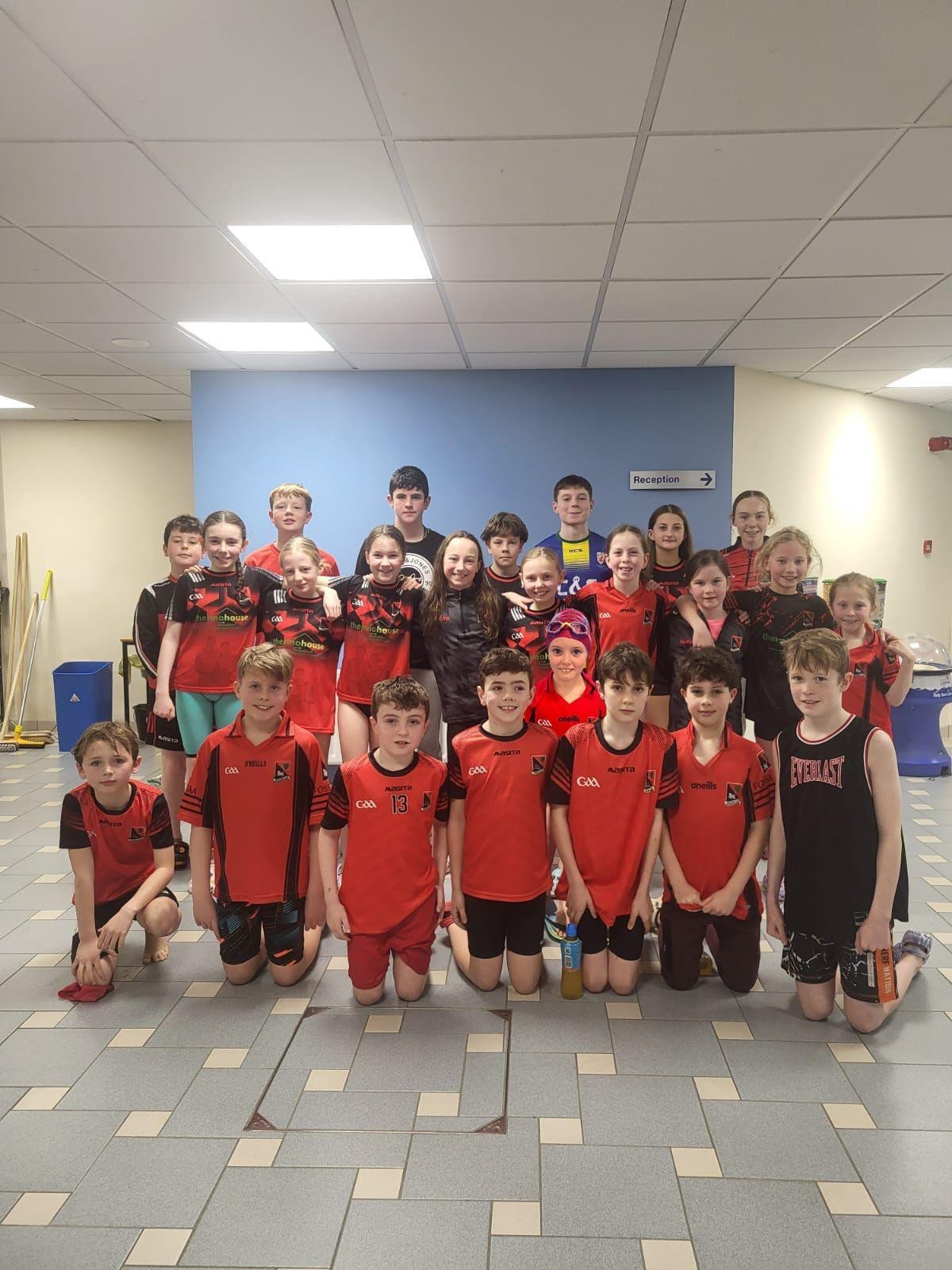
The Fossa Swim team pictured at the Tralee Sports Complex following their successful outing at the County Finals of the Community Games on Sunday, February 15. The 25-strong squad delivered […]

News
On the Ball Part 2 of the Mikey Daly Interview
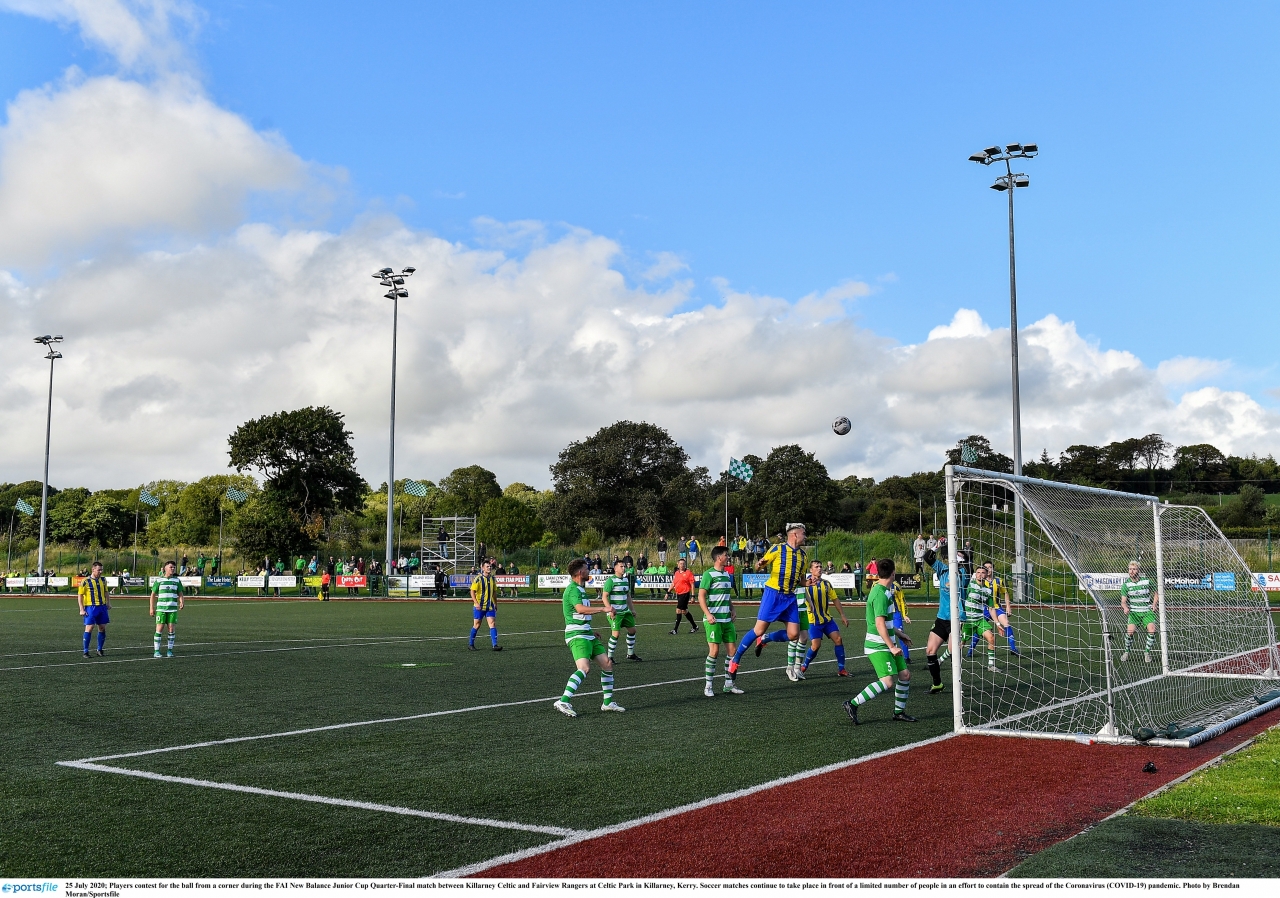
Éamonn Fitzgerald EF: Killarney Celtic are invited to participate in an Irish competition. That has big financial implications for travel, meals, etc. MD: It is great to be invited, showing […]


Paralympic legend Jason Smyth visits St Brendan’s
Paralympic legend Jason Smyth visits St Brendan’s World renowned Paralympian and world record holder Jason Smyth paid a visit to...


Deerpark Retail Park placed on market for fifteen million euro
Deerpark Retail Park in Killarney has officially been placed on the market with a guide price in excess of 15.4...


Killarney Racecourse to host first professional festive pantomime
Killarney Racecourse to host first professional festive pantomime A classic fairytale is set to receive a distinct Kerry makeover this festive...


Kerry artist explores identity at ANAM
Kerry artist explores identity at ANAM Kerry artist Felix Power is inviting the Killarney community to explore personal ideas of...


Town encouraged to wear bright colours for Kevin
Town encouraged to wear bright colours for Kevin The town of Killarney was encouraged to wear its brightest colours this...
