
News
KNOW YOUR RIGHTS: Rights of seasonal and part-time workers


This week, Declan Canty, Information Officer with Kerry Citizens Information outlines some of the rights and entitlements of seasonal and part-time workers.
A seasonal worker is a person who, for a limited period, works for a seasonal operation which is frequently found in the horticultural or agricultural sector. Other sectors, such as tourism and construction, are also included. Employees placed by an agency to carry out seasonal work are also in this category.
Terms of Employment
“Workers on seasonal work patterns have full access to the employment law provisions and to the terms and conditions of employment that employees are guaranteed under the law in Ireland," Declan said.
"Within five days of commencing employment, an employee must receive a written statement of the five core terms of their employment. In addition to this, employees must receive a full written statement of their terms and conditions of employment within two months of commencing employment.”
Wages and Pay
The National Minimum Wage is the minimum hourly pay rate that employers can legally pay their employees. It applies to full-time, part-time, temporary and seasonal employees. The rates are age related, with the full rate of €10.50 per hour applying to those age 20 or over.
“If your employment is covered by an SEO or an ERO you may have an entitlement to a higher rate of pay. An employee is also entitled to a premium payment for Sunday working.”
A written statement of wages (payslip) must be given to every employee with every payment of wages or, if you are paid electronically, as soon as possible after an electronic transfer has taken place.
Working Hours
The legislation sets out the rules around maximum working hours and, also, daily and weekly rest breaks. In some industries, such as agriculture and tourism, the rest breaks and rest periods may differ. You can get more information by contacting your local CIC or looking up our website www.citizensinformation.ie.
Holiday Leave
All employees, whether they are full-time, part-time, temporary or seasonal, earn annual leave and public holiday entitlements from the time they commence employment. There are minimum statutory entitlements for all employees, including an entitlement to four weeks paid annual leave per leave year for most employees. However, employees’ holiday entitlements are calculated depending on time worked. “If you need help calculating your annual leave entitlements, feel free to give us a call and we will be happy to help.”
Public Holidays
In Ireland there are now 10 public holidays each year. From 2023, there will be a new public holiday on the first Monday in February and the first Monday in February each year thereafter, except where February 1 falls on a Friday in which case that Friday February 1 will be the public holiday. While full-time workers have an immediate entitlement to benefit for public holidays, part-time workers have entitlement to benefit when they have worked a total of 40 hours in the previous five weeks.
Part-Time Workers
You are a part-time worker if you have fewer normal working hours than a comparable full-time worker. A comparable full-time worker works for the same employer as you, and either:
* Does the same work as you, under the same or similar conditions
* Is interchangeable with you in relation to the work done (for example, you can substitute or fill in for one another)
* Does the same work or similar work to you, and any differences between your work and working conditions are insignificant
* Does work of equal value, or of lesser value, than you.
The law on part-time work is set out in the Protection of Employees (Part-Time Work) Act 2001. This Act applies to all part-time workers, including casual workers. Part-time employees’ entitlements are generally in proportion (pro-rata basis) to full-time employees’ entitlements. This means that they should be in proportion to your hours. Declan confirms that there are minimum periods of continuous service required for the purpose of Unfair Dismissal and Redundancy entitlements as per the Unfair Dismissals Acts 1973-2015, and the Redundancy Payments Act 2003.
For more information in relation to your employment rights please contact a member of the local Citizens Information Service in Kerry on 0818 07 7860 Monday to Friday from 10am to 4pm. Alternatively you can email on tralee@citinfo.ie or log on to www.citizensinformation.ie
The National Phone Service is available on 0818 07 4000 Monday to Friday 9am to 8pm.

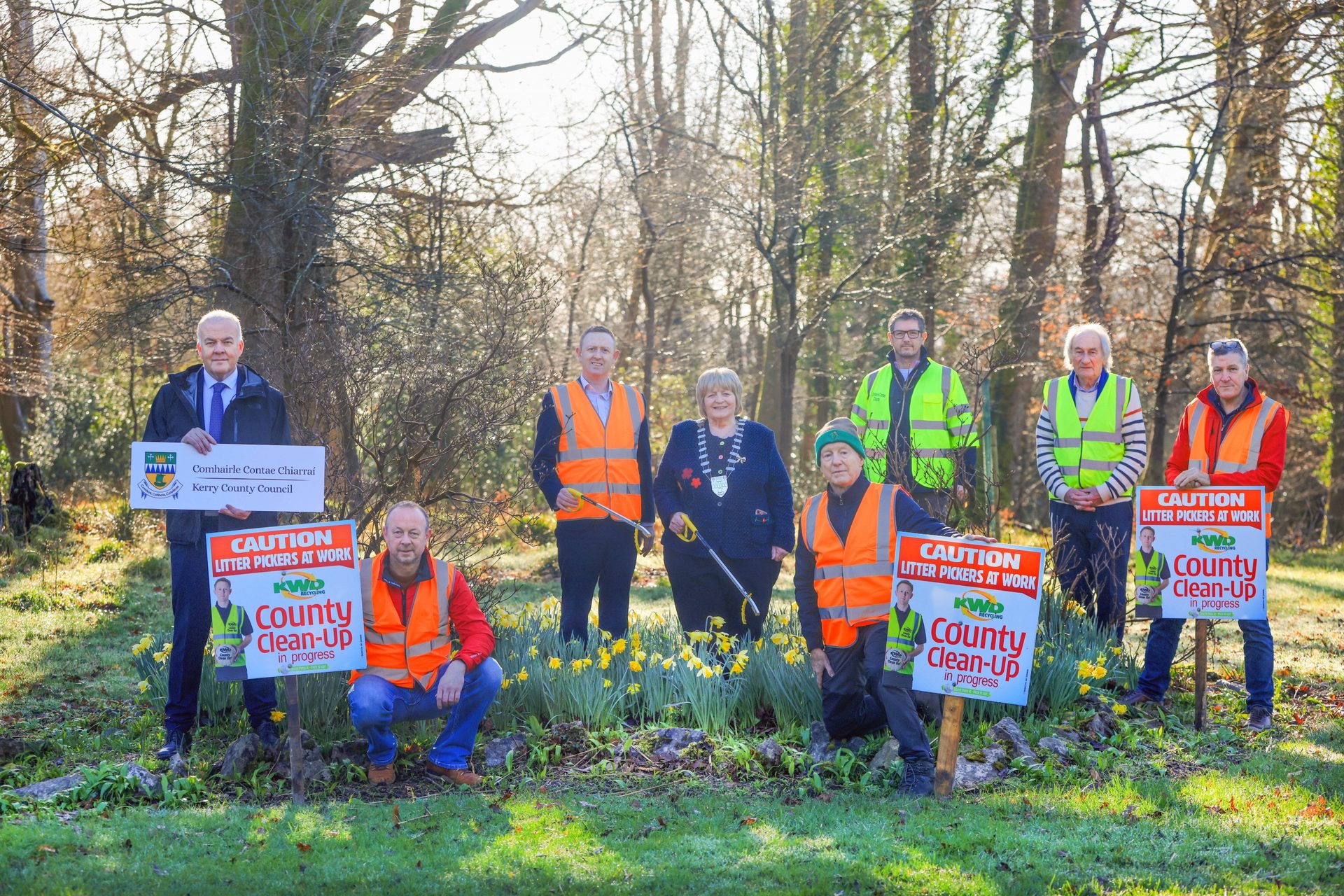
KWD Recycling shortlisted for national environmental awards
Killarney-based KWD Recycling has been announced as a finalist in the 2026 Repak Resource Awards, securing a spot on the national shortlist for environmental achievement.
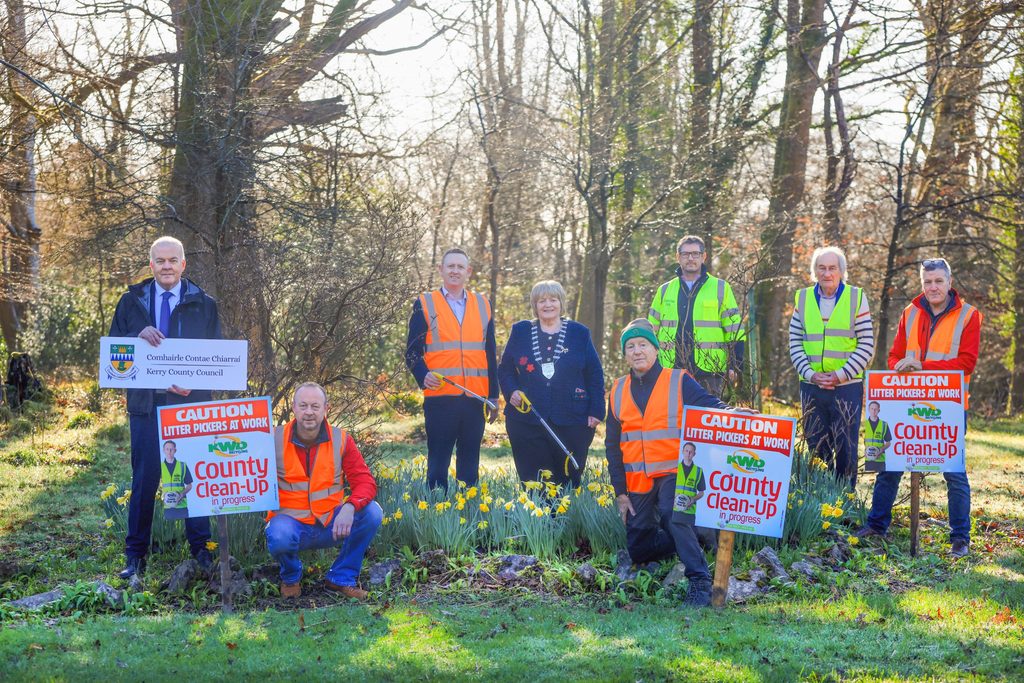
The local waste management company has been nominated in the Best Recovery Operator Innovation category, sponsored by DNV, for its state-of-the-art residual waste recovery system.
The Killarney facility utilizes optical sorting, screening, and mechanical processing to extract recyclable plastics and organic material from municipal waste. In its first year of operation, the technology recovered more than 10 per cent of plastic packaging from residual waste for recycling and diverted almost 50 per cent of organic material toward composting.
KWD Recycling will compete alongside Dublin operators Panda and Thorntons Recycling for the category title.
Repak CEO Zoe Kavanagh commended the Kerry firm for demonstrating environmental leadership and bringing local ambition to the national awards.
Category winners will be announced at a black-tie ceremony at the Mansion House in Dublin on Friday, October 23, where each winner will also compete for the Overall Repak Resource Award.
Local businesses have a strong track record at the national event, with Killarney town venue The Killarney Park and The Ross previously taking home the overall title in 2023.
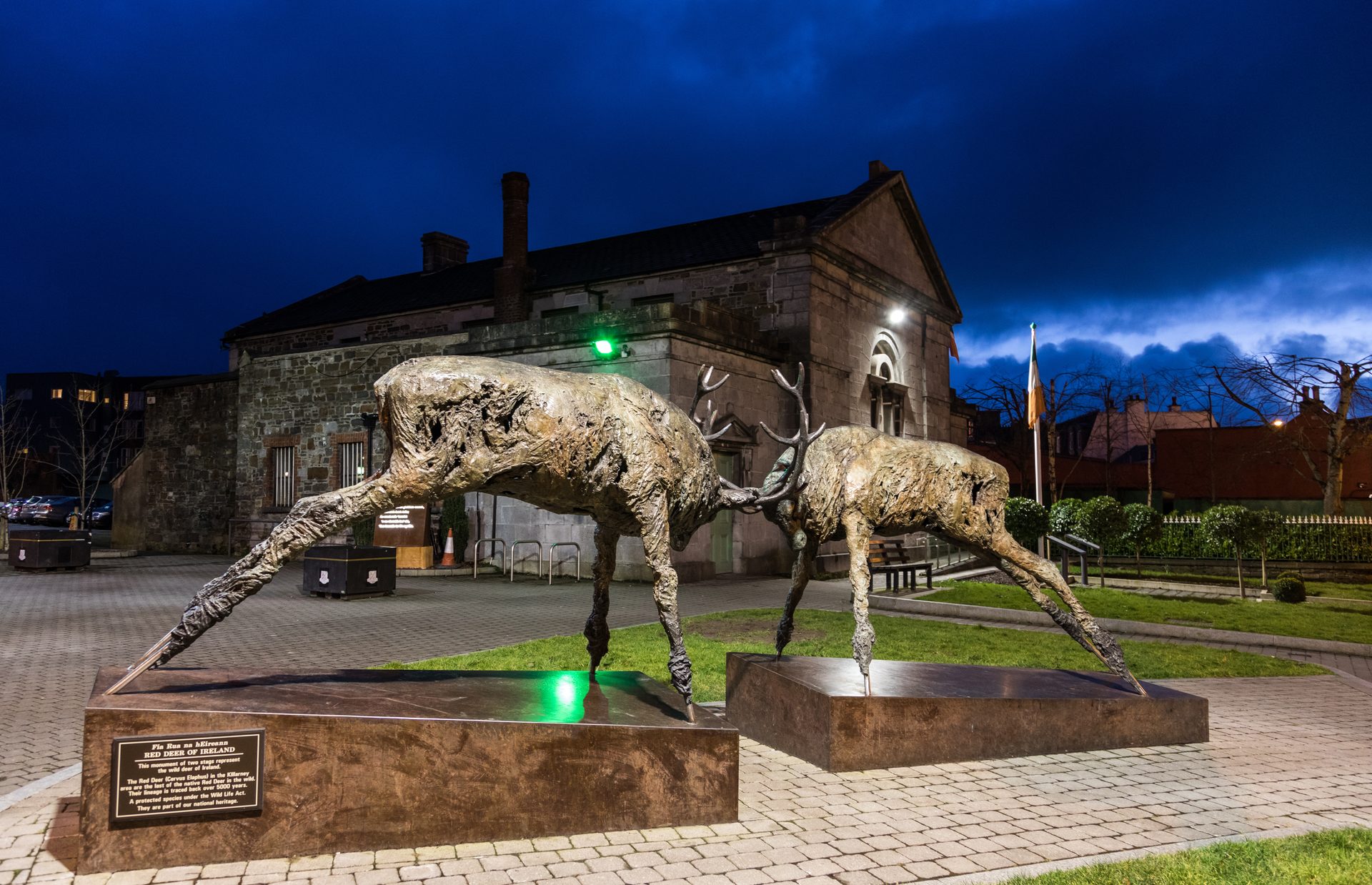
Drivers warned as deer rutting season begins
Motorists in Killarney are being urged to exercise extreme caution as the annual deer rutting season gets underway, causing animals to stray far beyond their usual habitats inside Killarney National Park.
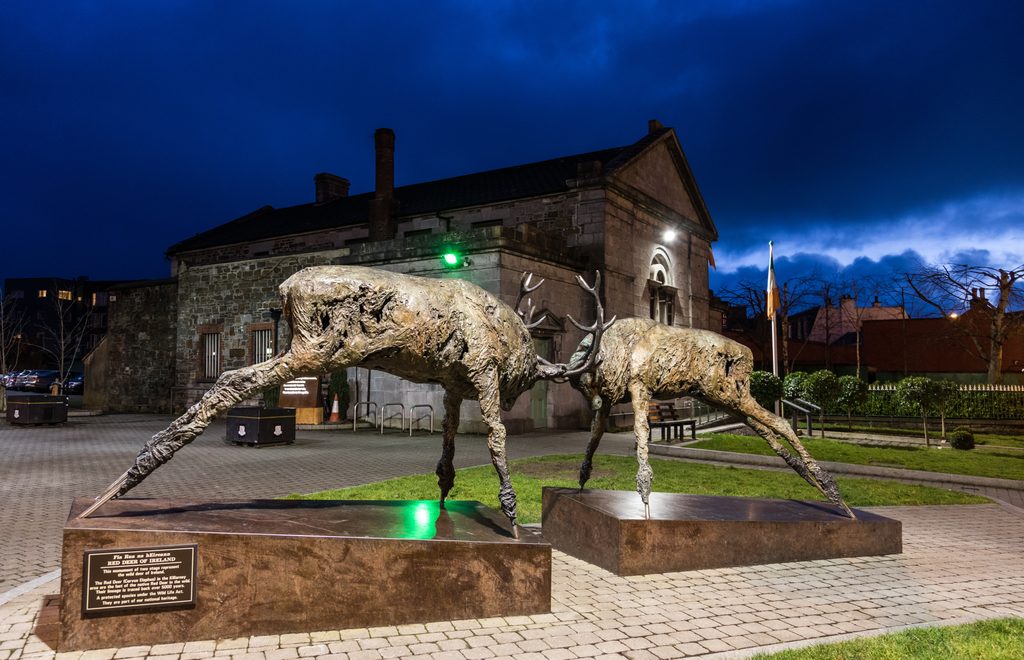
The autumn mating season sees deer becoming highly active and unpredictable, leading to increased sightings and collisions on local roads outside traditional park boundaries.
Two separate incidents highlighted the growing hazard on local routes this week. A reader contacted the Killarney Advertiser to warn drivers after spotting a deer roaming near Tiernaboul towards the school on Sunday afternoon around 7.30pm.
Later that same night, in the early hours of Monday morning, a local driver collided with a deer near Kerry Airport around 1am while returning home from an event.
Despite attempting evasive action, the motorist struck the animal, which died at the scene and temporarily blocked the road before local Gardaí were alerted to clear the obstruction.
The driver sustained substantial vehicle damage, requiring repairs to the bumper, headlamp, and internal components, leaving her facing significant garage costs and time off the road.
Gardaí and road safety advocates advise motorists travelLing during early morning and late evening and remain vigilant along tree-lined routes.
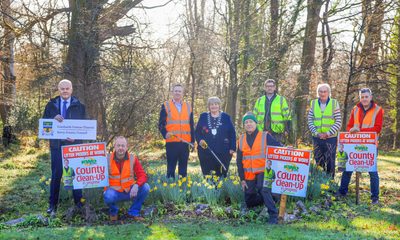

KWD Recycling shortlisted for national environmental awards
KWD Recycling shortlisted for national environmental awards Killarney-based KWD Recycling has been announced as a finalist in the 2026 Repak...
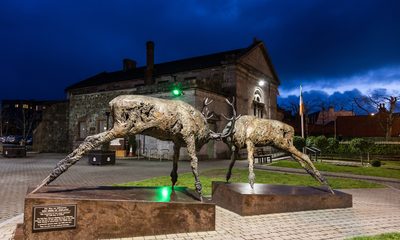

Drivers warned as deer rutting season begins
Drivers warned as deer rutting season begins Motorists in Killarney are being urged to exercise extreme caution as the annual...
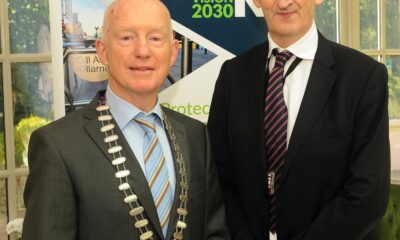

Kerry Airport CEO addresses chamber luncheon
Kerry Airport chief executive Adrian Neilan addressed local business leaders at the Killarney Chamber of Tourism and Commerce luncheon at...


The Brehon raises €2,850 for Jack and Jill Foundation
The Brehon Hotel and Spa raised €2,850 for the Jack and Jill Children’s Foundation after hosting a closest-to-the-pin golf simulator...
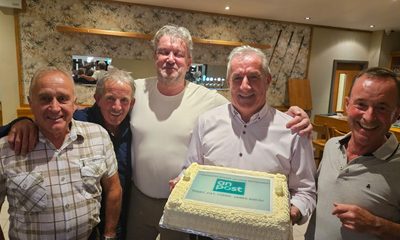

Five local postmen retire with 185 years service
Five local postmen retire with 185 years service RETIREMENT NIGHT: Pictured at the retirement party held at Killarney Racecourse on...


Fossa Swimmers make a splash at County Finals
The Fossa Swim team pictured at the Tralee Sports Complex following their successful outing at the County Finals of the...

On the Ball Part 2 of the Mikey Daly Interview
Éamonn Fitzgerald EF: Killarney Celtic are invited to participate in an Irish competition. That has big financial implications for travel,...


LUKE MANGAN recently caught up with Kerry FC’s manager, Colin Healy.
He spoke to him about his careers as a player and manager. Here’s how it went: When you began your...


Home cup tie for St Paul’s could be epic
Paudie O’Connor National Cup (Round 1) Utility Trust St Paul’s v GCU Brunell Saturday 7.30pm Killarney Sports and Leisure Centre...


Chances of Kerry v Cork Munster final in 2026 decrease as Munster GAA delay seeding plan
After facing a backlash from Limerick, Clare, Waterford and Tipperary players, Munster GAA have postponed their plan to keep Cork...
