
News
New book recounts stories from the Irish Civil War


The killing of 17-year-old Bertie Murphy in Killarney in September 1922

CIVIL WAR: 17-year-old Bertie Murphy was killed in Killarney in September 1922.


.

CIVIL WAR: 17-year-old Bertie Murphy was killed in Killarney in September 1922.


.
Historian and author, Owen O’Shea recounts one of the most shocking murders of the Civil War which occurred in Killarney a century ago this week.
There were many tragic episodes and incidents during the Civil War in Kerry. One of the dreadful features of the conflict was the young age at which many on both sides of the conflict were killed in 1922 and 1923.
In Killarney in August 1922, for example, two young Free State army medics were shot dead by a sniper as they stepped off a boat onto the shore of Inisfallen Island. 18-year-old Cecil Fitzgerald and 20-year-old John O’Meara, both from Galway, had joined the army just a few months previously and were enjoying a boat trip on the lake during a day’s leave when they were killed.
The following month, one of the most shocking deaths to occur in Killarney in this period was the murder of a 17-year-old boy from Castleisland.
Bertie Murphy, a member of Fianna Éireann, the youth wing of the IRA, was just 17-years-old when he was taken into custody by Free State soldiers while walking near his home in September 1922. His mother saw him being taken in away in a truck to the Great Southern Hotel where the army had established its headquarters in the town.
The improvised barracks had a number of prison cells in the basement where anti-Treaty IRA members were detained. The prison would become renowned as a place where beatings and torture took place: a young man whose brother was an IRA captain was taken there and ‘mercilessly beaten to get him to reveal information’. He was then ‘thrown down a coal chute and left as dead’.
On Wednesday, September 27, a Free State army convoy was ambushed by the IRA at Brennan’s Glen on the Tralee road and two officers, Daniel Hannon and John Martin, were killed. Bertie Murphy had been in one of the army vehicles – he was being used by the army as a hostage in an attempt to prevent attacks by anti-Treaty forces. It was common for Free State convoys to carry a prisoner as a deterrent to IRA ambushes and attacks.
When the convoy returned to the hotel, they were met by Colonel David Neligan, one of the most ruthless members of the Kerry Command of the Free State army. Neligan had been a member of Michael Collins’ ‘Squad’ during the War of Independence and was an experienced and battle-hardened soldier.
Neligan demanded to know why the soldiers had not taken any prisoners during the ambush at Brennan’s Glen, in which two of his officers had died. The soldiers, in a frenzy following the ambush, threw Bertie Murphy down the steps of the hotel. In the presence of other soldiers, Neligan began to beat up Murphy at the bottom of the steps and then shot the prisoner. In her book, 'Tragedies of Kerry', Dorothy Macardle says that Murphy lived ‘until the priest came’, but died shortly after.
Another prisoner was in custody in the hotel at the time. Con O’Leary from Glenflesk was brought down from his cell to identify the dead man. But so extensive were Murphy’s facial injuries that O’Leary was unable to identify his fellow prisoner.
Newspaper reports wrongly reported that Murphy had been wounded during the engagement at Brennan’s Glen and had ‘succumbed to his injuries’ on returning to Killarney.
At Murphy’s inquest which was held a fortnight later, General Paddy O’Daly, the head of the Kerry Command, sympathised with Murphy’s family but insisted that Murphy had died in the ambush at Brennan’s Glen. He said his soldiers had done ‘everything humanly possible for the man’.
He reminded those present that deaths like Murphy’s were the fault of reckless IRA leaders who refused to accept the authority of the people. ‘It is the women and children’, he said, ‘that are suffering, and for all the suffering that is being endured those leaders are to blame’.
It would not be the last time that O’Daly and senior army officers in Kerry would cover up the actions of their soldiers in the county. Nor, sadly, would it be the last time that young men, on both sides of the divide, joined the long list of victims of the Civil War in the county.
Owen O’Shea’s new book, ‘No Middle Path: The Civil War in Kerry’ will be published by Merrion Press in mid-October and can be pre-ordered now on Amazon and at www.owenoshea.ie.

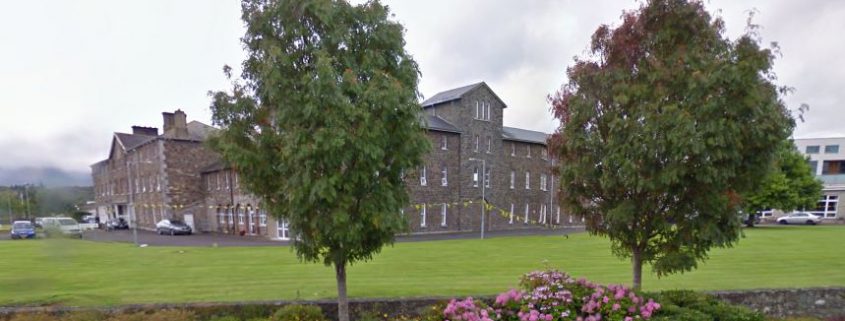
A design team has been appointed to advance plans for the proposed Minor Injury Unit on the grounds of St Columbanus Home though the HSE has confirmed it cannot yet give a construction or opening timeline.
Fianna Fáil TD Deputy Michael Cahill received the update in response to a Parliamentary Question submitted to the Minister for Health. HSE South West confirmed the newly appointed team will progress the project through design development, planning, and regulatory approval following the transfer of residents to the new Killarney Community Nursing Unit.
Deputy Cahill welcomed the appointment of the design team but raised concerns over the lack of a definitive schedule.
“I welcome the appointment of a design team, which represents progress towards delivering this important facility. However, I am concerned that the HSE is still unable to provide a definitive timeline. Previous indications from HSE officials pointed towards construction commencing in 2026, with completion anticipated in 2027. We now need clarity on the project schedule and assurances that there will be no unnecessary delays,” Deputy Cahill said.
He noted that the facility is vital to serve Killarney and the wider east, mid, and south Kerry regions while relieving pressure on the Emergency Department at University Hospital Kerry.
The HSE also confirmed it is finalising a broader review of healthcare accommodation across Killarney to develop the St Columbanus campus as an integrated healthcare hub.
“As a member of the Oireachtas Joint Committee on Health, I will continue to press the HSE and the Minister for Health to ensure this project is progressed without further delay. People across Killarney, east, mid, west and south Kerry deserve certainty. The appointment of a design team is welcome but the next priority must be getting this project to construction and delivering the facility,” Deputy Cahill concluded.
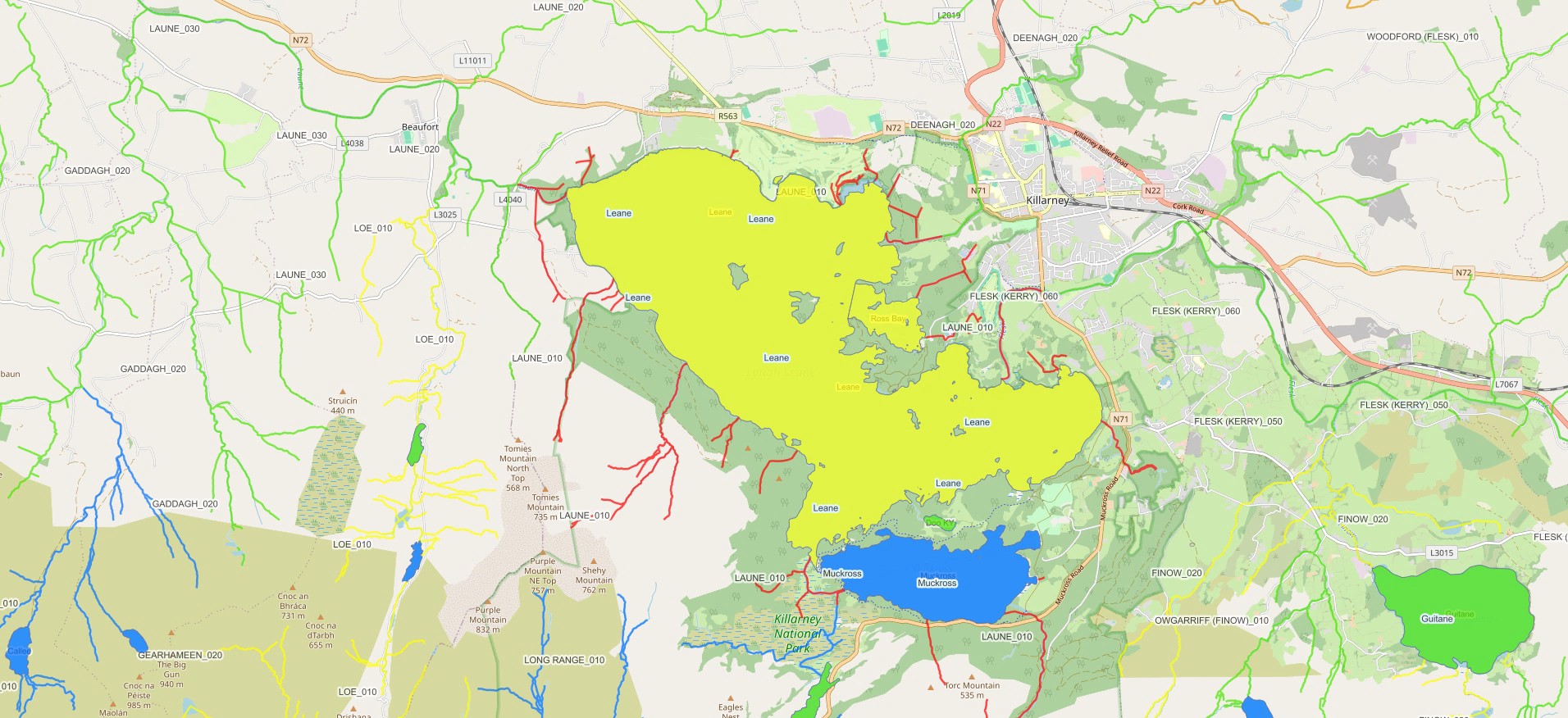
Lochanna Beo’s mapping highlights water quality concerns
Local environmental action group Lochanna Beo has released mapping data from the Environmental Protection Agency (EPA) to draw attention to deteriorating water quality across Killarney and the broader Laune Catchment.
The EPA map uses a colour-coded system to rate water quality status from 2019 to 2024: blue indicates high status, green indicates good, yellow represents moderate, brown denotes poor, and red signifies bad status.
The figures indicate significant ecological pressure on local lakes and rivers compared to neighbouring areas across County Kerry.
Formed during the summer of 2026, Lochanna Beo aims to bring together residents, business owners, agricultural operators, and public bodies to address the key factors affecting the regional aquatic ecosystem.
The community initiative is seeking direct engagement with relevant statutory authorities to implement practical restoration measures and protect the long-term health of Killarney’s water bodies.

Design team appointed for injury unit
A design team has been appointed to advance plans for the proposed Minor Injury Unit on the grounds of St...
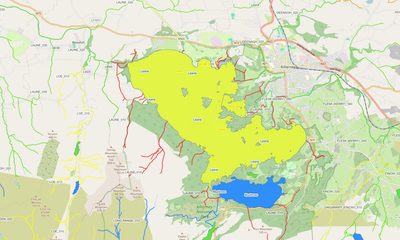

Lochanna Beo’s mapping highlights water quality concerns
Lochanna Beo’s mapping highlights water quality concerns Local environmental action group Lochanna Beo has released mapping data from the Environmental...
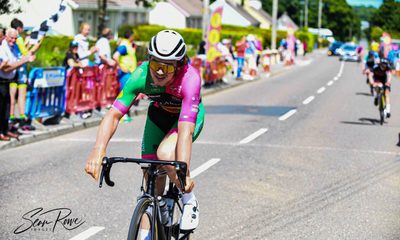

Stefan Caulfield-Dreier signs professional cycling contract
Former Killarney Cycling Club rider Stefan Caulfield-Dreier has secured a professional contract with leading Dutch-based outfit Azerion-Villa Valkenburg. The 23-year-old...
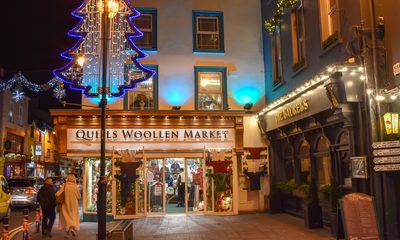

Church seeks creative Christmas trees for festival
Church seeks creative Christmas trees for festival The Methodist Church in Killarney is inviting local schools, community groups, businesses, and...
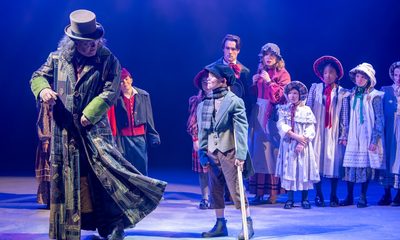

€6,000 Scrooge Giveaway!
€6,000 Scrooge Giveaway! Six lucky audience members will each walk away with €1,000 as the Gleneagle Arena welcomes an extraordinary...
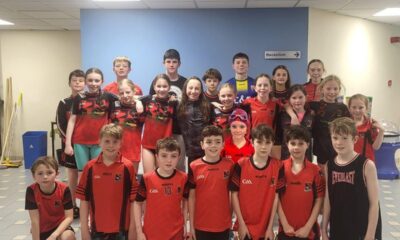

Fossa Swimmers make a splash at County Finals
The Fossa Swim team pictured at the Tralee Sports Complex following their successful outing at the County Finals of the...
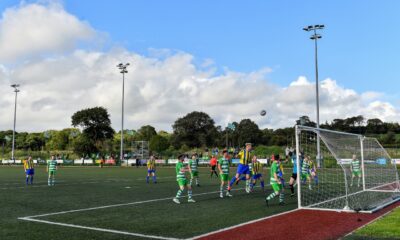

On the Ball Part 2 of the Mikey Daly Interview
Éamonn Fitzgerald EF: Killarney Celtic are invited to participate in an Irish competition. That has big financial implications for travel,...
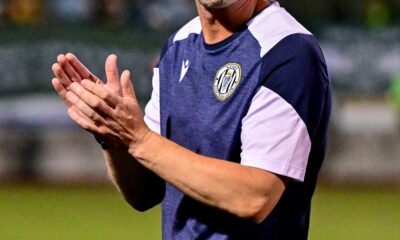

LUKE MANGAN recently caught up with Kerry FC’s manager, Colin Healy.
He spoke to him about his careers as a player and manager. Here’s how it went: When you began your...


Home cup tie for St Paul’s could be epic
Paudie O’Connor National Cup (Round 1) Utility Trust St Paul’s v GCU Brunell Saturday 7.30pm Killarney Sports and Leisure Centre...


Chances of Kerry v Cork Munster final in 2026 decrease as Munster GAA delay seeding plan
After facing a backlash from Limerick, Clare, Waterford and Tipperary players, Munster GAA have postponed their plan to keep Cork...
