
News
How to protect your home from intruders


By John Healy of Healy Insurances
Burglary rates have increased considerably as pandemic restrictions were lifted and workers returned to the workplace.

.

.
It is important to be mindful of security in your home. You should include all the following in your everyday routine to avoid break-ins:
Use levered deadlocks
Fitting and using good quality locks such as levered deadlocks on your doors will make it harder for burglars to barge through them. You should also ensure all ground floor windows have locks.
Hide keys/valuables out of sight
Remove keys from locked doors and windows and put them in a safe place. Valuables (cash, jewellery etc.), which can be seen from outside, are tempting targets for burglars, so keep them out of sight.
Apply timed switches on lights
Put timer switches on your lights so it looks like you’re at home when you’re out.
Install home security cameras and/or an alarm system
These can act as a deterrent and may ward off burglars. When choosing a home alarm system, look for one which is all the following:
1. Your home’s alarm should be easy to see as it will ward off burglars
2. A loud alarm will scare off burglars’ mid-break-in, while a fake or ‘dummy’ alarm won’t
3. Monitored alarms will allow the police to respond to an alarm event much more quickly
4. Household alarm systems that are wireless are harder to tamper with and continue to work during power outages
Lock garden items away
Valuable items such as bikes and power tools should be locked securely in a garden shed or outbuilding when not in use. Also, a well-lit garden can deter would-be burglars as it stops them from sneaking around unseen.
Most insurers will offer a discount if your house has a monitored alarm, however you must ensure that it is turned on and in working order each time you leave the house.

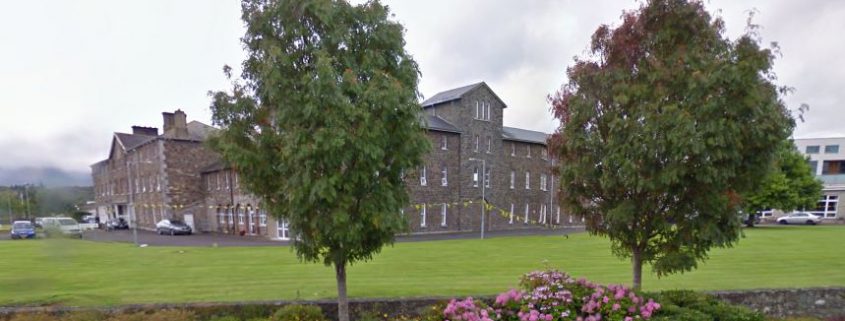
A design team has been appointed to advance plans for the proposed Minor Injury Unit on the grounds of St Columbanus Home though the HSE has confirmed it cannot yet give a construction or opening timeline.
Fianna Fáil TD Deputy Michael Cahill received the update in response to a Parliamentary Question submitted to the Minister for Health. HSE South West confirmed the newly appointed team will progress the project through design development, planning, and regulatory approval following the transfer of residents to the new Killarney Community Nursing Unit.
Deputy Cahill welcomed the appointment of the design team but raised concerns over the lack of a definitive schedule.
“I welcome the appointment of a design team, which represents progress towards delivering this important facility. However, I am concerned that the HSE is still unable to provide a definitive timeline. Previous indications from HSE officials pointed towards construction commencing in 2026, with completion anticipated in 2027. We now need clarity on the project schedule and assurances that there will be no unnecessary delays,” Deputy Cahill said.
He noted that the facility is vital to serve Killarney and the wider east, mid, and south Kerry regions while relieving pressure on the Emergency Department at University Hospital Kerry.
The HSE also confirmed it is finalising a broader review of healthcare accommodation across Killarney to develop the St Columbanus campus as an integrated healthcare hub.
“As a member of the Oireachtas Joint Committee on Health, I will continue to press the HSE and the Minister for Health to ensure this project is progressed without further delay. People across Killarney, east, mid, west and south Kerry deserve certainty. The appointment of a design team is welcome but the next priority must be getting this project to construction and delivering the facility,” Deputy Cahill concluded.
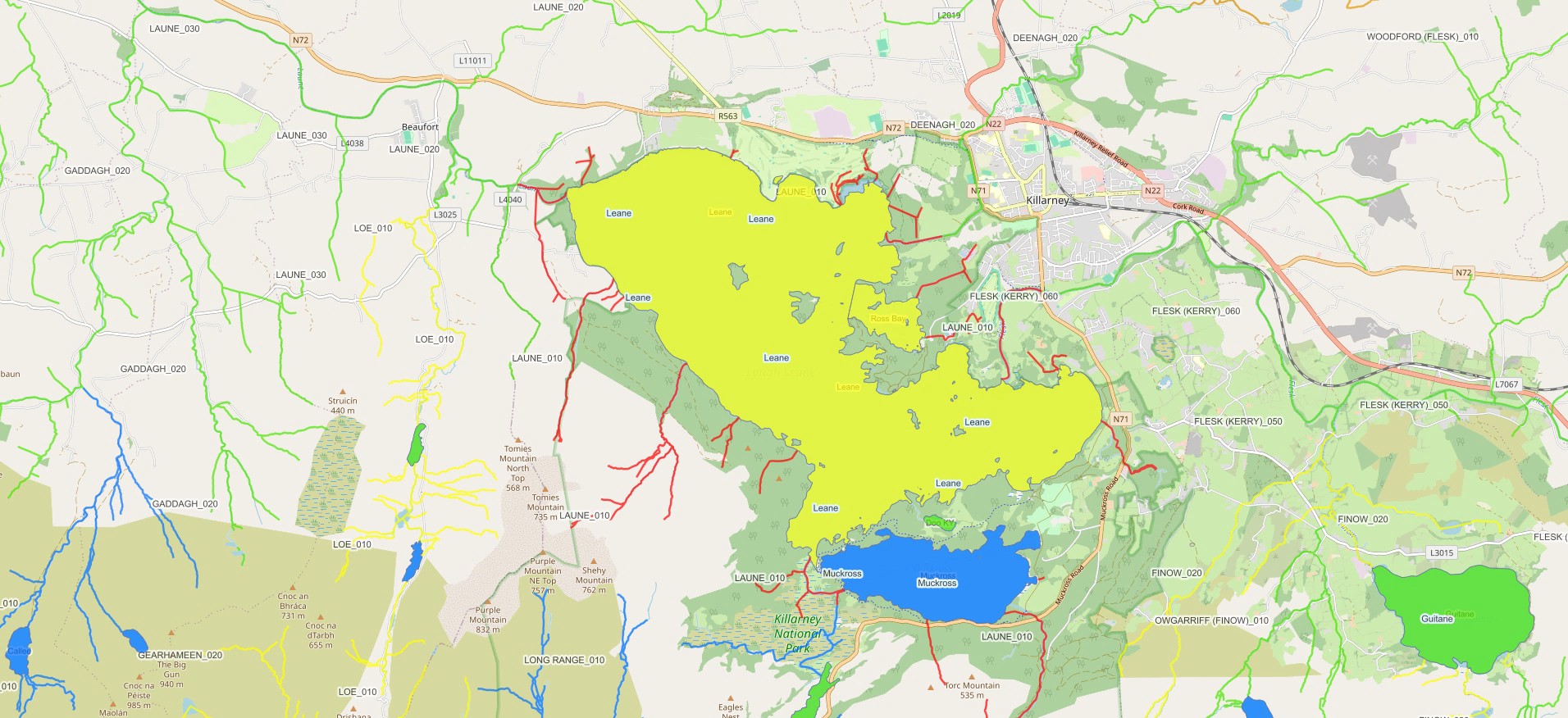
Lochanna Beo’s mapping highlights water quality concerns
Local environmental action group Lochanna Beo has released mapping data from the Environmental Protection Agency (EPA) to draw attention to deteriorating water quality across Killarney and the broader Laune Catchment.
The EPA map uses a colour-coded system to rate water quality status from 2019 to 2024: blue indicates high status, green indicates good, yellow represents moderate, brown denotes poor, and red signifies bad status.
The figures indicate significant ecological pressure on local lakes and rivers compared to neighbouring areas across County Kerry.
Formed during the summer of 2026, Lochanna Beo aims to bring together residents, business owners, agricultural operators, and public bodies to address the key factors affecting the regional aquatic ecosystem.
The community initiative is seeking direct engagement with relevant statutory authorities to implement practical restoration measures and protect the long-term health of Killarney’s water bodies.

Design team appointed for injury unit
A design team has been appointed to advance plans for the proposed Minor Injury Unit on the grounds of St...
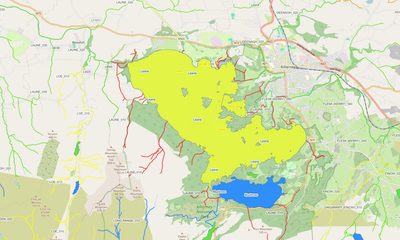

Lochanna Beo’s mapping highlights water quality concerns
Lochanna Beo’s mapping highlights water quality concerns Local environmental action group Lochanna Beo has released mapping data from the Environmental...


Stefan Caulfield-Dreier signs professional cycling contract
Former Killarney Cycling Club rider Stefan Caulfield-Dreier has secured a professional contract with leading Dutch-based outfit Azerion-Villa Valkenburg. The 23-year-old...


Church seeks creative Christmas trees for festival
Church seeks creative Christmas trees for festival The Methodist Church in Killarney is inviting local schools, community groups, businesses, and...


€6,000 Scrooge Giveaway!
€6,000 Scrooge Giveaway! Six lucky audience members will each walk away with €1,000 as the Gleneagle Arena welcomes an extraordinary...
