
News
KNOW YOUR RIGHTS: Motor vehicle collisions


Let’s face it, despite our best efforts, accidents do happen.
If you are involved in a motor collision, the law requires you to do certain things. This applies whether the collision was with another motor vehicle, another user of the road or an object along the road.
“Apart from the legal aspect, there are also things it is advisable to do for safety reasons and to help reduce your possible financial loss,” cautions Deirdre Vann Bourke, Kerry Manager with South Munster Citizens Information Service. “Forewarned is forearmed so it’s worth being informed about what to do in the event of an accident.”
What are my legal obligations?
Your legal obligations, if you are involved in a motor collision, are set out in Section 106 of the Road Traffic Act 1961 as amended. Firstly, you must stop your car and remain at the scene of the accident for a reasonable time.
Provide information: If a Garda is present at the scene of the collision, you must give them, when requested:
* Your name and address
* The address where your car is kept
* The name and address of the car owner
* The car’s registration number
* Motor insurance details (including the expiry date of the policy)
If there is no Garda present you must give this information on request to:
* The injured person (where someone has been hurt) – or a person asking on their behalf
* The owner whose property has been damaged, or someone asking on their behalf or
* Give the information to an independent person who was present when the collision occurred.
Report the accident: If there is no Garda present, you must report the accident as soon as possible to a Garda who is nearby or at a Garda station. The person (if any) you gave the information to can do this. If they are not in a position to do so, you must report the accident.
What should I do if I am involved in a motor collision?
“There are a number of steps you should take if you are unlucky enough to be involved in a collision with another vehicle,” says Deirdre.
Decide whether to move the cars:
If the collision is serious, do not move the cars. If the collision is minor and the cars are blocking the road or are a danger to other road users, mark their position on the road then move them. Take care when moving damaged cars and be alert to the danger from leaking fuel.
Warn other drivers: Try to warn oncoming traffic of the accident. You can warn them by using your hazard lights. If you have a reflective advance-warning triangle, place it on the road far enough from the scene of the collision to give enough warning to approaching traffic. If the collision happens near a bend in the road, make sure you give warning to traffic on both sides of the bend. If you need to ask for another road user’s help to warn traffic, do so right away.
Call for help: If someone is injured, call the Gardaí (telephone 999 or 112) and, if necessary, ambulance services.
Get information: You should get the information listed above (under ‘Provide Information’) from the other drivers involved in the collision. If the collision involves damage to property, get the owner’s name, address and telephone number.
Get the names, addresses and telephone numbers of any witnesses, as these may be required if a question of liability arises.
Photos: Take photos of the scene of the collision if you have a camera. These should include photos of the vehicles before they are moved.
Garda details: You should get the name or number of the Garda to whom the collision is reported. You may need to ensure that a Garda report has been filed for insurance purposes.
“You should write down an account of all relevant facts connected to the collision as soon as possible afterwards,” advises Deirdre. “Be sure to sign and date your account (including the time) when it is completed. This could be a very useful document to have going forward.”
Uninsured or unidentified cars:
If you wish to claim compensation where you are involved in an accident with an uninsured or unidentified car, contact the Motor Insurer's Bureau of Ireland (MIBI). MIBI also deals with claims arising from foreign drivers in Ireland or Irish drivers abroad.
Serious road traffic collisions:
When a serious road traffic collision occurs, causing a serious or fatal injury, there will be an investigation by the Gardaí and possibly the coroner. It may involve an inquest and even a criminal prosecution.
For anyone needing information, advice or have an advocacy issue, you can call a member of the local Citizens Information team in Kerry on 0818 07 7860, they will be happy to assist and make an appointment if necessary. The offices are staffed from Monday to Friday from 10am to 4pm. Alternatively you can email on tralee@citinfo.ie or log on to www.citizensinformation.ie for further information.

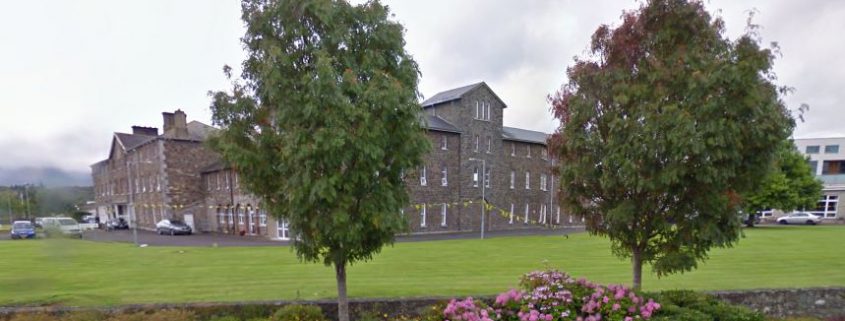
A design team has been appointed to advance plans for the proposed Minor Injury Unit on the grounds of St Columbanus Home though the HSE has confirmed it cannot yet give a construction or opening timeline.
Fianna Fáil TD Deputy Michael Cahill received the update in response to a Parliamentary Question submitted to the Minister for Health. HSE South West confirmed the newly appointed team will progress the project through design development, planning, and regulatory approval following the transfer of residents to the new Killarney Community Nursing Unit.
Deputy Cahill welcomed the appointment of the design team but raised concerns over the lack of a definitive schedule.
“I welcome the appointment of a design team, which represents progress towards delivering this important facility. However, I am concerned that the HSE is still unable to provide a definitive timeline. Previous indications from HSE officials pointed towards construction commencing in 2026, with completion anticipated in 2027. We now need clarity on the project schedule and assurances that there will be no unnecessary delays,” Deputy Cahill said.
He noted that the facility is vital to serve Killarney and the wider east, mid, and south Kerry regions while relieving pressure on the Emergency Department at University Hospital Kerry.
The HSE also confirmed it is finalising a broader review of healthcare accommodation across Killarney to develop the St Columbanus campus as an integrated healthcare hub.
“As a member of the Oireachtas Joint Committee on Health, I will continue to press the HSE and the Minister for Health to ensure this project is progressed without further delay. People across Killarney, east, mid, west and south Kerry deserve certainty. The appointment of a design team is welcome but the next priority must be getting this project to construction and delivering the facility,” Deputy Cahill concluded.
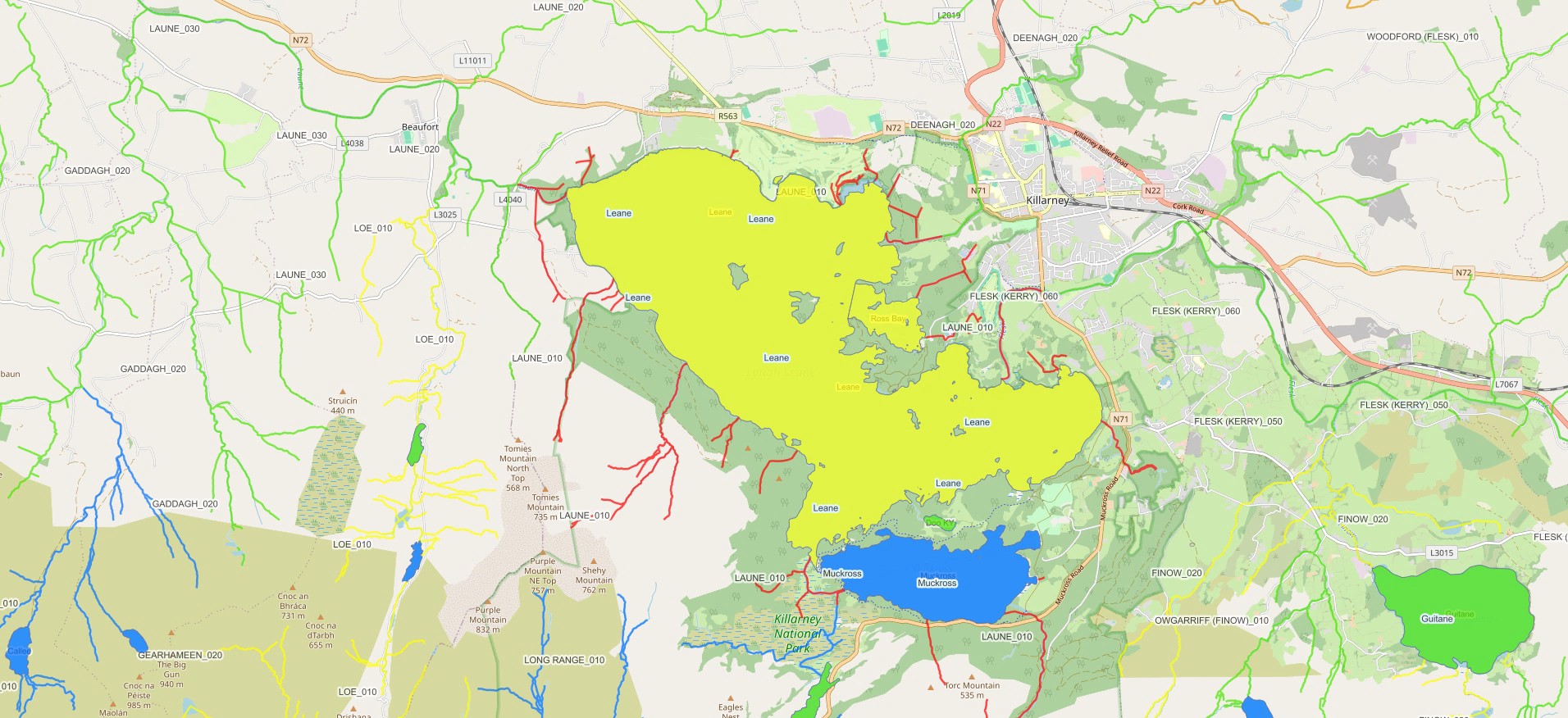
Lochanna Beo’s mapping highlights water quality concerns
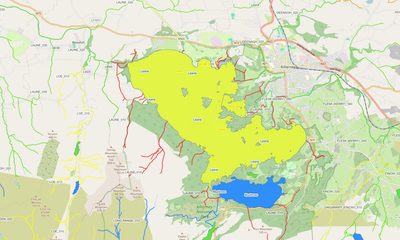
Local environmental action group Lochanna Beo has released mapping data from the Environmental Protection Agency (EPA) to draw attention to deteriorating water quality across Killarney and the broader Laune Catchment.
The EPA map uses a colour-coded system to rate water quality status from 2019 to 2024: blue indicates high status, green indicates good, yellow represents moderate, brown denotes poor, and red signifies bad status.
The figures indicate significant ecological pressure on local lakes and rivers compared to neighbouring areas across County Kerry.
Formed during the summer of 2026, Lochanna Beo aims to bring together residents, business owners, agricultural operators, and public bodies to address the key factors affecting the regional aquatic ecosystem.
The community initiative is seeking direct engagement with relevant statutory authorities to implement practical restoration measures and protect the long-term health of Killarney’s water bodies.

Design team appointed for injury unit
A design team has been appointed to advance plans for the proposed Minor Injury Unit on the grounds of St...

Lochanna Beo’s mapping highlights water quality concerns
Lochanna Beo’s mapping highlights water quality concerns Local environmental action group Lochanna Beo has released mapping data from the Environmental...

Stefan Caulfield-Dreier signs professional cycling contract
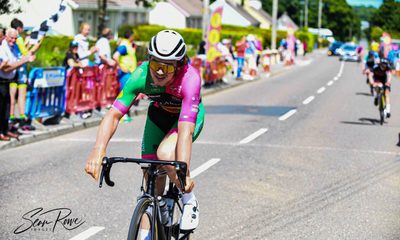
Former Killarney Cycling Club rider Stefan Caulfield-Dreier has secured a professional contract with leading Dutch-based outfit Azerion-Villa Valkenburg. The 23-year-old...


Church seeks creative Christmas trees for festival
Church seeks creative Christmas trees for festival The Methodist Church in Killarney is inviting local schools, community groups, businesses, and...


€6,000 Scrooge Giveaway!
€6,000 Scrooge Giveaway! Six lucky audience members will each walk away with €1,000 as the Gleneagle Arena welcomes an extraordinary...


Fossa Swimmers make a splash at County Finals
The Fossa Swim team pictured at the Tralee Sports Complex following their successful outing at the County Finals of the...

On the Ball Part 2 of the Mikey Daly Interview
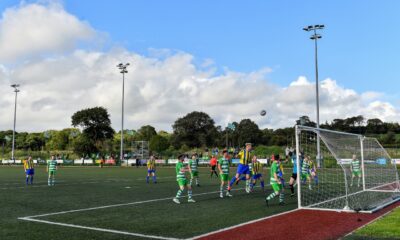
Éamonn Fitzgerald EF: Killarney Celtic are invited to participate in an Irish competition. That has big financial implications for travel,...

LUKE MANGAN recently caught up with Kerry FC’s manager, Colin Healy.
He spoke to him about his careers as a player and manager. Here’s how it went: When you began your...


Home cup tie for St Paul’s could be epic
Paudie O’Connor National Cup (Round 1) Utility Trust St Paul’s v GCU Brunell Saturday 7.30pm Killarney Sports and Leisure Centre...


Chances of Kerry v Cork Munster final in 2026 decrease as Munster GAA delay seeding plan
After facing a backlash from Limerick, Clare, Waterford and Tipperary players, Munster GAA have postponed their plan to keep Cork...
