
Sport
Meet the Kerry woman rubbing shoulders with Serena and Nadal


Molly Sullivan chats to Adam Moynihan about life as a strength and conditioning coach to professional tennis player İpek Öz
Molly Sullivan always wanted to work in professional sports but she never imagined it would happen like this. Despite playing a bit of tennis as a kid, the Ballyhar native admits to only having a passing interest in the sport. Up until recently, that is.
In April she came on board as strength and conditioning coach for up and coming Turkish player İpek Öz. The last few months have been a whirlwind of international travel, Grand Slams, and mixing with some of the greatest tennis players of all time.
It’s all bit surreal, Sullivan admits, although when you speak to her it doesn’t take long to figure out how she has ended up where she is. During our walk around Killarney House and Gardens on a sunny Tuesday morning, the 24-year-old comes across as clear-minded and driven; the type of person for whom mediocrity isn’t an option.
Initially she wanted to be a sports agent so she studied Law and Psychology in UL, but the draw of a more hands-on role was strong.
“It was a crossroads, left or right, and I couldn’t really decide for a very long time,” she recalls. “In the end I went and did a Masters in Sports Performance in UL. I finished that a year-and-a-half ago. Now I’m doing a Masters of Science in Sports Nutrition, which I’ll be finishing in November.”
Upon graduating from her first Masters, she quickly picked up an S&C gig with the Irish swim team. She enjoyed the role (despite dealing with the effects of the pandemic during her time there) but she ultimately came to the conclusion that it wasn’t for her.
“My boss there referred me another S&C coach, Ian Jones, who has worked in the NFL with the Houston Texans. That was my thing when I was studying, I wanted to go and work in the NFL. When Ian offered me a job, I was delighted. I took it because of the amount of connections Ian has and the amount of people he knows.”
A short time after linking up with Jones, her foresight paid off - albeit it in an unexpected manner.
“I was working with Ian for less than three months when he sent me a voice note saying that there was an American tennis coach looking for a strength and conditioning coach, and would I have any interest in travelling out there and trialling it for a few weeks.”
The athlete in need turned out to be the No. 1 female tennis player in Turkey, İpek Öz.
Sullivan, an accomplished rower who earlier this year won a national title in the women’s quad with Killorglin RC, jumped at the opportunity. Although she readily confesses to not being a big tennis fan up to that point.
“I actually wasn’t to be honest with you,” she smiles. “I used to play it when I was a kid but I would only watch the majors. I was never a hardcore tennis fan. But I just always wanted to work in professional sport. That was the goal. So it was a no-brainer to take the job.”
In addition to taking care of Öz’s physical training, Sullivan also manages the nutrition side of things. She says she has been taken aback by the sheer volume of work pro tennis players get through on a daily basis.
“It’s so different to any sport I’ve worked in. It’s insane the amount they have to go through. There’s a documentary on Netflix worth watching called Untold: Breaking Point. It shows how mentally draining it is.
“It’s all about showing up and doing the exact same thing for hours, and then doing the gym for an hour. And then repeating that the next day. In terms of workload, it’s very high.
“İpek gets up in the morning and hits [balls] for two or two-and-a-half hours on the court. It’s every other day basically for me; one day will be a weights session and the next day will be a conditioning session. So she’s training for about four hours every day, at least.
“Injury risk is always a problem, and you have to think about nutrition constantly. As a player you really have to love what you’re doing or else it just won’t work.”
By chance, Sullivan’s appointment has coincided nicely with the most exciting time in the pro tennis calendar. Since linking up with her new employer for the first time in Sweden (where Öz won a €25,000 tournament), the Kerry woman has been at Wimbledon, Roland Garros and, most recently, the US Open.
She helped Öz through a two-week training camp in Istanbul before flying out to the latter tournament, which is still ongoing. The Turkish player, who is currently ranked 165th in the world, exited in the qualifiers at the hands of Leolia Jeanjean of France last Wednesday.
It was nevertheless an incredible experience for Sullivan, not least because of the famous faces she bumped into while working at the iconic Flushing Meadows venue.
“The US Open was cool because all the main draw players arrive early. While we were there I watched Rafa Nadal practice every day. You meet them all in the corridor every day. I was just star-struck all the time.
“I’ve met Nadal a good few times actually. He came very early [to the US Open]. I just decided to go to Arthur Ashe Stadium, which is open to anyone with accreditation, and he was in there practicing. He took a photo with me afterwards. The following morning I saw him in the hallway and he said ‘good morning’. He’s just really sound and makes time for everyone. That’s the impression I got from him.”
This particular US Open is very special indeed for one of the greatest tennis players of all time, Serena Williams. The 40-year-old is expected to call it a day once her involvement in this year’s tournament is over; she is in third round action today (Friday) against Ajla Tomljanović. Sullivan is growing accustomed to being around the likes of Nadal and Andy Murray and Naomi Osaka, but she admits to being especially starstruck around the 23-time Grand Slam champ.
“I remember one day I was talking to İpek and I said, ‘Jeez, I’d love to meet Serena Williams’. And 10 seconds later, I swear, she was there warming up next to us. I turned around and was like, ‘I can’t be here right now’.
“I don’t like bothering players when they’re doing something so I actually caught her for a picture after her practice two days later. She was sound. Very nice about it.”
What do her family back in Ballyhar, a rural townland near Killarney, make of it all?
“They think I have notions now I’d say,” Sullivan jokes. “They think it’s unreal though. It’s what I’ve always wanted to do. I’ve had it planned when I was studying that I wasn’t going to end up anywhere else besides professional sport. Thankfully it has paid off now.”
Next up is a busy period that includes trips to Bucharest, Budapest and Parma. Sullivan says Öz is making good progress as she comes to terms with elite level tennis.
"She’s doing okay. She’s dealing with a lot of other things on the side that is affecting her mentally (Öz recently split with her coach). Other than that she’s going well. It’s her first year in Grand Slam tournaments so it’s a huge difference for her. You’re walking into the US Open and there are thousands of people there asking for pictures and autographs. And hers was a night match so everyone was drinking… It’s just a different kettle of fish altogether.
“She’s aiming to get into the top 100, and then the top 50. It’s all leading up to January, really, and the Australian Open in Melbourne. The big goal for İpek will be to win a few matches at a major.
“It’s exciting. The Australian Open is supposed to be the nicest of all of them for the athletes and coaches. The facilities are meant to be insane. You’re treated like royalty at the Grand Slams. It’s really nice to be a part of it.”
As for her future beyond that, Sullivan’s ambitions remain sky high, although she does feel as though being a woman is an “obstacle” in her chosen field. She was fortunate that Öz “really wanted” a female S&C coach, but job-hunting in male sports may prove to be more challenging.
“It’s not easy getting a job in professional sports as a female strength and conditioning coach. It’s just not that common yet. I was the only one at the US Open from what we could see. The females there were sports psychologists, nutritionists, or you’d see the odd physio. The majority of the teams were all male. I was constantly getting asked when I was playing because everyone thought I was a tennis player.
“Being a girl is still an obstacle, for sure. Especially working with men’s teams. That’s why I did my second masters; I wanted to have everything covered from an employer’s point of view.
“I’d like to help İpek get as high as she can in the rankings and go on that journey with her a bit. I’ll just see how that goes really and then, like I said, I always wanted to work in the NFL. I had planned to do that this summer on an internship but when I got offered this job, it took precedence.
“We’ll just have to see where it goes.”
News
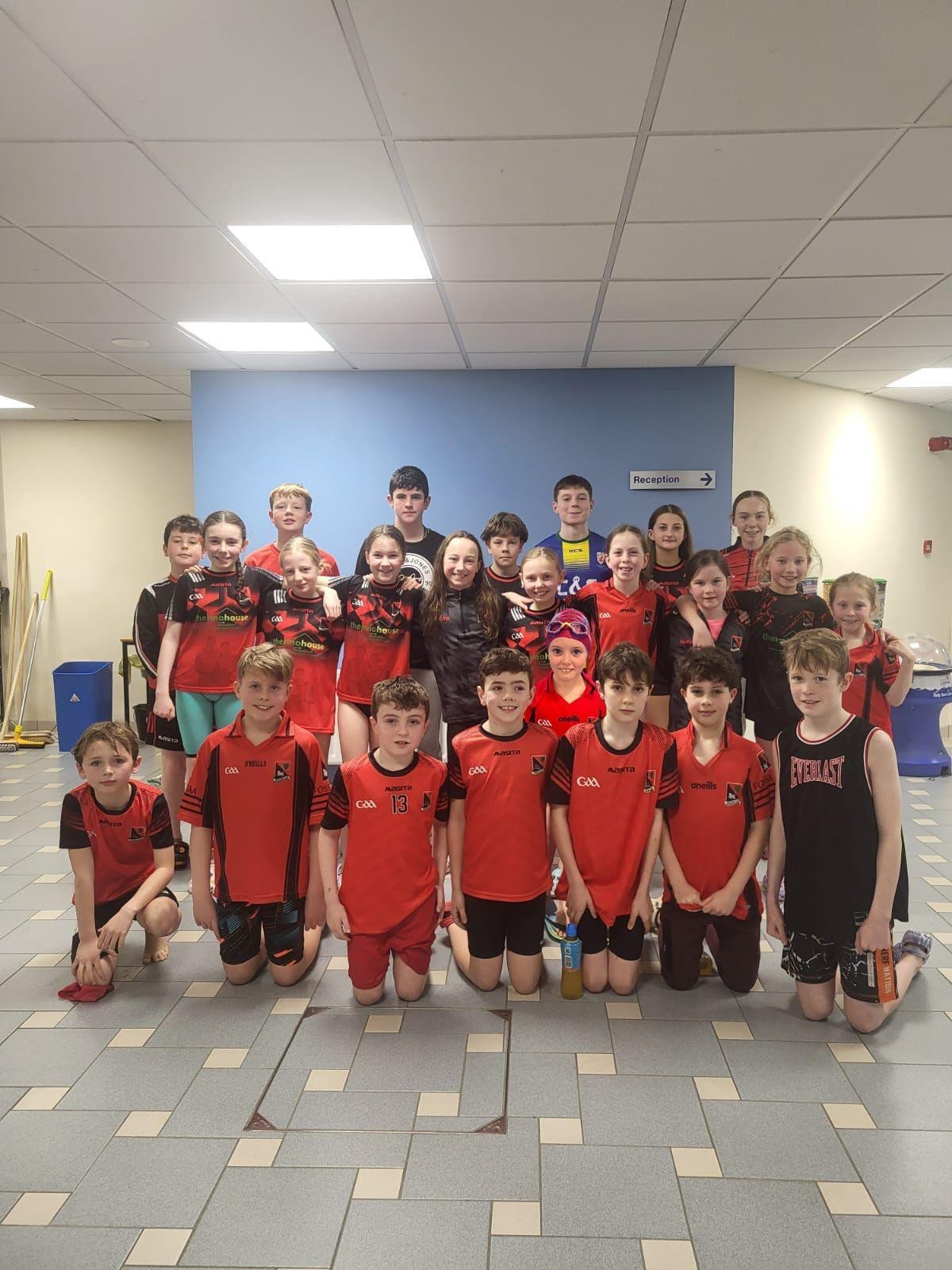
Fossa Swimmers make a splash at County Finals
The Fossa Swim team pictured at the Tralee Sports Complex following their successful outing at the County Finals of the Community Games on Sunday, February 15. The 25-strong squad delivered […]

News
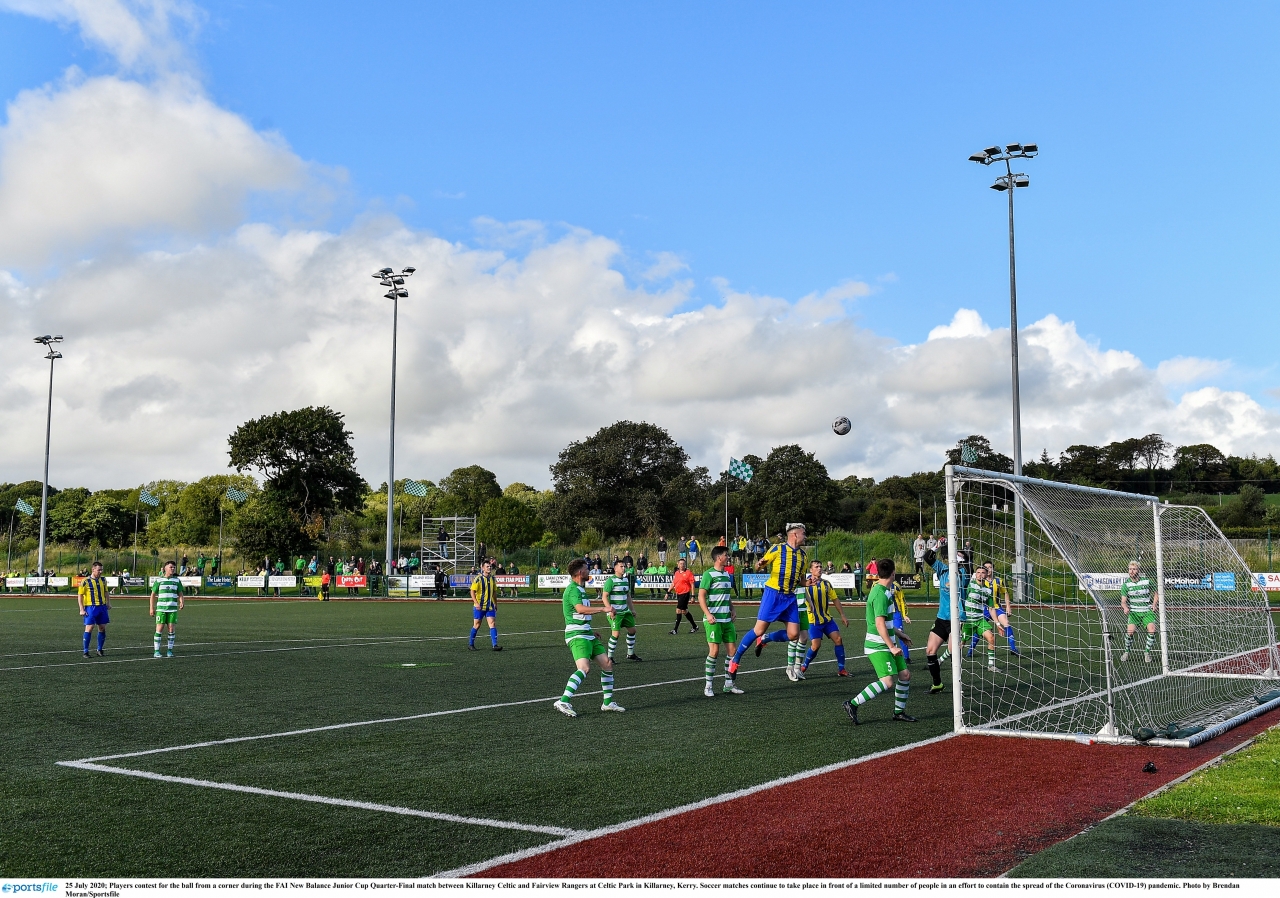
On the Ball Part 2 of the Mikey Daly Interview
Éamonn Fitzgerald EF: Killarney Celtic are invited to participate in an Irish competition. That has big financial implications for travel, meals, etc. MD: It is great to be invited, showing […]


Killarney Pumpkin Farm returns for Halloween
The annual event is in its sixth year and caters to people of all ages. The farm is located in...


Killarney Toastmasters host special open night
Killarney Toastmasters is inviting members of the local community to an open night at the Dromhall Hotel on Muckross Road...

Killarney hotels achieve top global rankings in Readers’ Choice Awards
Killarney hotels achieve top global rankings in Readers’ Choice Awards Two leading Killarney hotels are celebrating major international accolades following...

Paralympic legend Jason Smyth visits St Brendan’s
Paralympic legend Jason Smyth visits St Brendan’s World renowned Paralympian and world record holder Jason Smyth paid a visit to...


Deerpark Retail Park placed on market for fifteen million euro
Deerpark Retail Park in Killarney has officially been placed on the market with a guide price in excess of 15.4...
