
Sport
A year on from his Tokyo despair, Jordan Lee is bouncing back


High jumper Jordan Lee opens up to Adam Moynihan about last year’s Paralympic heartbreak and how he managed to rediscover his confidence in 2022
When Jordan Lee jetted off for Tokyo this time last year, his hopes were high.
The Killarney high jumper was heading east to compete in his first ever Paralympic Games and although he was still new to the sport (he had taken it up just three years prior), his performances up to that point indicated that he wasn’t just there to take part.
Sadly, that’s not how things played out for the then 21-year-old. He underperformed on the world stage and finished last in his field. It was a chastening experience for Lee and the ramifications were potentially huge as his funding from Paralympics Ireland was now – very suddenly - under threat.
“There was a lot of pressure on me to try and retain my funding,” Lee reveals. “I was very much on my last legs. Funding can be wiped away in an instant if you’re not performing. It’s very, very cutthroat. It was 50-50 [for me].”
Losing that financial support would have been life-changing for Lee, who has aspirations of competing at the next World Championships in Paris in 2023.
“If we’re going to call a spade a spade, I had some very poor performances last year. [But] it was just a poor season. I’ve shown consistency over the last four years, I’ve been going on the right trajectory – up until last year when things didn’t go my way.
“It would have been quite harsh to say, ‘he’s had a bad year, we’re going to strip him of his funding’. I think it was a fair compromise to allow me to have another year to prove myself. I have some really good people in my corner that were fighting for my cause.”
With the help of Tomás Griffin (coach), Alan Delaney (high jump technical coach), Shane O’Rourke and Ciarán McCabe (both strength and conditioning), the Kerryman has bounced back in a big way.
“Thankfully I’ve been able to produce a very solid year. There were some clear signs of progression. My best jump last year was 1.87 (metres). I’ve jumped 1.90 three times this year, which is a big improvement.
“Finishing second at the French Grand Prix was a highlight for me. I finished behind the Paralympic silver medallist as well. It was good to finish second at the first international comp since the Paralympics because the confidence had taken a bit of a hit. I’ve always been very confident so when Tokyo came it was a shock to the system.
“In France, I threw myself out there and I had the silver medallist on the edge. He had to pull some jumps out of the bag. It was important to build that confidence up again.”
Lee often speaks of his desire to be recognised as a good pro athlete – not simply a good disabled athlete – and he proved his point once again by winning gold at the National U23 Championships in July. In doing so he became the first disabled competitor since superstar sprinter Jason Smyth to triumph against able-bodied rivals at nationals.
“A lot of it is down to doing the basic things right again, and knowing that Tokyo is over. I can’t be dwelling on it. I’ve got to move on,” Lee says of his recent form.
“Being honest with yourself is important too. I realised that it couldn’t get lower from that point [in Tokyo]. I was actually in a very chilled out headspace all year.
"Provided that I’m training hard, giving it 100%, and being very diligent, I felt that things would get better. All that materialised into a very good season."
“Now I’m in a really good place to retain the funding again for next year. I’m third in the world and second in Europe in both high jump and long jump.”
The long jump is another nice string to Lee’s bow and, true to form, he has sampled immediate success in his new discipline. In his first competition, having trained for the event just twice, he jumped up to second in Europe. He will weigh up the pros and cons of potentially juggling both disciplines next year – the high jump is still his priority - but for now he’s ready to enjoy some downtime.
“It has been a hectic year so I’m looking forward to taking a break and doing normal 22-year-old things for once.”
The Killarney Valley AC man is actually heading to the host city of the next World Championships – Paris – in a couple of weeks, although he says it’s very much a holiday rather than a reconnaissance mission.
Before he signs off for 2022 he will attend the official opening of the Killarney Valley AC Arena tomorrow (Saturday). He and his clubmates will take part in an exhibition of athletics on the day as the club hopes to showcase both their new facilities and the talented young sportspeople who are now benefitting from them.
“It’s something that the club have wanted to do over the past couple of years but it couldn’t happen because of Covid,” Lee says. “We’re looking forward to having a great atmosphere down at the track with tons of people there.
“I know it’s a slogan and a hashtag that we use on social media but the club is legitimately ‘On the Rise’ over the past couple of years. This year alone we’ve won 106 or 107 national and provincial medals – that’s not including county competitions. That’s an insane number for what is a very new club, as such, in terms of moving into the track. It’s amazing to see it.
“Hopefully on Saturday everyone can get a good feel for what the club’s culture is like, get to see us in action and have some fun.
“It’s very hard for the general public to understand athletics, really. Jason Smyth, for example has run the 100 metres in 10.2 seconds. He competes against somebody who runs 10.9. The natural reaction for someone watching that is to think, ‘the guy who ran 10.9 is no good’. But 10.9 is ridiculously fast. That’s still an unbelievable time.
“I think speed and other physical attributes on the track aren’t really recognised by people. They don’t understand how good you have to be to run a certain time or jump a certain height.
“We have an unbelievably talented team right now. It’s hopefully going to be interesting for the people who come down on Saturday. I’m training this week so I can jump over a couple of people’s heads, just to put things into context.”
One of those individuals he’ll be clearing is his girlfriend and fellow para-athlete Madie Wilson-Walker. Or should we say, ‘attempting to clear’?
“We’ve already done it. We tested it out,” Wilson-Walker – who accompanied Lee for this interview – jokes.
Was there any flinching?
“Oh yeah, there was! He said he would do it off three steps and I was like, ‘I swear to God…!’”
“Three steps was bit dodgy,” Lee smiles. “That’s the pressure though. You either have to clear her or something goes wrong.”
As they say in show business, it will be alright on the night. Hopefully.
Lee and Wilson-Walker have been joined at the hip since reuniting post-Covid. The Canadian long jumper – a bilateral amputee who competes using blades - moved to Killarney in 2021 to be with Lee and properly resume their transatlantic romance.
Of course, Lee and Wilson-Walker won’t be the only international athletes on show. The Killarney club currently boasts a number of top-level performers and Lee says that, as a team, they are all pushing each other on to greater things.
“We have an amazing family dynamic in the group. We have group sessions but generally they will split up after the warm-up into different disciplines. Sarah [Leahy] will be doing her stuff with the sprinters, I’ll be doing my stuff with the jumpers, Oisín Lynch and Jason O’Reilly will be doing their own things with their own group of people… It’s great craic.
“The club had to work at the start to get people invested into athletics. Now we have an unbelievable team with athletes who are quitting other sports to stick with us. There’s evidence there to prove that it has worked, with Sarah going to the World Championships. I still don’t think that gets the recognition it deserves. To be competing against the Jamaicans and the Polish – the best in the world – and she’s training here with Killarney Valley…”
There must be a sense of pride there?
“Oh definitely. We always knew Sarah was incredibly talented it was just a question of consistency with her sessions at the track, progressing on bit by bit. She has done that, and she deserves all the rewards that she gets. She’s an incredible athlete.
“I think the likes of Sarah and Ciara Kennelly and myself have inspired the likes of Oisín Lynch and Jason O’Reilly, and hopefully other people in the club, to keep on progressing at a high level.”
It’s not all about the superstars who have Europeans and Worlds and Olympics on their minds, though. As Lee himself has shown through his own achievements to date, sport is for everybody.
“It’s good to have internationals around the place but nobody is held on a pedestal. That’s not what athletics is about. It’s about inclusion. We all have different goals that we want to achieve but the steps to get there remain the same for everybody.”
The official opening of the Killarney Valley AC Arena takes place tomorrow (Saturday) at 3.30pm.
News
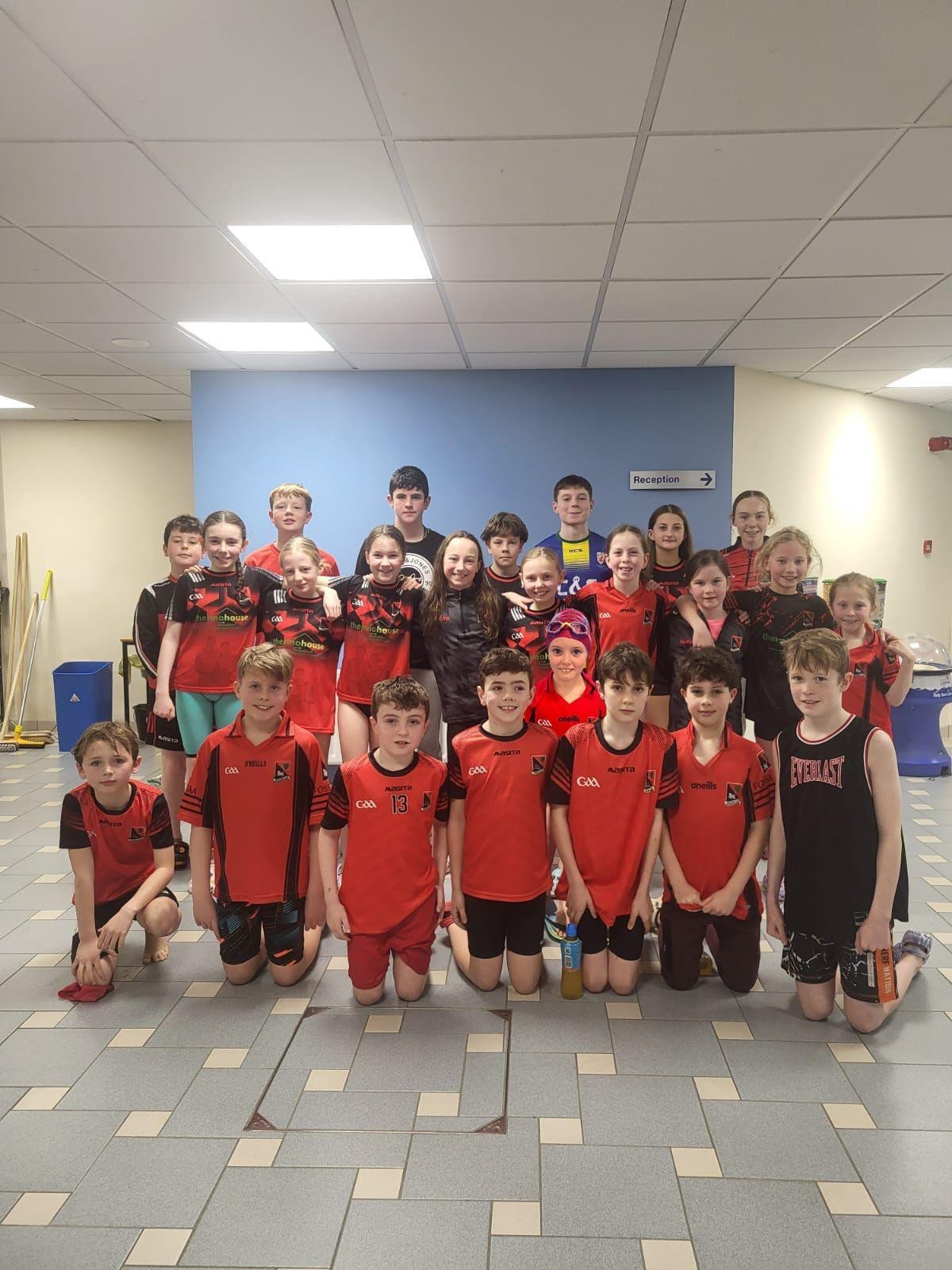
Fossa Swimmers make a splash at County Finals
The Fossa Swim team pictured at the Tralee Sports Complex following their successful outing at the County Finals of the Community Games on Sunday, February 15. The 25-strong squad delivered […]

News
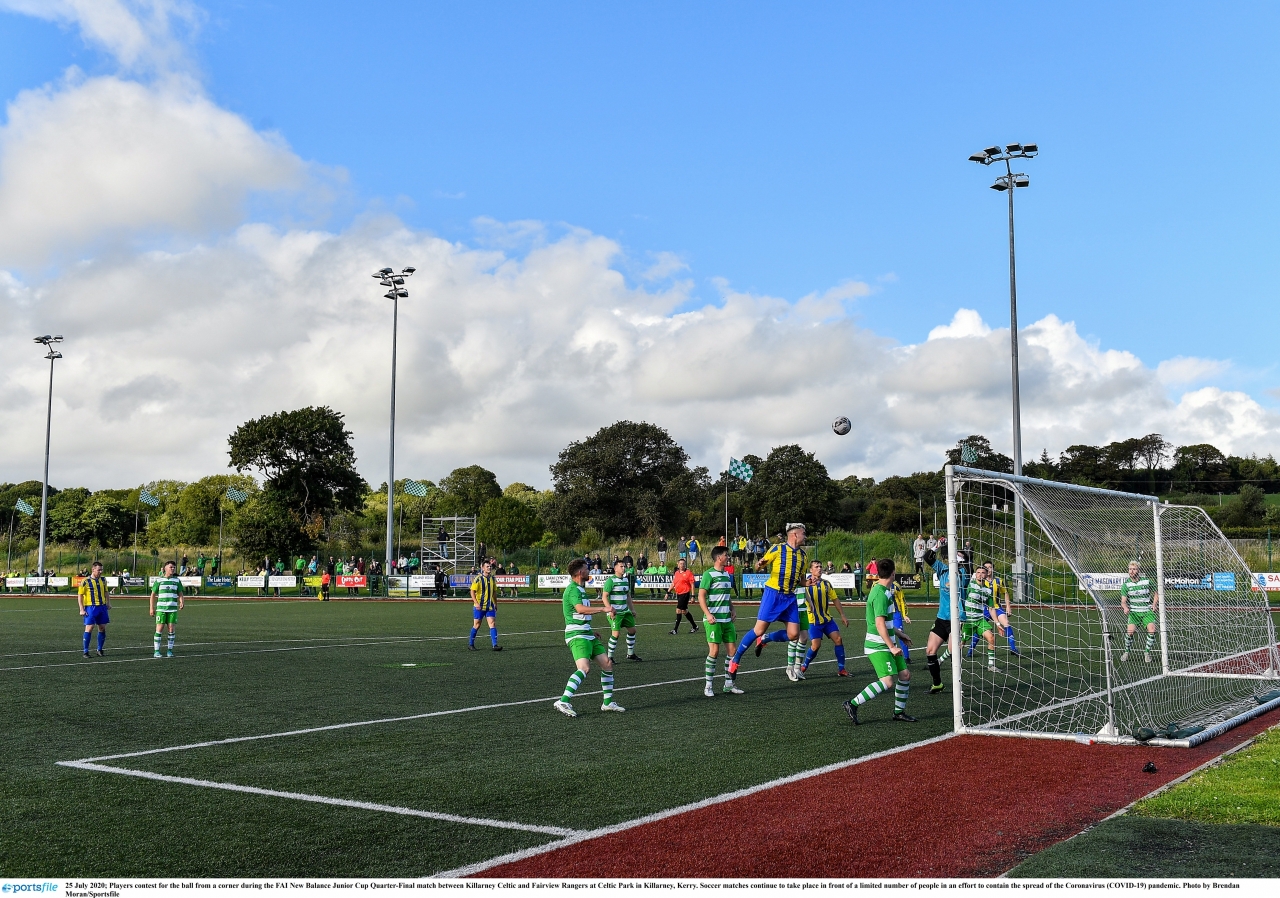
On the Ball Part 2 of the Mikey Daly Interview
Éamonn Fitzgerald EF: Killarney Celtic are invited to participate in an Irish competition. That has big financial implications for travel, meals, etc. MD: It is great to be invited, showing […]


Killarney Pumpkin Farm returns for Halloween
The annual event is in its sixth year and caters to people of all ages. The farm is located in...


Killarney Toastmasters host special open night
Killarney Toastmasters is inviting members of the local community to an open night at the Dromhall Hotel on Muckross Road...

Killarney hotels achieve top global rankings in Readers’ Choice Awards
Killarney hotels achieve top global rankings in Readers’ Choice Awards Two leading Killarney hotels are celebrating major international accolades following...

Paralympic legend Jason Smyth visits St Brendan’s
Paralympic legend Jason Smyth visits St Brendan’s World renowned Paralympian and world record holder Jason Smyth paid a visit to...
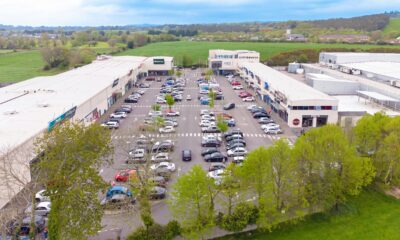

Deerpark Retail Park placed on market for fifteen million euro
Deerpark Retail Park in Killarney has officially been placed on the market with a guide price in excess of 15.4...
