News
Campanulas are easy to grow


By Debby Looney, gardening expert
We are spoilt for choice and colour at this time of year – perennials, annuals, shrubs, all come into their own. If we were to single out two, Alstroemeria and Campanula are real value for money.

.

.
Alstroemeria are also known as Peruvian lilies, and until recently we really only saw them in floral bouquets. However, they are now available in abundance and are well worth investing in. Flowering freely throughout the summer, they come in whites, yellows, oranges, reds and pinks.
There are tall varieties and dwarf ones, those with red foliage, and those with variegated foliage. All do well in our weather, but do not like to be waterlogged in the winter. The dwarf varieties are fantastic for pots, staying at a height of about 15cm.
Campanulas are a well-known garden staple, and are available in every size and shape you may need. Tall varieties include C. latifolia, a broadleaved variety. It reaches up to five feet, and has very large blue or purple bells. C. alliariifolia is also a tall variety, with elegant spires of pure white bells. It is a beauty! C. trachelium is also tall with simple mauve flowers, but ‘Bernice’ is a bit shorter - 60cm - with masses of double mauve flowers. Its name, trachelium, derives from trachelos, meaning throat. It was once used as a remedy for sore throats. C. ‘Kent Belle’ is a very popular campanula grown in many gardens. It has large bells in a rich shade of purply-blue. C. persicifolia grows to 80cm and is possibly the truest blue of all campanulas. It has delicate bright green foliage. ‘Boule de neige’, is, as the name suggests, pure white and very pretty!
A mid-sized campanula is C. punctate, and two to look out for or rather seek out, are ‘Cherry Bells’ and ‘Pantaloons’. The former has rich burgundy bells, the latter double bells in mauve with purple spots gracing the bottom frill. C. glomerata is a popular choice also, bearing tight, globe shaped clusters of flowers.
Campanulas really come into their own as ground cover, rockery plants and wall plants. C. portenschlagiana is an old variety, one which is ideal for rockeries, and which self seeds and finds a stronghold in any crevice. It has rich deep blue cup shaped flowers and a mat forming growth habit. C. garganica is another low grower, with azure blue star shaped flowers. It is evergreen in Kerry.
In general, campanulas are easy to grow. They are native to alkaline regions within Europe, and I have noticed that adding a little horticultural lime produces better plants. I recommend horticultural lime as opposed to builders lime for only one reason – it is granulated and this has a slow release action. Builder's lime, being dust, leaches out of the soil fairly quickly.
Well-drained soil is essential, and sunlight is certainly preferable! Repeat flowering can be encouraged by cutting back the plant after flowering. If you are hoping to establish plants in a wall, it is best to plant them in the crevices in autumn, giving them a chance to establish before summer.
Most campanulas are sold when in flower, so be patient, buy the plants, repot into bigger pots, then in October divide them and put them into the wall for a spectacular show next spring!


BREAKING: Move finally underway at new Killarney Community Nursing Unit
The HSE has confirmed to the Killarney Advertiser that the long-awaited move to the new Killarney Community Nursing Unit is officially underway.

Earlier today, HSE staff began transferring resident belongings and medical equipment into the newly built multimillion-euro facility on Lewis Road. The phased relocation of residents from St Columbanus Home and Killarney District Hospital will take place over the coming days, with the first residents expected to be settled into the new hospital by the end of this week.
This development marks a major step forward for the facility after a long series of false starts, including a recently missed target date of Monday, August 10.
In a statement issued today, the HSE confirmed the commencement of the transfer and outlined the scale of the operation.
“HSE South West is this week beginning the process of moving to Killarney Community Nursing Unit, on a phased basis,” the statement read. “This is a significant logistical operation, involving the move of a significant number of residents with varying levels of needs. There are a number of factors which will affect how long the move will take, however we are working to move all residents safely and in the shortest possible timeframe.”
Private dog park to open near Gap of Dunloe
Killarney and its surrounding areas are set to gain a long-awaited dog park, though the new facility will be a privately operated venture rather than a municipal amenity.
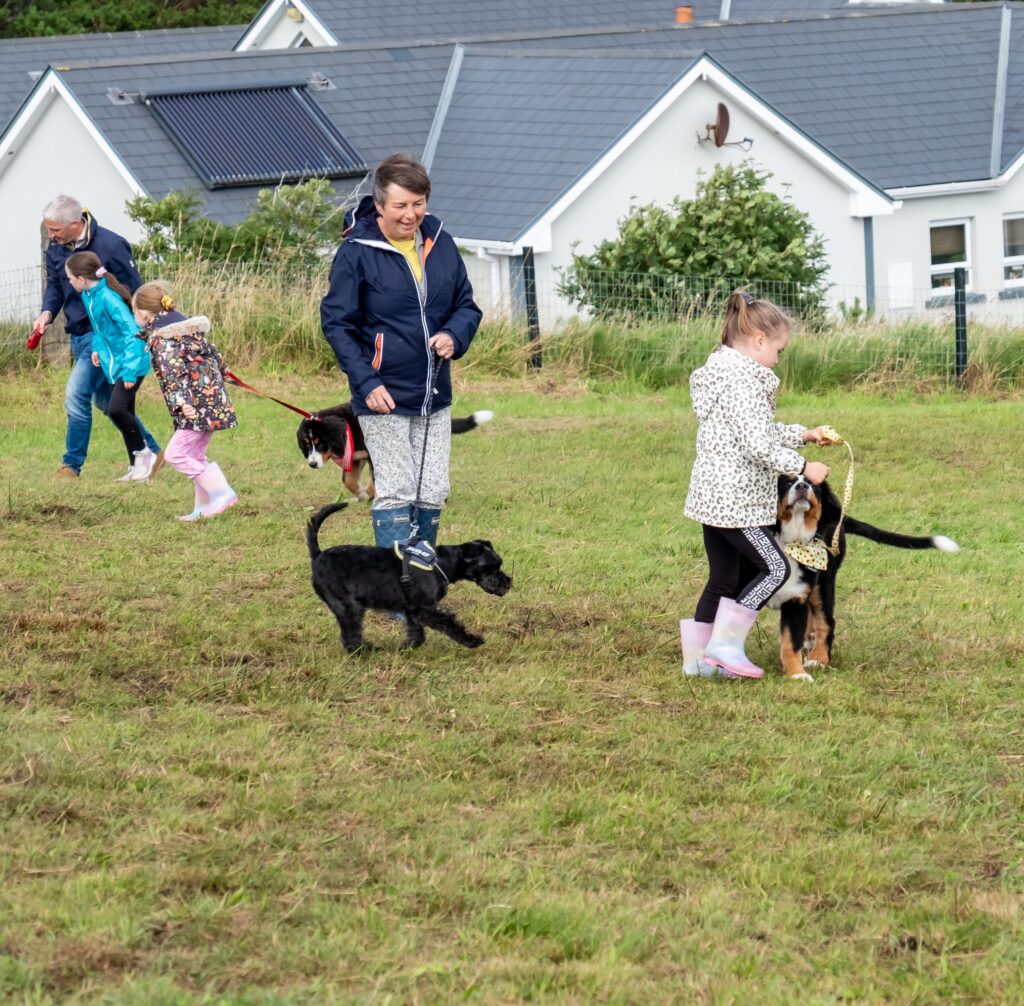
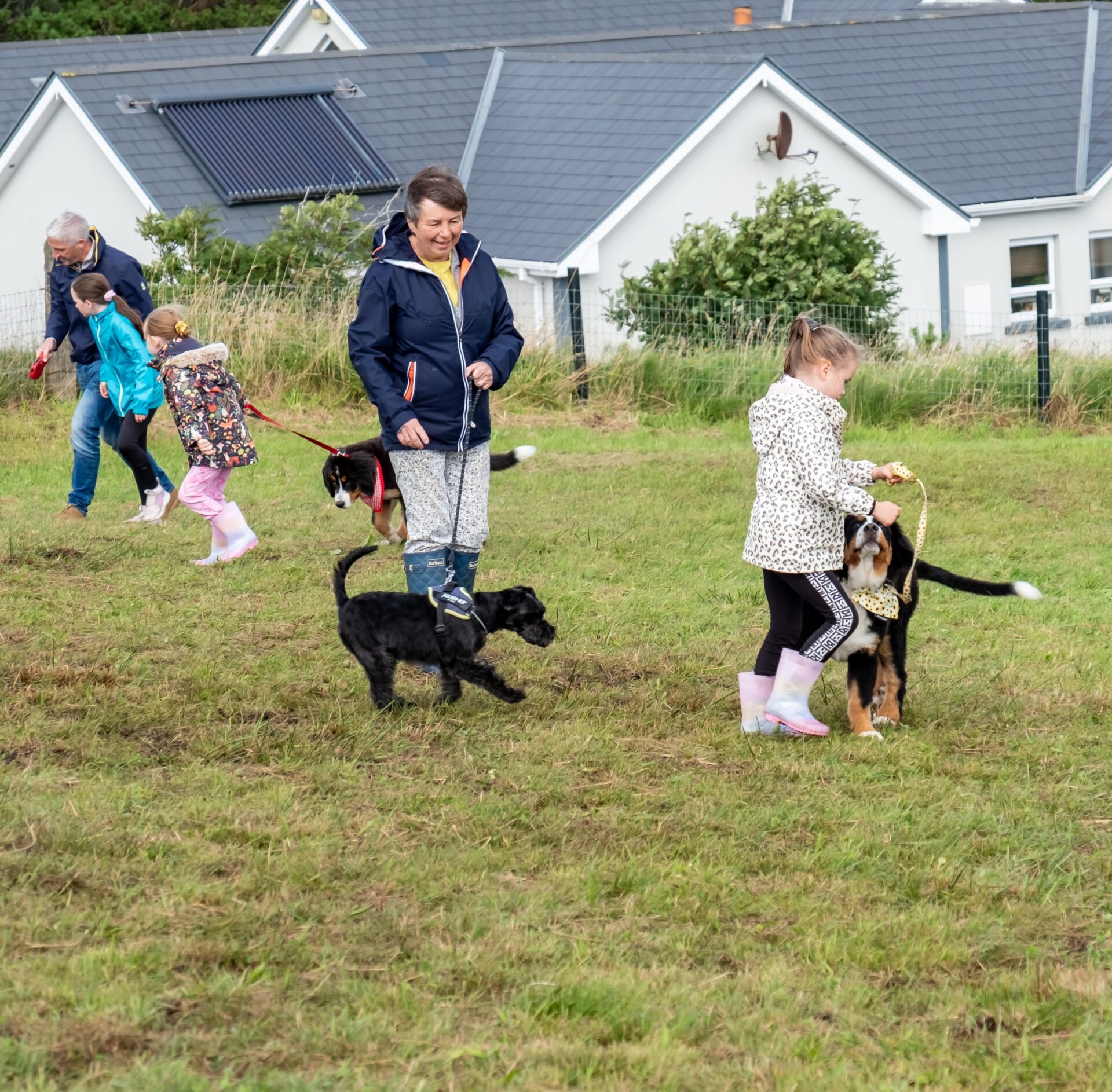
Located in the Gap of Dunloe near Kate Kearney’s Cottage (Eircode V93 K7N2), the enclosed park has been designed to provide a safe space for dogs to run freely.
Co-owner Declan Casey said that the facility will cater to both open socialising and private bookings, allowing owners of nervous dogs or restricted breeds to reserve the space exclusively for hour-long sessions.
The private initiative comes after repeated calls for a public dog park in the area over recent years. In May 2021, Councillor Brendan Cronin put forward a motion requesting that the Municipal District build a facility in town, citing a similar successful scheme in Lucan, County Dublin.
At the time, council officials noted that while the project had merit, local authority land was unavailable and discussions with the National Parks and Wildlife Service would be required.
The issue was raised again in January 2023 by Councillor John O’Donoghue, who highlighted the growing number of dog-friendly local businesses and the rising demand for dedicated space. However, Kerry County Council stated it had no plans to construct a public facility due to challenges around funding, location, and ongoing maintenance.


BREAKING: Move finally underway at new Killarney Community Nursing Unit
BREAKING: Move finally underway at new Killarney Community Nursing Unit The HSE has confirmed to the Killarney Advertiser that the...
Private dog park to open near Gap of Dunloe
Private dog park to open near Gap of Dunloe Killarney and its surrounding areas are set to gain a long-awaited...


22 nominations for 2026 Hugh O’Flaherty Humanitarian Award
22 nominations for 2026 Hugh O’Flaherty Humanitarian Award The Hugh O’Flaherty Memorial Society has announced that 22 nominations have been...
Another HSE deadline missed as Killarney Nursing Unit fails to open
Hopes that the phased transfer of patients and residents to the new Killarney Community Nursing Unit would finally begin yesterday,...


Corrina Griffin returns to inspire Golf Club juniors
Corrina Griffin returns to inspire Golf Club juniors The future of junior golf at Killarney Golf & Fishing Club received a welcome...


Fossa Swimmers make a splash at County Finals
The Fossa Swim team pictured at the Tralee Sports Complex following their successful outing at the County Finals of the...


On the Ball Part 2 of the Mikey Daly Interview
Éamonn Fitzgerald EF: Killarney Celtic are invited to participate in an Irish competition. That has big financial implications for travel,...


LUKE MANGAN recently caught up with Kerry FC’s manager, Colin Healy.
He spoke to him about his careers as a player and manager. Here’s how it went: When you began your...


Home cup tie for St Paul’s could be epic
Paudie O’Connor National Cup (Round 1) Utility Trust St Paul’s v GCU Brunell Saturday 7.30pm Killarney Sports and Leisure Centre...


Chances of Kerry v Cork Munster final in 2026 decrease as Munster GAA delay seeding plan
After facing a backlash from Limerick, Clare, Waterford and Tipperary players, Munster GAA have postponed their plan to keep Cork...