
News
COMMUNITY AIR AMBULANCE TASKED 512 TIMES DURING 2021


The Irish Community Air Ambulance has yet to receive any sort of government funding despite being called out on 512 missions in 14 counties during 2021.

LIFE SAVER: Diarmuid O’Donovan from Cork was airlifted to hospital after sustaining serious injuries while cycling in Kerry in May 2021. He is pictured visiting the HEMS Air Ambulance base in Rathcool with Key Relationships Manager Lorraine Toner. Photo: Brian Lougheed

LIFE SAVER: Diarmuid O’Donovan from Cork was airlifted to hospital after sustaining serious injuries while cycling in Kerry in May 2021. He is pictured visiting the HEMS Air Ambulance base in Rathcool with Key Relationships Manager Lorraine Toner. Photo: Brian Lougheed
Last year was the ICAA busiest year since the Helicopter Emergency Medical Service (HEMS) Air Ambulance launched in July 2019. There were 490 taskings in 2020.
The organisation is Ireland’s only charity-funded HEMS Air Ambulance. It works in partnership with the National Ambulance Service and responds to serious incidents and medical emergencies from its base in Rathcool, near Millstreet, in Co. Cork. Each helicopter mission costs an average of €3,500, all of which has to be raised or donated.
The CEO of the Irish Community Air Ambulance, Micheál Sheridan said that they engaged with the Government and regional political leaders throughout 2021 to secure some State support for the vital service.
FUNDING
Micheál Sheridan said, “The HSE is releasing funding to private Ambulance firms to provide support during the continuing crisis yet the Irish Community Air Ambulance is still entirely funded by public donations. The increased number of taskings during 2021 show that we provide a vital service,” said Mr Sheridan.
“The cost to run the charity during 2022 is expected to be €2.1 million which is a significant amount of money to raise. We are so grateful to all our supporters who help us to bring hope to those in emergency situations but we will continue to engage with the Government to provide funding during these uncertain times.”
There were more calls to cardiac arrests, farming-related incidents and falls from heights during 2021. Cardiac arrests accounted for one in five calls with 103 taskings last year, that’s up from 81 during 2020.
July and April were the busiest months of the year for the service with 57 missions completed each month. Cork, Kerry and Tipperary accounted for the majority of taskings. The Irish Community Air Ambulance was also tasked to Clare, Limerick, Waterford, Wexford, Kilkenny, Mayo, Galway, Offaly, Laois, Wicklow and Kildare.
One in every three taskings required an airlift to hospital. There were 111 transfers to Cork University Hospital during 2021 which equates to 66% of all transfers. University Hospital Limerick accounts for 20%.
TRANSFERS
Micheal Sheridan added, “There were also transfers to hospitals in Kerry, Tallaght, Galway, Temple Street, Crumlin and The Mater as we saw an increase in the number of times we were required to transfer children and young people to specialist paediatric hospitals in Dublin. We cover an area of 25,000 square kilometres and treat some of the most critically ill and injured patients, bringing them to the hospital that is best suited to their life-saving needs, not just the closest hospital geographically.”
SERIOUSLY INJURED
Diarmuid O'Donovan from Cork was seriously injured when he was thrown over the handlebars of his bike while cycling around Slea Head, Co Kerry in May 2021. He said he needed to be brought to a dedicated Trauma Centre quickly.
“A moment of carelessness saw me hit the road. I was on my own but thankfully it wasn’t long before I was found. Paramedics, a local doctor, the local Fire Service and Gardai all responded,” he explained.
“I was drifting in and out of consciousness and it quickly emerged that I needed to be at Cork University Hospital as soon as possible. I wasn’t in a suitable state for a two-and-a-half-hour journey by road so the Irish Community Air Ambulance was tasked and landed in Ventry. The journey to CUH by helicopter took just 30 minutes. I had 28 different bone breaks including my spine, shoulder and ribs as well as a punctured lung. I underwent several procedures that evening and spent 12 days in hospital. I believe it could have been far worse if I had not been transported to CUH so quickly and that my recovery has been much faster as a result.”

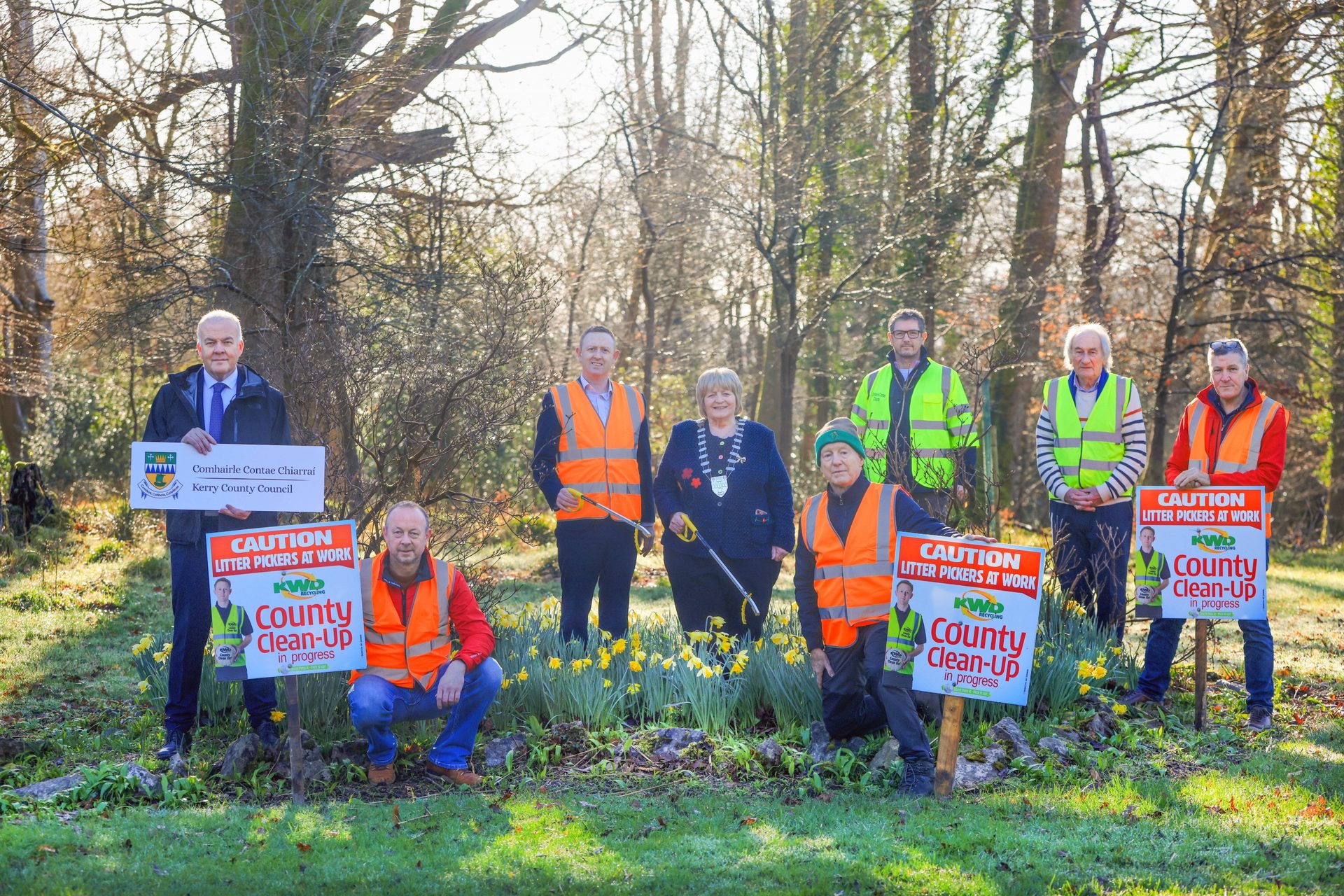
KWD Recycling shortlisted for national environmental awards
Killarney-based KWD Recycling has been announced as a finalist in the 2026 Repak Resource Awards, securing a spot on the national shortlist for environmental achievement.
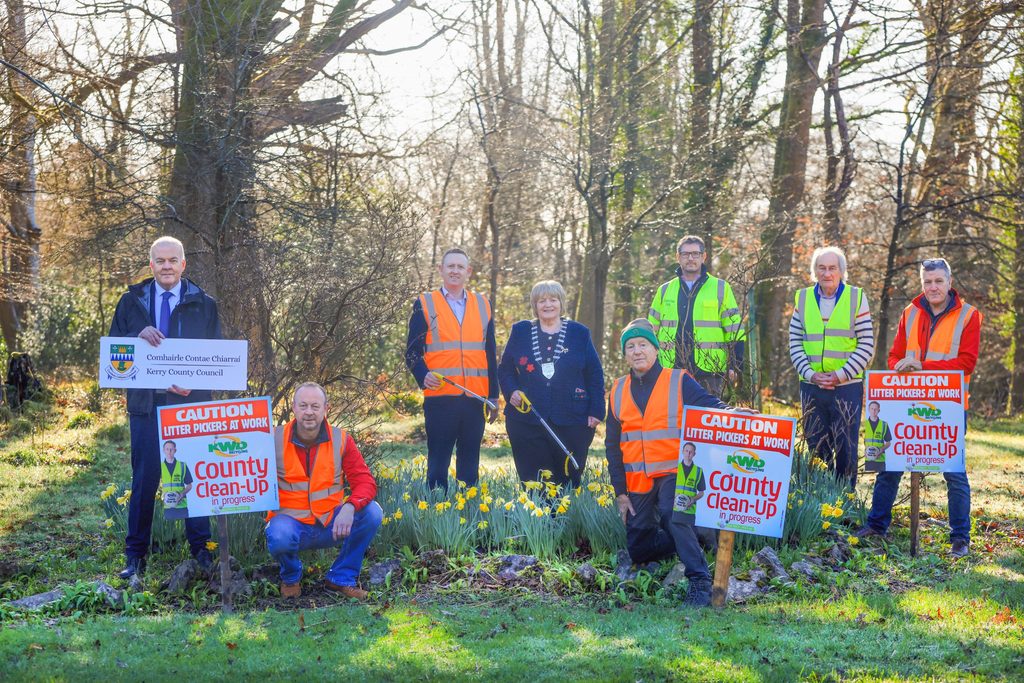
The local waste management company has been nominated in the Best Recovery Operator Innovation category, sponsored by DNV, for its state-of-the-art residual waste recovery system.
The Killarney facility utilizes optical sorting, screening, and mechanical processing to extract recyclable plastics and organic material from municipal waste. In its first year of operation, the technology recovered more than 10 per cent of plastic packaging from residual waste for recycling and diverted almost 50 per cent of organic material toward composting.
KWD Recycling will compete alongside Dublin operators Panda and Thorntons Recycling for the category title.
Repak CEO Zoe Kavanagh commended the Kerry firm for demonstrating environmental leadership and bringing local ambition to the national awards.
Category winners will be announced at a black-tie ceremony at the Mansion House in Dublin on Friday, October 23, where each winner will also compete for the Overall Repak Resource Award.
Local businesses have a strong track record at the national event, with Killarney town venue The Killarney Park and The Ross previously taking home the overall title in 2023.
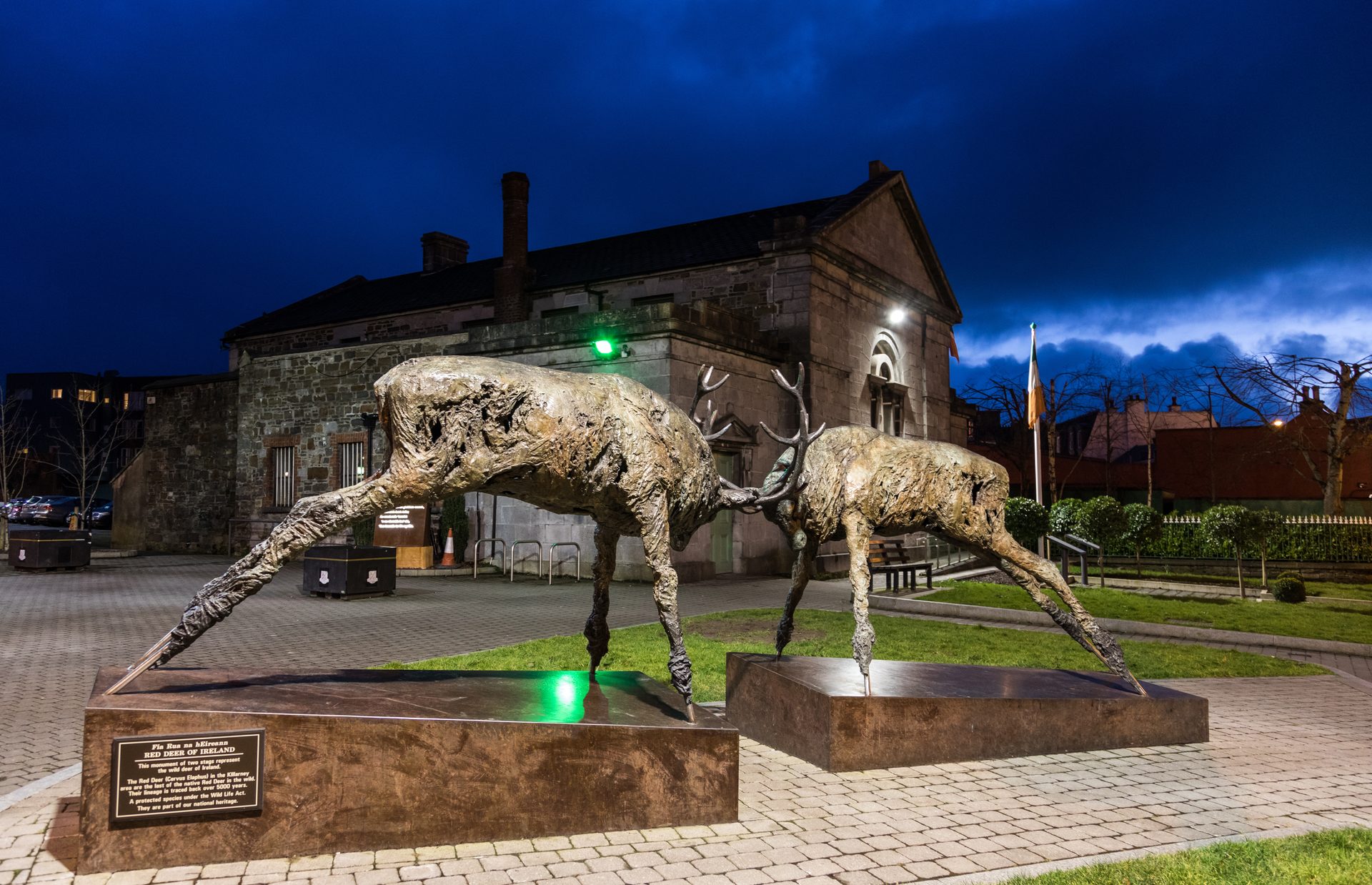
Drivers warned as deer rutting season begins
Motorists in Killarney are being urged to exercise extreme caution as the annual deer rutting season gets underway, causing animals to stray far beyond their usual habitats inside Killarney National Park.
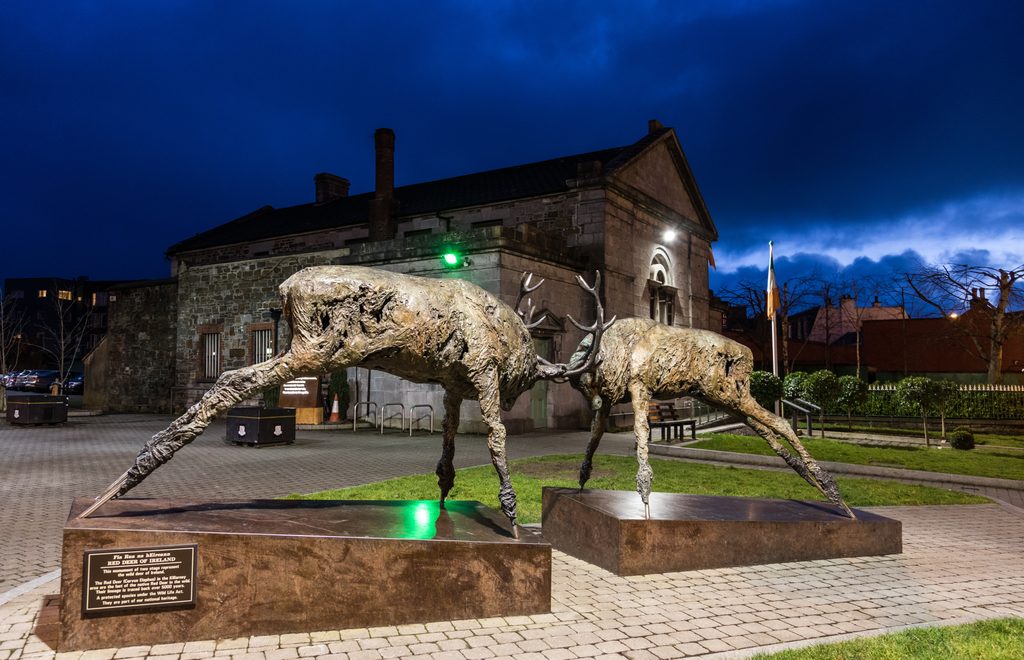
The autumn mating season sees deer becoming highly active and unpredictable, leading to increased sightings and collisions on local roads outside traditional park boundaries.
Two separate incidents highlighted the growing hazard on local routes this week. A reader contacted the Killarney Advertiser to warn drivers after spotting a deer roaming near Tiernaboul towards the school on Sunday afternoon around 7.30pm.
Later that same night, in the early hours of Monday morning, a local driver collided with a deer near Kerry Airport around 1am while returning home from an event.
Despite attempting evasive action, the motorist struck the animal, which died at the scene and temporarily blocked the road before local Gardaí were alerted to clear the obstruction.
The driver sustained substantial vehicle damage, requiring repairs to the bumper, headlamp, and internal components, leaving her facing significant garage costs and time off the road.
Gardaí and road safety advocates advise motorists travelLing during early morning and late evening and remain vigilant along tree-lined routes.
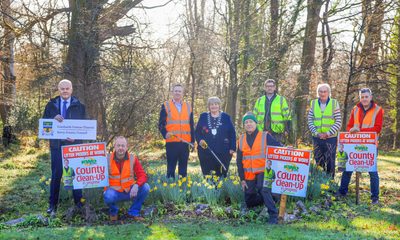

KWD Recycling shortlisted for national environmental awards
KWD Recycling shortlisted for national environmental awards Killarney-based KWD Recycling has been announced as a finalist in the 2026 Repak...
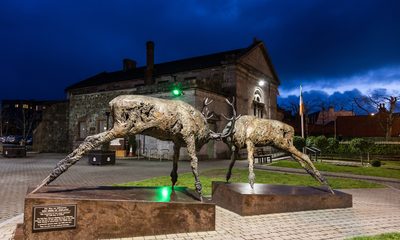

Drivers warned as deer rutting season begins
Drivers warned as deer rutting season begins Motorists in Killarney are being urged to exercise extreme caution as the annual...
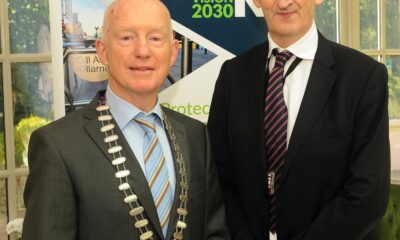

Kerry Airport CEO addresses chamber luncheon
Kerry Airport chief executive Adrian Neilan addressed local business leaders at the Killarney Chamber of Tourism and Commerce luncheon at...
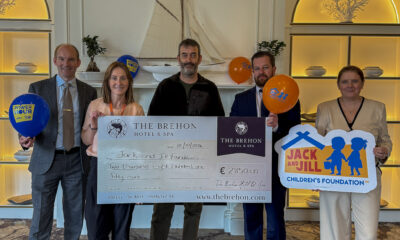

The Brehon raises €2,850 for Jack and Jill Foundation
The Brehon Hotel and Spa raised €2,850 for the Jack and Jill Children’s Foundation after hosting a closest-to-the-pin golf simulator...

Five local postmen retire with 185 years service
Five local postmen retire with 185 years service RETIREMENT NIGHT: Pictured at the retirement party held at Killarney Racecourse on...

Fossa Swimmers make a splash at County Finals
The Fossa Swim team pictured at the Tralee Sports Complex following their successful outing at the County Finals of the...

On the Ball Part 2 of the Mikey Daly Interview
Éamonn Fitzgerald EF: Killarney Celtic are invited to participate in an Irish competition. That has big financial implications for travel,...

LUKE MANGAN recently caught up with Kerry FC’s manager, Colin Healy.
He spoke to him about his careers as a player and manager. Here’s how it went: When you began your...


Home cup tie for St Paul’s could be epic
Paudie O’Connor National Cup (Round 1) Utility Trust St Paul’s v GCU Brunell Saturday 7.30pm Killarney Sports and Leisure Centre...


Chances of Kerry v Cork Munster final in 2026 decrease as Munster GAA delay seeding plan
After facing a backlash from Limerick, Clare, Waterford and Tipperary players, Munster GAA have postponed their plan to keep Cork...
