
News
Why fad diets don’t work


By Angela Kerrisk from Activate Fitness
If you scroll through social media, you are bound to see hundreds or even thousands of posts about fad diets, juice cleanses, detox teas, and tons of other products marketed to promote rapid weight loss.

.

.
Dieting is a 72 billion dollar a year industry, so it is no wonder why diet culture marketing is so prevalent.
But what is a fad diet and how do you tell if you are following one?
Weight-loss advice comes in literally hundreds of disguises, so how do you spot the red flags of a fad Diet? Most often these new and revolutionary diets are really old fad diets making a comeback!
These usually promise quick weight loss, sound too good to be true, and do not follow eating guidelines that support good health.
Many of us would like to lose a few pounds, however, you shouldn’t be tempted by the increasing range of quick fix options making unrealistic weight loss promises for minimum effort.
There is no fad diet you can follow without some associated nutritional or health risk and most offer a short-term fix to a long-term problem.
Stay away from diets that:
* Ban a specific food or food group. Fad diets are typically very restrictive
* Promises weight loss of over two pounds (1kg) per week
* Claims that sound too good to be true
* Lists of "good" and "bad" foods
* Recommendations made to help sell a product
* Promises a cure-all, ingredient or product to solve your weight problem without having to change your lifestyle
* Does not encourage physical activity
* Does not provide support for long-term weight loss success
Sadly, there is no magic solution to losing weight and keeping it off long-term. People will often try anything that promises to help them lose weight. They may want to look or feel better and companies that promote fad diets take advantage of this.
Fad diets work for a short amount of time. In most cases, this is because you eat fewer calories than normal and you also pay more attention to what you eat. By cutting out major groups of foods, you won’t get the nutrients your body needs to be healthy.
If you lose weight too quickly and there is no support to help you keep the weight off, you could get stuck in a cycle of weight loss and weight gain. This yo-yo dieting is stressful for your body. However, it’s likely that most of the weight you lose is from water and lean muscle, not body fat.
Most people then get fed-up with the restrictions, start eating more, choose less healthy foods and pile the pounds back on and that yo-yo cycle continues to the next magic fad!
They define successful weight loss as losing weight and keeping it off for at least five years. So what’s the best advice for getting rid of the extra pounds and keeping them off. It may be obvious, but to lose weight you need to make healthier choices, eat a nutritionally balanced and varied diet with appropriately sized portions and be physically active.
If you need help to figure out what weight loss plan will work best for you think about seeing a nutrition coach where you will learn healthy and sustainable diet and lifestyle habits.
This is the role of a nutrition coach, and they can set individualised action steps like working on incorporating more veggies in your diet, incorporating more activity when you aren’t at the gym, getting better sleep, and holding you accountable to engaging in these habits long term, with a goal to help you become the healthiest version of yourself.
If you would like more information on nutrition and nutrition coaching, contact us www.activate.ie/programs/nutrition/.

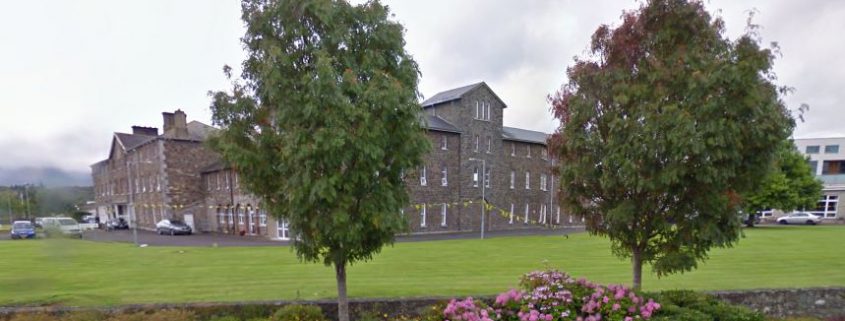
A design team has been appointed to advance plans for the proposed Minor Injury Unit on the grounds of St Columbanus Home though the HSE has confirmed it cannot yet give a construction or opening timeline.
Fianna Fáil TD Deputy Michael Cahill received the update in response to a Parliamentary Question submitted to the Minister for Health. HSE South West confirmed the newly appointed team will progress the project through design development, planning, and regulatory approval following the transfer of residents to the new Killarney Community Nursing Unit.
Deputy Cahill welcomed the appointment of the design team but raised concerns over the lack of a definitive schedule.
“I welcome the appointment of a design team, which represents progress towards delivering this important facility. However, I am concerned that the HSE is still unable to provide a definitive timeline. Previous indications from HSE officials pointed towards construction commencing in 2026, with completion anticipated in 2027. We now need clarity on the project schedule and assurances that there will be no unnecessary delays,” Deputy Cahill said.
He noted that the facility is vital to serve Killarney and the wider east, mid, and south Kerry regions while relieving pressure on the Emergency Department at University Hospital Kerry.
The HSE also confirmed it is finalising a broader review of healthcare accommodation across Killarney to develop the St Columbanus campus as an integrated healthcare hub.
“As a member of the Oireachtas Joint Committee on Health, I will continue to press the HSE and the Minister for Health to ensure this project is progressed without further delay. People across Killarney, east, mid, west and south Kerry deserve certainty. The appointment of a design team is welcome but the next priority must be getting this project to construction and delivering the facility,” Deputy Cahill concluded.
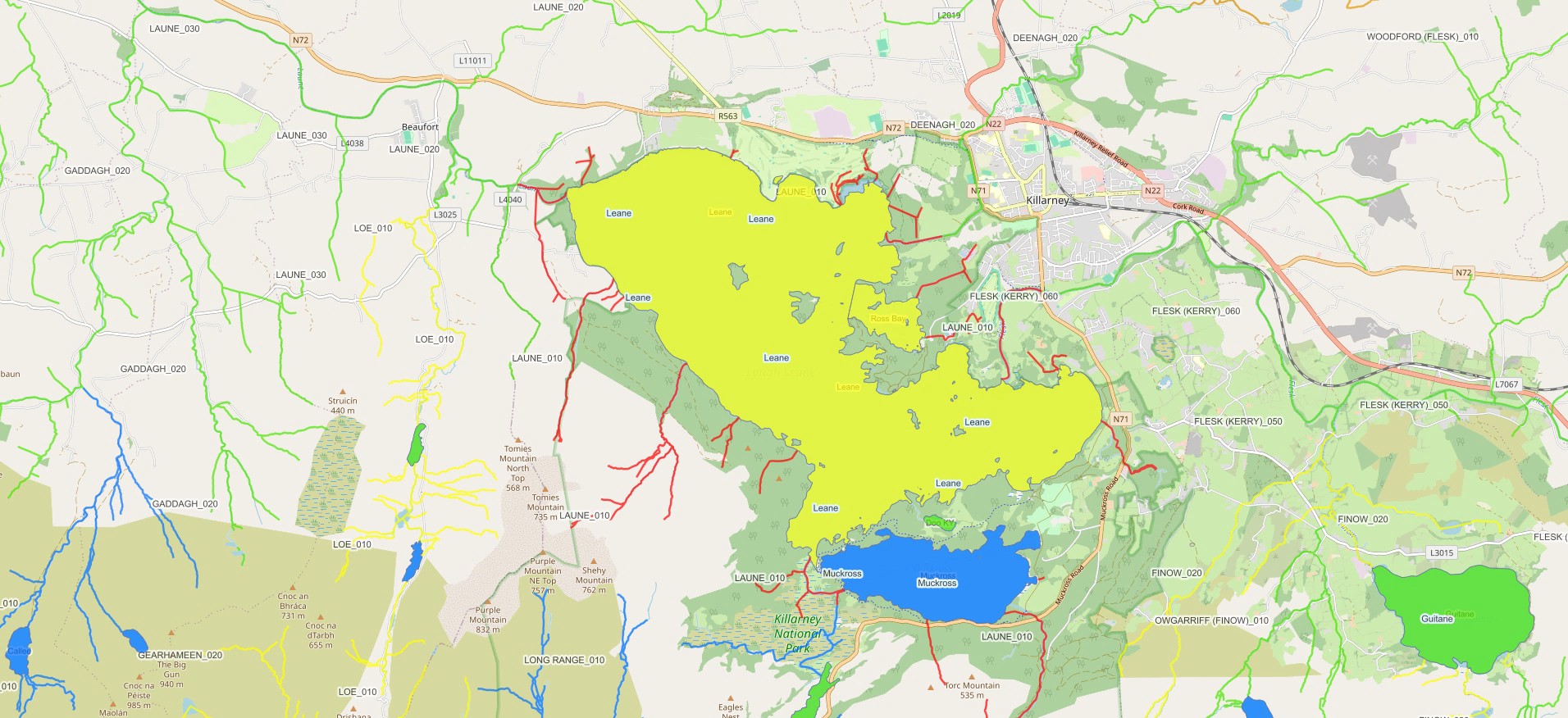
Lochanna Beo’s mapping highlights water quality concerns
Local environmental action group Lochanna Beo has released mapping data from the Environmental Protection Agency (EPA) to draw attention to deteriorating water quality across Killarney and the broader Laune Catchment.
The EPA map uses a colour-coded system to rate water quality status from 2019 to 2024: blue indicates high status, green indicates good, yellow represents moderate, brown denotes poor, and red signifies bad status.
The figures indicate significant ecological pressure on local lakes and rivers compared to neighbouring areas across County Kerry.
Formed during the summer of 2026, Lochanna Beo aims to bring together residents, business owners, agricultural operators, and public bodies to address the key factors affecting the regional aquatic ecosystem.
The community initiative is seeking direct engagement with relevant statutory authorities to implement practical restoration measures and protect the long-term health of Killarney’s water bodies.

Design team appointed for injury unit
A design team has been appointed to advance plans for the proposed Minor Injury Unit on the grounds of St...
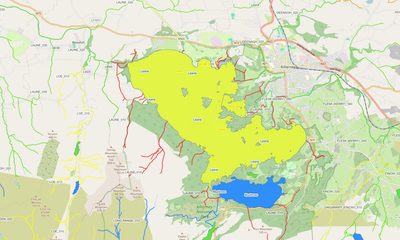

Lochanna Beo’s mapping highlights water quality concerns
Lochanna Beo’s mapping highlights water quality concerns Local environmental action group Lochanna Beo has released mapping data from the Environmental...


Stefan Caulfield-Dreier signs professional cycling contract
Former Killarney Cycling Club rider Stefan Caulfield-Dreier has secured a professional contract with leading Dutch-based outfit Azerion-Villa Valkenburg. The 23-year-old...


Church seeks creative Christmas trees for festival
Church seeks creative Christmas trees for festival The Methodist Church in Killarney is inviting local schools, community groups, businesses, and...


€6,000 Scrooge Giveaway!
€6,000 Scrooge Giveaway! Six lucky audience members will each walk away with €1,000 as the Gleneagle Arena welcomes an extraordinary...


Fossa Swimmers make a splash at County Finals
The Fossa Swim team pictured at the Tralee Sports Complex following their successful outing at the County Finals of the...


On the Ball Part 2 of the Mikey Daly Interview
Éamonn Fitzgerald EF: Killarney Celtic are invited to participate in an Irish competition. That has big financial implications for travel,...


LUKE MANGAN recently caught up with Kerry FC’s manager, Colin Healy.
He spoke to him about his careers as a player and manager. Here’s how it went: When you began your...


Home cup tie for St Paul’s could be epic
Paudie O’Connor National Cup (Round 1) Utility Trust St Paul’s v GCU Brunell Saturday 7.30pm Killarney Sports and Leisure Centre...


Chances of Kerry v Cork Munster final in 2026 decrease as Munster GAA delay seeding plan
After facing a backlash from Limerick, Clare, Waterford and Tipperary players, Munster GAA have postponed their plan to keep Cork...
