
News
Reopening roadmap: restrictions to ease – says Taoiseach


In an address to the nation this evening (Tuesday), Taoiseach Micheál Martin, outlined the next phase of easing restrictions 'COVID-19: Reframing the Challenge, Continuing Our Recovery and Reconnecting'.
The Government has agreed that during the period between September 1 and October 22, they will continue the careful and gradual approach to reopening, while supporting maximum reach of the vaccine programme and allowing time to achieve the full benefits for all those currently being vaccinated.
"Your effort and sacrifice has helped to save lives," he said.
He added that because of the uptake of the vaccine by the public that "we're now entering a whole new phase of the pandemic".
The Government has agreed that "the time is now right" to reopen many more sectors of society.
He added that if a new variant emerges "we will move quickly to respond" to it.
With the Delta variant, he added, "great uncertainty remains" and "we will have to remain vigilant". As we move in to this new phase, he said, "it'll be a time of trepidation for some".
EASING OF RESTRICTIONS:
Sept 1: Public transport will return to 100% capacity
Sept 6: Organised indoor events and mass gatherings can take place with capacity limits of 60% where all patrons are immune (fully vaccinated or recovered from COVID-19 within previous 6 months), or accompanied minors (under 18), in line with sectoral guidance.
Sept 6: Cinemas and theatres will have capacity limits of 60% of venue capacity where all patrons are immune (fully vaccinated or recovered from COVID-19 within previous 6 months
Sept 6: Outdoor events are permitted at a 75% capacity where all patrons are immune (fully vaccinated or recovered from COVID-19 within previous 6 months), or accompanied minors (under 18), in line with sectoral guidance.
Sept 6: All religious ceremonies can proceed with 50% of venue capacity, regardless of immunity status of attendees.
Sept 6: Coach tour activity can recommence at 50% capacity with protective measures.
Sept 20: Organised indoor group activities (sports, arts, culture, dance classes) can take place with capacity limits of 100 people (with appropriate protective measures) where all patrons are immune (fully vaccinated or recovered from COVID-19 within previous 6 months), or accompanied minors (under 18).
Sept 20: Restrictions on outdoor group activities for participants will be removed.
Sept 20: Return to work can be done on a phased basis
Sept 20: Restrictions on outdoor group activities for participants will be removed.
Oct 22: Almost all restrictions lifted but masks will be needed in some settings
COVID CASES
This evening 1,382 additional cases of COVID-19 have been confirmed while 355 COVID-19 patients are in hospital, with 54 of those patients in intensive care (ICU).
VACCINES
As of yesterday (Monday), there have been 6,818,637 doses of COVID-19 vaccine administered in Ireland:
* 3,451,531 people have received their first dose
* 3,367,106 people are fully vaccinated

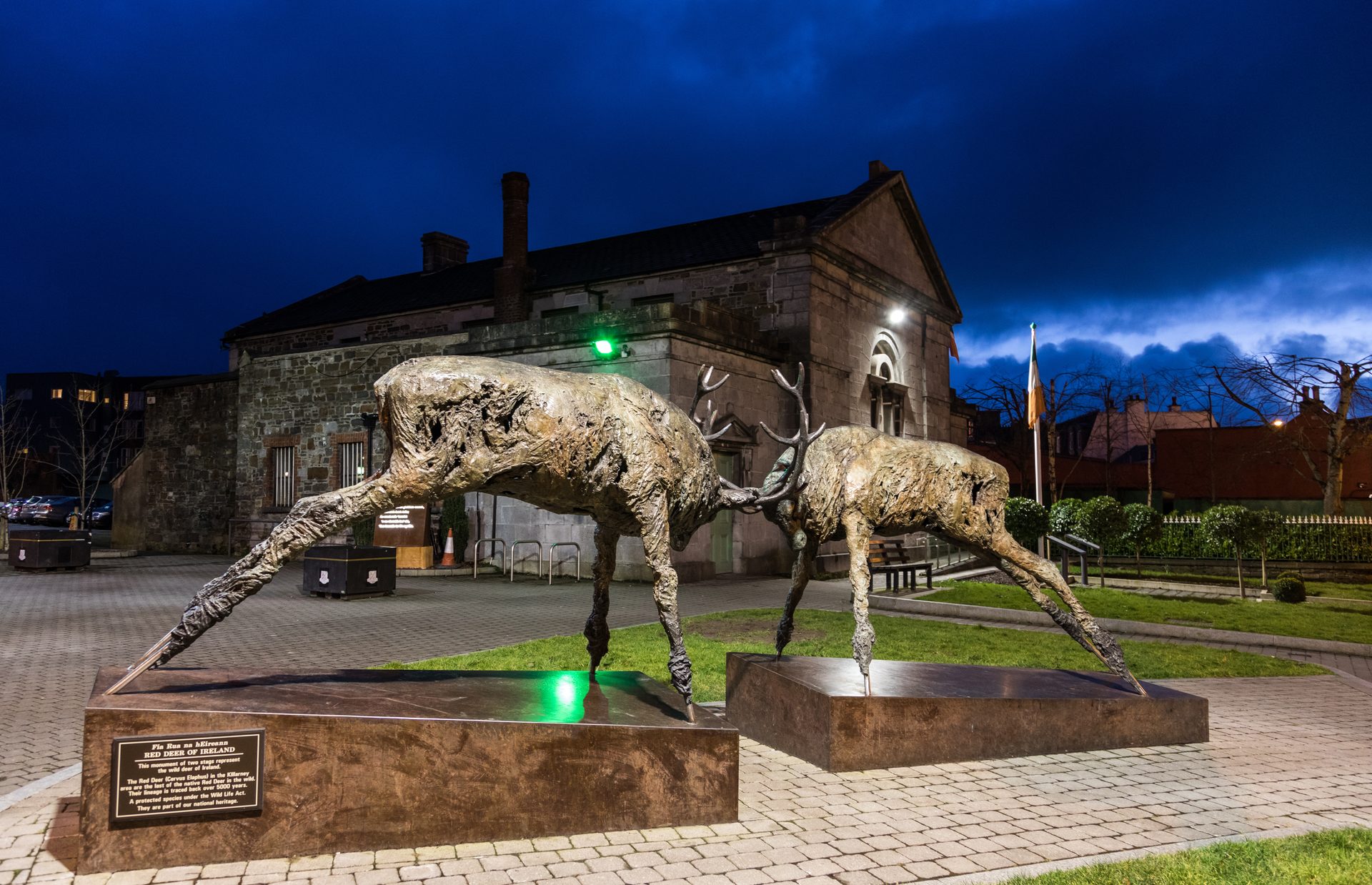
Drivers warned as deer rutting season begins
Motorists in Killarney are being urged to exercise extreme caution as the annual deer rutting season gets underway, causing animals to stray far beyond their usual habitats inside Killarney National Park.
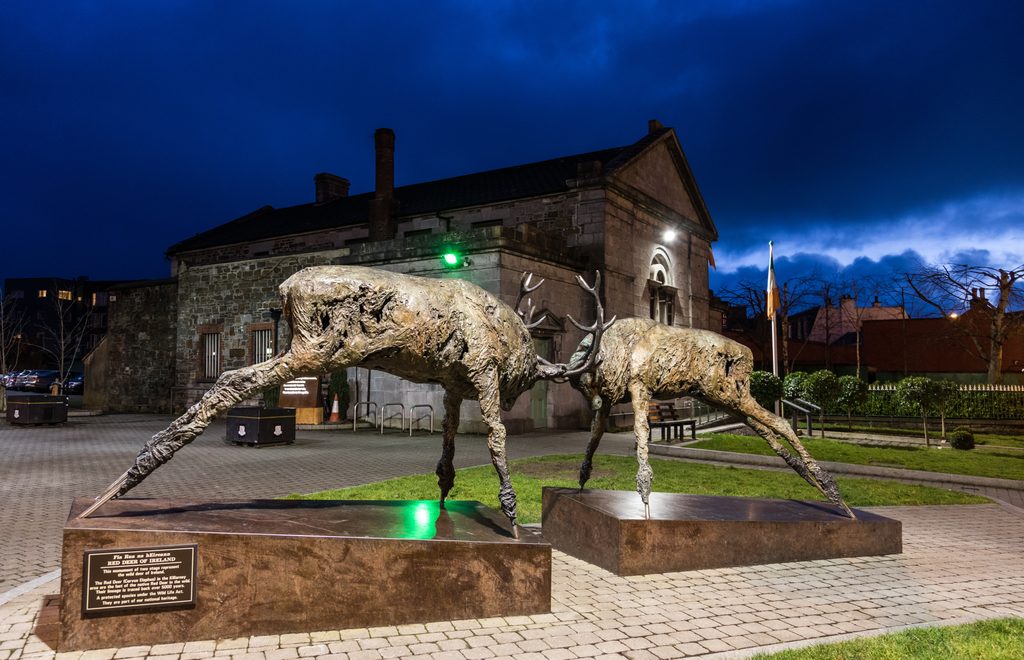
The autumn mating season sees deer becoming highly active and unpredictable, leading to increased sightings and collisions on local roads outside traditional park boundaries.
Two separate incidents highlighted the growing hazard on local routes this week. A reader contacted the Killarney Advertiser to warn drivers after spotting a deer roaming near Tiernaboul towards the school on Sunday afternoon around 7.30pm.
Later that same night, in the early hours of Monday morning, a local driver collided with a deer near Kerry Airport around 1am while returning home from an event.
Despite attempting evasive action, the motorist struck the animal, which died at the scene and temporarily blocked the road before local Gardaí were alerted to clear the obstruction.
The driver sustained substantial vehicle damage, requiring repairs to the bumper, headlamp, and internal components, leaving her facing significant garage costs and time off the road.
Gardaí and road safety advocates advise motorists travelLing during early morning and late evening and remain vigilant along tree-lined routes.

Drivers warned as deer rutting season begins
Drivers warned as deer rutting season begins Motorists in Killarney are being urged to exercise extreme caution as the annual...

Kerry Airport CEO addresses chamber luncheon
Kerry Airport chief executive Adrian Neilan addressed local business leaders at the Killarney Chamber of Tourism and Commerce luncheon at...
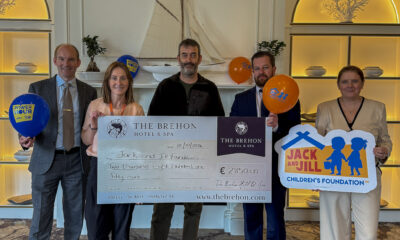

The Brehon raises €2,850 for Jack and Jill Foundation
The Brehon Hotel and Spa raised €2,850 for the Jack and Jill Children’s Foundation after hosting a closest-to-the-pin golf simulator...
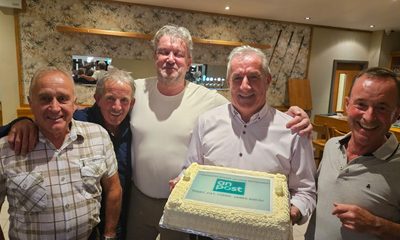

Five local postmen retire with 185 years service
Five local postmen retire with 185 years service RETIREMENT NIGHT: Pictured at the retirement party held at Killarney Racecourse on...

New Streetscapes murals launched at College Square
A colourful collaboration between the Kerry Local Creative Youth Partnership (LCYP) and the Architecture Kerry Festival at Kerry County Council...


Fossa Swimmers make a splash at County Finals
The Fossa Swim team pictured at the Tralee Sports Complex following their successful outing at the County Finals of the...

On the Ball Part 2 of the Mikey Daly Interview
Éamonn Fitzgerald EF: Killarney Celtic are invited to participate in an Irish competition. That has big financial implications for travel,...


LUKE MANGAN recently caught up with Kerry FC’s manager, Colin Healy.
He spoke to him about his careers as a player and manager. Here’s how it went: When you began your...


Home cup tie for St Paul’s could be epic
Paudie O’Connor National Cup (Round 1) Utility Trust St Paul’s v GCU Brunell Saturday 7.30pm Killarney Sports and Leisure Centre...


Chances of Kerry v Cork Munster final in 2026 decrease as Munster GAA delay seeding plan
After facing a backlash from Limerick, Clare, Waterford and Tipperary players, Munster GAA have postponed their plan to keep Cork...
