
News
New book on Kerry’s early Neolithic portal tombs


The fascinating story of the excavations at some of the oldest extant monuments in Ireland is told in a new book 'Stone, Bone & Belonging' published by Kerry County Council.
The portal tombs at Killaclohane near Milltown date to around 3,700 BC at the beginning of the Neolithic period in Ireland and are considered to be among the most important archaeological features of the Kerry and Irish landscape.
The tombs are considered to be monuments to the end of the hunter-gatherer lifestyle which had persisted for thousands of years, and the transition to and adoption of agriculture, which heralded an end to a nomadic existence and the adoption of the settled way of life.
The portal tomb known as Killaclohane I is the oldest extant monument in Kerry. In 2015, after nearly 6,000 years marking the passing of people and time, it was discovered to be in danger of imminent collapse. Kerry County Council stepped in to fund the conservation and excavation of the monument and continued to fund further excavations at another nearby tomb, known as Killaclohane II which is situated within Killaclohane Wood.
Significant items
The project, overseen by Kerry County Archaeologist, Dr Michael Connolly, included excavation, research and analysis of the material and data recovered from the tombs. A wide range of significant items were uncovered, including finely crafted flint tools and weapons as well as Neolithic pottery and provided significant evidence about how the tombs were constructed.
"The excavations also showed that the tombs had a long history of reuse both for burial and as focal points in the landscape used to create lineages and connections to both the peoples of the past and, more importantly, the land itself," Michael said.
"The new book 'Stone, Bone & Belonging' presents the results of six years of excavation and research in a clear and informative way that is accessible to both the academic and general reader. It details the history of research into portal tombs in Ireland and places the tombs in their geological and archaeological context before detailing the excavations of the tombs."
Detailed dating and discussion of the results of the research is accompanied by comprehensive analysis of the finds and environmental data by recognised experts in their various fields, all in a fully illustrated and beautifully produced hardback volume.
The book comprises 334 pages, 160 full colour plates and 67 figures and is available to purchase for just €20 from Kerry County Museum, Ashe Memorial Hall, Tralee (P&P €9 extra) in person or by phone on 066 7127777.

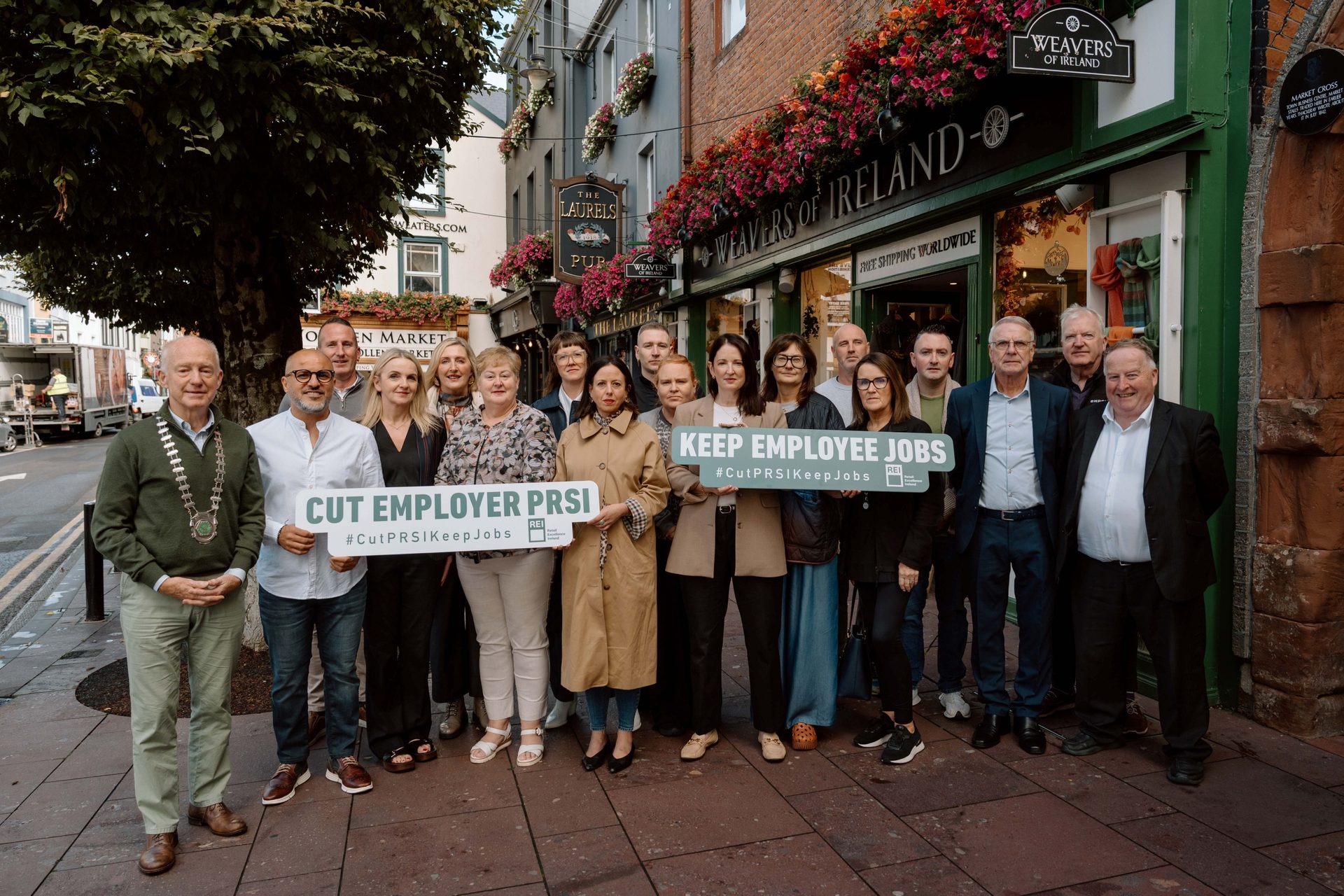
Retailers and shop staff across Killarney joined forces this week as part of the nationwide ‘#CutPRSIKeepJobs’ campaign, calling on the Government to reduce employers’ PRSI contributions in Budget 2027 to protect local employment.
Organised by Retail Excellence Ireland (REI), the campaign saw shop owners and employees stand together to highlight the severe financial pressures facing town centre businesses.
The industry body is urging the Government to introduce an employer PRSI band of 8% on the first €36,000 of every wage, zero employer PRSI for workers under 25, and a review of the methodology used to calculate the living wage.
The push comes amid growing concern over rising operational expenses, with new figures showing a loss of 10,800 retail jobs nationally over the past year and a 35% surge in retail insolvencies in the first half of 2026 alone.
Jean McCabe, Chief Executive Officer of Retail Excellence Ireland, warned that mounting wage costs are placing unprecedented strain on independent traders across Kerry.
“The retail industry has been under the most intense pressure from a range of cost pressures in recent times – and wage costs are the primary issue,” Ms McCabe said. “The industry is now seeing a rapid increase in insolvencies because of these pressures, so Government must now act unless it wants to see more businesses fail. Retailers standing together today shows just how widely this is being felt, in towns right across the country.”
Ms McCabe added that incoming PRSI rate increases scheduled for October 1 will deliver another major blow to small and medium enterprises unless urgent intervention is taken in the upcoming budget.
“We’re asking every TD, in every constituency, to back this ask,” Ms McCabe added. “And we’re asking Tánaiste Simon Harris, as Minister for Finance, to introduce it directly in Budget 2027. It’s costed, it’s modest, and it keeps jobs in local communities.”
Retailers join national campaign to cut PRSI and safeguard local jobs
Retailers and shop staff across Killarney joined forces this week as part of the nationwide ‘#CutPRSIKeepJobs’ campaign, calling on the Government to reduce employers’ PRSI contributions in Budget 2027 to protect local employment.
Organised by Retail Excellence Ireland (REI), the campaign saw shop owners and employees stand together to highlight the severe financial pressures facing town centre businesses.
The industry body is urging the Government to introduce an employer PRSI band of 8% on the first €36,000 of every wage, zero employer PRSI for workers under 25, and a review of the methodology used to calculate the living wage.
The push comes amid growing concern over rising operational expenses, with new figures showing a loss of 10,800 retail jobs nationally over the past year and a 35% surge in retail insolvencies in the first half of 2026 alone.
Jean McCabe, Chief Executive Officer of Retail Excellence Ireland, warned that mounting wage costs are placing unprecedented strain on independent traders across Kerry.
“The retail industry has been under the most intense pressure from a range of cost pressures in recent times – and wage costs are the primary issue,” Ms McCabe said. “The industry is now seeing a rapid increase in insolvencies because of these pressures, so Government must now act unless it wants to see more businesses fail. Retailers standing together today shows just how widely this is being felt, in towns right across the country.”
Ms McCabe added that incoming PRSI rate increases scheduled for October 1 will deliver another major blow to small and medium enterprises unless urgent intervention is taken in the upcoming budget.
“We’re asking every TD, in every constituency, to back this ask,” Ms McCabe added. “And we’re asking Tánaiste Simon Harris, as Minister for Finance, to introduce it directly in Budget 2027. It’s costed, it’s modest, and it keeps jobs in local communities.”
Retailers and shop staff across Killarney joined forces this week as part of the nationwide ‘#CutPRSIKeepJobs’ campaign, calling on the Government to reduce employers’ PRSI contributions in Budget 2027 to protect local employment.
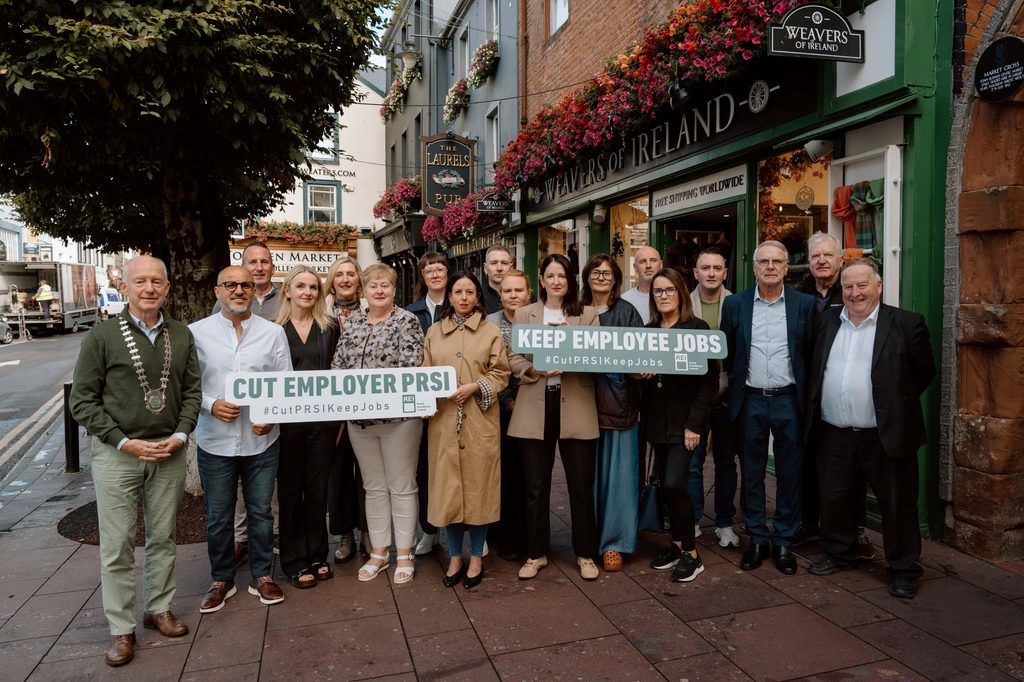
Organised by Retail Excellence Ireland (REI), the campaign saw shop owners and employees stand together to highlight the severe financial pressures facing town centre businesses.
The industry body is urging the Government to introduce an employer PRSI band of 8% on the first €36,000 of every wage, zero employer PRSI for workers under 25, and a review of the methodology used to calculate the living wage.
The push comes amid growing concern over rising operational expenses, with new figures showing a loss of 10,800 retail jobs nationally over the past year and a 35% surge in retail insolvencies in the first half of 2026 alone.
Jean McCabe, Chief Executive Officer of Retail Excellence Ireland, warned that mounting wage costs are placing unprecedented strain on independent traders across Kerry.
“The retail industry has been under the most intense pressure from a range of cost pressures in recent times – and wage costs are the primary issue,” Ms McCabe said. “The industry is now seeing a rapid increase in insolvencies because of these pressures, so Government must now act unless it wants to see more businesses fail. Retailers standing together today shows just how widely this is being felt, in towns right across the country.”
Ms McCabe added that incoming PRSI rate increases scheduled for October 1 will deliver another major blow to small and medium enterprises unless urgent intervention is taken in the upcoming budget.
“We’re asking every TD, in every constituency, to back this ask,” Ms McCabe added. “And we’re asking Tánaiste Simon Harris, as Minister for Finance, to introduce it directly in Budget 2027. It’s costed, it’s modest, and it keeps jobs in local communities.”

Retailers join national campaign to cut PRSI and safeguard local jobs
Retailers and shop staff across Killarney joined forces this week as part of the nationwide ‘#CutPRSIKeepJobs’ campaign, calling on the...
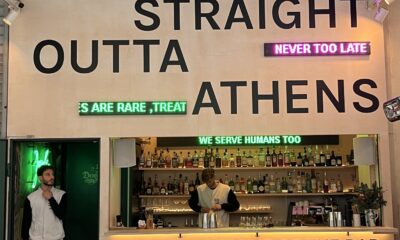

European mixology elite heading to Pig’s Lane
Fresh off being named Ireland’s Bar of the Year 2026, Pig’s Lane is set to host world-renowned Athens cocktail destination...


WEEK 14: Felicity’s Summer in Killarney
WEEK 14Felicity’s Summer in Killarney Previously: Here on Dundag it was far easier to relax than anywhere else. They had...
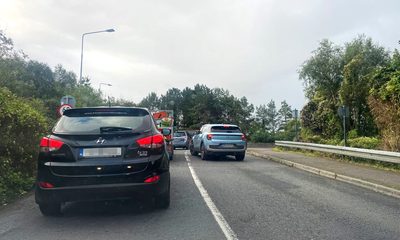

Frustration mounts over morning gridlock at Coolcorcoran
Frustration mounts over morning gridlock at Coolcorcoran Mounting traffic gridlock at the Coolcorcoran junction onto the N22 Killarney Bypass is...


Ailbhe Keogan scoops top television writing award
Acclaimed Kerry screenwriter Ailbhe Keogan has won the Best TV Drama Script award at the 19th Writers’ Guild of Ireland...
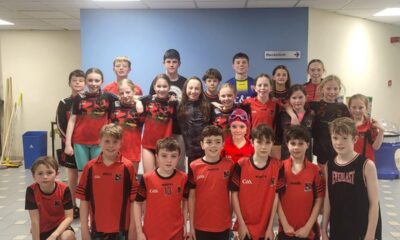

Fossa Swimmers make a splash at County Finals
The Fossa Swim team pictured at the Tralee Sports Complex following their successful outing at the County Finals of the...
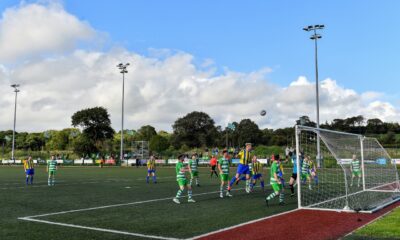

On the Ball Part 2 of the Mikey Daly Interview
Éamonn Fitzgerald EF: Killarney Celtic are invited to participate in an Irish competition. That has big financial implications for travel,...


LUKE MANGAN recently caught up with Kerry FC’s manager, Colin Healy.
He spoke to him about his careers as a player and manager. Here’s how it went: When you began your...


Home cup tie for St Paul’s could be epic
Paudie O’Connor National Cup (Round 1) Utility Trust St Paul’s v GCU Brunell Saturday 7.30pm Killarney Sports and Leisure Centre...


Chances of Kerry v Cork Munster final in 2026 decrease as Munster GAA delay seeding plan
After facing a backlash from Limerick, Clare, Waterford and Tipperary players, Munster GAA have postponed their plan to keep Cork...
