
News
How to do a job interview with confidence


By Niamh Dwyer, Chairperson of the Kerry Branch of Guidance Counsellors
It is perfectly normal to feel nervous when you are facing a job interview, in fact experts tell us that a certain amount of nerves are necessary to help us to perform with energy and enthusiasm when we meet the interview board.
The challenge is to ensure that those nerves don’t become overwhelming as this can hinder you from giving your best performance. You want to sound confident - even if you don’t feel it! Start by reminding yourself that the company or organisation already believe that you are competent to do the job, otherwise you wouldn’t have gotten to interview stage. Your task in the interview is to show evidence of your skills and competencies through relevant examples from your experience, to show your technical knowledge about the role or position and to demonstrate what sets you apart from other candidates. The more confidently you can do this, the better.
Prepare in advance of the interview by carefully examining the job description and specification, research the company or organisation itself and know every detail you have included in your CV or application and cover letter. You should also read carefully any information you receive about the format of the interview. Are there a number of stages? Is it by phone, virtual or face to face? You may be told for example, that you are being invited for a competency based, technical, strengths or skills based interview. You may also be required to do a presentation or bring evidence of a completed project. While there are some techniques specific to the format of the particular interview, there are certain generic questions that you need to be ready for – for example; Tell us about yourself, What are your strengths and weaknesses, Why should you get the job over other candidates, Why do you want the job, What do you know about the company and the position, What is your USP (Unique Selling Point)? These questions may seem quite straight forward but when you are put on the spot in the interview it is easy to get flustered, begin to waffle or get tongue-tied, so the key thing is to prepare, practice and perfect the information that you expect to be asked for in the interview. It is impossible to predict exactly what you are going to be asked and you will have to think on your feet, but the more familiar you are with information relevant to the job, company, sector and yourself, the better chance you have of answering difficult questions. Use language you are comfortable with as this will help you to feel confident but make sure you include key terms that are relevant to the role.
COMPETENCY
It is fairly standard to be asked to give evidence of the key competencies and to make sure you stay on point with your answer, use the STAR technique. For example, if asked to show evidence of a time you dealt effectively with a conflict structure your answer as follows – give the situation or task you were dealing with, the actions you took and what the result was. Be ready to elaborate on what you learned from the experience and what you would do differently. You may also get scenario questions such as ‘How would you deal with an irate customer in a busy reception areas?’ Practice your answers in front of a mirror, with a trusted friend or record yourself on your phone so you can work on improving your pacing and delivery and you become used to listening to the sound of your own voice speaking confidently about yourself. This is something that people find difficult to get used to. Use positive affirmations to remind yourself of how capable you are. The first step in convincing an interview board that you are the right person for the job is to believe that yourself. Show that you are confident in your body language and tone of voice. Listen carefully to what you are being asked. Make sure you leave the interview knowing you have made the right impression. At worst you will have gained very valuable experience and at best you will get the job!
Niamh Dwyer is a Guidance Counsellor in Scoil Phobail Sliabh Luachra, Rathmore, and Chairperson of the Kerry Branch of Guidance Counsellors. She is also a Careers Advisor - For details see www.mycareerplan.ie or follow @mycareerplan on Facebook, Instagram or Twitter.

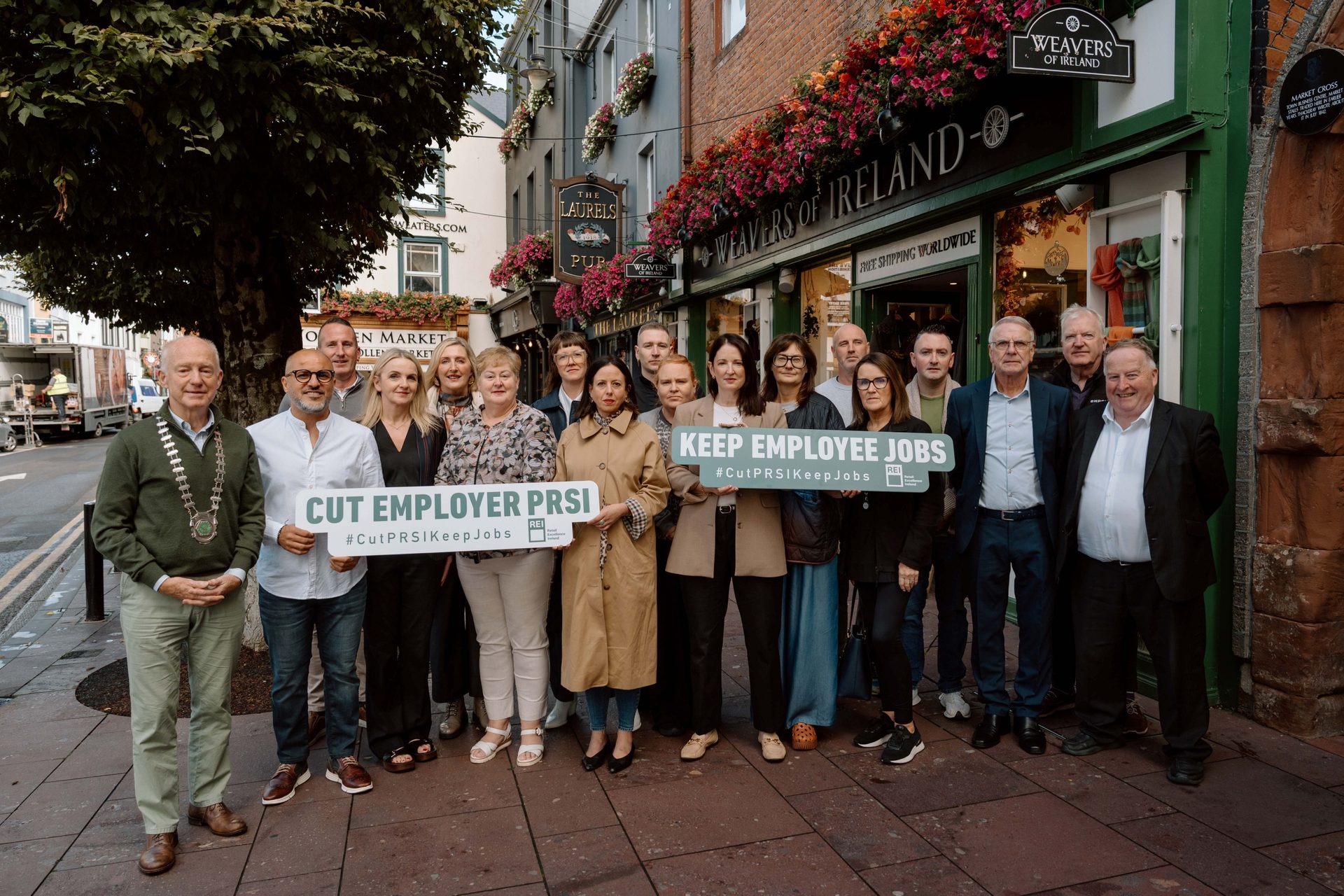
Retailers and shop staff across Killarney joined forces this week as part of the nationwide ‘#CutPRSIKeepJobs’ campaign, calling on the Government to reduce employers’ PRSI contributions in Budget 2027 to protect local employment.
Organised by Retail Excellence Ireland (REI), the campaign saw shop owners and employees stand together to highlight the severe financial pressures facing town centre businesses.
The industry body is urging the Government to introduce an employer PRSI band of 8% on the first €36,000 of every wage, zero employer PRSI for workers under 25, and a review of the methodology used to calculate the living wage.
The push comes amid growing concern over rising operational expenses, with new figures showing a loss of 10,800 retail jobs nationally over the past year and a 35% surge in retail insolvencies in the first half of 2026 alone.
Jean McCabe, Chief Executive Officer of Retail Excellence Ireland, warned that mounting wage costs are placing unprecedented strain on independent traders across Kerry.
“The retail industry has been under the most intense pressure from a range of cost pressures in recent times – and wage costs are the primary issue,” Ms McCabe said. “The industry is now seeing a rapid increase in insolvencies because of these pressures, so Government must now act unless it wants to see more businesses fail. Retailers standing together today shows just how widely this is being felt, in towns right across the country.”
Ms McCabe added that incoming PRSI rate increases scheduled for October 1 will deliver another major blow to small and medium enterprises unless urgent intervention is taken in the upcoming budget.
“We’re asking every TD, in every constituency, to back this ask,” Ms McCabe added. “And we’re asking Tánaiste Simon Harris, as Minister for Finance, to introduce it directly in Budget 2027. It’s costed, it’s modest, and it keeps jobs in local communities.”
Retailers join national campaign to cut PRSI and safeguard local jobs
Retailers and shop staff across Killarney joined forces this week as part of the nationwide ‘#CutPRSIKeepJobs’ campaign, calling on the Government to reduce employers’ PRSI contributions in Budget 2027 to protect local employment.
Organised by Retail Excellence Ireland (REI), the campaign saw shop owners and employees stand together to highlight the severe financial pressures facing town centre businesses.
The industry body is urging the Government to introduce an employer PRSI band of 8% on the first €36,000 of every wage, zero employer PRSI for workers under 25, and a review of the methodology used to calculate the living wage.
The push comes amid growing concern over rising operational expenses, with new figures showing a loss of 10,800 retail jobs nationally over the past year and a 35% surge in retail insolvencies in the first half of 2026 alone.
Jean McCabe, Chief Executive Officer of Retail Excellence Ireland, warned that mounting wage costs are placing unprecedented strain on independent traders across Kerry.
“The retail industry has been under the most intense pressure from a range of cost pressures in recent times – and wage costs are the primary issue,” Ms McCabe said. “The industry is now seeing a rapid increase in insolvencies because of these pressures, so Government must now act unless it wants to see more businesses fail. Retailers standing together today shows just how widely this is being felt, in towns right across the country.”
Ms McCabe added that incoming PRSI rate increases scheduled for October 1 will deliver another major blow to small and medium enterprises unless urgent intervention is taken in the upcoming budget.
“We’re asking every TD, in every constituency, to back this ask,” Ms McCabe added. “And we’re asking Tánaiste Simon Harris, as Minister for Finance, to introduce it directly in Budget 2027. It’s costed, it’s modest, and it keeps jobs in local communities.”
Retailers and shop staff across Killarney joined forces this week as part of the nationwide ‘#CutPRSIKeepJobs’ campaign, calling on the Government to reduce employers’ PRSI contributions in Budget 2027 to protect local employment.
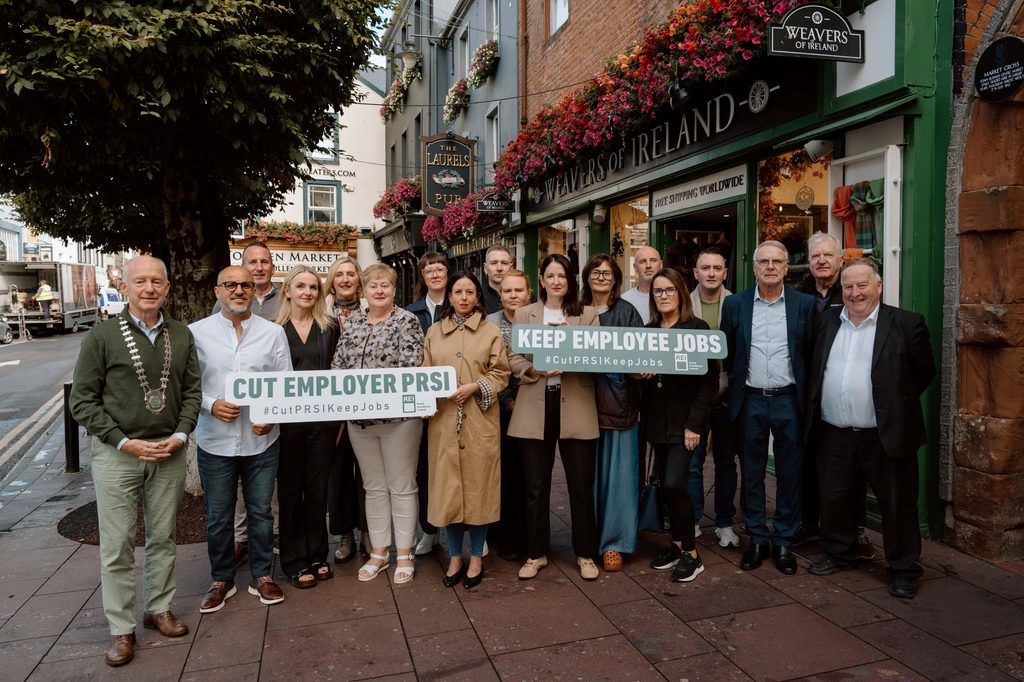
Organised by Retail Excellence Ireland (REI), the campaign saw shop owners and employees stand together to highlight the severe financial pressures facing town centre businesses.
The industry body is urging the Government to introduce an employer PRSI band of 8% on the first €36,000 of every wage, zero employer PRSI for workers under 25, and a review of the methodology used to calculate the living wage.
The push comes amid growing concern over rising operational expenses, with new figures showing a loss of 10,800 retail jobs nationally over the past year and a 35% surge in retail insolvencies in the first half of 2026 alone.
Jean McCabe, Chief Executive Officer of Retail Excellence Ireland, warned that mounting wage costs are placing unprecedented strain on independent traders across Kerry.
“The retail industry has been under the most intense pressure from a range of cost pressures in recent times – and wage costs are the primary issue,” Ms McCabe said. “The industry is now seeing a rapid increase in insolvencies because of these pressures, so Government must now act unless it wants to see more businesses fail. Retailers standing together today shows just how widely this is being felt, in towns right across the country.”
Ms McCabe added that incoming PRSI rate increases scheduled for October 1 will deliver another major blow to small and medium enterprises unless urgent intervention is taken in the upcoming budget.
“We’re asking every TD, in every constituency, to back this ask,” Ms McCabe added. “And we’re asking Tánaiste Simon Harris, as Minister for Finance, to introduce it directly in Budget 2027. It’s costed, it’s modest, and it keeps jobs in local communities.”

Retailers join national campaign to cut PRSI and safeguard local jobs
Retailers and shop staff across Killarney joined forces this week as part of the nationwide ‘#CutPRSIKeepJobs’ campaign, calling on the...
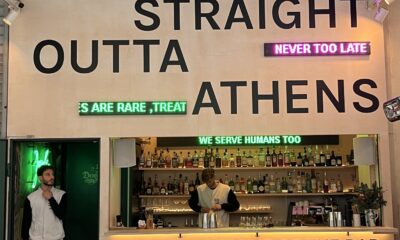

European mixology elite heading to Pig’s Lane
Fresh off being named Ireland’s Bar of the Year 2026, Pig’s Lane is set to host world-renowned Athens cocktail destination...


WEEK 14: Felicity’s Summer in Killarney
WEEK 14Felicity’s Summer in Killarney Previously: Here on Dundag it was far easier to relax than anywhere else. They had...


Frustration mounts over morning gridlock at Coolcorcoran
Frustration mounts over morning gridlock at Coolcorcoran Mounting traffic gridlock at the Coolcorcoran junction onto the N22 Killarney Bypass is...


Ailbhe Keogan scoops top television writing award
Acclaimed Kerry screenwriter Ailbhe Keogan has won the Best TV Drama Script award at the 19th Writers’ Guild of Ireland...
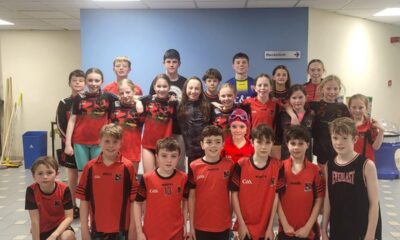

Fossa Swimmers make a splash at County Finals
The Fossa Swim team pictured at the Tralee Sports Complex following their successful outing at the County Finals of the...
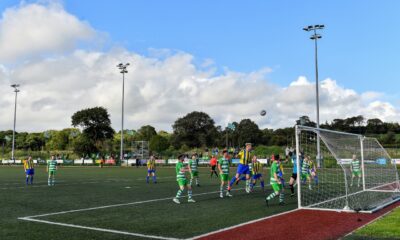

On the Ball Part 2 of the Mikey Daly Interview
Éamonn Fitzgerald EF: Killarney Celtic are invited to participate in an Irish competition. That has big financial implications for travel,...


LUKE MANGAN recently caught up with Kerry FC’s manager, Colin Healy.
He spoke to him about his careers as a player and manager. Here’s how it went: When you began your...


Home cup tie for St Paul’s could be epic
Paudie O’Connor National Cup (Round 1) Utility Trust St Paul’s v GCU Brunell Saturday 7.30pm Killarney Sports and Leisure Centre...


Chances of Kerry v Cork Munster final in 2026 decrease as Munster GAA delay seeding plan
After facing a backlash from Limerick, Clare, Waterford and Tipperary players, Munster GAA have postponed their plan to keep Cork...
