
Sport
FA Cup heroes Chorley could be Killarney-bound


Chorley manager Jamie Vermiglio has confirmed that he wants to bring his giant-killing cup heroes on a pre-season tour to Killarney.
Last Saturday, the former Killarney resident led his non-league side to an unlikely 2-0 victory over Championship outfit Derby County in the third round of the FA Cup, and the part-timers are now looking forward to a historic last 32 match-up against Premier League club Wolverhampton Wanderers.
Vermiglio moved to Killarney with his family back in the nineties and during that time he lined out with both Killarney Celtic and Killarney Athletic, so his rise to prominence is being celebrated on both sides of the town’s footballing divide.
Speaking to the Killarney Advertiser in the wake of his team’s famous win, the Liverpool native said that taking his cup stars to Kerry to play against his former clubs is a distinct possibility.
“Chorley to Killarney could be on the cards, when the pandemic is over,” the 38-year-old schoolteacher said. “I’ve been speaking to Eamon O’Donoghue of the Gleneagle Hotel to see if he could help to coordinate something in the future.
“There are lots of good soccer players in Killarney and the surrounding areas. I know a lot of players, if given the opportunity, could step up to the Irish league, or non-league or league football here in England.
“I loved my time in Killarney,” he continued. “It’s such a special place for me with many memories. I proposed to my wife at the Aghadoe Heights Hotel.”
If that pre-season trip does go ahead, Celtic and Athletic players will no doubt see it as an ideal opportunity to put themselves in the shop window, and perhaps even secure a coveted trial in English football.
CONTROVERSY
Last week, The Celts and The Blues both congratulated Vermiglio on his success.
“Congratulations to former Killarney Celtic FC player Jamie Vermiglio who is the manager of Chorley FC,” Celtic tweeted. “Today his team booked a place in the 4th Round of the FA Cup after their 2-0 win over Derby County. Best of luck in the next round to Jamie and Chorley FC.”
On Facebook, Athletic also wished Vermiglio well. “Huge congratulations to Jamie Vermiglio on the success of his team Chorley FC making it into the 4th Round of the FA Cup. A great day for Killarney to see one of our own having such success in promoting the beautiful game. We are all proud of you in Killarney Athletic, Jamie.”
With both teams “claiming” the Chorley gaffer, old tensions flared up briefly; various news outlets referring to Vermiglio as a “former Celtic player” didn’t help matters.
To clarify: Vermiglio started out with Celtic before transferring to Athletic, with whom he played most of his football during his time in Ireland. He then moved back England before returning again for less than a year. During this time, he lined out for Celtic at senior level. Mystery solved. He’s not Celtic or Athletic – he’s both.
Funnily enough, his former Athletic teammate Brian O’Reilly recalls that, in contrast to the current furore surrounding his mixed allegiances, there was very little fuss made about Vermiglio’s decision to change clubs at the time.
“Jamie’s uncle, John, was really heavily involved with Celtic so it was natural for him to play with them when he first arrived,” Reilly explains. “Then when he came into St Oliver’s, he became friendly with our group – myself, David Gleeson, Nick Murphy and Paudie O’Connor – and we all played for Athletic. You always end up playing with your friends, and that’s how he came to play with us. I don’t ever remember any hostility or anything like that (over the transfer).
“The way stuff has gone on the last few days – who’s claiming him and all that – it was never like that. We all played together with the Sem as well and his uncle came and coached us. We were just mates playing football.
“We’re all delighted for him, not from the point of view of Killarney Athletic or Celtic. We’re just happy to see him do well as a person, and put Killarney back in the spotlight.”
SKILFUL
The current Chorley boss went on to forge a fine career in England’s non-league ranks and Reilly remembers him as an “outrageously skilful player” who was “lightyears ahead” of his peer group.
“We used to play on the court in school and the astroturf in the Gleneagle and he was so skilful. He had all the tricks and flicks – a total showboater. But on the pitch, he was a completely different player. He played right wing or in the centre and he always seemed to do things right. He did the simple stuff and he had a very good football brain – you could see that from very early on.
“He was a cheeky chappy from Liverpool with a great sense of humour. He was very charismatic too. You could see that he was a leader on the pitch even back then and he had a big personality. He was always encouraging fellas – a good motivator and a very good teammate.
“And a really nice guy off the pitch as well.”
SAVIOUR
The significance of Chorley’s win cannot be overstated, even though it came against a Derby squad that was weakened by an outbreak of COVID-19. Vermiglio’s side operate in the National League North, which is the sixth tier of English football.
The financial benefits of an unexpected cup run are huge. Speaking to The Guardian in the lead-up to the match, Vermiglio said the tie itself had “saved the club”.
“We told the players at the start of the season that, with all the uncertainty, we’d commit to paying the wages but they may not get them on time every week. I think [the money from the Derby match] is a figure close to £250,000 with all the TV revenue, and it has put us in a very fortunate position compared to some other non-league clubs. It’s been a saviour for us.”
Although Vermiglio admitted after the match that, with all due respect to the opposition, The Magpies “should be beating” Derby when their team was made up of so many young players, Chorley are quite a young outfit themselves with an average age of roughly 23. They are also a part-time club (they have a bartender, a lift engineer, a teacher and a personal trainer in their ranks) so defeating an established professional club like Derby is a major achievement.
One disappointing note from Vermiglio’s end is that he couldn't to go toe-to-toe with Derby manager and fellow Liverpudlian Wayne Rooney, who was unable to attend due to the COVID outbreak in his first team squad.
“I grew up on Scarisbrick Road in Liverpool, and he was a Toxteth lad, I think. Seeing someone from near where you live do what he’s done, it’s been very inspirational for the local lads in Liverpool. It would have been great to get the opportunity to come up against him with Chorley as equals.”
Now that the storm in a teacup over Vermiglio’s local allegiances has hopefully blown over, Killarney’s footballing fraternity will turn their attention to Chorley’s next big cup tie: Wolves at home on the weekend of January 23/24. Win that and they could be playing host to the most successful team in the competition’s history: the mighty Arsenal.
The odds will be stacked against them making it that far but, interestingly, Chorley’s most notable result prior to last weekend came in 1986 when they dumped a big club out of the cup after a replay.
The unfortunate club in question? Wolverhampton Wanderers.
ABOVE: Vermiglio watching his side's historic victory over Derby. Pic: Stefan Willoughby.
News
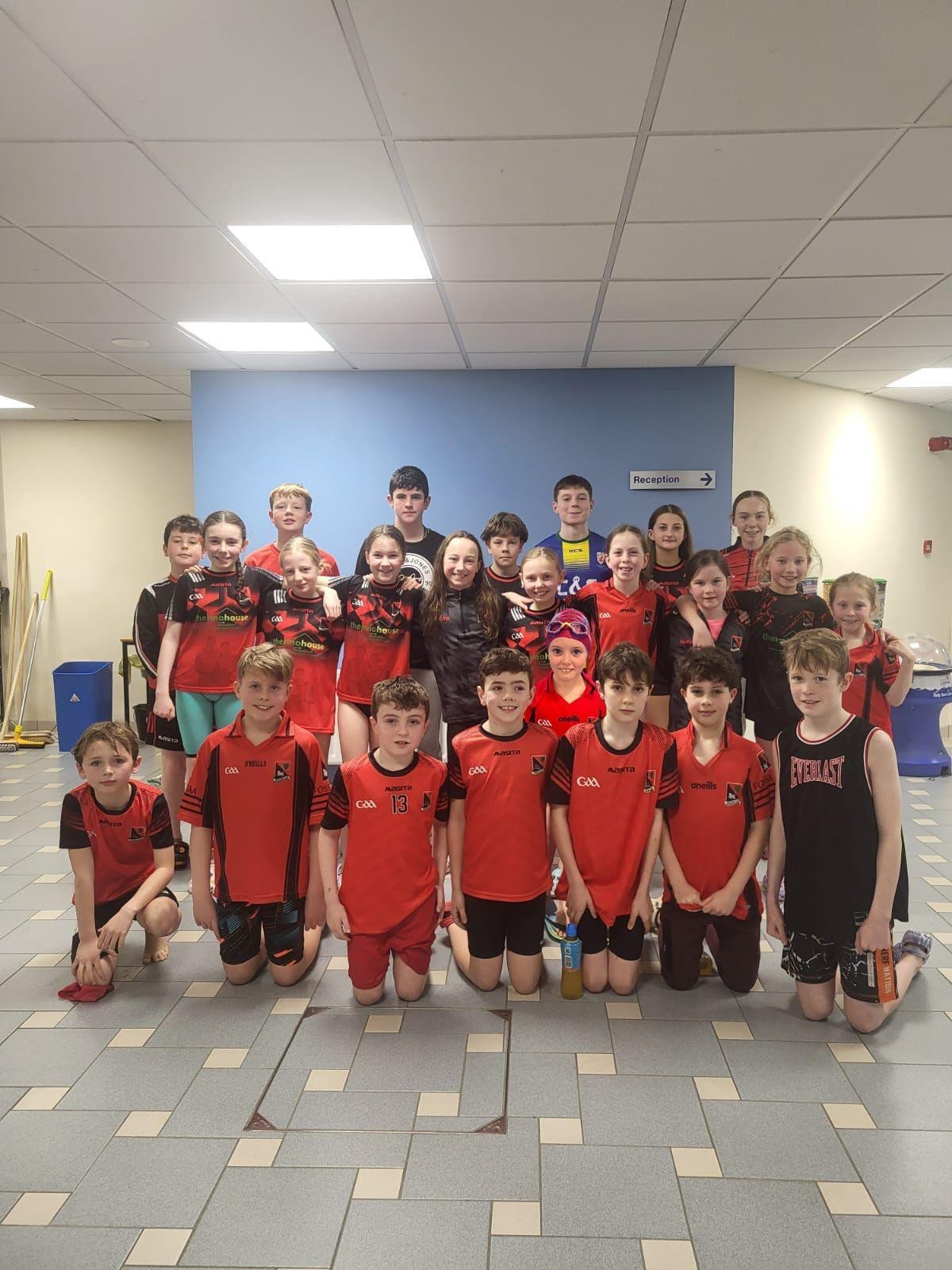
Fossa Swimmers make a splash at County Finals
The Fossa Swim team pictured at the Tralee Sports Complex following their successful outing at the County Finals of the Community Games on Sunday, February 15. The 25-strong squad delivered […]

News
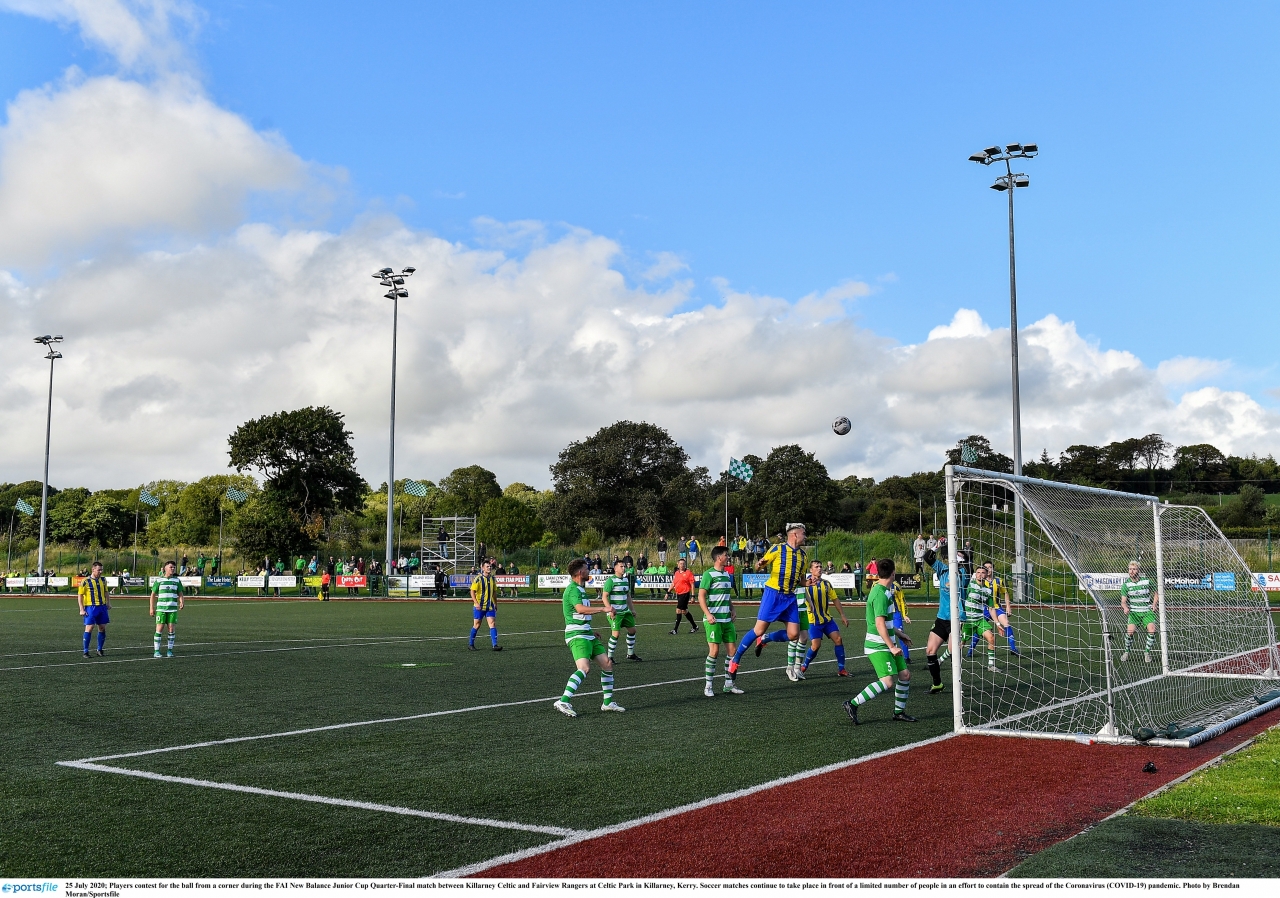
On the Ball Part 2 of the Mikey Daly Interview
Éamonn Fitzgerald EF: Killarney Celtic are invited to participate in an Irish competition. That has big financial implications for travel, meals, etc. MD: It is great to be invited, showing […]

Missing Killarney chef located dead in UK
Missing Killarney chef located dead in UK A 34-year search for missing former Killarney chef Patrick (Patsy) O’Sullivan ended following...


Speed cameras go live at Farranfore level crossing
Speed cameras go live at Farranfore level crossing An Garda Síochána, Iarnród Éireann, Transport Infrastructure Ireland, and Kerry County Council...


Conference on historic Annals of Inisfallen
Conference on historic Annals of Inisfallen A full-day conference dedicated to one of Ireland’s most important surviving medieval manuscripts will...

Gneeveguilla apprentice wins national stonemasonry title
Gneeveguilla apprentice wins national stonemasonry title Darragh O’Sullivan from Gneeveguilla won the overall prize in the Architectural Stonemasonry category at...


Jessica Cronin donates hair for children’s charity
Jessica Cronin donates hair for children’s charity Ten-year-old Killarney resident Jessica Cronin is set to cut and donate 12 inches...
