Connect with us

Sport

GAA misinformation in the WhatsApp age

Published

on

On the surface it’s a fairly simple app. Boring even. A basic messaging service that doesn’t really compare with Twitter or Instagram or Facebook in terms of features.

But in many ways this simple little app has emerged as a one of our main sources of sports news and information. Whether it’s direct via a friend or indirect via the infamous forwarded message, WhatsApp pumps a never-ending stream of sports-related truths, half-truths and bare-faced lies onto our screens. The problem is: how do we tell our fact from our fiction?

Well, in this age of misinformation, it’s probably wise to start off by assuming that its false and then work backwards from there. By this stage we all know that forwarded messages (i.e. messages from another chat, now rendered anonymous, that have been passed on hundreds or thousands of times before reaching our phone) are notoriously untrustworthy.

Recently, rumours surrounding the Kerry football manager Peter Keane – specifically that he was facing a player coup – spread like wildfire on WhatsApp, forcing the county board as well as present and former players to clarify that there was no truth whatsoever in the speculation.

“The erroneous WhatsApp messages and subsequent social media furore that emerged in the weeks following our defeat (to Cork) had, in our opinion, the aim of damaging the reputation of players and management, and it has to be said that the prevalence of fake news has increased with the rise of social media,” Kerry GAA Chairman Tim Murphy said.

In the past, videos and images that supposedly showed intercounty players fighting or misbehaving in some other way have been debunked, but not before they have been dispatched to the four corners of the country. A photo popped up recently of a well-known player apparently holding an illegal substance. It turned out the picture had been photoshopped. In the original version, he was holding a pin in support of a charitable foundation.

That’s the dangerous side of WhatsApp, the side that can damage reputations for the sake of a “joke”.

Teams and individuals have also gotten into trouble when things they actually did were shared widely via the app. Who could forget the Ballyragget hurlers? In 2017, the Kilkenny club, who had won the intermediate championship a couple of days earlier, earned national headlines for all the wrong reasons when footage of some of their players cavorting with strippers leaked via Snapchat to WhatsApp. What a fuss that particular episode caused.

Local club Kilcummin also had to deal with a bit of a media storm last year when a video of one of their training sessions left the team group chat and found its way into the pockets of half the country. The clip showed a coach shouting profanities at his players as they wrestled on the ground, and it drew plenty of tut-tutting from the Gaelic football purists. It all blew over pretty quickly but it wasn’t much craic for the club at the time.

Leaks are common enough when it comes to classified team information (which, admittedly, is great from a journalistic standpoint). Maybe it’s to be expected: when you have 40 odd fellas in a group, what are the chances that at least one of them isn’t as wedded to the vow of secrecy as the rest? All it takes is for one person to share it in one external group. Once that happens, you’re done. Even professional outfits like the Irish national soccer team have had issues with this kind of thing in the past.

There are some funny stories to come out of WhatsApp, though. One of my favourites is the time a local player, disillusioned with not getting a run in a certain game, went home and posted a picture in the group chat. It showed his bin – with his football boots sticking out of it.

Getting your hands on someone else’s phone can also lead to some amusing WhatsApp episodes, as I found out first-hand (from the wrong side of the joke) a couple of years ago. I started training with the Legion again (one of my many failed comeback attempts) and one night, not long after I had returned, I was out with a few of my teammates. I was standing at the bar with my phone in my hand and next thing it was gone, snatched by a thief who disappeared into the crowd.

When it came back into my possession, I discovered that the assailant (a teammate) had sent a heartfelt WhatsApp message to our manager, Stephen Stack, saying how glad I was to be back and how I was looking forward to working with him for the rest of the year. Bear in mind that this was around 2am on a Saturday night. On a scale of one to Ballyragget it wasn’t that bad, but it was still fairly embarrassing.

I suppose like all of these new technologies, we’re still finding out how to use WhatsApp and how to take and process the information that we receive. Really the best advice is to take everything you read on WhatsApp with a pinch of salt. (Especially if you’re a manager and you get an emotional message from a player you barely know very late on a Saturday night.)


Advertisement

News

On the Ball Part 2 of the Mikey Daly Interview

Éamonn Fitzgerald EF: Killarney Celtic are invited to participate in an Irish competition. That has big financial implications for travel, meals, etc. MD: It is great to be invited, showing […]
Published

on

Éamonn Fitzgerald
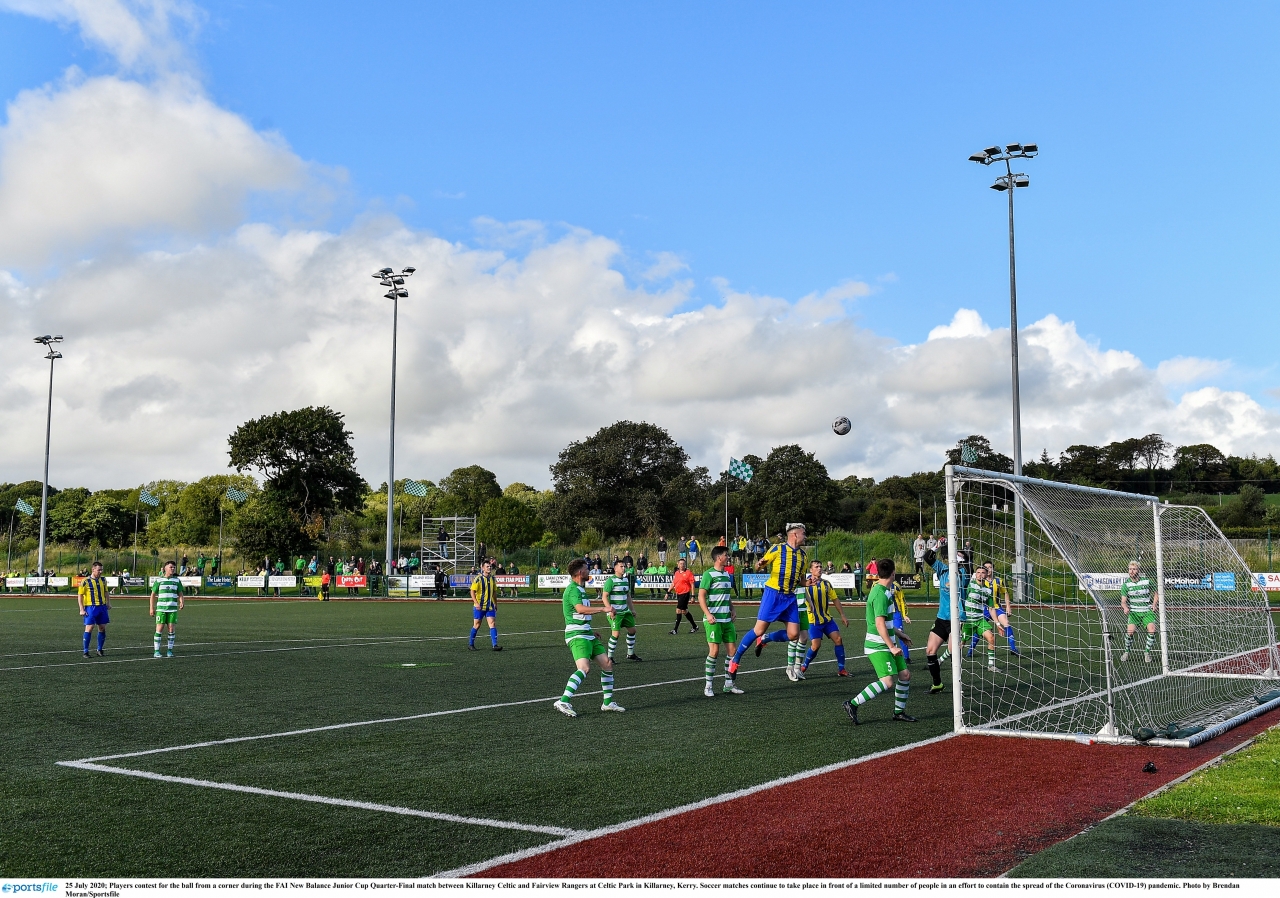
EF: Killarney Celtic are invited to participate in an Irish competition. That has big financial implications for travel, meals, etc.
MD: It is great to be invited, showing the quality of our squads, but travel costs are very high. I have been looking at clubs like ours in Limerick, Tipperary, Clare and elsewhere for a regionalised competition so that travel costs could be reduced, but I don’t see any commitment to that idea. It’s up in the air at the moment.
EF: Running an amateur sports club is very expensive, especially if you have so many successful teams in competition.
MD: You are well aware of that yourself, but with all of our activities, we are funded by the usual sources used by all sports to collect money. We are in a very good financial state.
EF:How good?
MD: As a trustee of the club, I am very proud to say that we are almost debt-free and we expect to be clear of any debt by October this year, marking our 50th anniversary. In saying that, whether you are an Under 12 or a senior player, all you have to pay for a training session with Killarney Celtic is €2.

EF:The women in Celtic appear to do great work developing soccer for all.
MD: Yes, they do marvellous work in so many parts of the club, led by trojan worker Mary Lyne. On Wednesday night last, the Mothers, Others and Friends started a weekly non-competitive fun game under lights at Celtic Park, and that is great.

EF: Can, can you see some ex-Celtic player is going to make it with a top Irish club and then cross Channel?
Md: I have to compliment Killarney Athletic here right away because Brendan Moloney and Diarmaid O’Carroll did just that. We haven’t had any such shining light yet, but we know that we will in the future because we have great young successful players coming through.
EF: Reverting back again, to 1976, you would have come up at the time The ‘ban’ was abolished. That rule prevented GAA players from playing soccer. If they did, they were suspended. However, it must have been difficult for a player to play both codes when it was permitted.
MD: Fair dues to Seán Kelly, he removed the “ban’, and we were very fortunate that there were some great players from Spa in particular, like Billy Morris, Seán Cronin, the Cahill brothers, James and John, Seánie Kelliher and others. They wanted to play football and soccer. The way we worked it in Celtic was that if the football season was over, then they always played soccer with us, and vice versa
EF: Why do you think that club soccer has become so popular in Ireland? It is climbing the rankings as a sport in Ireland.
MD: Because it’s on television the whole time, and the coverage is getting is precedented. Anytime you turn on the TV, you will find a soccer game from all parts of the world, not just cross channel. The 11-a-side is probably easier to organise than we say 15-a-side in the GAA, and some small clubs, particularly in rural areas, find it hard to get 15 to form a team. See what they’re doing in places. Two neighbouring teams get together as one team, and that’s understandable because all people want to do is play. Of course, not all young people wish to play soccer; they have different hobbies, learning the guitar or whatever, and that is great for them. That’s my experience anyway.

EF: The real crunch time comes when they get to roughly 18-years-old, completing their post-primary education and moving away from Killarney for third-level education. They may be in college, anywhere in the country, making it difficult to come down and play with their local club. So that’s one big reason for the fall off.
MD: Some fall away before that, believe it or not.
EF: Do you think Celtic are doing well, promoting the club?

Yes, for all sexes, but particularly for the girls, so that they can stay on longer for valuable coaching. We’re very fortunate to have David McIndoe as coach for the Celtic girls, and he is outstanding, absolutely fantastic.
EF: The FAI seems to stumble from one crisis to another, but at local level soccer is alive and well in towns, as well as in rural areas. Ballyhar and Mastegeeha are very good examples where great facilities have been developed by enthusiastic volunteers and that attracts the players
MD: So I think once you get to the stage where you have a facility and committed club people, you’re there. We have a very good membership, and we’d be well organised for parents who support their kids playing, and they do. We have two stands, as you know, one dedicated to our former great Celtic man, John Doyle (RIP). That’s important nowadays that you have a clubhouse where the spectators can get that welcome cup of coffee they will relish, especially on cold days.
EF: Where do you see Celtic in 2076?

MD: As I said earlier in Killarney Celtic, we are welcoming for everyone, the local Irish, of course, but it’s open to all. We have great people originally, from China, Europe, and the Middle East. We have an exceptionally good committee at the moment. We had people with foresight like Dermot O’Callaghan (RIP), who were progressive, and of course, that family continues the Celtic tradition. Obviously, we like to push the thing on a bit further, but we’re very conscious that we spent 50 years putting this together and we want to make sure that when we go, the structures are in place in (Killarney) Celtic for the next 50 ( years)As a trustee I am very proud of how we have developed and will celebrate that achievement this year. We will also remember the Celtic players and supporters who have passed away since 1976 and look forward to whatever challenges and opportunities face Killarney Celtic in the years ahead. It is hard to believe that it all started from our conversation (with Billy Healy and Tommy O’Shea) that a new club was needed in Killarney, so that all players who wish to play soccer will be able to play at whatever level they wish and join us at Celtic Park.
EF: Thanks, Mikey, and wish you good health on your daily cycles with your good friend Mike O’Neill.
That’s Mikey Daly, always a pleasure to chat with him on a variety of sports.

Continue Reading

News

LUKE MANGAN recently caught up with Kerry FC’s manager, Colin Healy. 

  He spoke to him about his careers as a player and manager. Here’s how it went: When you began your career, was there ever a player or manager you idolised? […]

Published

on


He spoke to him about his careers as a player and manager.

Here’s how it went:

When you began your career, was there ever a player or manager you idolised?

‘When I started my career, not really, I was 18 with Celtic and you know a lot of good players were there. Henrik Larsson was one. It was more important for me to get to that level and stay at that level, and it was a great experience’.

Tell me how it felt to play for Ireland while Mick McCarthy was manager.

‘It was very good. I began working with him in the Irish camp, and then when I joined Sunderland he would have been the manager there. So he’s been fantastic’.

Looking back on your career, what are you most proud of?

‘I’m just proud as always that I had a long career, a lot of injuries aswell, so probably getting back from those injuries. Along with playing for Cork City and playing internationally for Ireland which is always a good thing’.

When you went into managing, was there ever a manager or manager’s style you idolised?

‘Well we had a few, obviously Martin O’Neil at Celtic, and of course he’s still coaching today. Martin was a very good man and a very good manager. So I’d probably say Martin’.

Describe to me what it felt like to represent your country at an international level.

‘Yea, it was probably the proudest day and one of the biggest achievements’.

This will be your first full season with Kerry, what would you like to being to the club?

‘We recruited well, we still look to bring in more players, but listen i just want to get us as far as we can and get higher up the table and improve on last year’.

What do you believe is Kerry’s strongest capability?

‘We’re still in pre-season so we got some good goals, there’s still some stuff we can improve on, but its still early doors for us. Obviously we got new players, and they need the type of time as the players that are here. So overall it was good to get into the next round (of the Munster Senior Cup), but as I say, we can always be better’.

Attachments

Continue Reading