
Sport
Eamonn Fitzgerald: Goodbye to a difficult year


Killarney Advertiser sports columnist Eamonn Fitzgerald reflects on 2020, a sporting year like no other that produced some fascinating storylines.
What’s another year, as we say goodbye to 2020, a year dominated by COVID-19.
It impacted on the health of so many people and sadly, in the case of far too many, death followed. To all those who suffered and were bereaved we extend our sympathies and hope that 2021 will be a better one for you and for your families.
Sport also came a cropper, especially in the early stages, but then it opened up again. I had argued in this column on a number of occasions that most sporting activities should also be closed down, because the health and lives of people were at stake, particularly in crowded situations, involving teams and supporters. I was in favour of individual sport continuing.
I can appreciate the counter-argument that sport was not alone necessary for the physical health of players and supporters, but very much so for mental health. Sporting events were something we look forward to, but the risks were too high.
However, most sports opened up and 2020 provided that release for so many aficionados. It was a different year, with most sports played behind closed doors. Live streaming became the norm and it looks like the new norm will continue for 2021.
SOCCER
COVID-19 wasn’t kind to Stephen Kenny in his opening matches in charge of the Irish team in the Nations League. A famine of goals followed as he set about changing the Irish style of play. Gone was the Charlton mode of putting ‘em under pressure, often hoofing the ball long and direct. Kenny’s style is more attractive, but fans want wins, not moral victories. And, certainly, we need goals. What is overlooked too often is that he does not have the calibre of class players that Big Jack had. He has too few top-class footballers to call on.
On the club scene, COVID-19 didn’t stop Liverpool from being crowned champions, even if their many supporters in Killarney had to wait for quite a while before they could exercise the bragging rights, which they did. They were deserving champions and they still lead the way. Chelsea and Leeds’ fans hopes were high to challenge them, but recent results burst that balloon, even at this early stage. The challenge may well fall to the two Manchester rival clubs and what about Leicester, making an early burst?
On the Irish stage Shamrock Rovers reigned supreme and were worthy champions. I have happy memories of going to Glenmalure Park in Miltown (Dublin) in the seventies when they were unbeatable. They are in that mode again, but their old stomping ground is no more. In 1987 that beautiful pitch was controversially sold to speculative-minded builders, so beautifully captured by Luke Kelly in his song Dublin in the Rare Old Times: “the grey unyielding concrete makes a city of my town”.
Rovers had no home ground for over 20 years until they settled on Tallaght.
SIX–IN-A-ROW
Across the city to the north side and there was no stopping the Dubs as they rewrote the history they made in 2019 by clinching the new norm of six-in a-row.
Great displays by Cavan and Tipperary brought home interprovincial silverware to success-starved fans in those counties. No joy for Kerry, who allowed Cork to boss them in the deluge at Páirc Uí Chaiomh and bending the knee with that late, late goal. What’s the story for 2021? More about that in future editions.
The Kerry hurlers gave great satisfaction to so many supporters, even if they lost the McDonagh Cup final to Antrim, who proved to be their nemesis on four occasions in 2020.
This game was a curtain-raiser to the All-Ireland senior hurling final which was won convincingly in great fashion by Limerick. My abiding hurling memories of 2020 were those amazing sideline cuts by the imperious Joe Canning. Four out of four from varying distances, left and right. What a skill, what a man raising four white flags. At local level, it was encouraging to see Dr Crokes win the Kerry IHC title versus Tralee Parnells. They are looking good for the future.
Speaking of the future and of optimism: fair dues to the Kerry U17 footballers. They beat Cork in a thriller in Tralee and made sure of the Munster title with victory over Clare. They played a brand of football that gladdened the hearts of Kerry supporters, who were still hurting after the seniors' defeat. They played a good mix of old-style direct football and controlled close passing until the colleague arrived on the shoulder. They drove forward and delivered the ball in quickly to the scoring zone, where garsúns like Cian McMahon came of age, notching match-winning scores.
They were due to meet Roscommon in the All-Ireland semi-final in two weeks’ time, but I don’t expect that game to go ahead.
The U20s were badly hit for their All-Ireland semi-final v Galway, losing three players to the virus just before the match. Galway went on to beat Dublin in the final. John Sugrue had a good stint as manager but he stepped down, after facing that long return journey from Portlaoise a few times every week.
Declan O’Sullivan will manage this important group for the next two years, at least. His linkage with the senior management team will be very important as Kerry regroup. As expected, Donie Buckley wasn’t idle too long after parting company with Kerry, the one team he wanted to work with. Banty has taken him on board to boost Monaghan’s hopes of cranking up their dreams.
KERRY LADIES
A special mention to the Kerry ladies football team. They did very well and put up a great show against Cork in Tralee. Cork went on to the All-Ireland final, where they bowed to the other Dub trailblazers.
Mind you, the emerging Dubs have a long ways to go to reach the heights of past Kerry teams which included, among others, the all-round sports star Mary Geaney and Mary Jo Curran. If memory serves me well, Kerry won something like nine All-Irelands in a row, led by Beaufort’s Mary Jo. She won a bagful of All-Ireland medals, 11 in all. What a record and only Henry Shefflin, the great Kilkenny hurler, came near with 10.
At long last progress has been made in some sports where women were treated less equally than men.
Such misogynistic sentiments are coming to their rightful and timely end. In golf at long last, the GUI and the ILGUI have merged amicably into Golf Ireland. I wonder what the story is in Portmarnock and in Royal Dublin? Killarney Golf & Fishing Club has embraced this welcome, pluralistic mindset for quite some time.
The men and women players in the GAA are also well on the way to unity, but the top table of the GAA still lacks the heterogeneity of thought to bring them all under the one umbrella. The treatment of Galway in the staging of the All-Ireland semi-final still rankles, as does the low level of travel expenses paid to the ladies in comparison to the men. Equality beckons. Or does it?
HEART
There was plenty more to gladden the heart in 2020. Katie Taylor is the queen of the ring, the undisputed world champion.
Bookies were closed for the most part, as horse racing went ahead behind closed doors. The harsh lesson from the fall-out in March from Cheltenham was a stark reminder. The main winner in the new set-up was Willie Mullins and it was great to seek the Kerry jockeys doing so well.
The Irish rugby team struggled, but are Munster on the way back up again to their former lofty perch?
In golf, there was no Ryder Cup for team captain Pádraig Harrington. We had winning performances from Dustin Johnson, as well as the arrival on the podium of Bryson DeChambeau, defying best practices by missing most of the fairways and using his extra three stone weight to hit the ball out of the high rough without a bother, giving high handicappers great hopes of making the same winning connection more regularly.
FOCAL SCOIR
Focal scoir and just a few days into 2021, I still feel on balance that a halt should be called to competitions for team sports, where physical contact is a prerequisite. Numero uno is the health of all. Sport for individuals could go ahead, where social distancing is not an issue.
The daily number of cases is close to 5,000. By the time you read this, the daily figure may be up to 7,000. Statistics are reminders of the reality of the fallout from COVID -19. However, these are also human stories of suffering, worry, uncertainty and regrettably, in too many cases, death and mourning for families who are unable to grieve in the healing process of traditional Irish wakes and funerals.
Schools may not re-open on Monday next and Lockdown 3 may well need to continue into March. Team sports should be put on hold until it is deemed safe to open up. After all, basketball has been closed completely in 2020, as it is an indoor sport. For the first time in over 50 years the eagerly awaited Castleisland Christmas basketball blitz, masterminded by the indefatigable Duke, did not go ahead.
Idir an dá linn, Happy New Year and stay safe.
News
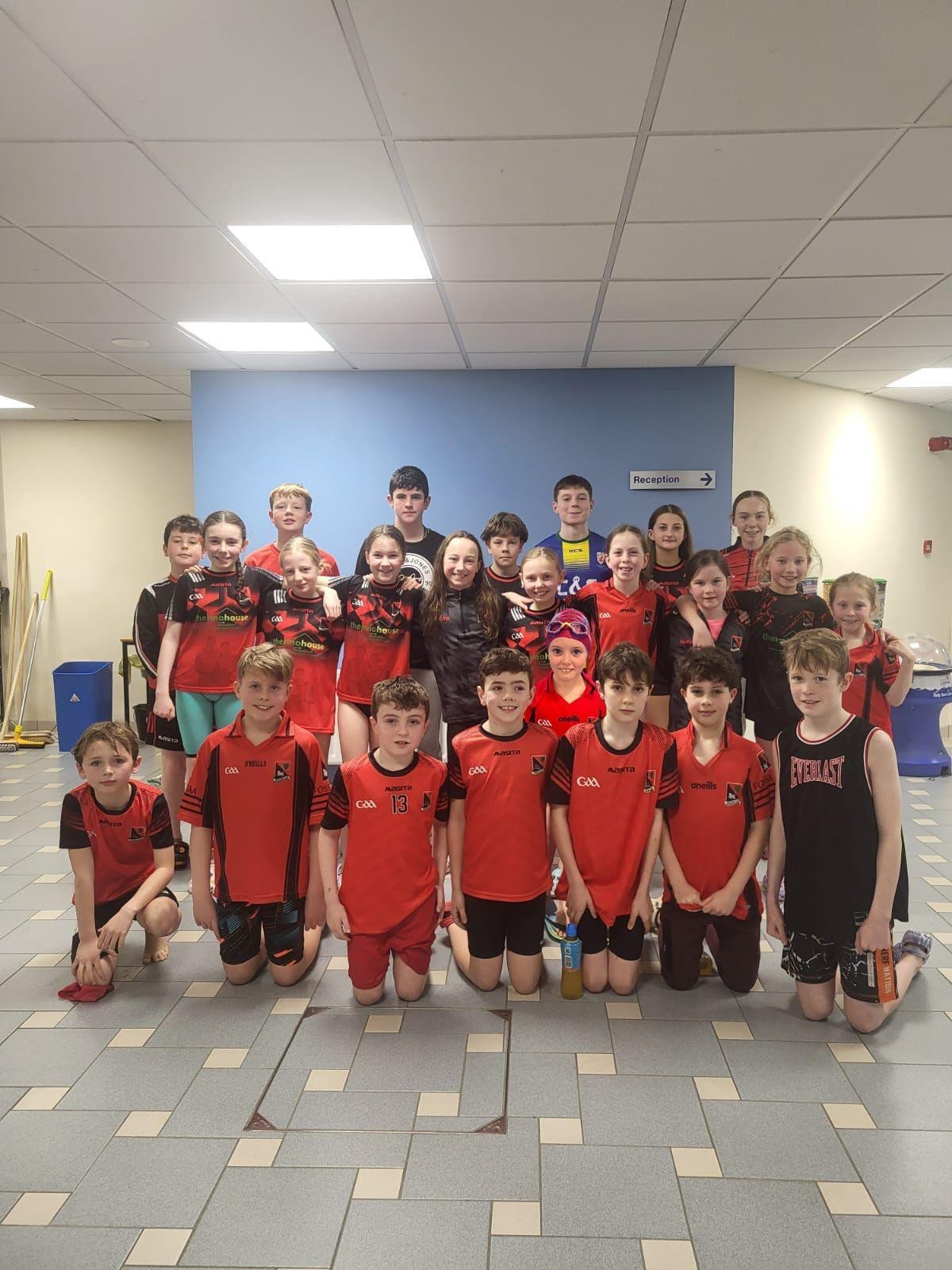
Fossa Swimmers make a splash at County Finals
The Fossa Swim team pictured at the Tralee Sports Complex following their successful outing at the County Finals of the Community Games on Sunday, February 15. The 25-strong squad delivered […]

News
On the Ball Part 2 of the Mikey Daly Interview
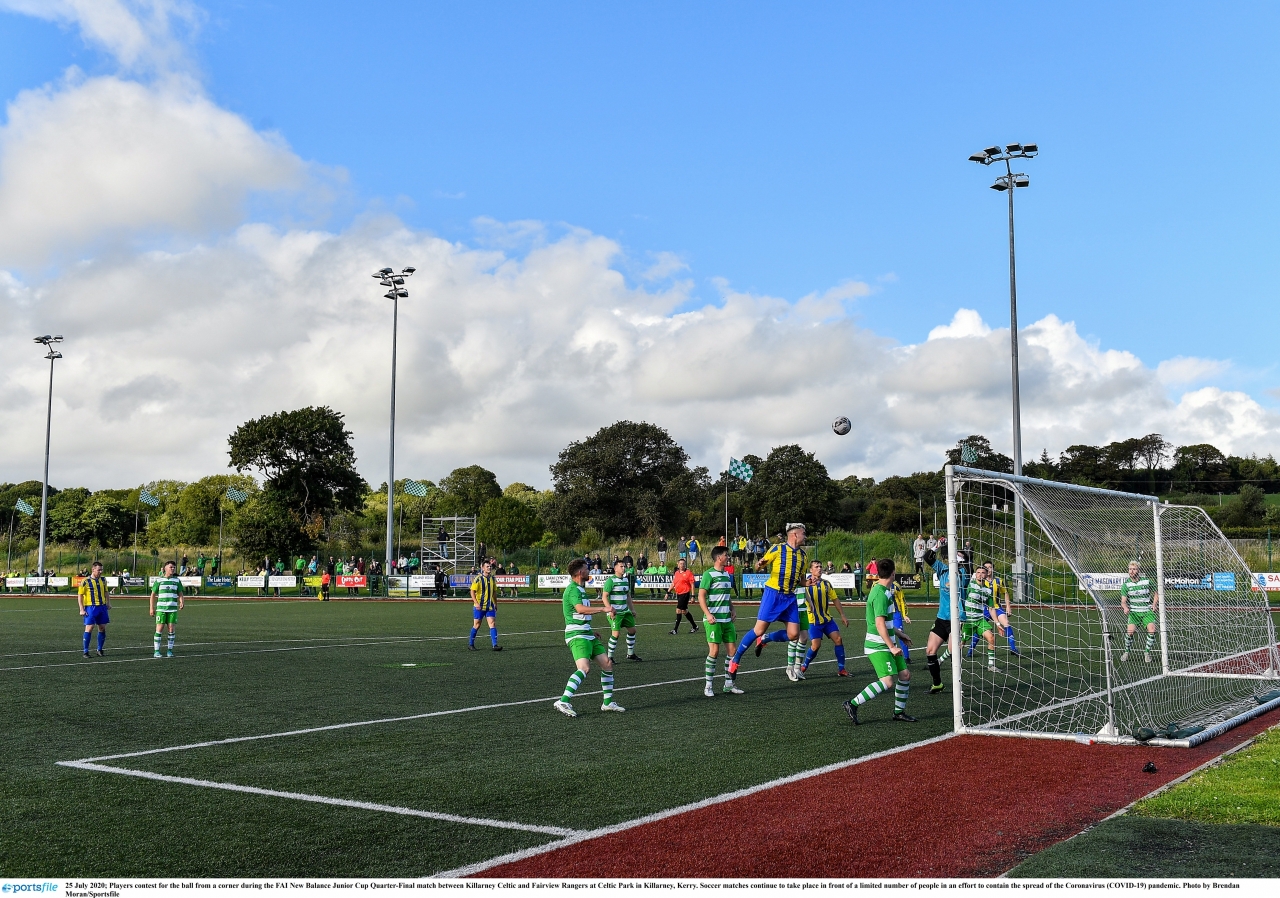
Éamonn Fitzgerald EF: Killarney Celtic are invited to participate in an Irish competition. That has big financial implications for travel, meals, etc. MD: It is great to be invited, showing […]

KWD Recycling shortlisted for national environmental awards
KWD Recycling shortlisted for national environmental awards Killarney-based KWD Recycling has been announced as a finalist in the 2026 Repak...

Drivers warned as deer rutting season begins
Drivers warned as deer rutting season begins Motorists in Killarney are being urged to exercise extreme caution as the annual...

Kerry Airport CEO addresses chamber luncheon
Kerry Airport chief executive Adrian Neilan addressed local business leaders at the Killarney Chamber of Tourism and Commerce luncheon at...

The Brehon raises €2,850 for Jack and Jill Foundation
The Brehon Hotel and Spa raised €2,850 for the Jack and Jill Children’s Foundation after hosting a closest-to-the-pin golf simulator...

Five local postmen retire with 185 years service
Five local postmen retire with 185 years service RETIREMENT NIGHT: Pictured at the retirement party held at Killarney Racecourse on...
