
News
Top tips to make your CV stand out from the crowd

Your CV has one thing to do – get you noticed by potential employers. It is the ‘door-opener’ and needs to demonstrate clearly why you are the right person for the job or the company in question.
This needs to be done in the most concise and targeted way possible and you need to test that it passes the seven second rule! On average if an employer doesn’t see what they want in seven seconds your chances of getting shortlisted or interview are slim to none! Get the basics right and they will read on.
Keep it to two pages
It doesn’t matter how much experience you have or how many courses you have done, only those that are relevant to the job should be included. This means that you will need to adapt your CV to different jobs.
Use a clear and simple layout
Fonts such as Times New Roman, Verdana, Tahoma, Arial, Calibri, Cambria, Georgia and Helvetica are best and use 12-point font size unless you are really tight on space and then reduce to 11.
Put your name in larger font at the top of the CV. There's no need to include the word CV or Curriculum Vitae, and include your contact details underneath – email, mobile number, address if you feel you want to, and LinkedIn profile details if you are on it.
Stick to the truth
While it is tempting to stretch it a little, if you get called to an interview or references are verified, there is every chance that you will get caught out.
Your CV should have the following sections – Opening summary/professional profile, Work Experience, Education and Training, Key sSkills and Expertise, Interests and Achievements which are only needed if you are a recent graduate or school leaver.
After the Opening Summary which can be done as a paragraph or bullet points, you need to lead with your strongest section. If you have extensive relevant experience and it has been a long time since you completed your education then you are primarily selling your experience on your CV. If you are student or recent graduate then you need to focus on how your education links to the job so give details of modules, projects and any key achievements linked to your qualification.
Employers like evidence and data so when completing the section on work experience include proof of what you have achieved in the workplace and rather than giving a list of tasks and responsibilities of your past jobs tell them what competency you have demonstrated. Use action verbs to explain what you do/did. Don’t forget to include voluntary work if relevant.
In relation to education; be selective. If it’s more than 15 years since you completed your Leaving Cert then you don’t really need to include it. While you may have lots of courses done over the years only include those which are relevant to the job you are applying for. You could also consider dividing them into two sections – ‘Education & Training’ and ‘Other Training’.
Information in sections on employment and education should be listed in reverse chronological order.
If you are concerned about a gap in your CV, say for example if you have taken a year out to travel or some years out to care for family then state the years so the employer can account for the time and give a simple and short explanation of the competencies you developed during it.
Keywords are essential
This is particularly the case if the CV is being read by a computer before it ever reaches the eyes of a human resource manager, a process known as Applicant Tracking Systems (ATS).
Mirror the exact words, language and terminology, that have been used in the job description. Make it clear that you have what they are looking for.
When it comes to key skills and expertise make sure to link them directly to the job, demonstrate what you are great at and be prepared to explain your skills in interview.
The section on ‘Hobbies & Interests’ always raises questions. If you have more than seven years’ experience it’s not really relevant. Never use the word ‘hobbies’, use ‘Interests and Achievements’ instead. Give a line about each one that is useful and dynamic.
Referees
Unless you are a recent graduate or starting out in your career, employers don’t need details of referees on your CV, only if requested to do so in the job advertisement, as they won’t contact them until after interview. Always remember to ask permission of those who have agreed to provide a reference for you to include their name and contact details on the CV.
Proofread the finished product several times! There is no greater turnoff for a potential employer than seeing spelling, grammar mistakes or misprints. Get a couple of family members or friends to check it and don’t rely on spellcheck!
Niamh Dwyer is a Guidance Counsellor in Scoil Phobail Sliabh Luachra, Rathmore & PRO of Kerry Branch of Guidance Counsellors. She can be contacted on careerfocusnow@gmail.com

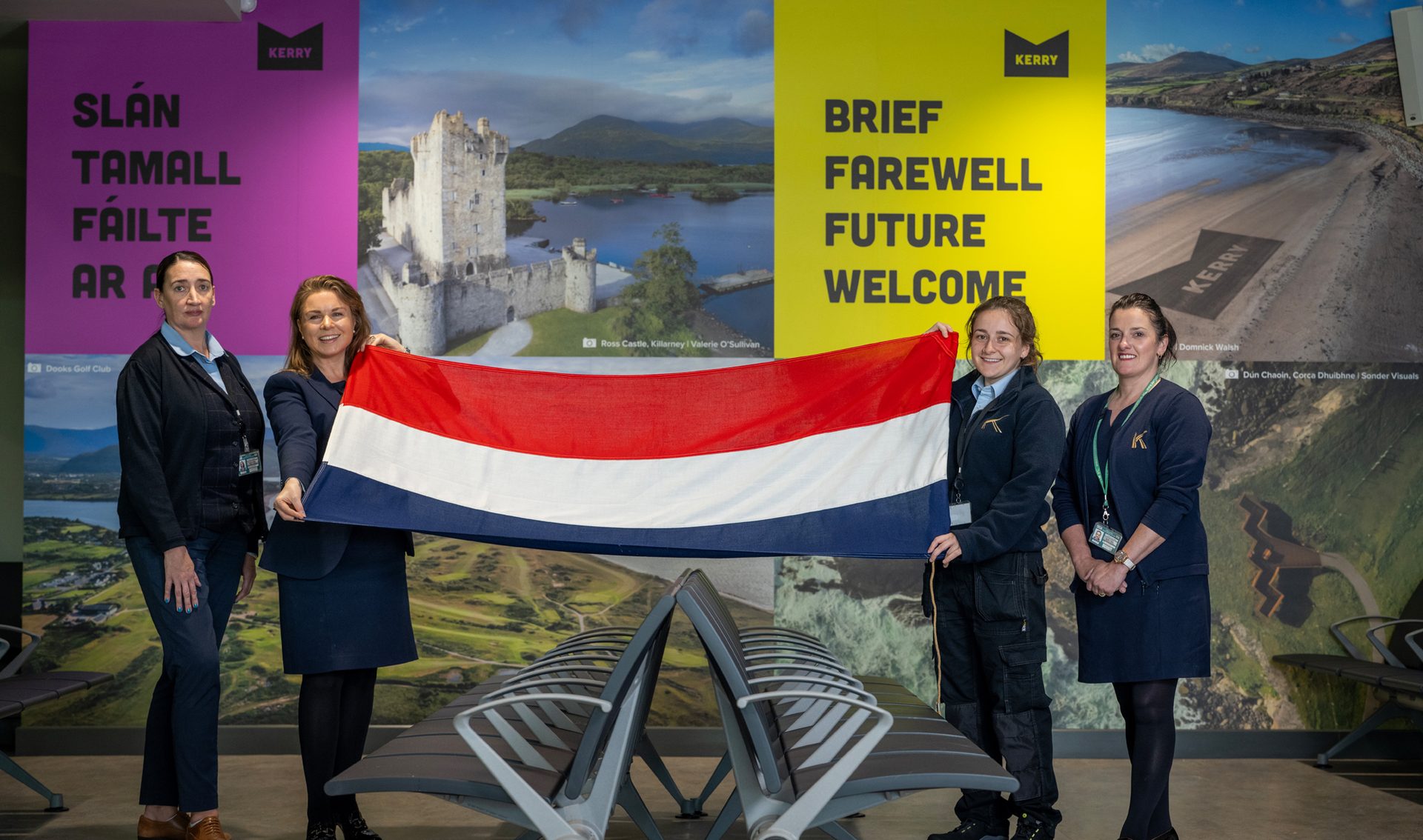
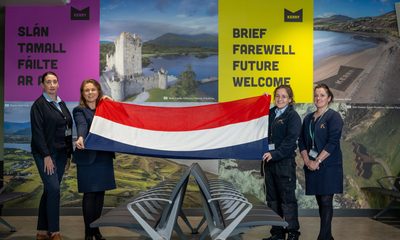
New Dutch flights to connect Groningen and Kerry Airport
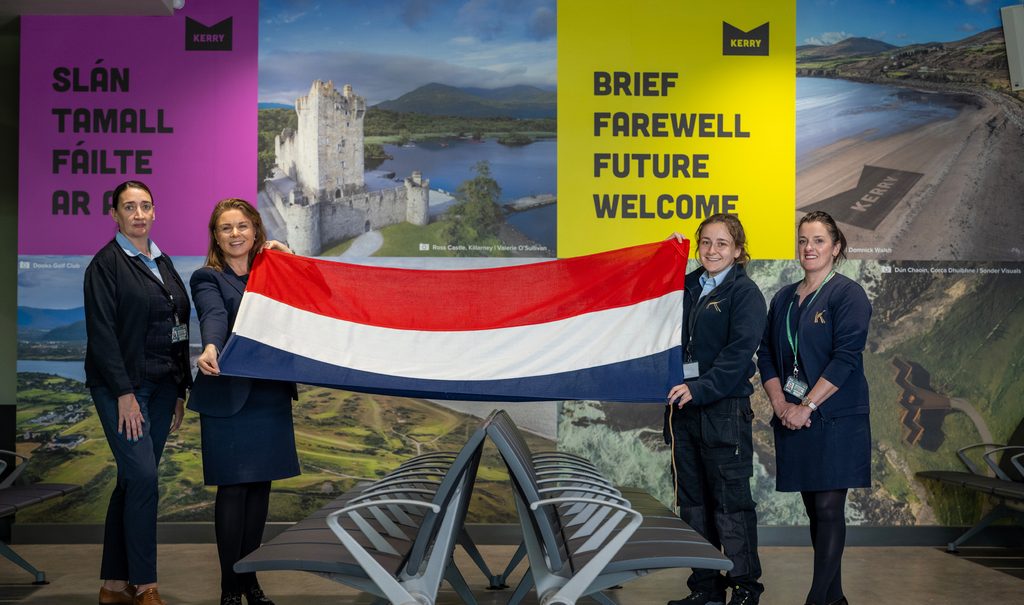
Tourism across Kerry is set for a boost following the announcement of direct charter flights from the Netherlands to Kerry Airport for the 2027 summer season.
Dutch tour operator BBI Travel will introduce weekly flights from Groningen Airport Eelde to Farranfore every Thursday from April 29 to September 6, 2027. The service will be operated by regional carrier Sky Alps using its fleet of aircraft.
The announcement comes following strong passenger growth at Kerry Airport, which handled 440,367 passengers in 2025 before recording a further 12 per cent increase during the first six months of 2026. The new European link will provide direct access for Dutch tourists visiting Killarney National Park, Muckross House, and the wider Wild Atlantic Way route.
BBI Travel, which has specialised in Irish travel packages since 1963, will offer combined flight, accommodation, and car hire packages. The service will run alongside the operator’s existing Monday flights to Ireland West Airport Knock, allowing open-jaw itineraries across the west coast.
Welcoming the new route, Kerry Airport Customer Service Manager Evelyn Crowley said:
“We are delighted that BBI Travel has chosen Kerry Airport as its new destination for 2027. BBI Travel has an excellent track record and more than 60 years’ experience in bringing visitors to Ireland, so this new partnership is a significant vote of confidence in Kerry and the wider south-west as a destination for Dutch holidaymakers.
“The great advantage for passengers is that they arrive right in the heart of Ireland’s tourism capital. Kerry Airport is just 15 minutes from Killarney and Tralee, on the doorstep of the spectacular Ring of Kerry and within 50 minutes of Dingle and the Wild Atlantic Way.
“Our new state-of-the-art Arrivals Hall, with modern baggage handling and passport control facilities and our staff will provide a warm and efficient welcome from the moment passengers land in Kerry.
“That convenience continues on the journey home, with a short and efficient trip through security into our spacious and comfortable Departures Lounge. Passengers can enjoy a local tipple in Peig Sayers Bar or a snack in the Sky Bar before boarding their direct flight back to Groningen.
“We look forward to working with BBI Travel and welcoming their passengers to Kerry in 2027.”
Packages and flights for the 2027 summer schedule are expected to go on sale through BBI Travel in the coming months.
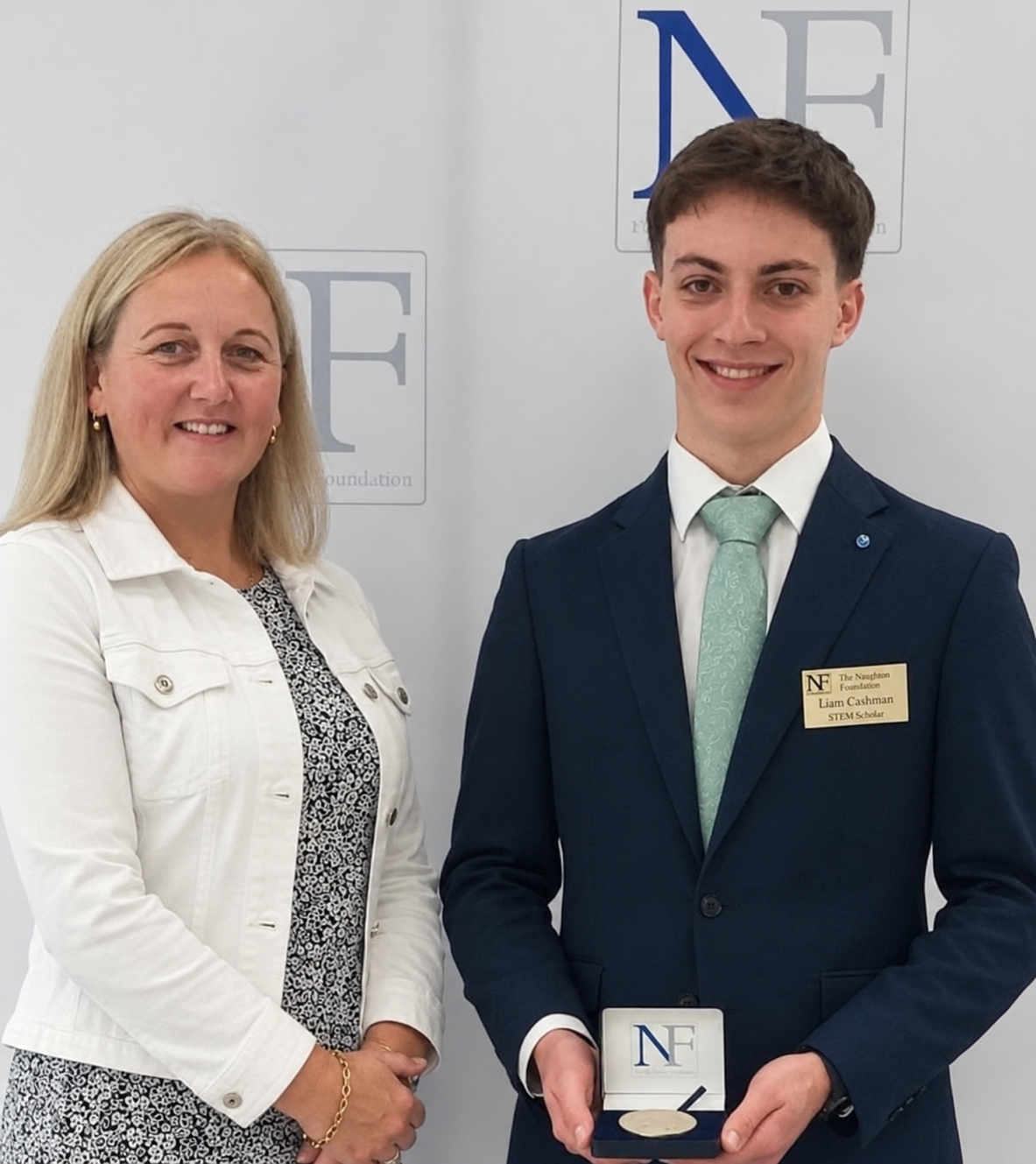
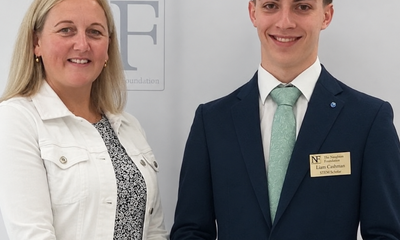
Eoin Cashman named Kerry’s sole Naughton Scholar
Scoil Phobail Sliabh Luacha student Eoin Cashman has been honoured as County Kerry’s sole recipient of the prestigious Naughton Scholarship for 2026.
Eoin received the award at an official ceremony held at Trinity College Business School on Saturday, October 17.
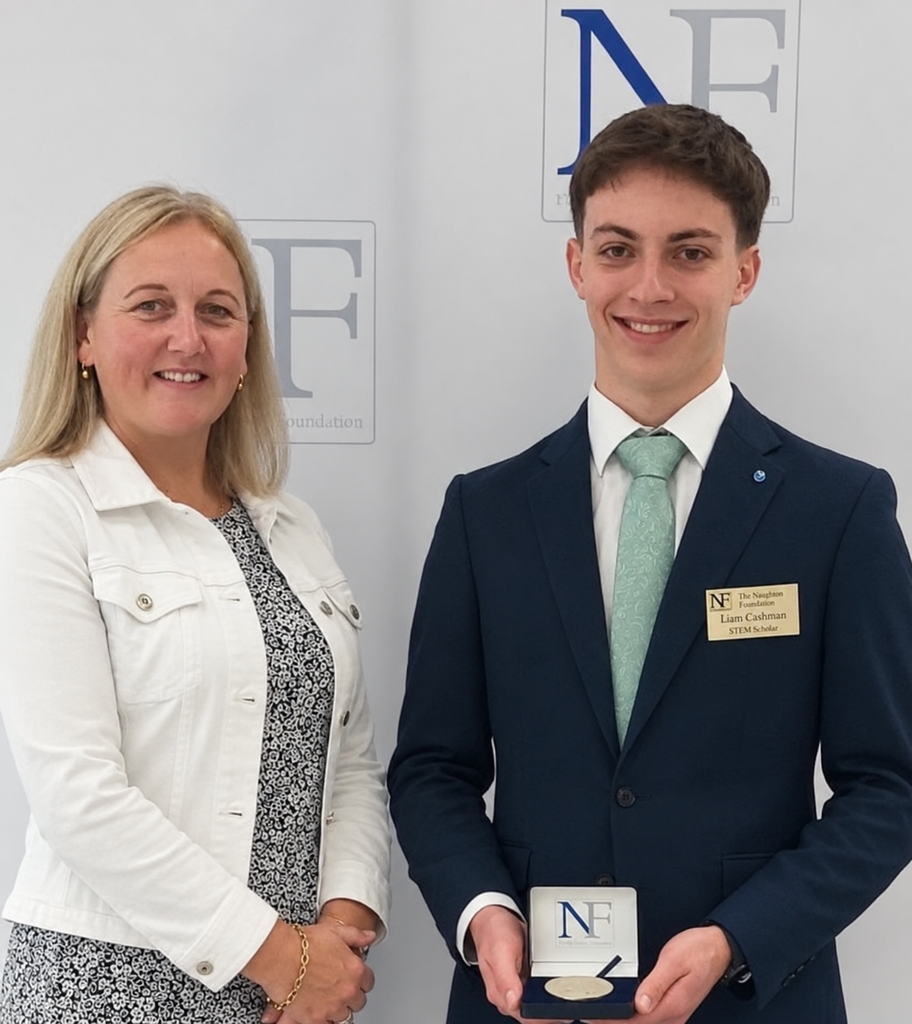
The Naughton Scholarships recognise outstanding students entering third-level education in STEM subjects, including science, technology, engineering, and mathematics.
Eoin was accompanied at the Dublin presentation by his parents, Marian and Pat Cashman, alongside SPSL Principal Mairéad Lucey.
The scholarship follows an exceptional Leaving Certificate performance where Eoin achieved seven H1 grades. His passion for STEM extended well beyond the classroom, having reached the SciFest 2025 National Final as overall runner-up and winning the Regeneron International Science and Engineering Award to represent Ireland in Phoenix, Arizona.
The funding will support Eoin in his current studies at University College Cork, where he is pursuing a Bachelor of Science degree in Physics and Astrophysics.
As part of the award, Eoin will travel to Kylemore Abbey in March 2027 for a special gathering bringing together past and present Naughton Scholars from across Ireland.
Speaking at the ceremony, Minister Jennifer Carroll MacNeill TD congratulated the scholars, encouraging them to maintain critical thinking and independent thought throughout their third-level journeys. Mrs Carmel Naughton also addressed the gathering, expressing immense pride in the class of 2026.
SPSL Principal Mairéad Lucey commended the Rathmore student on his achievement:
“Eoin’s academic achievements are a source of immense pride for the entire SPSL school community. His Naughton Scholarship follows an exceptional Leaving Certificate performance in 2026, when he achieved seven H1 grades as well as his strong commitment to STEM beyond the classroom, reaching the SciFest 2025 National Final and being awarded Overall Runner-Up and also winning the Regeneron International Science & Engineering Award, earning them the right to represent Ireland at the Regeneron ISEF world finals in Phoenix, Arizona.”
The school management and wider Rathmore community extended their congratulations to Eoin and his parents, Marian and Pat, as he continues his academic career in UCC.

New Dutch flights to connect Groningen and Kerry Airport
New Dutch flights to connect Groningen and Kerry Airport Tourism across Kerry is set for a boost following the announcement...

Eoin Cashman named Kerry’s sole Naughton Scholar
Eoin Cashman named Kerry’s sole Naughton Scholar Scoil Phobail Sliabh Luacha student Eoin Cashman has been honoured as County Kerry’s...

KWD Recycling shortlisted for national environmental awards
KWD Recycling shortlisted for national environmental awards Killarney-based KWD Recycling has been announced as a finalist in the 2026 Repak...

Drivers warned as deer rutting season begins
Drivers warned as deer rutting season begins Motorists in Killarney are being urged to exercise extreme caution as the annual...
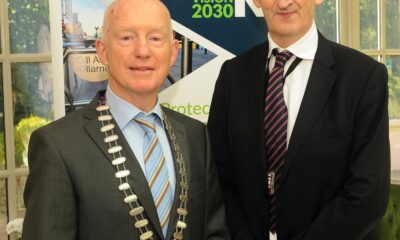

Kerry Airport CEO addresses chamber luncheon
Kerry Airport chief executive Adrian Neilan addressed local business leaders at the Killarney Chamber of Tourism and Commerce luncheon at...
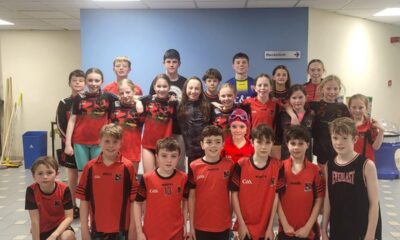

Fossa Swimmers make a splash at County Finals
The Fossa Swim team pictured at the Tralee Sports Complex following their successful outing at the County Finals of the...
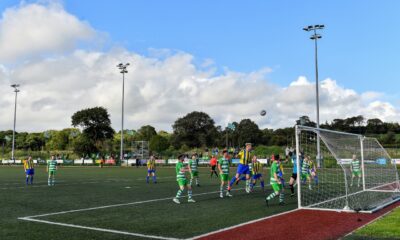

On the Ball Part 2 of the Mikey Daly Interview
Éamonn Fitzgerald EF: Killarney Celtic are invited to participate in an Irish competition. That has big financial implications for travel,...


LUKE MANGAN recently caught up with Kerry FC’s manager, Colin Healy.
He spoke to him about his careers as a player and manager. Here’s how it went: When you began your...


Home cup tie for St Paul’s could be epic
Paudie O’Connor National Cup (Round 1) Utility Trust St Paul’s v GCU Brunell Saturday 7.30pm Killarney Sports and Leisure Centre...


Chances of Kerry v Cork Munster final in 2026 decrease as Munster GAA delay seeding plan
After facing a backlash from Limerick, Clare, Waterford and Tipperary players, Munster GAA have postponed their plan to keep Cork...
