
News
Traditionalism trumps common sense as Kerry clubs vote to keep captaincy rule

The captain of the Kerry senior football team will be selected by the county champions again in 2021 after a motion seeking to defer that decision to the team’s manager was defeated at a county board meeting on Monday night.
It’s not the first time this motion has been shot down (and it might not be the last) but critics of the existing rule were hopeful that this would finally be the year. A number of important voices have openly called for change, most notably ex-players like Tomás Ó Sé and Kieran Donaghy, the previous bainisteoir Eamonn Fitzmaurice and even current players who know what it's like to have the full weight of the captaincy thrust upon them.
Speaking on Monday, Kerry GAA chairman Tim Murphy said that Peter Keane and his management team were also in favour of the motion as “they feel they have been entrusted to represent Kerry and win All-Irelands… [and] they feel the current system doesn’t necessarily allow them the best chance of doing so.”
In the end, 50 clubs listened to the men at the coalface and voted in favour of the motion, but 48 voted against; a majority, but not the two-thirds majority needed to abolish the long-standing practice, which is only adhered to by Kerry and the Kilkenny hurlers.
REMARKABLE
To be honest, I think it’s fairly remarkable that some club officers assume to know better than Peter Keane when it comes to deciding what’s right for his team. The men making these calls are by and large completely removed from the inner workings of the Kerry senior football team, they don't know how an intercounty dressing room works in 2020, and they don't understand the kind of pressure modern-day footballers are under. Surely it makes sense to listen to the people who do?
There’s no denying that certain delegates from championship contenders voted to stick with the status quo because the current system is likely to result in footballers from their own clubs being nominated in the future, and to an extent I get that. We all want one of our own to captain Kerry. It’s a big deal for any club. Naturally, this being Kerry, thoughts immediately turn to August and the prospect of a homecoming.
But are officers really comfortable with potentially hurting the chances of their county winning an All-Ireland just to improve the chances of their own club having a captain?
There seems to be this attitude in certain quarters that all is rosy in Kerry’s garden, and that there’s no need to alter the way we do things. “If it’s not broken, don’t fix it” is a common refrain around these parts. That’s all well and good – unless, of course, it actually is broken.
This might come as a shock to Kerry supporters of a certain vintage but the 1980s (aka The Golden Years) were 40 years ago. Things haven’t been so spectacular since.
Powered by all-time greats like Colm Cooper, Seámus Moynihan and the Ó Sé brothers, Kerry won five All-Irelands in the 2000s but the 1990s (one All-Ireland) and the 2010s (one All-Ireland) were the county’s two least successful decades since the 1890s.
Of course, allowing the county champions to choose the Kerry captain isn’t the sole root of these relatively barren spells, but you have to ask yourself the question: has it helped?
FAILED
Looking at the recent past in particular, it's clear that the system has failed. Of the last six nominated captains, five have not started in, or have been dropped for, Kerry’s final game in that year’s championship. The other was withdrawn at half-time.
When Kerry needed leadership in their biggest moments, more often than not their nominated captain wasn’t even on the pitch.
And that’s not to be critical of any of the guys in question. They are all excellent players and in many cases they simply had the captaincy imposed upon them at inopportune times, when they were either new to the team or not guaranteed starters. In other instances, they were simply unlucky.
Back in 2018, Shane Murphy was captain on his championship debut. Whatever about the team, how is that fair on him?
That same year, Micheál Burns was handed the captaincy in Murphy’s absence and he later admitted that it adversely affected his performance. Maybe it was "time to look for the most experienced and well-placed person”, he noted.
In recent years, being asked to captain Kerry was a bit like being asked to sleep with the Queen. It’s a great honour, but no one wanted to do it.
David Clifford may well have captained Kerry at some stage if it were up to the manager, but at 21 years of age? I don’t think it will phase him because he’s a freak of nature and nothing does, but if the Kerry captain was selected by general election then I doubt Clifford would have put his name on the ballot. Not yet, anyway.
I find it bizarre that club officials in Kerry will readily sign off on large sums of money for the latest gym equipment, nutritionists and sports psychologists, presumably to give their team every possible edge in a sport that has become increasingly aware of the fine margins, but when it comes to something as fundamental as choosing a team captain, they’re willing to leave it to chance.
This week’s outcome is a disappointing one for many observers, although in truth I doubt anyone is massively surprised.
This is the GAA, after all, where blind traditionalism often trumps basic common sense.
ABOVE: Shane Murphy leads Kerry out on his championship debut against Clare in 2018. Pic: Matt Browne/Sportsfile.

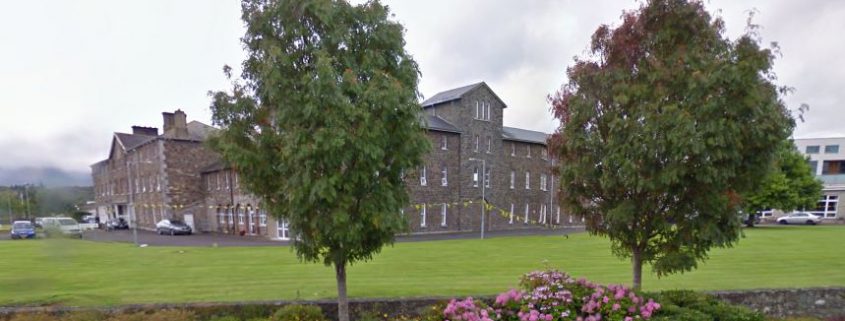
A design team has been appointed to advance plans for the proposed Minor Injury Unit on the grounds of St Columbanus Home though the HSE has confirmed it cannot yet give a construction or opening timeline.
Fianna Fáil TD Deputy Michael Cahill received the update in response to a Parliamentary Question submitted to the Minister for Health. HSE South West confirmed the newly appointed team will progress the project through design development, planning, and regulatory approval following the transfer of residents to the new Killarney Community Nursing Unit.
Deputy Cahill welcomed the appointment of the design team but raised concerns over the lack of a definitive schedule.
“I welcome the appointment of a design team, which represents progress towards delivering this important facility. However, I am concerned that the HSE is still unable to provide a definitive timeline. Previous indications from HSE officials pointed towards construction commencing in 2026, with completion anticipated in 2027. We now need clarity on the project schedule and assurances that there will be no unnecessary delays,” Deputy Cahill said.
He noted that the facility is vital to serve Killarney and the wider east, mid, and south Kerry regions while relieving pressure on the Emergency Department at University Hospital Kerry.
The HSE also confirmed it is finalising a broader review of healthcare accommodation across Killarney to develop the St Columbanus campus as an integrated healthcare hub.
“As a member of the Oireachtas Joint Committee on Health, I will continue to press the HSE and the Minister for Health to ensure this project is progressed without further delay. People across Killarney, east, mid, west and south Kerry deserve certainty. The appointment of a design team is welcome but the next priority must be getting this project to construction and delivering the facility,” Deputy Cahill concluded.
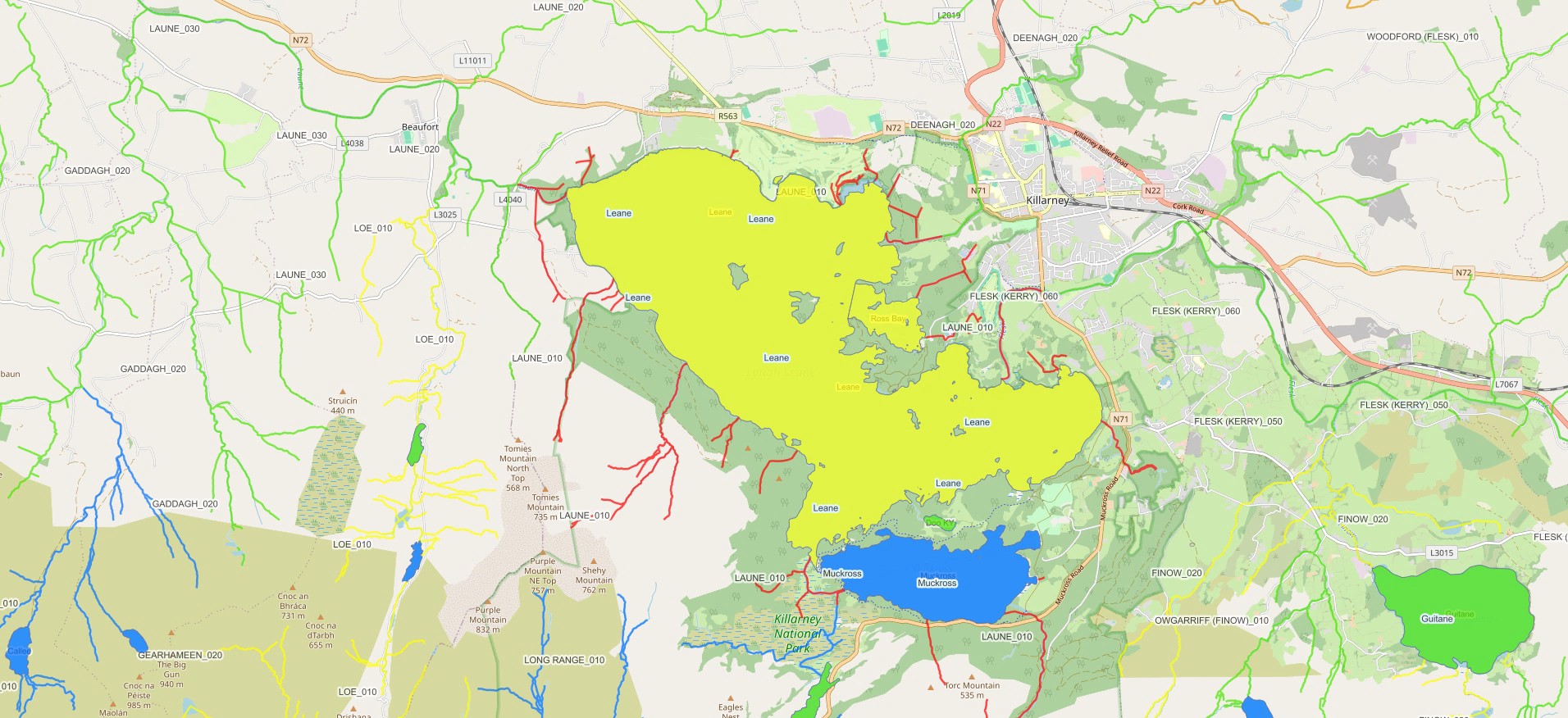
Lochanna Beo’s mapping highlights water quality concerns
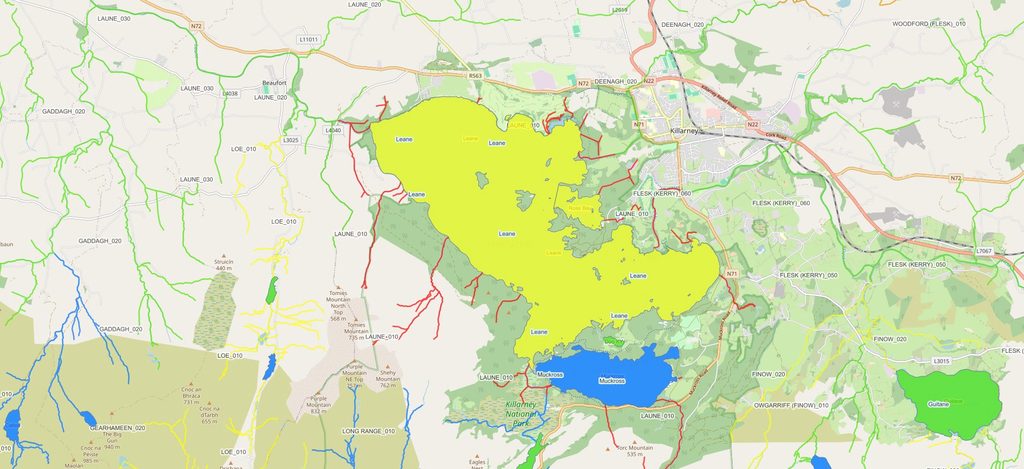
Local environmental action group Lochanna Beo has released mapping data from the Environmental Protection Agency (EPA) to draw attention to deteriorating water quality across Killarney and the broader Laune Catchment.
The EPA map uses a colour-coded system to rate water quality status from 2019 to 2024: blue indicates high status, green indicates good, yellow represents moderate, brown denotes poor, and red signifies bad status.
The figures indicate significant ecological pressure on local lakes and rivers compared to neighbouring areas across County Kerry.
Formed during the summer of 2026, Lochanna Beo aims to bring together residents, business owners, agricultural operators, and public bodies to address the key factors affecting the regional aquatic ecosystem.
The community initiative is seeking direct engagement with relevant statutory authorities to implement practical restoration measures and protect the long-term health of Killarney’s water bodies.


Design team appointed for injury unit
A design team has been appointed to advance plans for the proposed Minor Injury Unit on the grounds of St...

Lochanna Beo’s mapping highlights water quality concerns
Lochanna Beo’s mapping highlights water quality concerns Local environmental action group Lochanna Beo has released mapping data from the Environmental...

Stefan Caulfield-Dreier signs professional cycling contract
Former Killarney Cycling Club rider Stefan Caulfield-Dreier has secured a professional contract with leading Dutch-based outfit Azerion-Villa Valkenburg. The 23-year-old...


Church seeks creative Christmas trees for festival
Church seeks creative Christmas trees for festival The Methodist Church in Killarney is inviting local schools, community groups, businesses, and...


€6,000 Scrooge Giveaway!
€6,000 Scrooge Giveaway! Six lucky audience members will each walk away with €1,000 as the Gleneagle Arena welcomes an extraordinary...


Fossa Swimmers make a splash at County Finals
The Fossa Swim team pictured at the Tralee Sports Complex following their successful outing at the County Finals of the...

On the Ball Part 2 of the Mikey Daly Interview
Éamonn Fitzgerald EF: Killarney Celtic are invited to participate in an Irish competition. That has big financial implications for travel,...


LUKE MANGAN recently caught up with Kerry FC’s manager, Colin Healy.
He spoke to him about his careers as a player and manager. Here’s how it went: When you began your...


Home cup tie for St Paul’s could be epic
Paudie O’Connor National Cup (Round 1) Utility Trust St Paul’s v GCU Brunell Saturday 7.30pm Killarney Sports and Leisure Centre...


Chances of Kerry v Cork Munster final in 2026 decrease as Munster GAA delay seeding plan
After facing a backlash from Limerick, Clare, Waterford and Tipperary players, Munster GAA have postponed their plan to keep Cork...
