
News
Council split over the future Plunkett St

E
Elected members of Killarney Municipal District Council are divided over the future of Plunkett St.
Two years ago the council introduced a pedestrian-only plan for the street between 7pm and 7am every day.
The recently elected council met for the first time on Tuesday July 2 and one of the hottest topics on the agenda was two proposals by elected members to reverse the decision and re-open the street to traffic as soon as possible.
Cllr Niall O’Callaghan, who was back in the chamber after a five year absence tabled a motion to reverse the decision to pedestrianise the street. He said the barrier at the top of the street is creating a perception that the town centre ends at the barrier and people are turning around at this point and not visiting businesses along College St.
“Business is down 25 per cent on College St,” he told the meeting.
The motion was backed by Cllr Donal Grady who called for the street to be re-opened as soon as possible, and like O’Callaghan he felt that barrier was effecting business in the area.
Opposition for the plan came from both councillor Brendan Cronin and Mayor Michael Gleeson.
“What we have created is a family friendly street where people with buggies or wheelchairs can comfortably relax,” said Cronin. “In the run up to the election I spoke to only three people that had negative views on the street. Killarney is 20 years behind, when it comes to pedestrianising compared to other, even smaller, tourist towns. Business is down because of Brexit and other reasons but not because of Plunket Street.”
Mayor Gleeson supported Cronin’s motion.
“I have been a very strong advocate of pedestrianising in Killarney,” he said. “Pedestrianising is fundamental to the financial well-being of the town.”
A survey of businesses effected by the closure is being carried out by Killarney Municipal District Council but as the closure was sanctioned via a Section 38 order a second Section 38 process including public consultations would have to carried out before the decision could be reversed.


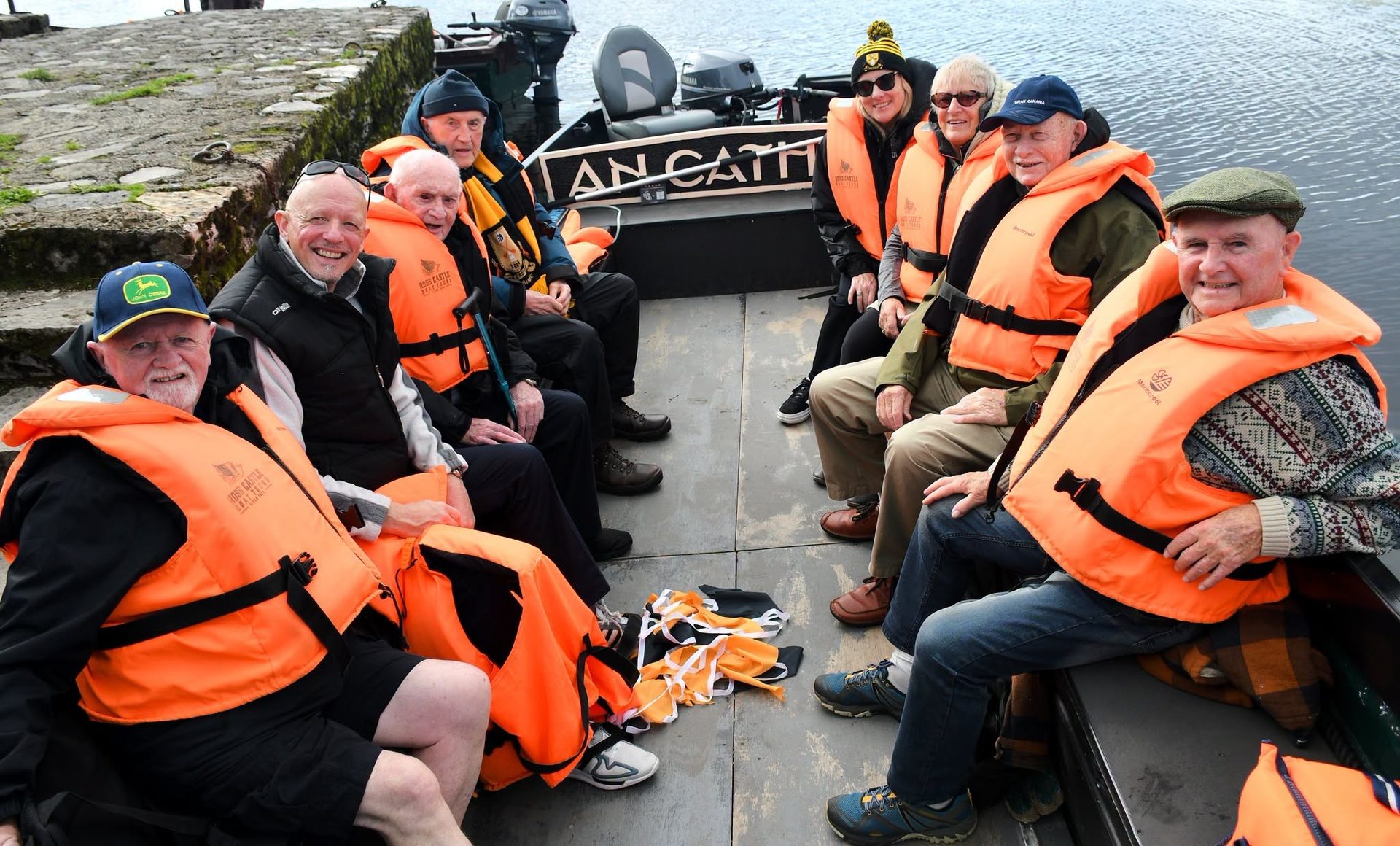
Dr Crokes stalwarts enjoy lake cruise
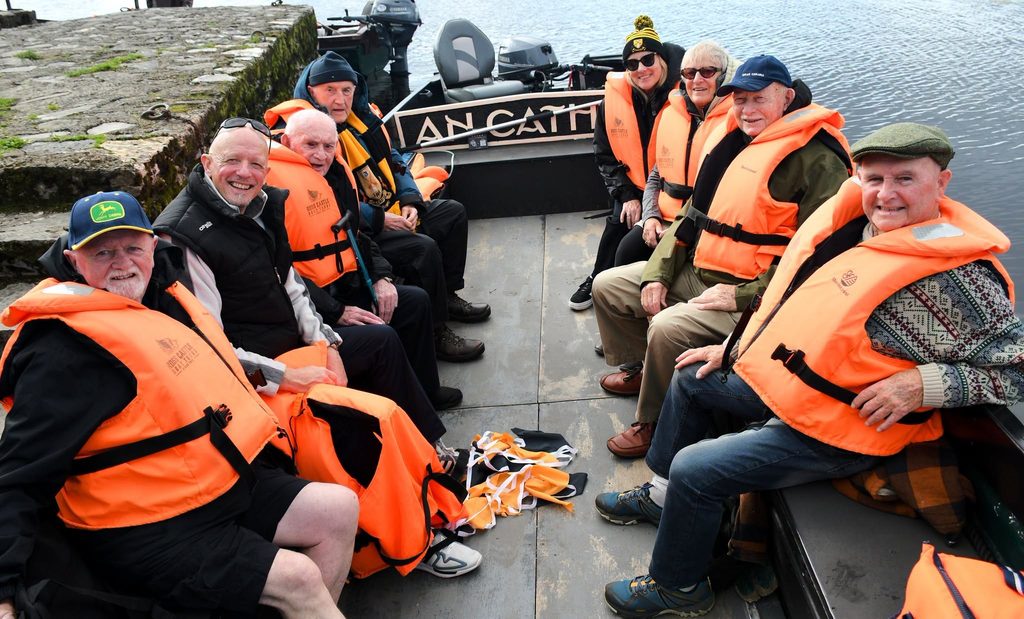
Dr Crokes GAA Club hosted a special day out for its senior members on Monday, this week, taking a group aged between 70 and 90 on a cruise across the Lakes of Killarney.
Organised by the Dr Crokes Healthy Club committee under its Crokes Cruisers initiative, the event was held to recognise the lifetime contribution made by long-standing members who continue to support club activities behind the scenes.
The group travelled on two vessels, including An Cathal, an open boat operated by local brothers Tony and Mike Fleming. Built to preserve the traditional Killarney lake boat style, it is the only purpose-built, fully accessible boat on the lakes, allowing members with mobility issues and wheelchair users to safely join the two-hour trip.
Following the lake tour, the party gathered on shore for coffee and refreshments provided by Derric McMahon and Harry Clifton of the Ross Castle Garden Cafe.
The initiative forms part of the club’s ongoing community work as a Gold Award winner in the GAA Healthy Club programme.


New Streetscapes murals launched at College Square
A colourful collaboration between the Kerry Local Creative Youth Partnership (LCYP) and the Architecture Kerry Festival at Kerry County Council...

Dr Crokes stalwarts enjoy lake cruise
Dr Crokes stalwarts enjoy lake cruise Dr Crokes GAA Club hosted a special day out for its senior members on...


Green light for Torc to Dinis walkway
Green light for Torc Dinis walkway Planning approval has been granted for a long-awaited lakeside walkway and cycleway connecting Torc...
LOCAL GOLD:
LOCAL GOLD: Terrie O’Shea, founder and owner of Killarney-based business Sorella Berries, celebrating her Gold award win at the Blas...

Grady demands Killarney traffic review
Killarney councillor Martin Grady has called for an urgent review of traffic management across the town following severe delays along...


Fossa Swimmers make a splash at County Finals
The Fossa Swim team pictured at the Tralee Sports Complex following their successful outing at the County Finals of the...

On the Ball Part 2 of the Mikey Daly Interview
Éamonn Fitzgerald EF: Killarney Celtic are invited to participate in an Irish competition. That has big financial implications for travel,...


LUKE MANGAN recently caught up with Kerry FC’s manager, Colin Healy.
He spoke to him about his careers as a player and manager. Here’s how it went: When you began your...


Home cup tie for St Paul’s could be epic
Paudie O’Connor National Cup (Round 1) Utility Trust St Paul’s v GCU Brunell Saturday 7.30pm Killarney Sports and Leisure Centre...


Chances of Kerry v Cork Munster final in 2026 decrease as Munster GAA delay seeding plan
After facing a backlash from Limerick, Clare, Waterford and Tipperary players, Munster GAA have postponed their plan to keep Cork...
