News
Silent Sidelines: Kerry GAA ask parents to stop shouting at kids

"One parent is yelling 'shoot it' - that's usually the player's parent. One parent is yelling 'pass the ball' - that's usually someone else's parent who wants the kid to pass the ball to their son. Another is saying 'dribble it'. So who's the kid supposed to listen to?"
Kevin Eastman is a top collegiate and professional basketball coach who was an assistant at the Boston Celtics when they won the NBA Championships back in 2008.
Eastman once conducted an experiment with a young AAU team that involved placing a player at midcourt and covering his eyes with a blindfold. He then asked all of the players’ parents who were in attendance to direct the young man on how to get to the basket and make a shot. Unsurprisingly, it didn’t go well.
“A couple of them were yelling, ‘go right, go right!’ Two others were going, ‘left, left!’ The other was saying, ‘turn around!’ All of a sudden, the kid was so confused that he was nowhere near the basket,” Eastman explains in a video for the Positive Coaching Alliance.
“Half-way there I told him to stop and I said (to the parents), ‘this is what they’re hearing’.”
In recent years, the issue of over-zealous parents making a nuisance of themselves at sporting events has become a major talking point globally and Ireland is no exception. Anyone who regularly attends underage football games in this part of the world can tell illuminating tales of mothers and fathers who are guilty not only of over-instruction but also of directing abuse at coaches, referees and even players, at every age group from U10s right up to minor.
In fact, the problem has become so severe in the GAA that administrators have encouraged the implementation of Silent Sidelines in various juvenile competitions right across the country.
The terms of the innovative Silent Sideline initiative stipulate that each team nominates one lead coach. That lead coach is the only person who can interact with the children once the game begins, which means that parents and spectators must refrain from communicating with the players throughout.
Applause and positive feedback for scores and good play is permitted, but in general shouting is discouraged. Two Silent Sideline signs, similar to the ‘quiet please’ signs seen at major golf tournaments, are held up by adults throughout the match.
Earlier this month, Kerry GAA and Kerry Coiste na nÓg introduced the practice for U12 County League games, with all participating clubs asked to co-operate. As well as helping to retain and attract more referees (who are less likely to receive abuse from angry parents), the initiative also encourages kids to think for themselves when they’re out on the pitch.
Speaking to the Killarney Advertiser, Killarney Legion U12 coach Donal O’Leary says the Silent Sideline has worked very well so far.
“I’ve noticed that the kids are feeling more like it’s their game rather than the coach’s or mom and dad’s,” he said.
“Parents are well-intentioned 99% of the time but I think this is just an educational thing. You think you’re doing the right thing by saying, ‘go on Johnny, kick it!’ but you’re actually better off letting the children make their own mistakes and learn from them.
“It’ll also help to change the culture in our game, where it’s acceptable to basically say what you want on the sideline. It’s a good initiative all around and it’s definitely something we believe in.”
IN-GAME COACHING
Coach Eastman isn’t the only expert to have questioned the practice of (and logic behind) shouting instructions at players during games.
Manchester City manager Pep Guardiola has said that coaching players during games is difficult, even for him.
“I would like to have a timeout like basketball but that can’t happen. I think managers move a lot (on the sideline) and make a lot of gestures, but it’s more to release adrenaline or pressure, because the players don’t understand too much what we are saying.”
If one of the best coaches in the world finds it hard to give meaningful instructions to his players once a game kicks off, what hope does an unqualified (in sporting terms) parent of an 11-year-old Gaelic footballer have?
Eastman has also spoken of the role he played at his own son’s high school basketball games. Fellow parents often asked why this elite level coach wasn’t telling his child what to do when he was out on the floor.
“The answer is simple,” Eastman said. “I’m a parent, not a coach. I’ll clap for Jake but I very seldom even say ‘good shot’ or anything like that, because for that time period I’m the dad, not a coach. His coach is his coach.”
Whatever about the questionable rationale of shouting at children when they’re playing sport, one also has to consider the destructive and long-term impact negative feedback can have on a young person.
One simple, throwaway comment today can affect someone’s self-esteem for years. If we’re not careful with our words, we run the risk of pushing youngsters away from sport altogether and, far worse than that, leaving them with emotional scars that last for years, far away from the courts and the playing fields.
In that regard, Kerry GAA’s Silent Sideline project certainly appears to be a step in the right direction.

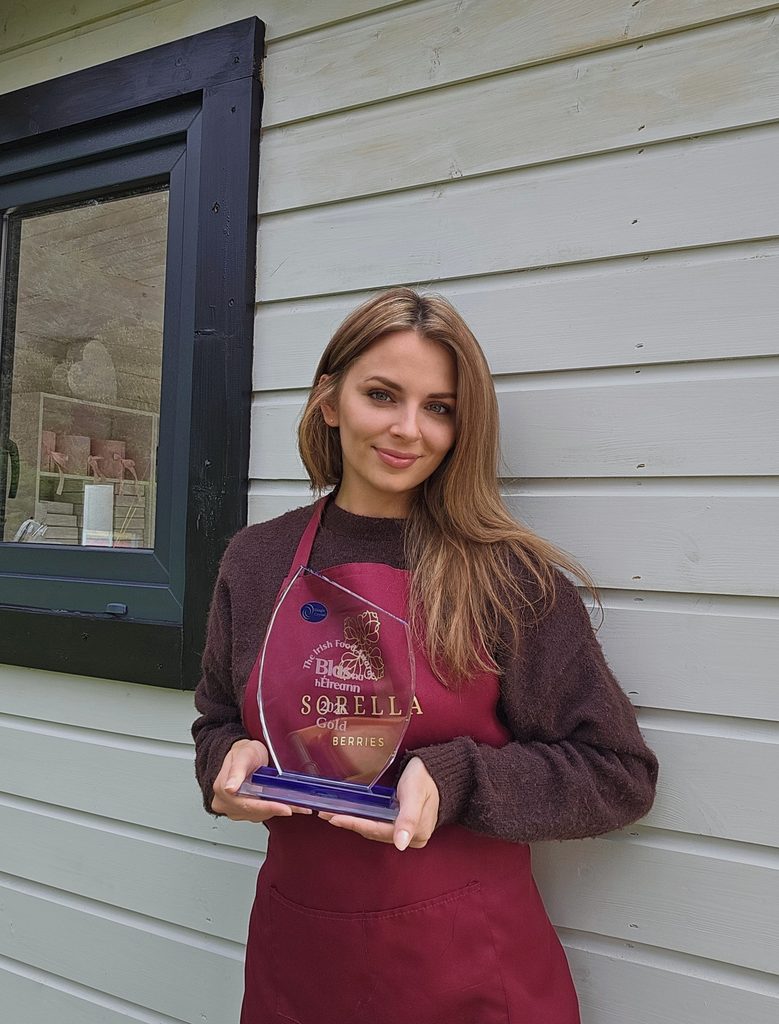
LOCAL GOLD: Terrie O’Shea, founder and owner of Killarney-based business Sorella Berries, celebrating her Gold award win at the Blas na hÉireann Irish Food Awards held in Dingle last week. Her hand-crafted chocolate covered strawberries secured the top spot in national competition, earning recognition for the local food producer on the national stage.
LOCAL GOLD:
LOCAL GOLD: Terrie O’Shea, founder and owner of Killarney-based business Sorella Berries, celebrating her Gold award win at the Blas...


Grady demands Killarney traffic review
Killarney councillor Martin Grady has called for an urgent review of traffic management across the town following severe delays along...


Killarney Pumpkin Farm returns for Halloween
The annual event is in its sixth year and caters to people of all ages. The farm is located in...


Killarney Toastmasters host special open night
Killarney Toastmasters is inviting members of the local community to an open night at the Dromhall Hotel on Muckross Road...


Killarney hotels achieve top global rankings in Readers’ Choice Awards
Killarney hotels achieve top global rankings in Readers’ Choice Awards Two leading Killarney hotels are celebrating major international accolades following...

Fossa Swimmers make a splash at County Finals
The Fossa Swim team pictured at the Tralee Sports Complex following their successful outing at the County Finals of the...

On the Ball Part 2 of the Mikey Daly Interview
Éamonn Fitzgerald EF: Killarney Celtic are invited to participate in an Irish competition. That has big financial implications for travel,...


LUKE MANGAN recently caught up with Kerry FC’s manager, Colin Healy.
He spoke to him about his careers as a player and manager. Here’s how it went: When you began your...


Home cup tie for St Paul’s could be epic
Paudie O’Connor National Cup (Round 1) Utility Trust St Paul’s v GCU Brunell Saturday 7.30pm Killarney Sports and Leisure Centre...


Chances of Kerry v Cork Munster final in 2026 decrease as Munster GAA delay seeding plan
After facing a backlash from Limerick, Clare, Waterford and Tipperary players, Munster GAA have postponed their plan to keep Cork...