News
Scrapping provincial football championships is the logical next step

H
Here in Kerry our attitude towards the Munster Championship can be summed up by the following query, which is heard on every street, in every bar and in the car to every game at the dawn of summer.
“Is it on in Cork or Killarney this year?”
A Cork v Kerry football final is such a regular occurrence we simply assume that it will eventually come to pass, and our only concern is whether or not we’ll get a big day out in Killarney, or if a road trip over the border is on the cards.
And with good reason. Kerry and Cork have completely dominated the Munster SFC since its inception in 1888. Between them, the pair have won a staggering 117 out of 130 finals and since 1935 their record has been even more ridiculous.
Kerry and Cork have won 82 of the last 83 Munster finals, Clare’s shock victory over Kerry in 1992 the only anomaly over that period.
Kerry’s haul of 80 championships dwarfs that of Cork, who have just 37. Cork’s haul of 37 dwarfs that of Tipperary, who have just 9. Tipperary’s haul of nine dwarfs that of Clare, who have just two.
The other teams, Limerick and Waterford, have just one Munster Championship apiece and both of those triumphs came before the turn of the 20th century (1896 and 1898 respectively).
Kerry are currently seeking their seventh provincial title in as many years and ahead of next weekend’s semi-final against Clare, Peter Keane’s men are 1/16 to lift the nameless trophy on June 22.
All things considered, the Munster SFC is surely one of the most relentlessly uncompetitive competitions in world sport. The Scottish Premiership is the only tournament I can think of that can rival it for sheer predictability, but you might be surprised to learn that the Celtic/Rangers stranglehold is actually weaker than the one Cork and Kerry have in Munster.
The Glasgow giants have claimed 104 out of 123 Scottish league titles (84.5%) while Cork and Kerry have won of 117 out of 130 Munster Championships (90%).
And in Scotland, there’s a far more even split. Celtic have 50 and Rangers have 54. Their current period of domination has been longer, however: the last team outside of the top two to win the Scottish league was Alex Ferguson’s Aberdeen in 1985.
Leinster and Connacht
And this isn’t just a Munster problem. Fair enough, the Ulster Championship has a far more interesting and balanced past. Cavan have 37 (36 came between 1891 and 1969) and the rest of the championships have been fairly evenly divided amongst the rest.
But both Leinster and Connacht are terribly top heavy.
Galway and Mayo have won 93 of the 121 Connacht SFCs, with Roscommon accounting for 23 of the remaining 28.
In Leinster, Dublin have won 57 titles including 13 of the last 16. If you add in Meath (21) that’s 78 out of 121.
Outside of Ulster, 291 (or 77%) of the 372 provincial championships have been won by just six counties.
And despite the growing level of professionalism that can be seen in traditionally weaker footballing counties, there’s no sign of this disparity changing any time soon. Mayo won five in a row between 2011 and 2015. Kerry can make it seven in a row next month. The Dubs are on for eight.
Yet whenever the topic of restructuring the football championship rears its head, you have certain people who say that the provincial championships should be preserved at all costs.
Why? Who is benefitting from these competitions?
Are Limerick, Waterford, Tipp and Clare, who have one title between them in 83 years? Are Wicklow, Westmeath, Longford, Carlow, Laois and Wexford, who have one title in 50 years? What about Sligo and Leitrim, who have sampled provincial glory just five times between them in 121 years?
And it’s not just the small teams who suffer. It’s obviously great to be winning but there’s a very strong argument to be made that teams like Kerry and Dublin aren’t actually gaining anything from the provincials either.
The National League final was played on March 31. The first round of the Super 8 fixtures will take place on July 13. In Kerry’s case, that’s 15 weeks with just two games, neither of which will come against Division 1 opposition, in between.
Up in Ulster they say we have it handy down here in Kerry but I have no doubt whatsoever that Peter Keane would much rather have regular (or at least competitive) games as he prepares his squad for the business end of the season. Jim Gavin likewise.
The fact of the matter is that the provincial championships are not benefitting the vast majority of counties. They are largely uncompetitive and frequently unexciting, and their prestige has undoubtedly plummeted over the course of the last two decades.
You would nearly be blue in the face from saying it but the National League works because teams are grouped based on their ability. Apart from geography, there’s no good reason for Dublin (57 Leinster titles) to be competing with the likes of Wicklow (zero Leinster titles).
Thankfully, there now appears to be genuine willingness on the part of the GAA to revamp the championship. A Fixtures Review Group is being set up and it has been agreed that no idea will be off the table. Encouragingly, the Club Players Association, who have for a number of years lobbied for a solution to the current fixtures crisis, will be represented on the committee.
In a recent proposal, I suggested disconnecting the provincials from the All-Ireland Championships and playing them separately in February, but this would only be for the sake of compromise. Unfortunately, I’m not sure if I can see the GAA (and the provincial councils) agreeing to scrap them altogether, although looking at the numbers, it does appear to be the next logical step.
Above: David Clifford of Kerry in action against Clare in last year's Munster SFC. Kerry won 0-32 to 0-10. Pic: Paudie Healy.

LOCAL GOLD: Terrie O’Shea, founder and owner of Killarney-based business Sorella Berries, celebrating her Gold award win at the Blas na hÉireann Irish Food Awards held in Dingle last week. Her hand-crafted chocolate covered strawberries secured the top spot in national competition, earning recognition for the local food producer on the national stage.

LOCAL GOLD:
LOCAL GOLD: Terrie O’Shea, founder and owner of Killarney-based business Sorella Berries, celebrating her Gold award win at the Blas...


Grady demands Killarney traffic review
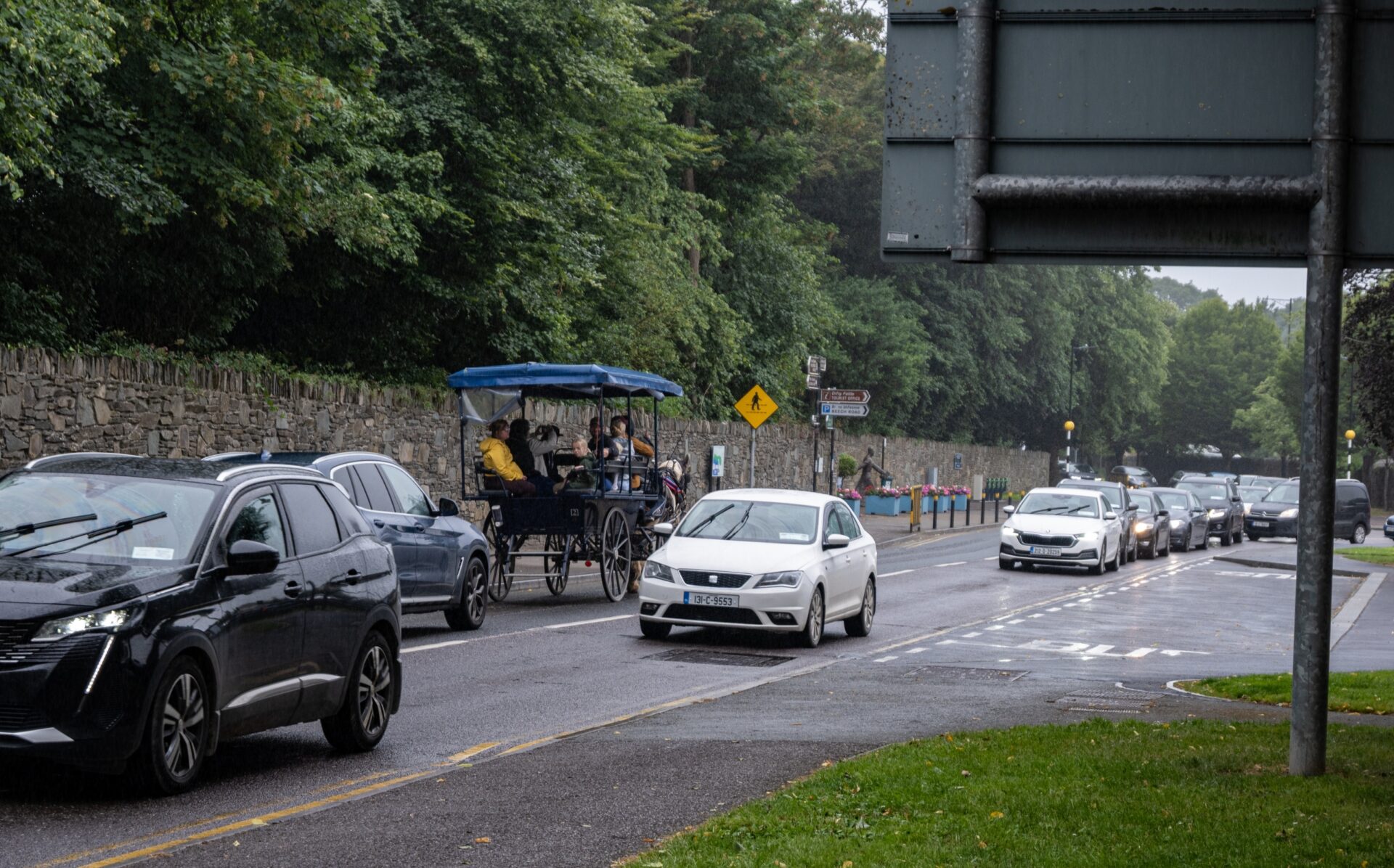
Killarney councillor Martin Grady has called for an urgent review of traffic management across the town following severe delays along...


Killarney Pumpkin Farm returns for Halloween
The annual event is in its sixth year and caters to people of all ages. The farm is located in...


Killarney Toastmasters host special open night
Killarney Toastmasters is inviting members of the local community to an open night at the Dromhall Hotel on Muckross Road...

Killarney hotels achieve top global rankings in Readers’ Choice Awards
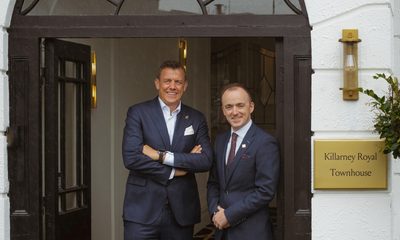
Killarney hotels achieve top global rankings in Readers’ Choice Awards Two leading Killarney hotels are celebrating major international accolades following...


Fossa Swimmers make a splash at County Finals
The Fossa Swim team pictured at the Tralee Sports Complex following their successful outing at the County Finals of the...

On the Ball Part 2 of the Mikey Daly Interview
Éamonn Fitzgerald EF: Killarney Celtic are invited to participate in an Irish competition. That has big financial implications for travel,...


LUKE MANGAN recently caught up with Kerry FC’s manager, Colin Healy.
He spoke to him about his careers as a player and manager. Here’s how it went: When you began your...


Home cup tie for St Paul’s could be epic
Paudie O’Connor National Cup (Round 1) Utility Trust St Paul’s v GCU Brunell Saturday 7.30pm Killarney Sports and Leisure Centre...


Chances of Kerry v Cork Munster final in 2026 decrease as Munster GAA delay seeding plan
After facing a backlash from Limerick, Clare, Waterford and Tipperary players, Munster GAA have postponed their plan to keep Cork...