News
O’Callaghan brings modern twist to election canvassing


F
Former mayor to seek election via social media
By Sean Moriarty
Former Mayor of Killarney, Niall ‘Botty’ O’Callaghan has made a surprise return to politics by announcing that he’s to run for the Killarney Municipal District in the local elections, set to take place on May 24.
O’Callaghan, who’s to run as an independent candidate, served two previous terms as a town councillor and was named as the town mayor in 2008. He has not worked in politics since 2013.
He operates, along with his brother Paudie, the popular Fáilte Hotel on College Street and has identified the Government’s decision to increase the VAT rate to 13.5 percent which is having an impact on hotels, restaurants, pubs and other service industries.
Car parking and traffic congestion in Killarney, especially during peak tourism months and the state of the Tralee to Killarney road are other issues he intends to fight - if elected.
The former Dr Crokes GAA team selector also hopes to put the redevelopment of Fitzgerald Stadium on the agenda.
However, his campaign will take on a modern twist and he will engage with voters via social media platforms and not through a traditional door-to-door canvas.
“I look forward to meeting as many people as I possibly can in the weeks ahead but it is not my intention to knock on doors and disturb people in their own homes in an attempt to get my message across,” he said. “I firmly believe that, in this day and age, traditional canvassing methods are seriously outdated. I intend to run a modern campaign with a heavy emphasis on social media and I will reach out to the public to convey my message through Facebook, Twitter, Instagram, video and other modern day methods.”

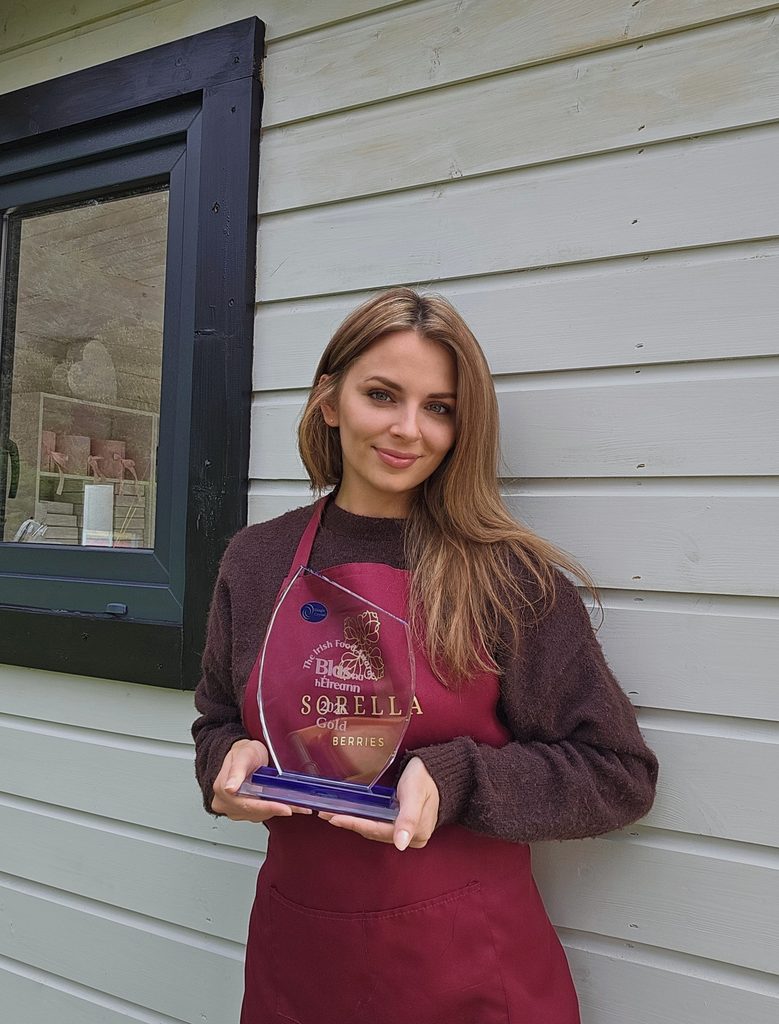
LOCAL GOLD: Terrie O’Shea, founder and owner of Killarney-based business Sorella Berries, celebrating her Gold award win at the Blas na hÉireann Irish Food Awards held in Dingle last week. Her hand-crafted chocolate covered strawberries secured the top spot in national competition, earning recognition for the local food producer on the national stage.
LOCAL GOLD:
LOCAL GOLD: Terrie O’Shea, founder and owner of Killarney-based business Sorella Berries, celebrating her Gold award win at the Blas...

Grady demands Killarney traffic review
Killarney councillor Martin Grady has called for an urgent review of traffic management across the town following severe delays along...
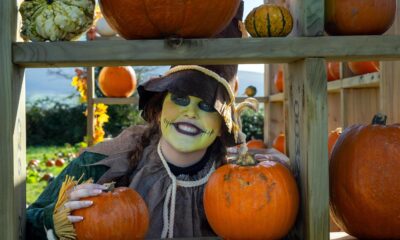

Killarney Pumpkin Farm returns for Halloween
The annual event is in its sixth year and caters to people of all ages. The farm is located in...


Killarney Toastmasters host special open night
Killarney Toastmasters is inviting members of the local community to an open night at the Dromhall Hotel on Muckross Road...
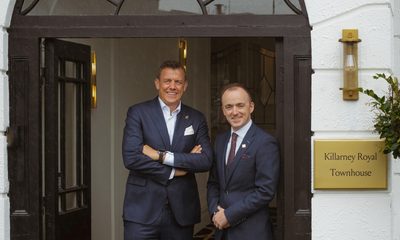

Killarney hotels achieve top global rankings in Readers’ Choice Awards
Killarney hotels achieve top global rankings in Readers’ Choice Awards Two leading Killarney hotels are celebrating major international accolades following...
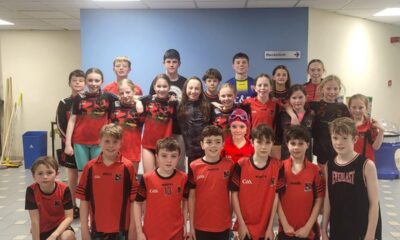

Fossa Swimmers make a splash at County Finals
The Fossa Swim team pictured at the Tralee Sports Complex following their successful outing at the County Finals of the...
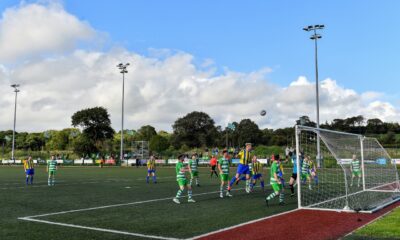

On the Ball Part 2 of the Mikey Daly Interview
Éamonn Fitzgerald EF: Killarney Celtic are invited to participate in an Irish competition. That has big financial implications for travel,...


LUKE MANGAN recently caught up with Kerry FC’s manager, Colin Healy.
He spoke to him about his careers as a player and manager. Here’s how it went: When you began your...


Home cup tie for St Paul’s could be epic
Paudie O’Connor National Cup (Round 1) Utility Trust St Paul’s v GCU Brunell Saturday 7.30pm Killarney Sports and Leisure Centre...


Chances of Kerry v Cork Munster final in 2026 decrease as Munster GAA delay seeding plan
After facing a backlash from Limerick, Clare, Waterford and Tipperary players, Munster GAA have postponed their plan to keep Cork...