News
Second engineering award for Kerry water treatment plant

AWARD: Pictured were: Andrew Driver (Glan Agua), David Harpur (Diatec), Michael Tinsley (Irish Water), Andrew Young (Glan Agua) and John O’Connor (Kerry County Council).
The Kerry Central Regional Water Treatment Scheme has won a second prestigious award.
On Friday night last, the Kerry Central Regional Water Treatment Scheme won the Civil Engineering Project of the Year Award 2019, at the Irish Construction Excellence Awards ceremony, which took place in the Mansion House, Dublin.
The Irish Construction Excellence Awards provide an opportunity for the industry to showcase and reward best practice across the full range of construction disciplines and project categories.
The project by Irish Water, in association with Kerry County Council, and undertaken by Nicholas O'Dwyer Ltd., Tobin Consulting Engineers and Glan Agua Ltd, was chosen as the winner by an expert panel of judges from the construction world.
This is the second national award for the Kerry Central Regional Water Treatment Scheme, having won the Engineers Ireland Engineering Project of the Year Award 2018, in November.
The project is also in line for an international award. The Kerry Central Regional Water Supply Scheme has been shortlisted for the global Water Project of the Year. The Kerry project is one of four finalists, along with projects from Saudi Arabia, Russia and America. Previous winners include Perth Groundwater Replenishment Scheme (Australia), Mujib Dam Water Supply Project (Jordan) and Abuja water supply project (Nigeria). The 2019 Global Water Awards will be presented at the Natural History Museum, London on April 9, as part of the 2019 Global Water Summit.
The Kerry Central Regional Water Treatment Plant was officially opened on November 5, 2018 by Minister of State at the Department of Transport, Tourism and Sport, Brendan Griffin and Cllr Norma Foley, Cathaoirleach of Kerry County Council. The €30 million project provides a safe and secure water supply for over 62,000 residents as well as industry and agriculture in the region, and serves the more than 1.2 million tourists who visit the region annually across Tralee, Killarney, Castleisland and Castlemaine.
The scheme’s new water treatment plant is amongst the largest in the country and provides over 50 million litres of drinking water every day. As a result of the upgrade and investment by Irish Water, the scheme has been removed from EPA’s Remedial Action List - RAL is the list of ‘at risk’ water supplies.
“Until the completion of this project, the local water supply lacked an effective system to treat the raw water abstracted from Lough Guitane,” Michael Tinsley, Infrastructure Portfolio Delivery Manager, Irish Water said.
“This meant that the areas supplied by the Kerry Central Regional Water Supply Scheme were at risk due to the lack of sufficient water treatment.”
“We are delighted the project has received this award. I’d like to thank all the project team including staff in Irish Water, Kerry County Council, Nicholas O’Dywer, Tobin Consulting and Glan Agua who met the size and scale of the challenge of this project and developed a solution that would safeguard the supply of safe, clean drinking water for so many people in Kerry. I also want to thank the Irish Construction Excellence Awards judges for this recognition which is hugely appreciated.”

LOCAL GOLD: Terrie O’Shea, founder and owner of Killarney-based business Sorella Berries, celebrating her Gold award win at the Blas na hÉireann Irish Food Awards held in Dingle last week. Her hand-crafted chocolate covered strawberries secured the top spot in national competition, earning recognition for the local food producer on the national stage.

LOCAL GOLD:
LOCAL GOLD: Terrie O’Shea, founder and owner of Killarney-based business Sorella Berries, celebrating her Gold award win at the Blas...


Grady demands Killarney traffic review
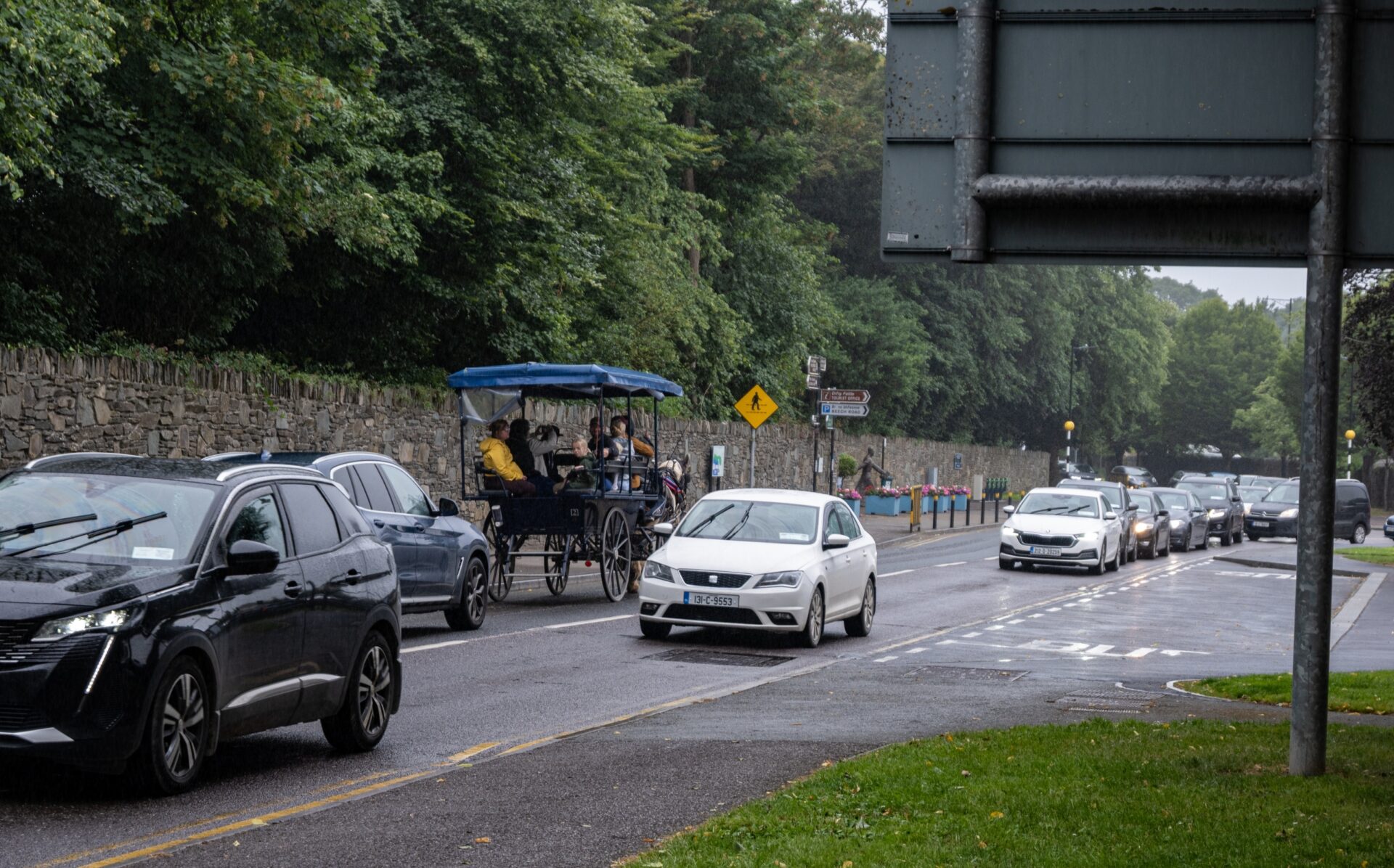
Killarney councillor Martin Grady has called for an urgent review of traffic management across the town following severe delays along...


Killarney Pumpkin Farm returns for Halloween
The annual event is in its sixth year and caters to people of all ages. The farm is located in...


Killarney Toastmasters host special open night
Killarney Toastmasters is inviting members of the local community to an open night at the Dromhall Hotel on Muckross Road...


Killarney hotels achieve top global rankings in Readers’ Choice Awards
Killarney hotels achieve top global rankings in Readers’ Choice Awards Two leading Killarney hotels are celebrating major international accolades following...


Fossa Swimmers make a splash at County Finals
The Fossa Swim team pictured at the Tralee Sports Complex following their successful outing at the County Finals of the...


On the Ball Part 2 of the Mikey Daly Interview
Éamonn Fitzgerald EF: Killarney Celtic are invited to participate in an Irish competition. That has big financial implications for travel,...


LUKE MANGAN recently caught up with Kerry FC’s manager, Colin Healy.
He spoke to him about his careers as a player and manager. Here’s how it went: When you began your...


Home cup tie for St Paul’s could be epic
Paudie O’Connor National Cup (Round 1) Utility Trust St Paul’s v GCU Brunell Saturday 7.30pm Killarney Sports and Leisure Centre...


Chances of Kerry v Cork Munster final in 2026 decrease as Munster GAA delay seeding plan
After facing a backlash from Limerick, Clare, Waterford and Tipperary players, Munster GAA have postponed their plan to keep Cork...