
News
Killarney man appointed to new Disability Advisory Committee

B
By Michelle Crean
A local man has this week been appointed to serve on the Disability Advisory Committee by the Irish Human Rights and Equality Commission.
Headfordman Adrian Carroll (28), a law graduate with autism spectrum condition, was named as one of 11 to serve on thefirst ever statutory advisory committee in Ireland to support monitoring of Ireland’s implementation of the UN Convention on the Rights of Persons with Disabilities (UNCRPD).
The Disability Advisory Committee, made up of a majority of people with disabilities, is brought together by the Commission to support its statutory function of monitoring Ireland’s implementation of the UN Convention and held its first formal meeting this week.
Adrian recently completed a LLM Degree in International and Comparative Disability Law and Policy from NUI Galway. He believes assistive technology can help bridge the gap between higher education and employment for people with cognitive disabilities.
“I am delighted to be appointed to this new Disability Advisory Committee,”Adrian Carroll told the Killarney Advertiser this week.
“The diversity of the committee, in terms of where people are from, their mix of experience and backgrounds will allow us to provide real insights on how Ireland can act to ensure that the rights of persons with disabilities are recognised as human rights.
“It’s taken a number of years for Ireland to ratify the UN Convention on the Rights of Persons with Disabilities which sets out clearly the rights of people with disabilities in Ireland, but now that it’s in force, I’m keen to work with the other members of this committee to support the Irish Human Rights and Equality Commission in monitoring how Ireland makes good on its obligations.”
Emily Logan, Chief Commissioner of the Irish Human Rights and Equality Commission welcomed the appointments.
“The Disability Advisory Committee will be an important mechanism to ensure that the Irish Human Rights and Equality Commission can fulfil its mandate to hold the State to account on the rights of people with disabilities. The new committee members, including Adrian, bring with them significant personal and professional experience.”

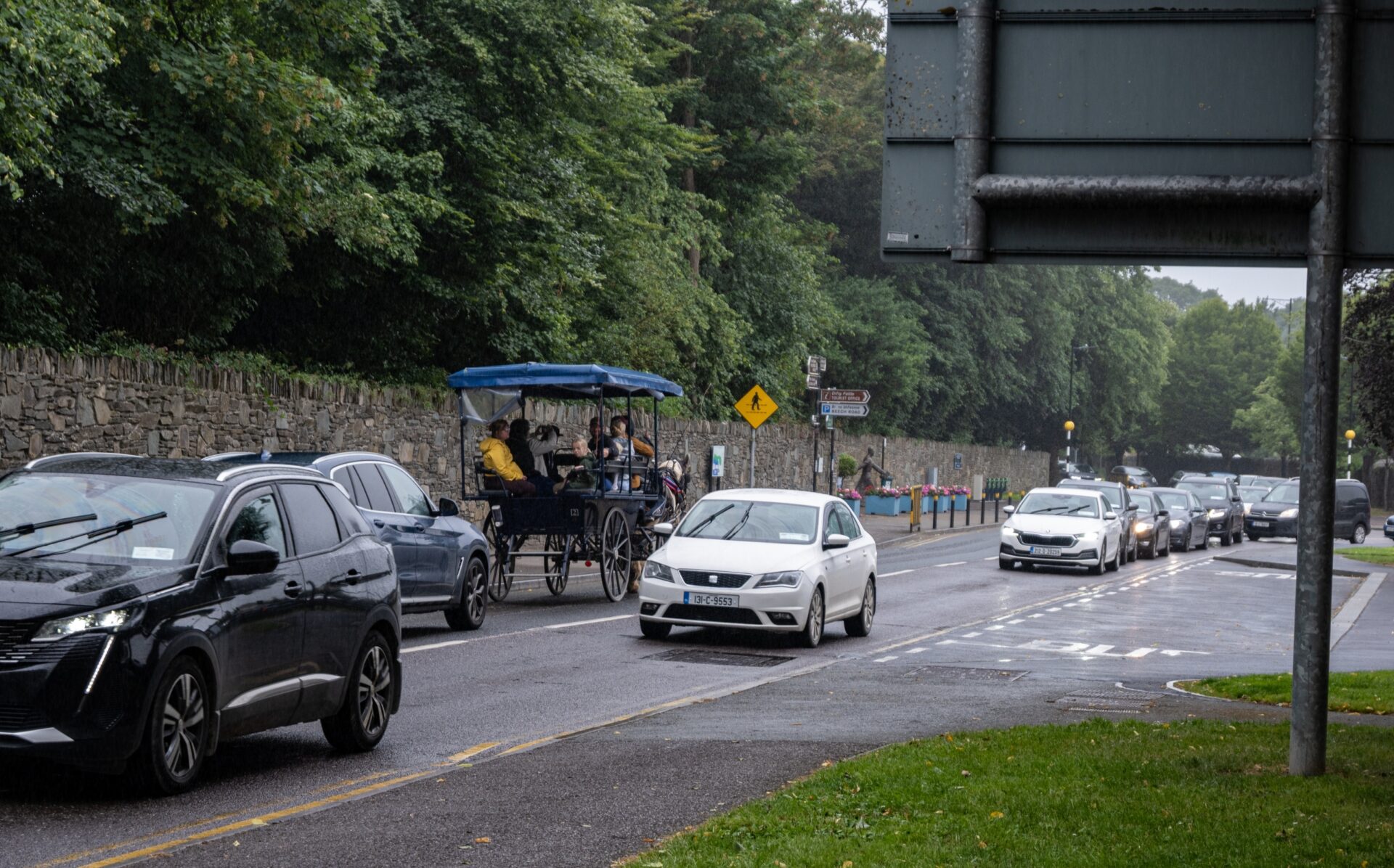


Grady demands Killarney traffic review
Killarney councillor Martin Grady has called for an urgent review of traffic management across the town following severe delays along...


Killarney Pumpkin Farm returns for Halloween
The annual event is in its sixth year and caters to people of all ages. The farm is located in...


Killarney Toastmasters host special open night
Killarney Toastmasters is inviting members of the local community to an open night at the Dromhall Hotel on Muckross Road...

Killarney hotels achieve top global rankings in Readers’ Choice Awards
Killarney hotels achieve top global rankings in Readers’ Choice Awards Two leading Killarney hotels are celebrating major international accolades following...

Paralympic legend Jason Smyth visits St Brendan’s
Paralympic legend Jason Smyth visits St Brendan’s World renowned Paralympian and world record holder Jason Smyth paid a visit to...
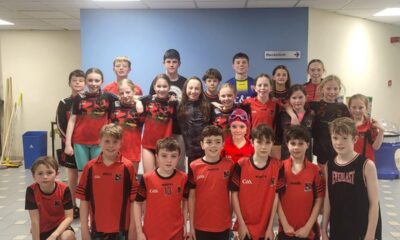

Fossa Swimmers make a splash at County Finals
The Fossa Swim team pictured at the Tralee Sports Complex following their successful outing at the County Finals of the...
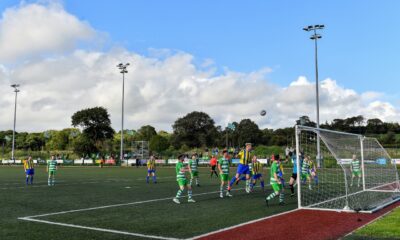

On the Ball Part 2 of the Mikey Daly Interview
Éamonn Fitzgerald EF: Killarney Celtic are invited to participate in an Irish competition. That has big financial implications for travel,...
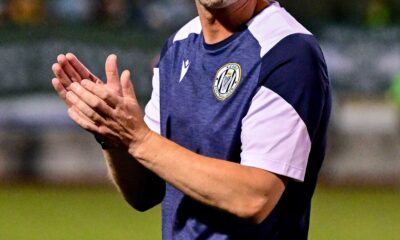

LUKE MANGAN recently caught up with Kerry FC’s manager, Colin Healy.
He spoke to him about his careers as a player and manager. Here’s how it went: When you began your...


Home cup tie for St Paul’s could be epic
Paudie O’Connor National Cup (Round 1) Utility Trust St Paul’s v GCU Brunell Saturday 7.30pm Killarney Sports and Leisure Centre...


Chances of Kerry v Cork Munster final in 2026 decrease as Munster GAA delay seeding plan
After facing a backlash from Limerick, Clare, Waterford and Tipperary players, Munster GAA have postponed their plan to keep Cork...
