
News
Killarney tourism generates €410m per year and supports 3,100 jobs, report finds

K
Killarney’s contribution to the tourism industry nationally has been confirmed in a report launched today by Minister of State for Tourism and Sport Brendan Griffin that reveals an overall economic impact of €410 million generated locally by holiday makers.
The Killarney Tourism Economic Impact Review (TEIR 1) report, compiled by strategic research consultants W2 Consulting, revealed that the tourism industry supports 3,122 jobs locally and brings 1.1 million annual visitors to the town.
Launched at the Aghadoe Heights Hotel on the outskirts of Killarney, the report predicts growth of 30% for tourism in Killarney between now and 2025. But to achieve this, two issues must be dealt with: ‘regionality’ and seasonality.
The review, commissioned by Killarney Chamber of Tourism and Commerce, involved an examination of the economic contribution of tourism, attitudes of visitors to the town and areas for consideration to promote further tourism growth. The timeframe for the tourism industry research was August to October 2017, with all data supplied based on 2016 performance indicators.
The report found that Killarney is delivering for tourists, with 41% of visitors stating it had exceeded expectations and 57% that it had met expectations. The town also scored strongly in terms of value for money, with 77% rating Killarney either ‘very good’ or ‘good’ value compared to 61% for Ireland.
The average room rate for Killarney was €113 compared to €139 nationally. Its monthly average room rate peaked in August at €126, compared to €117 nationally – one of only two months of the year when the town had a rate higher than the national average. However, Killarney’s rate was still lower than Dublin’s rate (€139) during August.
It also reveals that North American market remains the most lucrative for the Irish tourism industry, with the US/Canadian guest spending 80% more per day than domestic tourists. North American visitors have an average daily spend of €191.50 – 30% more than UK tourists and more than double that of Mainland European visitors.
However, two key challenges stand out for the town – regionality and seasonality. The former emerged in results on occupancy rates, with the annual average for Killarney at 64% and 74% nationally. Killarney has, however, twice the national average of beds per head of population.
Nonetheless, seasonality remains an issue for the tourism sector in Killarney, with an average occupancy of just 20% in December – its weakest performing month – compared to 48% in the (south west) region, 71% in Dublin and 60% nationally at that time.
Another issue is the low level of business tourism, with only 7% of visitors coming to Killarney for business, in keeping with Co.Kerry’s ranking as the lowest of all Wild Atlantic Way counties for IDA jobs per capita and less than half the national average.
Commenting on the results, Killarney Chamber of Tourism & Commerce president Paul O'Neill said: “This report has been enlightening. It has quantified just how important tourism is for us and the figures are hugely impressive. We most definitely have the capacity, with in excess of 10,000 beds in the town; we have a unique product in terms of what we offer in the town itself and immediate hinterland but also what we offer as a gateway to both the Ring of Kerry and Dingle Peninsula. And according to this report, visitors are having their expectations more than met.
“The report does, however, raise some issues, particularly with regard to our regional location and seasonality. While these are challenges we must address, we believe that with the right approach and investment we can turn them into an opportunity. This is also very much recognised in the Fáilte Ireland strategy to address regionality and seasonality and the County Kerry Tourism Strategy & Action Plan 2016-2022 objectives.”
Among the key recommendations outlined in the TEIR 1 report are:
- A national and international ‘Killarney’ digital marketing campaign
- Supporting direct international access to the west coast
- Investment in road network to Kerry, particularly the Macroom and Adare by-passes, and broadband in Kerry
- Preparing for the Brexit challenge by building on Killarney’s strong appeal within the North American and Mainland European markets
- Enhancing the product mix in the town, including indoor attractions, to build its capacity to attract and retain visitors
- Investing in key products or segments that will address the seasonality challenges faced by Killarney and the wider Kerry area, including completion of Gap of Dunloe Greenway, Fossa Way and Lough Leane Loop Walk
Conor Hennigan, Development Manager, Killarney Chamber of Commerce and Tourism said: “Tourism is hugely important to Killarney, as this report illustrates, but there are indicators within the report that confirm the economic imbalance on this island. The fact that Dublin is the destination most frequently visited by tourists after their time in Killarney suggests that not enough of our visitors are spending time elsewhere in Co Kerry or on the Wild Atlantic Way. The report also raises concerns about the low percentage of beds being booked for business reasons, mirroring the fact that Kerry has the second lowest number of IDA jobs on the Wild Atlantic Way. There’s clearly a perception that all is well in Kerry because of tourism but this report indicates that while we have an amazing product that is delivering on tourists’ expectations, there are areas we need to address.”

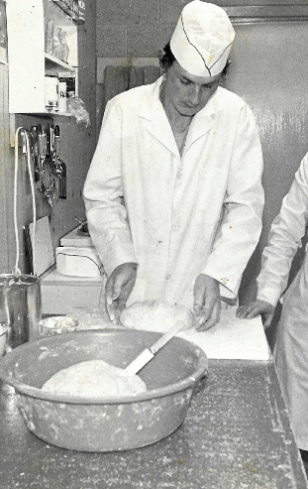
Missing Killarney chef located dead in UK
A 34-year search for missing former Killarney chef Patrick (Patsy) O’Sullivan ended following confirmation that he was located deceased in the UK.
Patsy was 35 years old when last seen by relatives in Lombardstown, County Cork, during the Easter Bank Holiday weekend in April 1992. At the time of his disappearance, he was working as a chef in Waterville, having previously worked across several Killarney hotels. He was scheduled to attend a family Christening shortly after returning from Kerry, but never arrived.
Despite decades of public appeals, including features on RTÉ’s Crimecall, his location remained unknown.
Investigations revealed that Patsy moved to the UK and changed his name to Patrick Aldridge in 1995, adopting the surname of his partner who passed away in 2022. He passed away from natural causes on July 5, 2024, living just over an hour away from his brother who also passed away in the UK last year.
Speaking on Cork’s 96FM, his brother Jerry O’Sullivan confirmed the family finally received closure following renewed efforts led by Garda PJ Roche and investigating officers. He noted that while unanswered questions remain about why Patsy started over fresh, the family is grateful for the work that brought final answers.
An Garda Síochána confirmed the missing person case is closed and thanked the public for their assistance over the years.
IN MEMORY: Patrick (Patsy) O’Sullivan, a native of North Cork who worked as a chef in Killarney and Waterville, went missing in April 1992 and was located deceased in the UK. Photo: Garda Press Office.
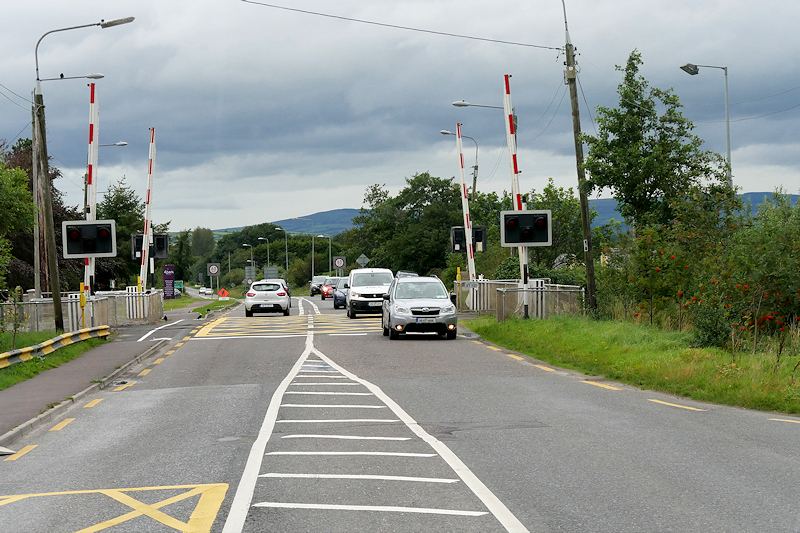
Speed cameras go live at Farranfore level crossing
An Garda Síochána, Iarnród Éireann, Transport Infrastructure Ireland, and Kerry County Council put new safety enforcement cameras into operation at the Farranfore level crossing this week.
The GoSafe system, which went live at 12pm on Tuesday, October 6, automatically detects vehicles running red lights or breaking the speed limit as they approach and cross the railway track.
Farranfore is only the second level crossing on the national rail network to feature the technology, following a trial at Merrion Gates in Dublin where driver compliance reached 99.7 per cent. Up to six crossing locations nationwide are slated to receive the units.
The system targets two distinct traffic violations. Proceeding past a stop line when red lights are flashing carries an automated Fixed Charge Notice of €80 and two penalty points, rising to five penalty points upon court conviction. Speeding violations trigger a €160 fine and three penalty points, which can increase to five points and fines up to €1,000 if prosecuted in court.
Iarnród Éireann highlighted excessive approach speed as a key safety factor at the Farranfore junction. Nationwide, 31 incidents involving vehicles or bicycles colliding with automated level crossing gates have occurred in 2026 to date, up from 23 in 2025.
Highlighting the risk to local road users, Road Safety Officer with Kerry County Council Declan Keogh said: : “The new safety cameras at Farranfore railway crossing serve as a dual-safety mechanism, for road users and for rail users and operators. I would urge all motorists to think twice before taking that chance to get across the railway line when the warning lights have activated and the barriers are lowering. All too often those chances have proved unsuccessful, with serious consequences.”
Iarnród Éireann Chief Executive Mary Considine noted that interfaces between road and rail traffic represent one of the primary safety risks on the network, adding that automated cameras encourage drivers to reduce speed and obey active signals.
Assistant Commissioner Ferry of the Garda National Roads Policing Bureau welcomed the joint venture, stating that technology-led enforcement will significantly assist in maintaining safety across shared transport networks.
50km/h zone enforced at Farranfore
Motorists traveling through Farranfore are reminded that the speed limit on the approach to and across the railway crossing is strictly 50km/h.
While automated safety systems enforce both signal compliance and vehicle speed, the 50km/h limit remains the maximum legal speed on the N22 section approaching the crossing gates.
The newly activated GoSafe cameras record vehicle speeds automatically in both directions. Any motorist detected exceeding the 50km/h threshold will automatically receive a €160 Fixed Charge Notice alongside three penalty points applied to their driving licence.
Local authorities and Gardaí advise drivers approaching Farranfore from both the Tralee and Killarney directions to adjust their driving speed early, monitor active signals, and prepare to stop safely when warning lights activate.

Missing Killarney chef located dead in UK
Missing Killarney chef located dead in UK A 34-year search for missing former Killarney chef Patrick (Patsy) O’Sullivan ended following...

Speed cameras go live at Farranfore level crossing
Speed cameras go live at Farranfore level crossing An Garda Síochána, Iarnród Éireann, Transport Infrastructure Ireland, and Kerry County Council...


Conference on historic Annals of Inisfallen
Conference on historic Annals of Inisfallen A full-day conference dedicated to one of Ireland’s most important surviving medieval manuscripts will...
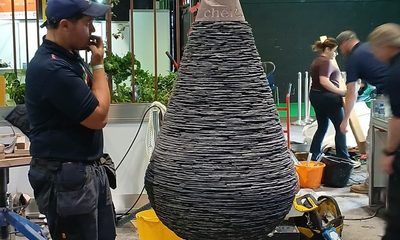

Gneeveguilla apprentice wins national stonemasonry title
Gneeveguilla apprentice wins national stonemasonry title Darragh O’Sullivan from Gneeveguilla won the overall prize in the Architectural Stonemasonry category at...
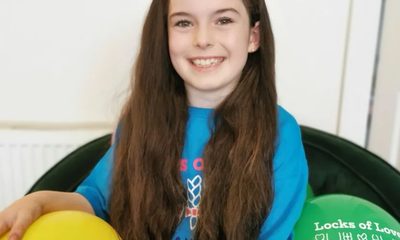

Jessica Cronin donates hair for children’s charity
Jessica Cronin donates hair for children’s charity Ten-year-old Killarney resident Jessica Cronin is set to cut and donate 12 inches...
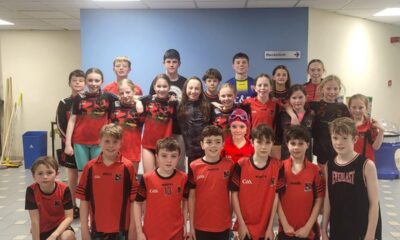

Fossa Swimmers make a splash at County Finals
The Fossa Swim team pictured at the Tralee Sports Complex following their successful outing at the County Finals of the...

On the Ball Part 2 of the Mikey Daly Interview
Éamonn Fitzgerald EF: Killarney Celtic are invited to participate in an Irish competition. That has big financial implications for travel,...


LUKE MANGAN recently caught up with Kerry FC’s manager, Colin Healy.
He spoke to him about his careers as a player and manager. Here’s how it went: When you began your...


Home cup tie for St Paul’s could be epic
Paudie O’Connor National Cup (Round 1) Utility Trust St Paul’s v GCU Brunell Saturday 7.30pm Killarney Sports and Leisure Centre...


Chances of Kerry v Cork Munster final in 2026 decrease as Munster GAA delay seeding plan
After facing a backlash from Limerick, Clare, Waterford and Tipperary players, Munster GAA have postponed their plan to keep Cork...
